Starlark: The Python Dialect That Wins by Doing Less
A deep look at `bazelbuild/starlark`, where freezing, determinism, and a ruthless test suite turn configuration into a safe, parallel, reproducible system.
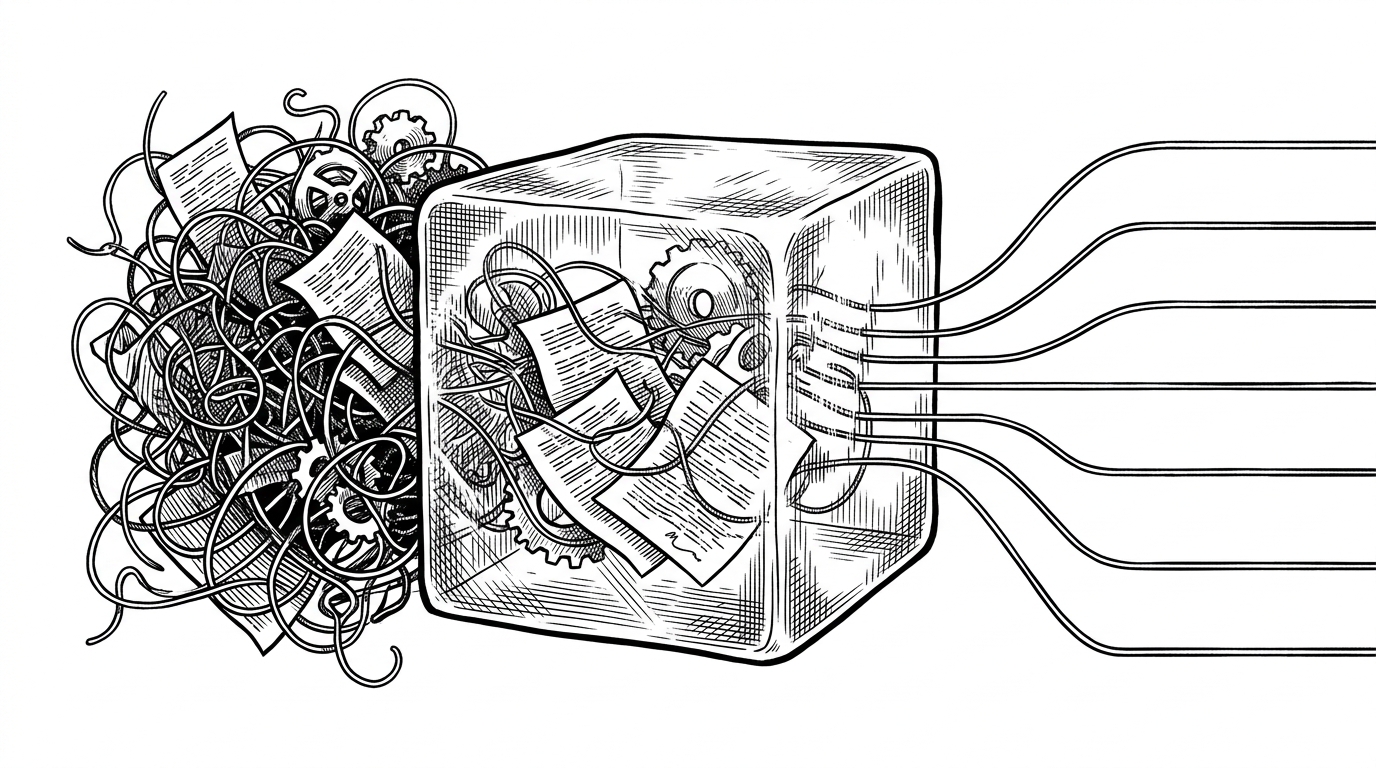
- Starlark’s real innovation is subtraction: it removes ambient power so configuration can be deterministic, hermetic, and safe to run in parallel.
- Its freezing model turns module data into immutable shared state, which eliminates a whole class of locking and race-condition problems.
- The repository is not just a language spec. It is a governance system that uses one test suite to keep Go, Java, and Rust implementations aligned.
- Starlark is less a small Python and more a constraint-driven execution model for large, reproducible systems.
Why Starlark Matters
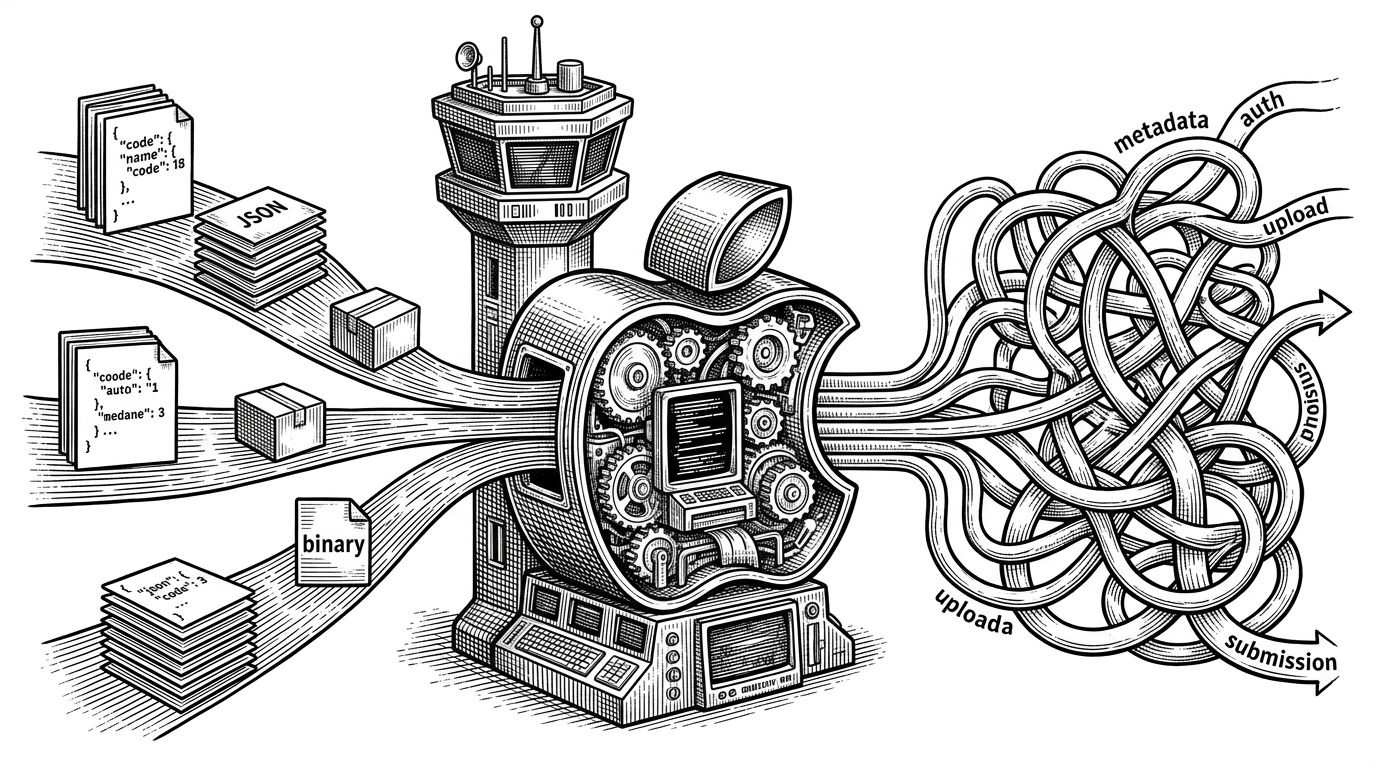
Starlark is not trying to be a general-purpose scripting language with extra discipline. It is trying to be an embeddable language that stays predictable under load. That matters when your config is executed in build systems, CI pipelines, or policy engines where the wrong kind of flexibility becomes a bug factory.
The repo’s thesis is simple: remove the features that make execution hard to reason about, then make the remaining features mechanically trustworthy. No ambient I/O. No recursion. No `while`. No exceptions. What remains is a language that can be evaluated safely, repeatedly, and in parallel.
The Freezing Trick
The most important design move in Starlark is freezing. Once a module finishes loading, its top-level data becomes immutable. That sounds like a small runtime rule. In practice, it is the thing that makes shared module state safe to read across threads without locks.
This is why the language feels so different from Python in the places that matter. You can still write familiar expressions and function calls, but you cannot lean on mutable global state as an invisible coordination channel. The module boundary is the wall.
Subtraction as a Language Design
Starlark’s constraints are not accidental omissions. They are the design. Deterministic dict iteration, static name resolution, no implicit string concatenation, no booleans as integers, and strict tuple syntax all push the language toward fewer surprises and more reproducible outputs.
| Feature | Starlark | General-purpose scripting |
|---|---|---|
| Control flow | Bounded loops only. No `while`. | Unbounded loops are normal. |
| Errors | No exceptions for control flow. | Exceptions are part of everyday design. |
| Global state | Freezes after module load. | Mutable globals are common. |
| External effects | Hermetic by design. | Filesystem and network access are typical. |
| Ordering | Deterministic iteration is required. | Ordering may depend on runtime details. |
| Goal | Safe embedding and reproducibility. | Expressiveness and convenience first. |
The point is not that Starlark is missing features. The point is that every removed feature makes a class of failures impossible. A build file that cannot reach the network or hide work in a `while` loop is easier to parallelize, cache, and trust.
Starlark (formerly known as Skylark) is a language intended for use as a configuration language. It was designed for the Bazel build system, but may be useful for other projects as well.
The Repo Is the Spec
This repository is not a conventional implementation dump. It is a language governance system. `spec.md` is the source of truth. `design.md` records the rationale. `proposals/` shows how the language evolves without turning into improvisation.
That structure matters because Starlark exists across multiple host languages. The repo’s job is not to privilege one runtime. Its job is to define behavior tightly enough that different implementations can converge on the same semantics.
How the Test Suite Holds the Line
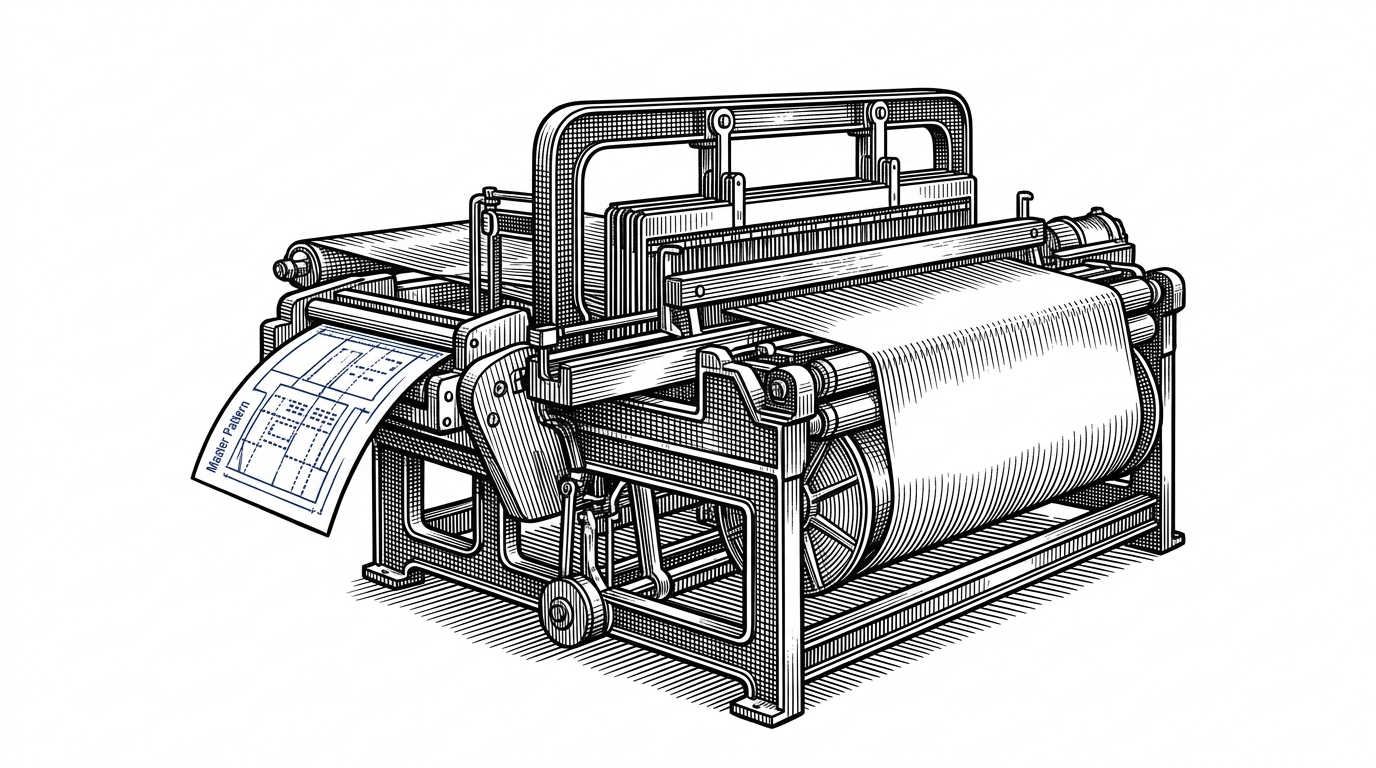
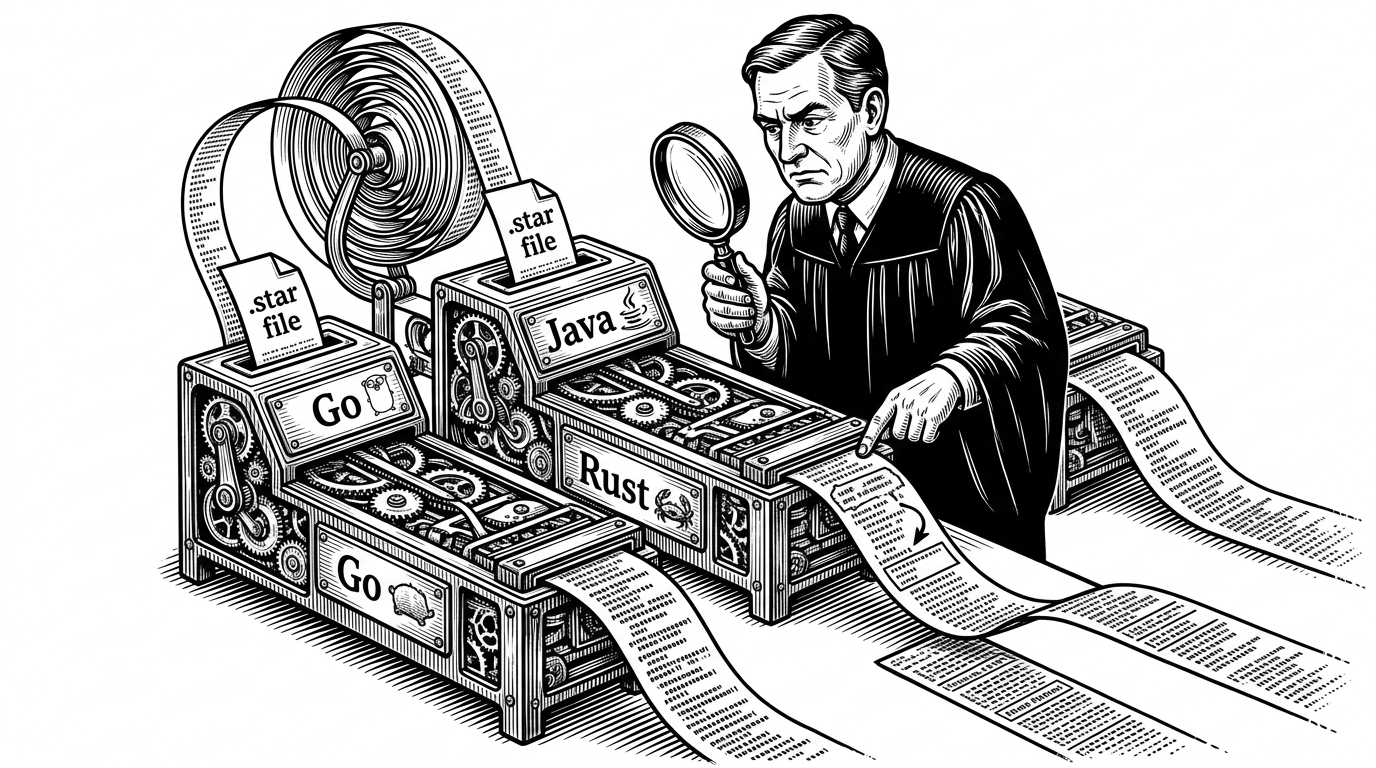
The heart of the project is `test_suite/starlark_test.py`. It reads one `.star` file, splits it into chunks with `---`, injects a shared `PRELUDE`, and then runs the same cases through multiple interpreters. That gives the maintainers one place to define behavior and many places to verify it.
m = re.fullmatch("(.*?) *### *((go|java|rust):)? *(.*)", line)

# Expected-error syntax lets the same test file specify
# different error text for each implementation.
# The harness keeps the semantic contract shared
# while allowing host-language message differences.
The regex-based error matching is a quiet but important detail. It acknowledges a reality of multi-language systems: semantics can be identical even when error strings differ. The harness preserves that boundary instead of pretending every runtime speaks in the same voice.
| What one test file does | Why it matters |
|---|---|
| Splits into chunks with `---` | Multiple cases live in one source of truth. |
| Injects a shared prelude | Assertions behave consistently everywhere. |
| Matches implementation-specific errors | Different runtimes can still conform semantically. |
| Runs against Go, Java, and Rust | The spec is enforced across host languages. |
Why Multiple Implementations Matter
A language spec is only as credible as its enforcement. If one interpreter drifts, the language becomes folklore. Starlark avoids that by making the test suite a conformance contract, not a convenience.
That is why the repository matters beyond Bazel. Any embedded language can promise determinism. Far fewer can prove it across runtimes, over time, in a way maintainers can keep auditing.
The Trade-Off Is the Point
| Question | Python-style scripting | Starlark |
|---|---|---|
| Can code depend on ambient state? | Yes, often. | No, by design. |
| Can it hide unbounded work? | Yes, with loops and exceptions. | No, not through `while` or exception flow. |
| Can shared module data be read safely by threads? | Not as a default property. | Yes, after freezing. |
| Is the priority maximum expressiveness? | Usually. | No, safety and reproducibility win. |
| Is it easy to embed in large systems? | Sometimes. | That is the whole point. |
Starlark is not Python with pieces missing. It is a narrower promise made on purpose. The payoff is not cleverness. It is that large systems can evaluate the same config reliably, in parallel, without inheriting the full chaos of general-purpose scripting.