ExtractBench Grades the Extraction Nobody Checks
LlamaIndex's schema-guided benchmark scores completeness, traceability, and cost across 370 enterprise documents. Its real subject is how easily a leaderboard can lie.

- ExtractBench scores schema-guided document extraction on completeness, null discipline, schema validity, and source evidence, not just field accuracy.
- A vendor adapter bug that failed to strip confidence sidecars moved one reported result from 64.5% to roughly 94%, proving the evaluator can decide a ranking as much as the model.
- The harness treats its own scoring surface as an attack surface: the dataset directory is the authority on which categories exist, so a category that fails entirely shows up as a zero instead of vanishing.
- The benchmark's publisher holds the top slots on its own leaderboard, so per-axis results are more useful than the headline rank.
A Wrong Payment Is an Extraction Bug
Enterprises write a new JSON Schema for nearly every workflow. There is no fixed template to tune against, because the template is invented per job. An invoice, an RFQ, a schedule, a compliance form: each one asks a different set of questions, and the answers land in a downstream system that acts on them.
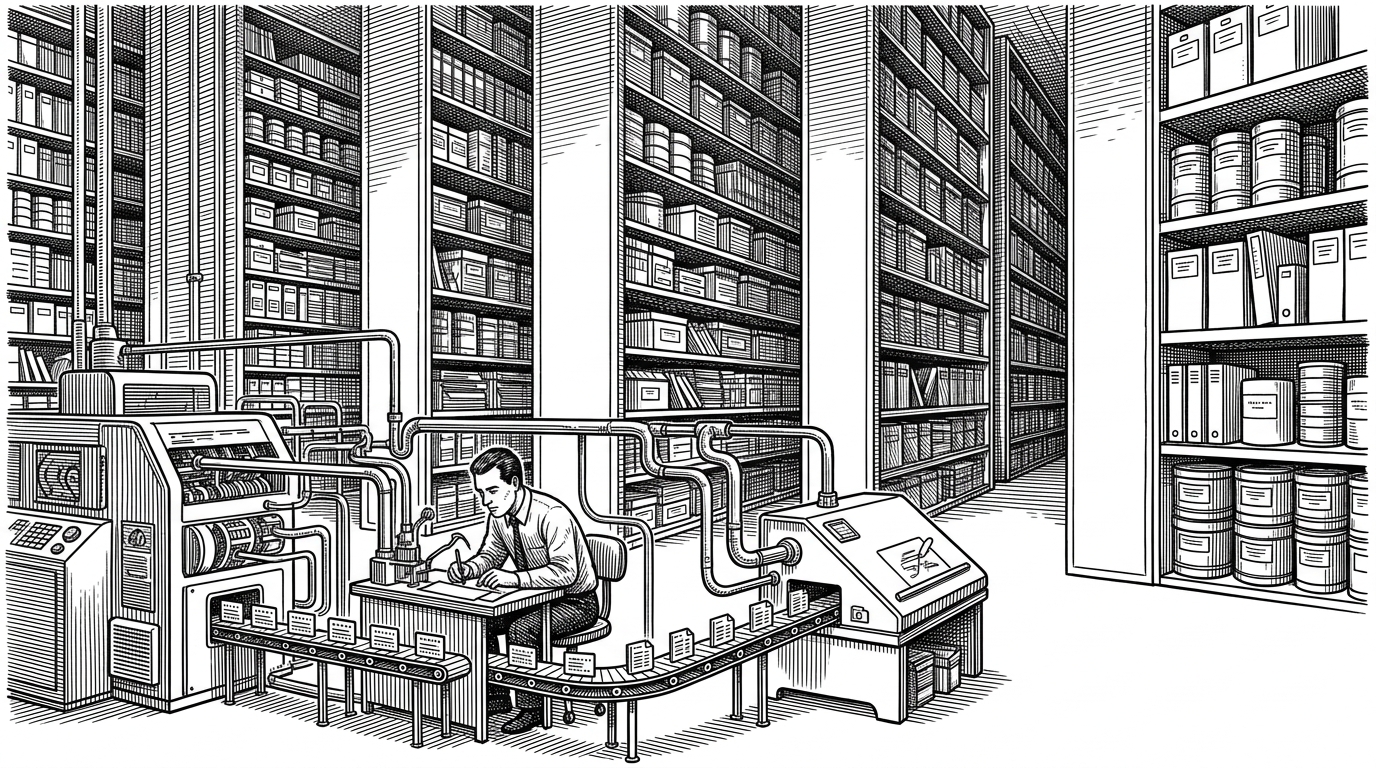
That is the stakes. Agents act on extracted values before a human reviews them. A truncated list of line items, or a single invented value for a field that was actually blank, becomes a wrong payment, a wrong bid, a wrong filing. The failure is not that the model misread a digit. The failure is that it returned a confident subset and nobody noticed the missing rows.
The ExtractBench README states the problem in one line, and it is worth quoting exactly:
So the benchmark does not ask whether a model got the easy fields right. It asks whether every repeated record came back, whether missing fields were marked null instead of guessed, and whether each value can be traced to a source.
The Adapter Bug That Moved a Vendor 30 Points
Here is the fact that reframes the whole project. Datalab, a document-extraction company, published an account of its own ExtractBench result. Its adapter failed to strip the _meta confidence and citation fields from its output before scoring. The scorer read those sidecars as incorrect extra values and penalized them.
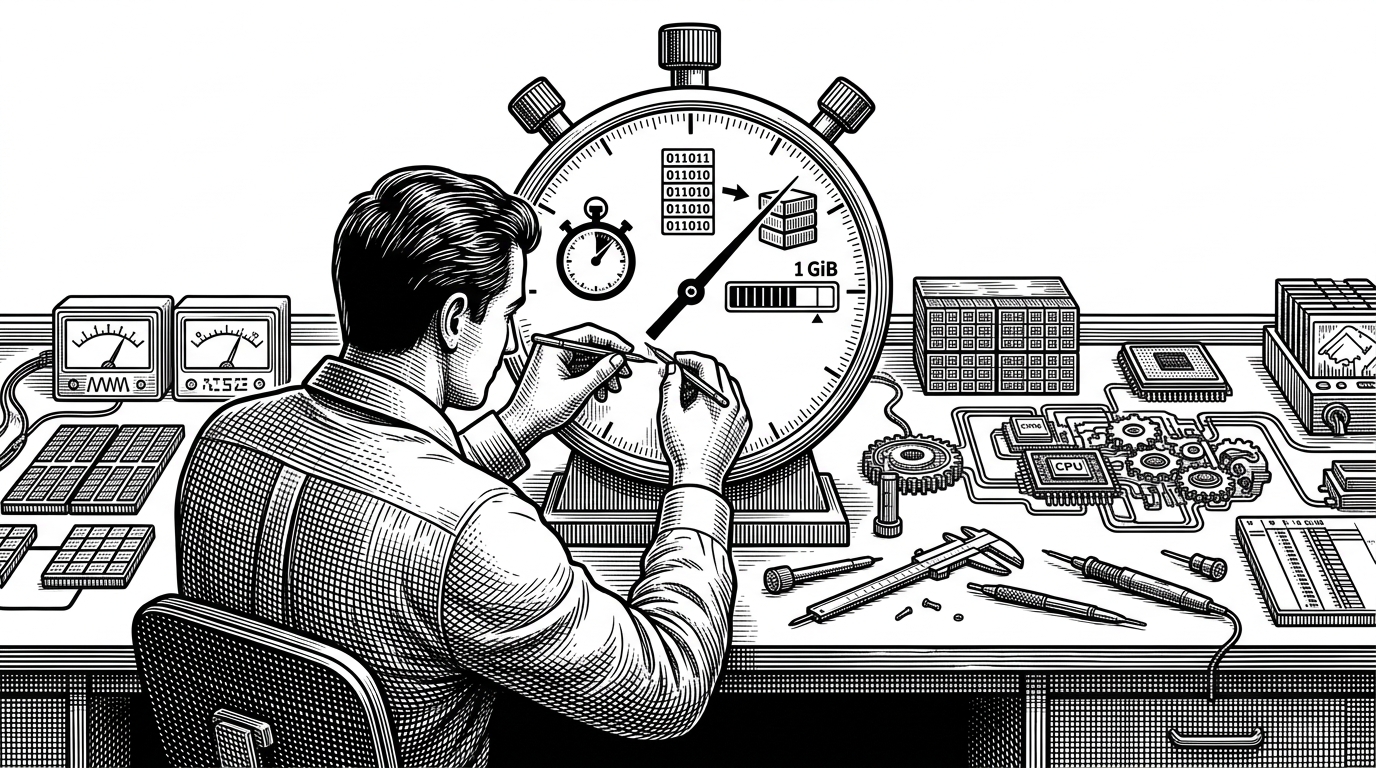
Correcting the adapter changed Datalab's reported result from 64.5% to approximately 94%. A 30-point swing, caused entirely by how a normalization step handled metadata. The model did not change. The prompt did not change. The scoring surface did.
The benchmark shipped with major scoring bugs.
Treat this as one vendor's account, not an adjudicated finding. Datalab's own post cautions that extraction varies between runs. But the shape of the claim is the point, and it generalizes past Datalab: in extraction, the evaluator is as fragile as the system under evaluation. A leaderboard row is a claim about a pipeline, and the normalization stage is part of that pipeline.
This is why the rest of the article is about design decisions rather than model names. ExtractBench is unusual because it appears to have anticipated this fragility and built it into its assumptions.
Four Things ExtractBench Actually Scores
Strip away the marketing and the scoring obligations reduce to four. They are the differentiator, and none of them is plain accuracy.
- Schema-valid JSON. The output must conform to the user's schema, not a convenient approximation of it.
- Every record of every repeated structure. Every line item, every row, every schedule entry. Not a representative subset. This is the completeness axis, and it is the hard one.
nullfor missing fields. A blank field must come back blank. Inventing a plausible value is scored as a failure, not a lucky guess.- Source evidence for each value. The value has to be tied back to where it came from in the document. Traceability, not just correctness.
The instinct is to read "extraction benchmark" as a field-accuracy test. It is closer to an audit. Accuracy is assumed; the scoring lives in whether the system returned the whole record set, resisted filling gaps, and kept a thread back to the page.
ExtractBench is an open benchmark: the dataset, eval harness, and methodology are all public and reproducible.
Per the README, the dataset covers 370 documents, 4,869 pages, 8 business domains, and 67 document types, each with its own schema. Each document is tagged on five independent axes (task challenge, perception challenge, table structure, length, and business domain) so that a low score can be traced to a cause instead of just recorded.
How a Provider Earns a Score
Every system that wants a score implements the same two-method contract. It is the central architectural split in the codebase.
class Provider(ABC):
    @abstractmethod
    def run_inference(self, pipeline, request) -> RawInferenceResult: ...

    @abstractmethod
    def normalize(self, raw_result) -> InferenceResult: ...
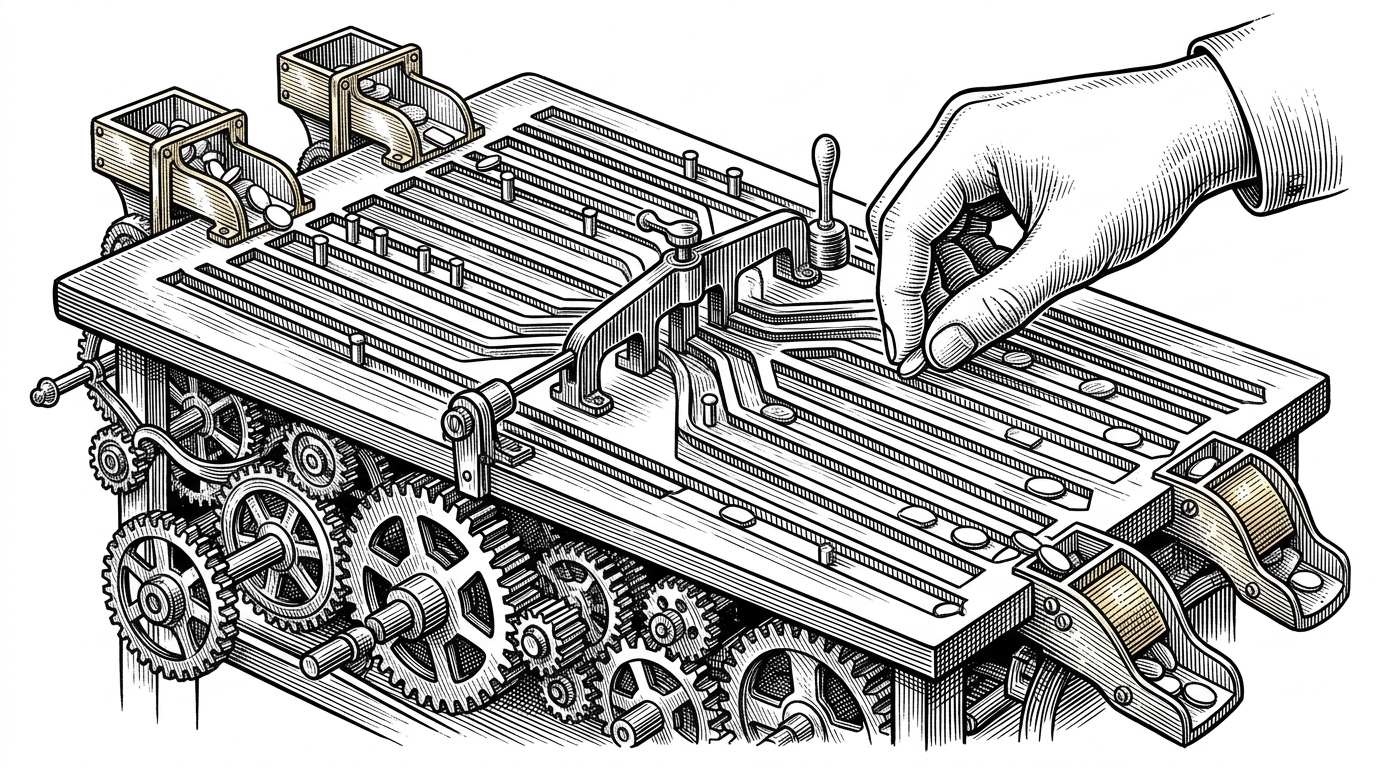
run_inference only fetches. It calls the vendor's API and returns a RawInferenceResult, unnormalized and provider-specific. That raw result can carry sidecars, confidence scores, and citation objects that the vendor needs but the scorer does not.
normalize converts that raw output into a canonical ExtractOutput. This is the step Datalab's bug lived in. And because the harness persists both forms, a corrected normalize can re-score the same run without calling any API again. Scoring logic can change for free.
Run end to end, the pipeline is inference, then evaluation, then report, then an HTML dashboard in a browser. The runner handles concurrency (default 20 parallel jobs), a 30-minute per-file timeout for the long agentic extractions, and exponential backoff (2s, 4s, 8s, 16s, 32s) on rate limits. Its error taxonomy separates the cases that matter: ProviderRateLimitError, ProviderTransientError, ProviderPermanentError, and ProviderTerminalCheckpointError. The last one exists so a downstream harness can tell the difference between "retry this job" and "this remote job is dead."
Failure Cannot Hide
The cleverest engineering in the repository is not in the scoring. It is in making failure visible.
Consider how a naive leaderboard discovers which categories to report. It reads the result files. That means a category where every single document errored writes no result file at all. It never becomes a group. It drops off the board as "no data" instead of showing up as a zero.
ExtractBench treats the dataset directory as the authority on which groups should exist. If a whole category fails, it still appears, scored at zero. The code comment names the perverse incentive this removes: results-only discovery "rewards failing a whole category over failing most of one." A system that returns nothing for a category is not silently excused.
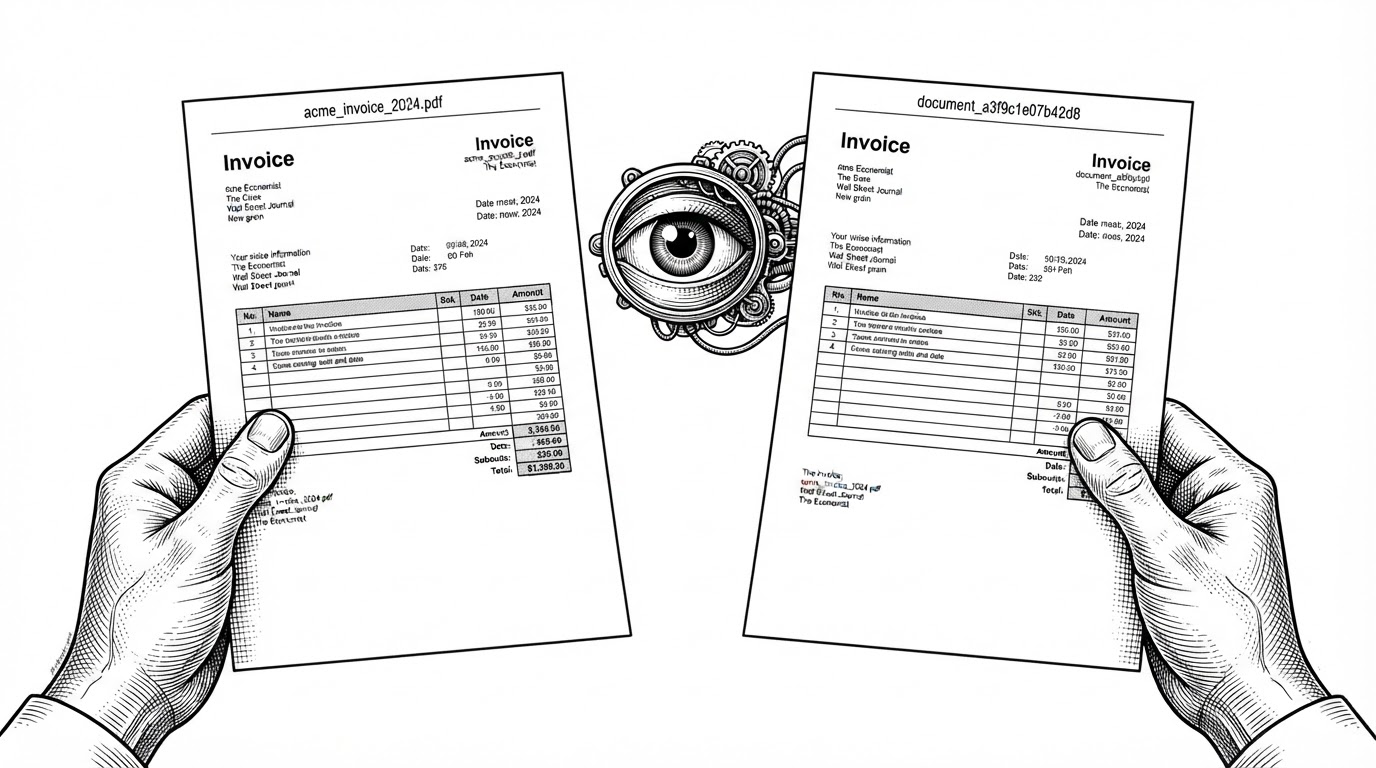
The second anti-contamination measure is filename randomization. A file named acme_invoice_2024.pdf tells the model what the document is, and a hosted service could learn to recognize names it has seen in a published benchmark. So most providers receive the same bytes under a random basename: a 16-character hexadecimal token plus a stem drawn from a fixed list (document, file, input, pages, record, report, scan, upload), in one of four patterns. The helper uses Python's secrets module rather than random, a deliberate choice even though the purpose is not cryptographic.
There is an asymmetry worth flagging. Providers whose names begin with llamaparse, llamaextract, or llamasplit are exempt and receive the original filename. First-party providers keep the real names. The benchmark documents this rather than hiding it, but a reader should know it exists.
Who Referees the Referee
Now the uncomfortable part. ExtractBench is published by LlamaIndex, and LlamaExtract variants hold the top slots on its own Overall leaderboard. Per the README, that is the ranking. The publisher is also the top-ranked vendor.
This is not a disqualifier, but it is a caveat that any honest reading has to carry. The mitigating factors are real: the dataset, harness, and methodology are public, runs are reproducible, and the per-axis breakdowns let a reader check whether a high overall score comes from the completeness axis or from an easy document mix. The format is a leaderboard, and leaderboards published by participants have a long history. The defense is transparency, not neutrality.
The practical advice follows from that. Read the per-axis results, not the headline rank. If you are choosing a vendor, run the harness yourself on your own documents with your own schemas. The raw/normalized split means a full re-score is cheap once the inference is paid for.
Where ExtractBench Sits
ExtractBench is not the first extraction benchmark. It is the first to make the schema itself a variable. Prior benchmarks fixed the target fields in advance, which let systems tune to a known template. That is the axis that separates them.
| Benchmark | Task shape | Scoring focus | Notes |
|---|---|---|---|
| ExtractBench | User-defined JSON Schema per document, 370 documents, 4,869 pages, 67 types | Schema validity, completeness on repeated records, null discipline, source evidence, cost | Published by LlamaIndex; LlamaExtract tops the board |
| ExtractBench Pro | Same task, 100 documents, 2,622 pages, 86 types | Adds chart and drawing interpretation, counting under house rules, specialized vocabulary | Harder companion set, synthetic long-tail documents |
| SROIE | Receipt key-information extraction | Fixed target fields | Narrower, receipt-specific |
| DocILE | Business document localization and extraction | Task-specific, line-item oriented | Not schema-at-inference-time |
| RealKIE | Real-world key-information extraction | Fixed extraction targets | Named as a precursor by ExtractBench's authors |
The difference is not "more documents." It is that the schema is chosen at inference time by the user, not baked into the benchmark. A system cannot memorize the answer key because there is no fixed answer key, only a schema handed in with each document.
The Pro edition pushes further into the long tail: charts, drawings, counting rules, and specialized vocabulary, all things a fixed-field benchmark never had to confront. The same pipeline serves both datasets, which is why the harness has a dataset switch rather than two separate code paths.
One more note on reading the board. Systems on it are configurations, not raw models. A harness that parses a document once and gives the model tools to read it selectively can outscore the model it is built on. That is a statement about orchestration and normalization as much as about the model, which is exactly the lesson the Datalab bug taught from the other direction.