DeepSpec: The Full-Stack Machine for Teaching Small Models to Predict Big Ones
How DeepSeek-AI turned speculative decoding into a trainable, measurable pipeline, and why the real price of speed is often paid in storage, not compute.
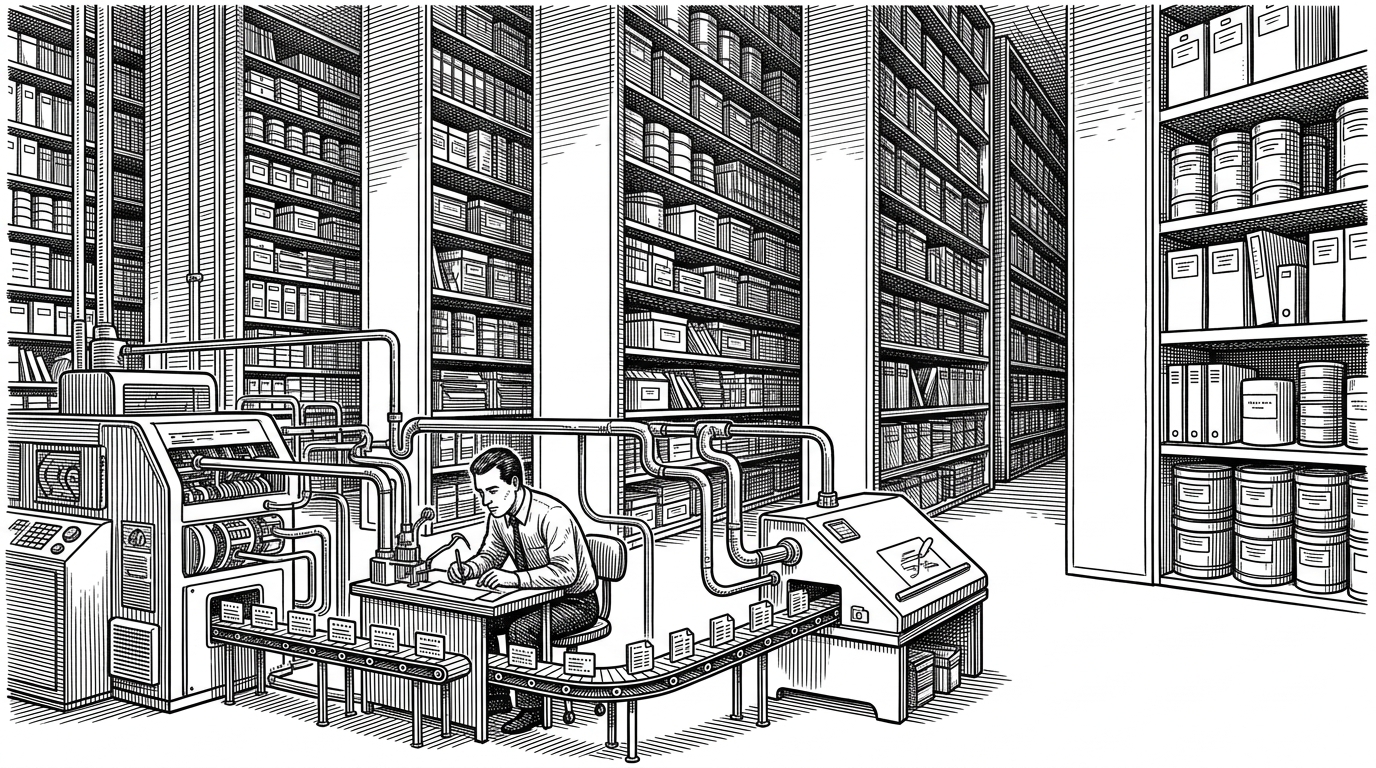
- DeepSpec turns speculative decoding into an offline pipeline, so the draft model can be trained against cached target outputs instead of keeping the target model live in GPU memory.
- The project's real novelty is not a single algorithm, but a full-stack workflow that standardizes data prep, training, and evaluation for draft models.
- Its design makes the trade-off explicit: faster research throughput is bought with heavy storage, not just better kernels or smaller weights.
- DeepSpec measures success the way speculative decoding actually matters, by acceptance behavior and throughput rather than token loss alone.
The Fast Model Is Not the Whole Story
DeepSpec's most revealing number is not a benchmark score. It is the storage bill. The repo's target cache strategy can reach tens of terabytes, which sounds absurd until you see the point: move the expensive work out of the live training loop and into an offline asset that the draft model can learn from repeatedly.
That is the real bet here. DeepSpec is not trying to make speculative decoding feel lightweight or elegant. It is treating it like infrastructure, with caches, trainers, evaluators, configs, and scripts arranged as a pipeline instead of a notebook demo.
A full-stack codebase for training and evaluating speculative decoding algorithms.
What DeepSpec Actually Builds
At the top level, DeepSpec is a lifecycle system for speculative decoding research. The repo is organized around modeling, trainer, eval, config, and scripts, which is a strong signal that the project cares about repeatability, not just one-off algorithm code.
The architecture matters because speculative decoding is usually fragmented. In other projects, the serving engine, the draft model, the training loop, and the benchmark script often live in separate worlds. DeepSpec pulls those pieces into one place so researchers can change the draft design without rebuilding the entire workflow.
The Draft Model Factory
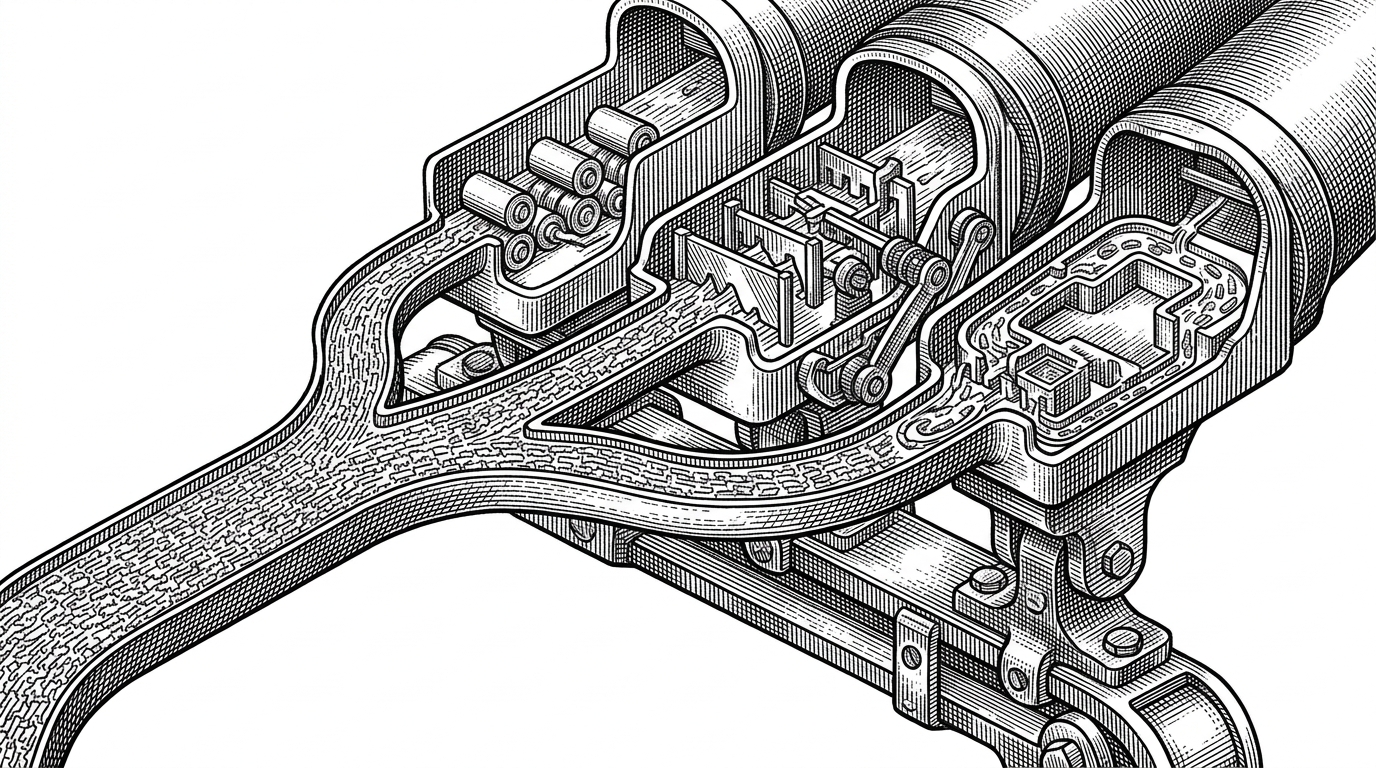
The DSpark family is where the repository gets interesting. Instead of treating the draft model as a tiny transformer that just happens to be smaller, DeepSpec experiments with specialized heads that are built to remember and reuse local prediction patterns.
The progression is easy to read: VanillaMarkov is the simplest lookup-style approach, GatedMarkovHead adds a learned gate between current hidden state and prior token context, and RNNHead carries state forward through the draft block. That last step is subtle but important. It makes the draft model behave less like a static classifier and more like a small sequence machine.
Why Cache the Target Model at All?
Because it changes the shape of the job. DeepSpec's cache dataset lets draft training run without keeping the target model active in GPU memory. The big model does its expensive pass once, the outputs are frozen, and the draft model trains against that frozen record as many times as needed.
That pushes the bottleneck from compute to storage. It is not a free lunch. It is a deliberately different lunch, one that favors high-throughput research runs and standardized experiments over minimal disk usage.
| Layer | DeepSpec | vLLM / TensorRT-LLM / TGI | Medusa / Lookahead Decoding | Hugging Face Transformers / TRL |
|---|---|---|---|---|
| Primary job | Train and evaluate speculative decoding draft models | Serve LLMs efficiently | Implement a specific paper or method | General model training and fine-tuning |
| Draft model training | Built in | Not the focus | Usually included for one algorithm | Manual |
| Acceptance-based evaluation | Built in | Limited or indirect | Usually paper-specific | Manual |
| Algorithm agnosticism | Yes | No | Usually no | Yes, but generic |
| Best mental model | Research pipeline | Inference engine | Paper repo | Training stack |
The Loss Function Is Part of the Product
DeepSpec also spends engineering effort where many repos would stop at a standard PyTorch loss. The Triton-fused soft cross-entropy kernel is there because large vocabularies make ordinary implementations expensive, and the repo wants the training loop to stay fast enough to support iteration.
# DeepSpec's training signal is not just token loss.
# The system tracks acceptance-oriented metrics during the forward pass.

loss = soft_cross_entropy(logits, targets)
metrics = {
    "tau_greedy": tau_greedy,
    "tau_probabilistic": tau_probabilistic,
}

# These values help estimate how often the draft's guesses
# will be accepted by the target model.
That matters because the loss is only useful if it predicts the right operational outcome. In speculative decoding, a draft model that looks good on paper but gets rejected too often is not a win. DeepSpec keeps the metric surface close to the training surface so researchers can see that gap sooner.
Why Acceptance Rate Matters More Than Loss
Speculative decoding is judged by what the target model accepts. That is why DeepSpec's evaluation stack focuses on acceptance rate, speedup, and related metrics across benchmarks. Token loss is a training signal. Acceptance is the system-level outcome.
This is a useful correction to the way model optimization often gets discussed. A small model can be statistically neat and still be operationally poor. DeepSpec keeps the evaluation centered on the actual contract between draft and target.
How DeepSpec Differs From the Rest of the Stack
DeepSpec is not trying to replace inference engines or generic training libraries. It sits between them. vLLM, TensorRT-LLM, and TGI are serving systems. Medusa and Lookahead Decoding are more like paper-shaped implementations. Transformers and TRL are general-purpose training tools. DeepSpec is the missing middle, a research framework for the draft-model lifecycle.
| Tool | What it is | Trains draft models | Evaluates acceptance | Algorithm agnostic |
|---|---|---|---|---|
| DeepSpec | Full-stack speculative decoding research framework | Yes | Yes | Yes |
| vLLM | Inference engine | No | Partial | No |
| TensorRT-LLM | GPU inference optimization stack | No | Partial | No |
| TGI | Serving toolkit | No | Partial | No |
| Medusa | Paper-specific repo | Yes | Yes | Mostly no |
| Lookahead Decoding | Paper-specific repo | Yes | Yes | Mostly no |
| Transformers / TRL | General training stack | Possible, but manual | No | Yes, but generic |
That niche is narrower than a general AI platform, but it is also more honest. DeepSpec is built for people who already know they want speculative decoding and need a cleaner way to study, train, and compare draft strategies without reinventing the scaffolding every time.
The Trade-Off DeepSpec Makes Explicit
DeepSpec's core thesis is simple. If you want faster LLM inference research, standardize the expensive upstream work. Cache the target model. Train the draft model offline. Measure acceptance, not just loss. Then iterate on the architecture that actually improves throughput.
That is why the project feels more like a machine than a library. It gives speculative decoding a production-shaped research loop, and it makes the cost of speed visible instead of hiding it inside ad hoc scripts and one-off experiments.