QSOLKCB/QEC: The Quantum Error-Correction Stack That Treats Reproducibility as a First-Class Result
A deep look at a repo that builds QEC, QLDPC, invariants, and replay proofs into one deterministic system.
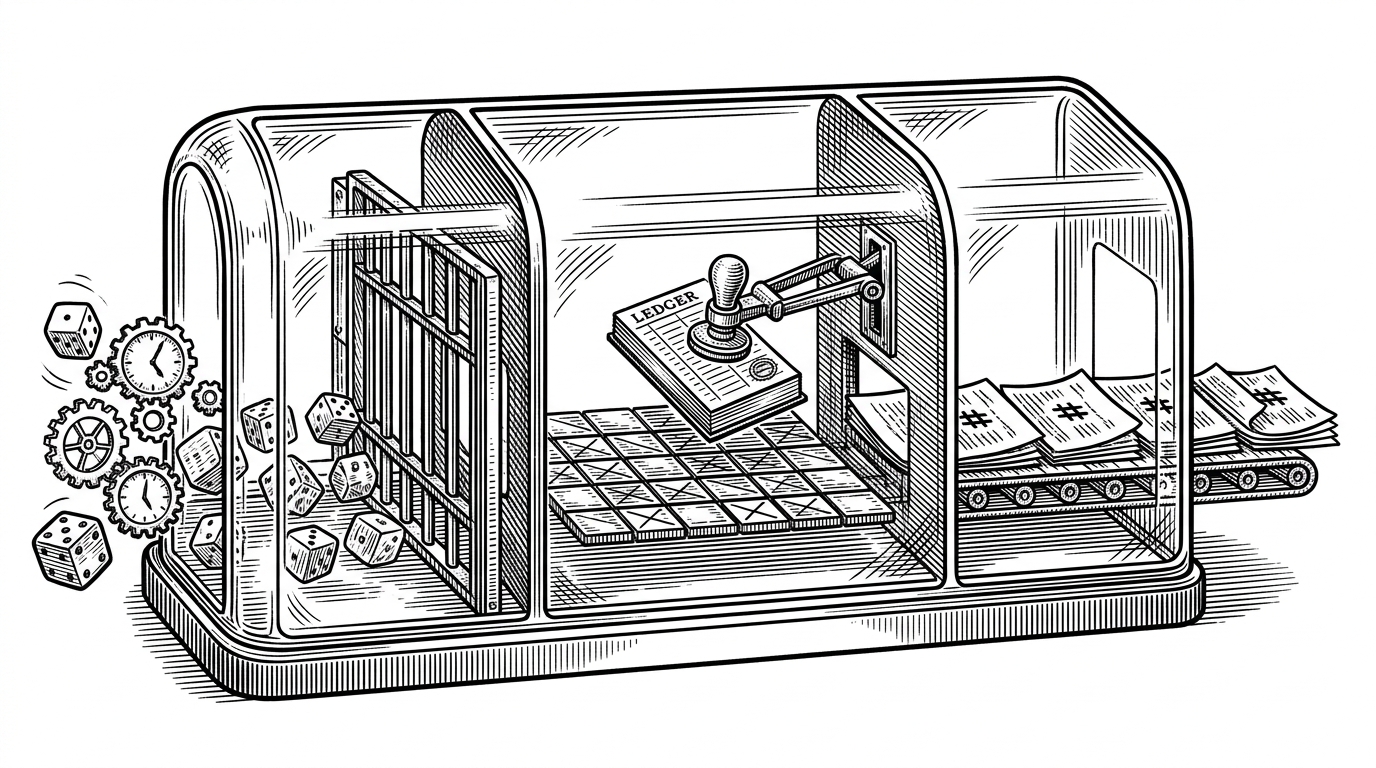
QSOLKCB/QEC is not trying to be a casual simulator. It behaves more like a scientific instrument with a memory, one that refuses to trust a result unless it can be replayed, hashed, and checked against invariants.
QSOLKCB / QEC QEC is a deterministic, replay-safe reasoning system for quantum error correction and invariant-driven computation.
A Quantum Codebase That Refuses to Be Sloppy
That refusal is the headline. In most research code, the question is whether a decoder converged or a code construction passed. Here the question is harsher: can you prove the run did not drift, mutate, or depend on hidden randomness?
The repository frames quantum error correction as an accountability problem. The code is not just calculating. It is building evidence, and the evidence has to survive replay.
The Core Idea: Proof Over Drift
The architecture is built around banned behaviors. Random calls are disallowed, wall-clock dependence is disallowed, unordered iteration is disallowed, and the system expects every state transition to be reconstructible from a deterministic chain.
- No hidden seeds. No wall-clock dependence. No unordered iteration.
- Every transition can be hashed and replayed.
- A failed invariant stops the pipeline instead of being quietly repaired.
That is a severe design choice, but it is coherent. In a domain where tiny sources of nondeterminism can distort a result, the repo makes determinism part of the science rather than a convenience for debugging.
How the Codebase Enforces Its Own Rules
The directory structure mirrors the philosophy. The decoder layer is treated as the protected core. Channel logic, diagnostics, predictors, and analysis sit above it, which means observation and reasoning can evolve without rewriting the base assumptions.
| Axis | Typical research repo | QSOLKCB/QEC |
|---|---|---|
| Randomness handling | Often hidden in scripts or seeds | Explicitly constrained and avoided where it would break replay |
| Reproducibility | Usually best effort | Designed as a proof requirement |
| Invariant enforcement | Checked late, if at all | Fail-fast gatekeeping before malformed states continue |
| Decoder mutability | Frequently patched in place | Core layers stay protected while higher layers reason about them |
| Evidence trail | Logs and ad hoc notebooks | Hash-linked transitions and replay verification |
| Diagnostics | Mostly visual traces | Includes multimodal diagnostics, including sonification |
| Theory-code coupling | Loose or paper-driven | Implementation rules tie code to the theory corpus |
The result is a stack with guardrails at every level. It is not just organized. It is opinionated about what kinds of mistakes are allowed to exist in the first place.
The Algebraic Heart of the Project
Under the governance layer is the math. The repository builds CSS codes through algebraic structure, including the bicycle construction and shared-circulant lifting, so valid relationships are guaranteed by construction instead of discovered by search.
That matters because it changes the burden of proof. The system is not asking the computer to stumble into a good code and then verify it afterward. It is shaping the space so the code cannot violate the rule in the first place.
Why the Repository Cares About GF(2^e)
The field arithmetic widens the scope beyond binary qubits. By supporting GF(2^e), the repo makes room for non-binary error-correction research, including qutrit and ququart experiments that need more than a bitwise algebraic toolbox.
| Dimension | Binary focus | Non-binary focus in QEC |
|---|---|---|
| State space | Two-level systems | Multi-level systems such as qutrits and ququarts |
| Arithmetic | GF(2) | GF(2^e) with table-driven field operations |
| Research value | Standard qubit assumptions | Broader frontier for alternative physical encodings |
| Code implication | Simpler parity logic | Richer decoder and construction space |
The important part is not that the repo can branch outward. It is that it keeps the same discipline while doing so. Broader algebra does not dilute the determinism story.
The Strange, Memorable Part: Hearing a Decoder Fail
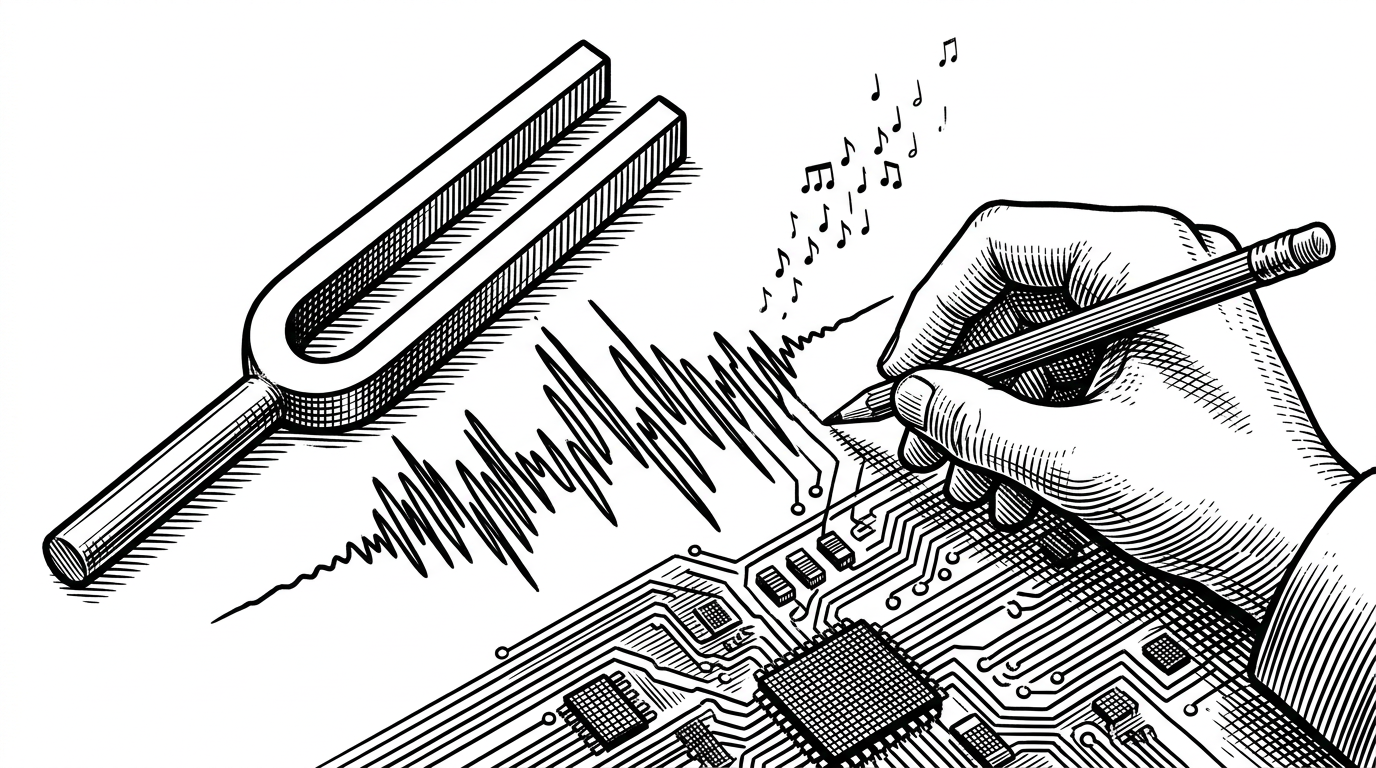
That is not garnish. In a system this structured, any extra channel that helps spot trapping sets or decoder instability earns its keep. Sonification is unusual, but it fits the larger pattern: add observability, not noise.
What This Repo Is Actually Optimized For
If you want speed-first tooling, this is the wrong mental model. The repo is optimized for traceability, invariants, and exact replay. It is trying to produce confidence that survives inspection.
| Priority | QSOLKCB/QEC |
|---|---|
| Fast experimentation | Not the main goal |
| Deterministic replay | Core requirement |
| Invariant enforcement | Built into the workflow |
| Theory-code alignment | Explicit and recurring |
| Auditability | Central to the design |
That discipline is what makes it interesting. Many projects can compute. Fewer can explain themselves after the fact with the same certainty they had at runtime.
A Different Kind of Quantum Tooling
QSOLKCB/QEC reads like a reply to a common failure mode in research software. The code does not merely aim to get the answer. It wants the answer, the path to the answer, and the proof that the path can be walked again without deviation.
That is a different kind of quantum tool. It is less like a sandbox and more like a ledger. And in a field where reproducibility can be the difference between a result and a rumor, that distinction is the whole story.