DroPE: The LLM Context Trick That Works Better After You Drop the Map
Sakana AI’s repo extends pretrained models by removing positional embeddings, then recalibrating just enough to unlock longer context windows without brute-force long-context fine-tuning.
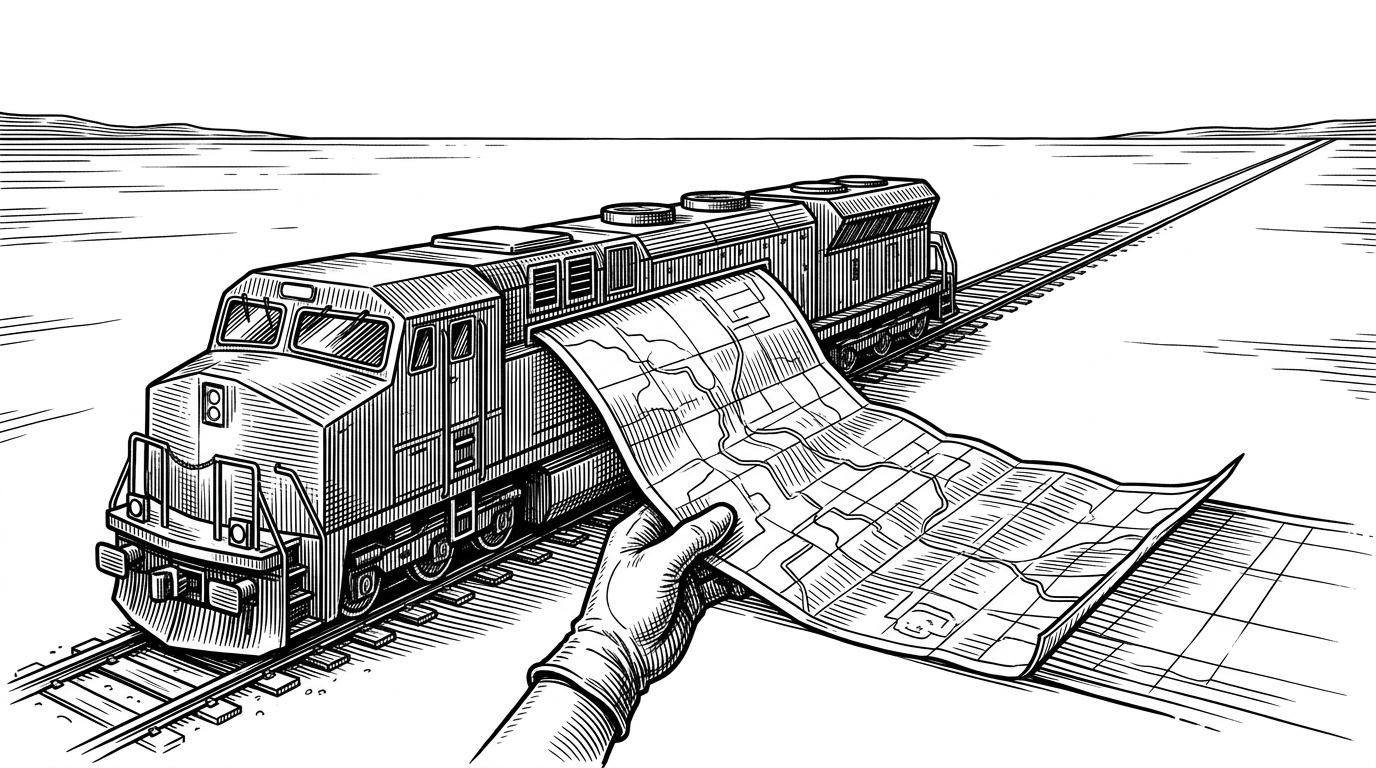
- DroPE treats positional embeddings as a training scaffold, not a permanent feature, and that inversion is the whole point.
- The repo wins on compatibility because it patches existing Hugging Face models instead of forcing a new training stack.
- Recalibration is the unlock, because a short adaptation pass stabilizes the NoPE model after the embeddings are removed.
- Compared with RoPE scaling or long-context fine-tuning, DroPE sells a cheaper and less invasive path to longer context.
The weird part is the point
Most context-extension tricks add something. DroPE does the opposite. It treats RoPE as scaffolding for pretraining, then removes the scaffold after the model has learned to stand, so the same checkpoint can stretch into longer sequences without a full long-context retrain.
We discovered that explicit positional embeddings like RoPE are critical for training convergence but eventually become the primary bottleneck preventing models from generalizing to longer sequences.
That is a useful kind of audacity because it keeps the Hugging Face ecosystem intact. Sakana AI’s repo patches pretrained Llama and Qwen-style models rather than asking you to rebuild a transformer stack from scratch, which makes the idea feel both elegant and slightly rude to convention.
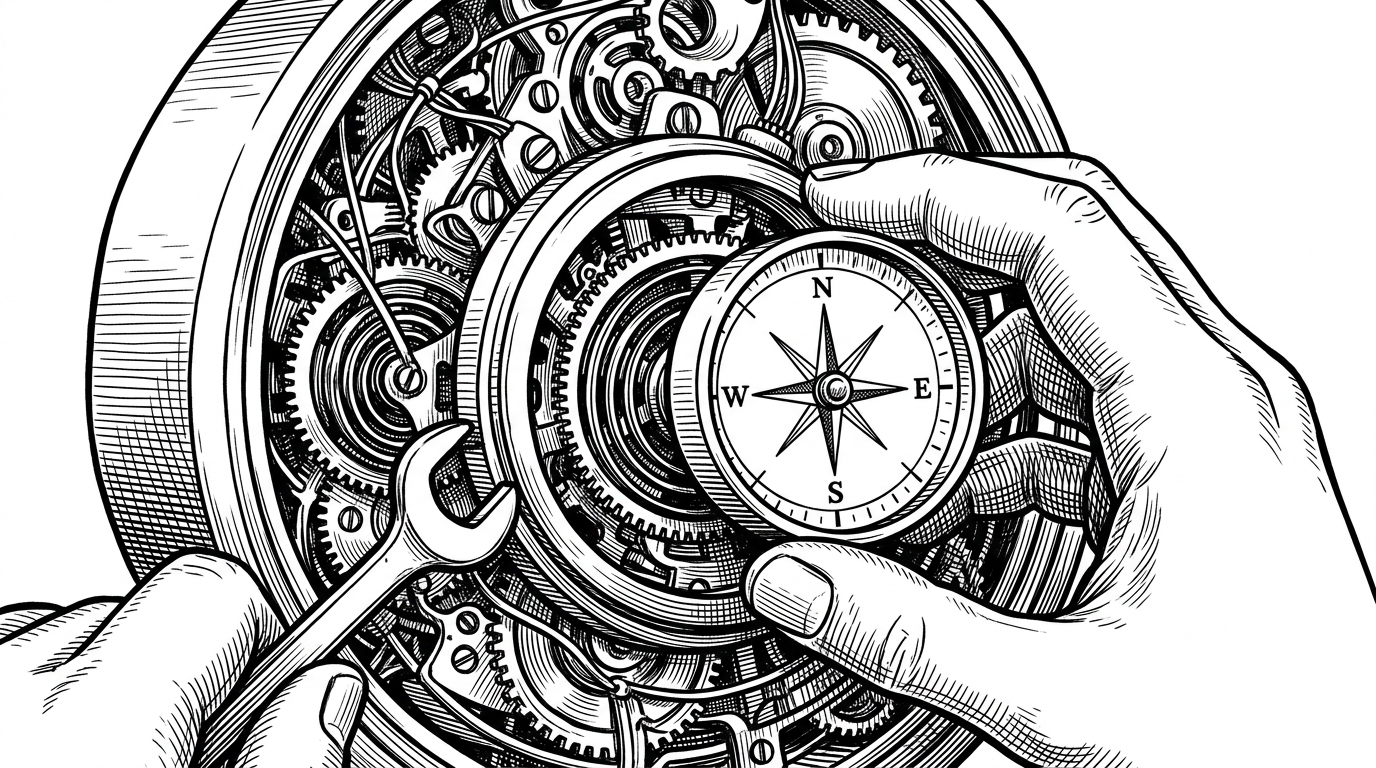
Why RoPE starts as a helper and ends as a ceiling
The logic is simple once you stop treating position as sacred. RoPE helps optimization by giving the model a stable sense of order during pretraining, but that same structure can become a ceiling when the model is asked to generalize far beyond the sequence lengths it saw before.
DroPE leans into that trade-off. It does not claim that positional embeddings are useless, only that they may be more valuable early than late, and that a pretrained model can sometimes do better after those coordinates are removed and the network is allowed to re-balance itself.
How the repo patches a pretrained model without breaking the ecosystem
The repository is organized like an engineering team that expects to ship. `custom_models/` holds the runtime attention patches, `trainers/` adds recalibration helpers, `cfgs/` keeps Hydra configuration modular, and `custom_data/` handles packed long-sequence batches without letting attention spill across boundaries.
def nope_forward(q, k, v, position_embeddings):
    cos, sin = position_embeddings
    cos = torch.ones_like(cos)
    sin = torch.zeros_like(sin)
    q = q_norm(q)
    k = k_norm(k)
    return attend(q, k, v, cos=cos, sin=sin)
Under the hood, the patch is intentionally boring in the best way. It intercepts the attention forward pass, swaps the rotary pair for identity rotations, and adds Query-Key normalization when stability needs help. That is how a counterintuitive research idea becomes something you can actually load like a normal model.
The recalibration phase is the whole trick
Recalibration is what keeps this from being a party trick. Instead of retraining on mountains of long text, DroPE runs a short adaptation phase that can stay under 1% of the original pretraining budget, then checks whether the model still behaves on ordinary tasks while it learns to operate over much longer spans.
That matters because long-context work usually forces a trade-off. Either you brute-force train on long sequences, or you accept that extrapolation is fragile. DroPE tries to keep the pretrained checkpoint, cut the training bill, and preserve the path through the stack that teams already know how to operate.
DroPE versus the usual ways of buying context
| Method | What changes | Why teams use it | Trade-off |
|---|---|---|---|
| DroPE | Drop positional embeddings after pretraining, then recalibrate | Keeps existing checkpoints and promises cheaper long-context extension | Needs careful stabilization and a new training phase |
| RoPE scaling | Stretch or interpolate the rotary positions | Fast and familiar inside existing toolchains | Can degrade on very long sequences |
| ALiBi | Use linear attention biases from the start | Supports extrapolation with a simple inductive bias | Requires architectural commitment early |
| Long-context fine-tuning | Train on long sequences directly | Straightforward conceptually | Expensive enough to block most teams |
That is why DroPE stands out. It is not the only route to longer context, but it is one of the few that looks like a patch instead of a migration, which makes it attractive anywhere the checkpoint is precious and the training budget is not.