fast-weight-product-key-memory: FwPKM: The Memory Layer That Writes Back
Sakana AI’s open-source experiment fuses product-key lookup with fast-weight updates, so an LLM can retrieve from a huge memory and revise what it remembers mid-stream.
- FwPKM matters because it makes memory writable during inference, not just larger.
- Product Key Memory gives that writable layer a sparse address space that stays efficient.
- The repo treats fast weights as an inner-loop system, while the global optimizer steps around them.
- FwPKM sits between static memory tables and compressed state models because it can revise what it just retrieved.
The memory layer that writes back
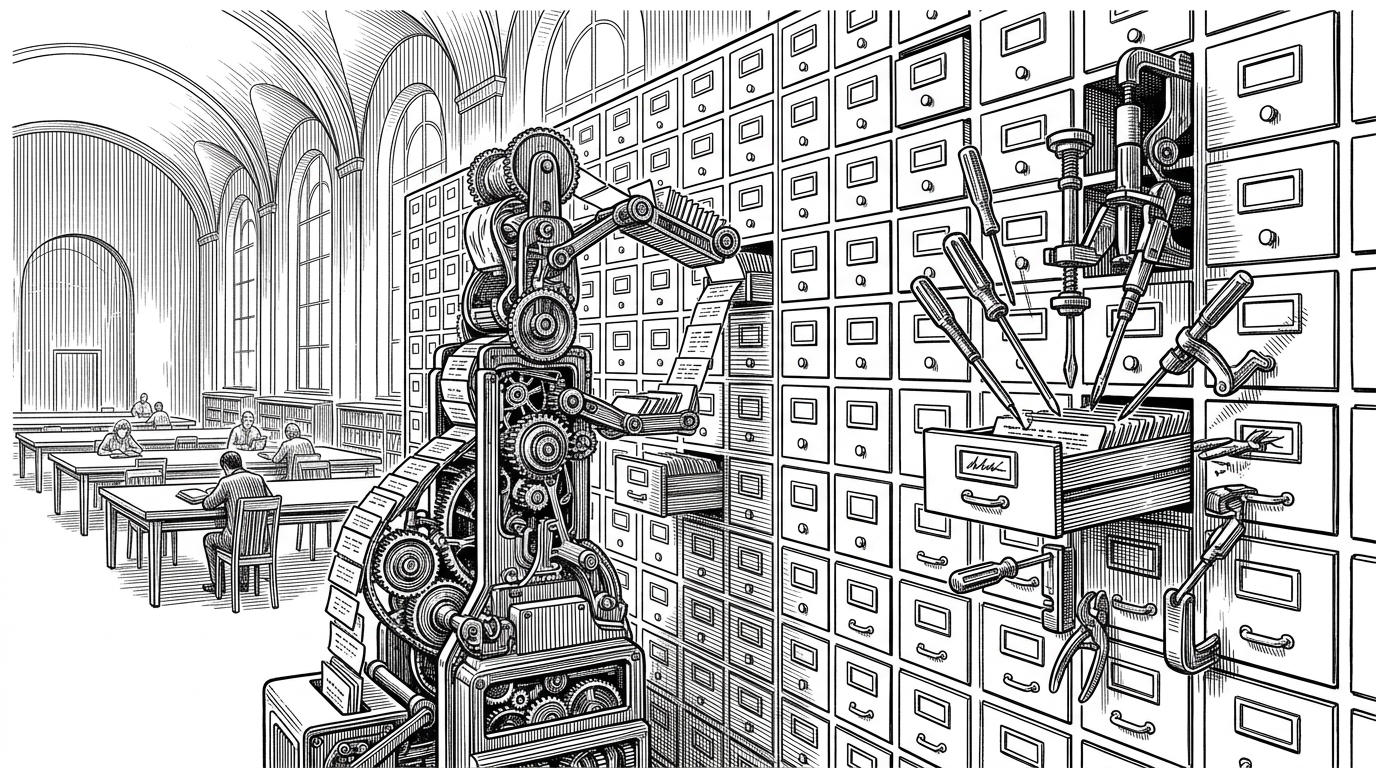
FwPKM matters because it changes the rule of memory. Most systems either retrieve from a frozen store or squeeze context into a fixed state. FwPKM does both retrieval and update in the same pass, so the memory you read from is also the memory you leave behind.
That sounds subtle, but it is the whole project. A query token lands on a sparse set of memory slots, pulls values into the residual stream, and then uses an inner-loop signal to nudge those slots before the next token arrives. Memory becomes episodic instead of archival.
Why static memory hits a ceiling
Softmax attention can read any previous token, but it pays quadratic cost. Linear attention, RWKV-style state models, and SSMs like Mamba save compute by compressing history into a bounded state. They are efficient, but they are forced to forget details or smear them together.
Product keys give the model a huge address space
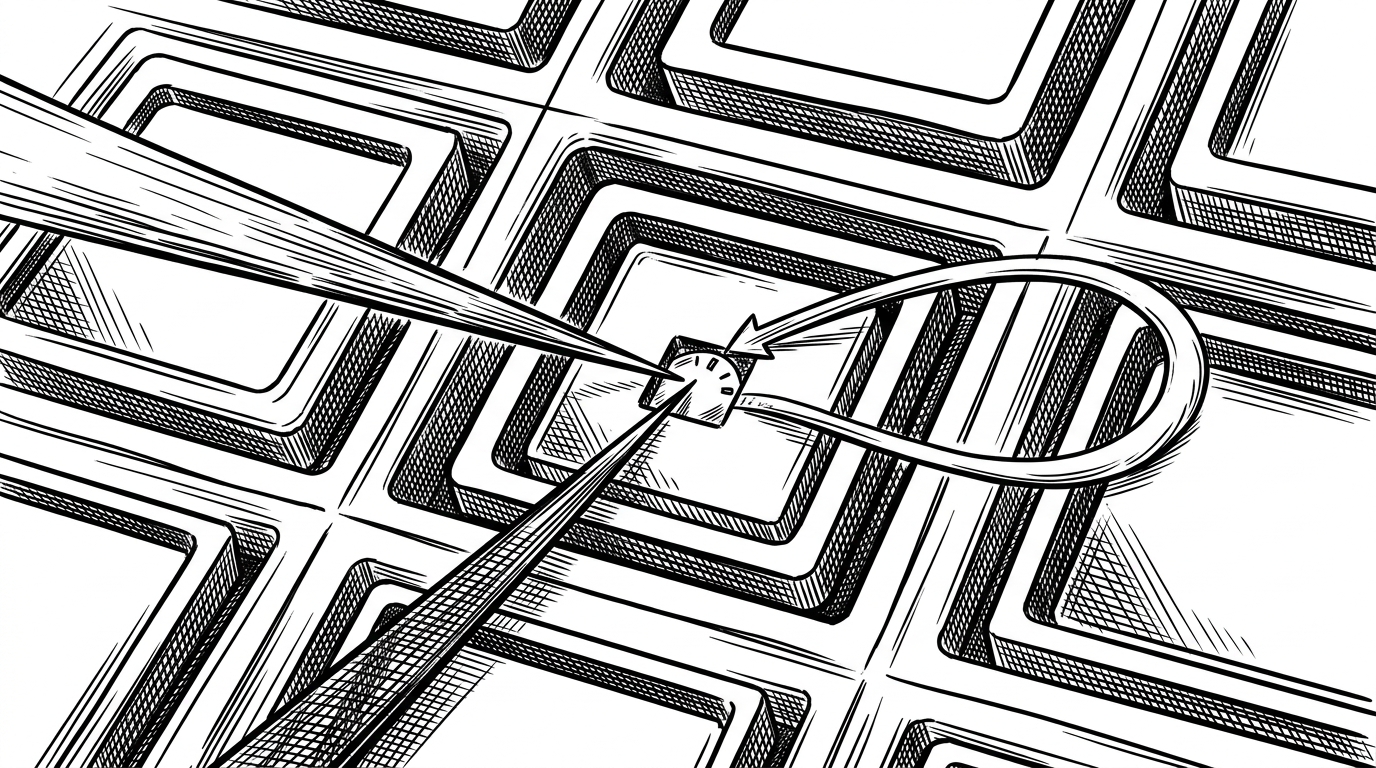
Product Key Memory gives FwPKM the scale it needs. Instead of scanning a dense table, the query is split into subkeys, scored against a product-key grid, and routed to a small set of top-k candidates. That keeps retrieval sparse while still opening a large effective memory.
The other detail that matters is collapse resistance. The repository includes marginal entropy pressure so the model does not keep falling back to the same few addresses. In plain terms, the memory is encouraged to stay busy.
The inner loop is the real trick
Now the twist. FwPKM treats retrieved values as fast weights, computes a local learning signal, and uses torch.autograd.grad to update that memory path during the forward pass. The base model learns the update rule, while the current sequence gets to rewrite the memory state it just used.
That is why the repository excludes fwpkm parameters from the global optimizer. The outer loop trains the architecture, but the memory itself is updated by its own inner loop. Static PKM stops after lookup. FwPKM keeps going.
for name, param in model.named_parameters():
    if "fwpkm" in name:
        continue
optimizer_params.append(param)Sakana AI’s recent Fast-Weight Product Key Memory paper (https://arxiv.org/pdf/2601.00671) excels in this arena; it transforms Product Key Memory into a dynamic, ‘fast-weight’ episodic memory that updates parameters during inference for superior memory dynamics.
That is the most important distinction in the repo. The point is not to remember more. The point is to remember differently, with a mechanism that can react to the document it is still processing.
The repo is built like research, not a demo
cfgs/holds experiment and ablation JSON files for different training setups.scripts/covers data prep, DeepSpeed training, and evaluation flows.src/models/fwpkm/contains the fast-weight memory core.src/models/pkm/implements the static Product Key Memory baseline.src/models/lact_model/adds Triton-optimized kernels for adjacent long-context experiments.
The surrounding structure says a lot. There are experiment configs, ablations, DeepSpeed training scripts, LongBench and Needle-In-A-Haystack evaluation paths, and model wrappers that look ready for serious pretraining runs. This is not a notebook with a clever layer. It is a research harness around a new memory rule.
Where FwPKM sits among long-context approaches
| Approach | Memory model | Update behavior | Strength | Limitation | FwPKM difference |
|---|---|---|---|---|---|
| Softmax attention | Full token history | No explicit memory state | Exact access to any prior token | Quadratic cost grows fast | FwPKM keeps access sparse and memory local |
| Linear attention, RWKV, SSMs | Compressed hidden state | State changes every step | Fast and scalable | Details get folded into a fixed-size state | FwPKM stores discrete associations instead of only summaries |
| Standard PKM | Large sparse key-value table | Static after training | Huge address space at reasonable cost | Cannot adapt mid-sequence | FwPKM adds a writable inner loop |
| FwPKM | Sparse key-value memory with fast weights | Updated during the forward pass | Retrieval and adaptation in one layer | More moving parts and more to tune | This is the article's subject |
FwPKM’s niche is narrower than attention and sharper than a state compressor. It keeps sparse associative lookup, then adds runtime adaptation. That makes it feel closer to a writable scratchpad than a frozen index or a lossy summary.
Sakana AI’s research lineage
Sakana AI tends to favor hybrid systems that combine ideas most teams would keep separate. FwPKM fits that pattern. It pairs product-key sparsity with fast weights, the same broad instinct that shows up in adjacent memory work like Doc-to-LoRA and Text-to-LoRA: push adaptation closer to the moment of use.