MemPalace: The AI Memory System That Refuses to Forget the Details
A local-first, verbatim memory vault for LLMs that treats exact context as the product, not a byproduct.
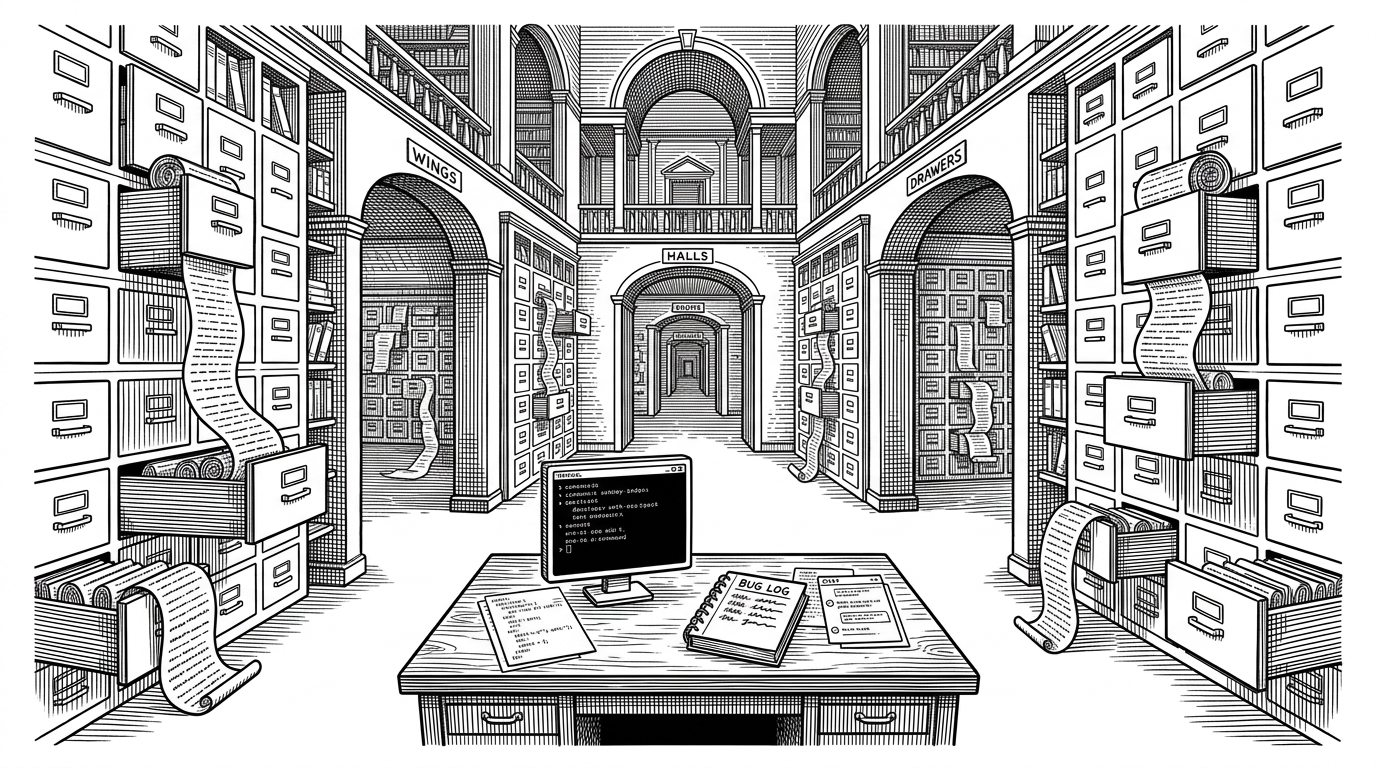

I wanted my AI to remember the way I remember — not just the conclusions, but the journey. The alternatives I considered, the reasons I changed my mind, the nuance. That's what existing memory systems throw away.
- MemPalace argues that exact wording is often more valuable than a summary when the memory belongs to technical work.
- Its palace hierarchy narrows retrieval so semantic search stays scoped instead of wandering through every stored exchange.
- The project’s real bet is local, verbatim storage first, with summarization treated as optional compression rather than the source of truth.
- Its most interesting signal may be maturity: the repository now reads like a tool trying to earn trust, not just attention.
Most AI memory tools try to shrink experience into a few extracted facts. MemPalace takes the opposite bet: keep the original exchange, keep the wording, and make retrieval smarter later. For developers, that is not a philosophical flourish. It is the difference between recovering a useful debugging conversation and getting a bland summary that omits the line you actually needed.
The memory problem MemPalace is really solving
The pain point is context amnesia. A model remembers the gist, then loses the exact config, error trace, prompt tweak, or architectural tradeoff that made the conversation valuable in the first place. MemPalace is built around the idea that the exact text is not noise. It is the asset.
A palace is a better schema than a blob
The metaphor does real work. Wings, Halls, Rooms, and Drawers are not decorative names, they are retrieval boundaries. A flat memory store asks the model to search everything. A palace lets the system narrow the search space before semantic matching even begins.
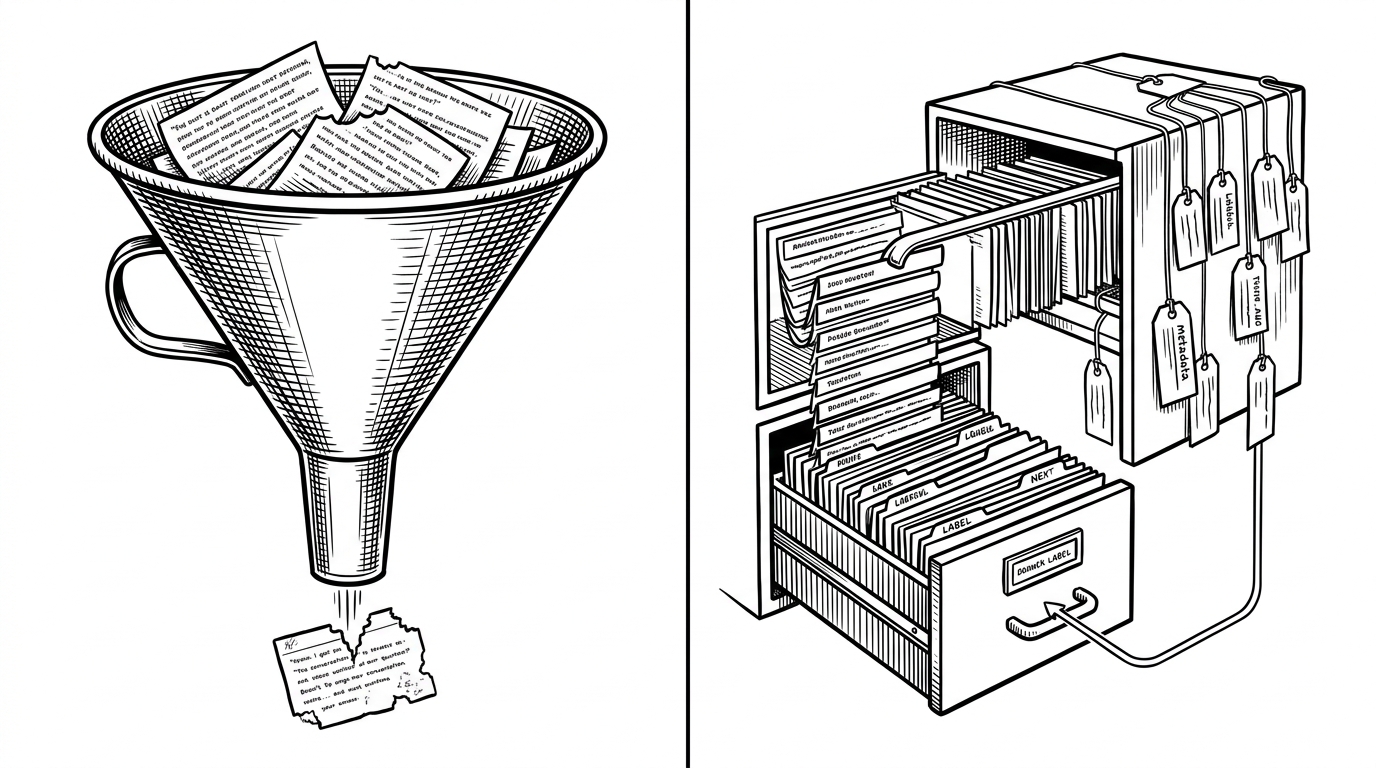
Why MemPalace stores the raw conversation instead of a summary
That choice shows up in the ingestion logic. The repo research points to exchange-level chunking in convo_miner.py, which means a user turn and assistant response are kept together as a unit. That is more faithful than slicing by arbitrary token windows, because the memory boundary matches the conversational boundary.
# Conceptual shape of the ingestion strategy
for exchange in convo_miner._chunk_by_exchange(transcript):
    preserve_verbatim(exchange)
    assign_metadata(
        wing=project,
        room=topic,
        drawer=turn_id,
    )
    embed_and_store(exchange)
The repo’s file filtering is just as telling. A GitignoreMatcher means the system respects the user’s own boundaries before anything is indexed. In other words, MemPalace does not just remember more. It remembers more responsibly.
AAAK is the weirdest part, and maybe the most interesting
AAAK is a compression dialect, but not the usual kind. It encodes meaning with flags and emotion codes, so the system can squeeze more signal into a constrained token budget without pretending the raw conversation never existed. That makes it less like summarization and more like symbolic indexing.
| Approach | What it stores | Retrieval shape | Main weakness | Best use case |
|---|---|---|---|---|
| MemPalace | Raw exchanges plus metadata | Hierarchical and semantic | More structure to manage | Developer memory that must be exact |
| Summary-first memory | Extracted facts and condensed notes | Fact lookup over compressed text | Important wording disappears | Broad reminders and lightweight recall |
| Flat vector store | Embedded chunks with little structure | Similarity search across everything | Search drifts without scoping | General document retrieval |
| RAG over docs or notes | Source documents or curated notes | Query over retrieved passages | Depends on upstream curation | Knowledge bases with stable source text |
The tradeoff is simple. Compression buys brevity, but it also throws away the texture that makes technical memory useful. MemPalace is betting that the texture matters enough to preserve first and compress later.
Search is scoped, not just semantic
This is where the palace metaphor becomes an engineering choice. The research notes point to ChromaDB queries filtered by wing and room metadata, which means semantic similarity is only one step in the process. Scope comes first, then search. That reduces accidental recall across unrelated projects or topics.
That matters for real workflows. If you are revisiting a decision from three projects ago, you do not want a global pile of vaguely related memories. You want the exact thread, in the exact place it was filed.
The MCP server turns memory into a live tool
mcp_server.py moves MemPalace from archive to infrastructure. Once memory is exposed through the Model Context Protocol, an agent can query it as a tool instead of waiting for a human to export notes or paste context. That is a practical shift: memory becomes callable.
We tested MemPalace at The Zero-Human Company and deployed it to 79 employees. This is a masterpiece.
Why this project feels different from most AI memory tools
The comparison is not subtle. MemPalace is local-first, verbatim, hierarchy-aware, and built for people who care about exact recall. Many competing systems lean on extraction, hosted services, or convenience-first abstractions. That can be fine for casual recall. It is weaker when the goal is to preserve the history of a technical decision.
| Project | Storage philosophy | Retrieval shape | Weakness | Best fit |
|---|---|---|---|---|
| MemPalace | Store everything verbatim | Scoped semantic search with palace metadata | Can feel heavier than summary-based tools | Developers who need exact context |
| Mem0 | Extract key facts | Fact-centric memory layers | Lossy by design | General assistant memory |
| Zep | Conversation memory service | Hosted retrieval and session memory | Cloud dependency | Teams that want managed infrastructure |
| Flat vector RAG | Chunk and embed source text | Similarity search over broad corpora | Little hierarchy, more drift | Document chat over stable sources |
The clearest takeaway is not that MemPalace is universally better. It is that it optimizes for a different truth. Sometimes the right memory system is the one that refuses to edit the past before you have asked it to.
The maturity signal matters as much as the architecture
The interesting editorial detail is not the benchmark headline. It is the correction arc. The repository story has moved toward clearer methodology and more grounded claims, which is exactly what you want from a tool asking for trust. A memory system is only useful if you believe what it says it remembered.
My friend Milla Jovovich and I spent months building MemPalace with Claude Code. First perfect score on LongMemEval. 5,400 GitHub stars in 24 hours.