SakanaAI/sparser-faster-llms: How TwELL Makes Sparse Transformers Run Like They Were Built for Hopper
A deep dive into the repo that couples activation sparsity with H100-tuned CUDA kernels, so the model’s zeros become real speed, lower memory use, and lower energy.
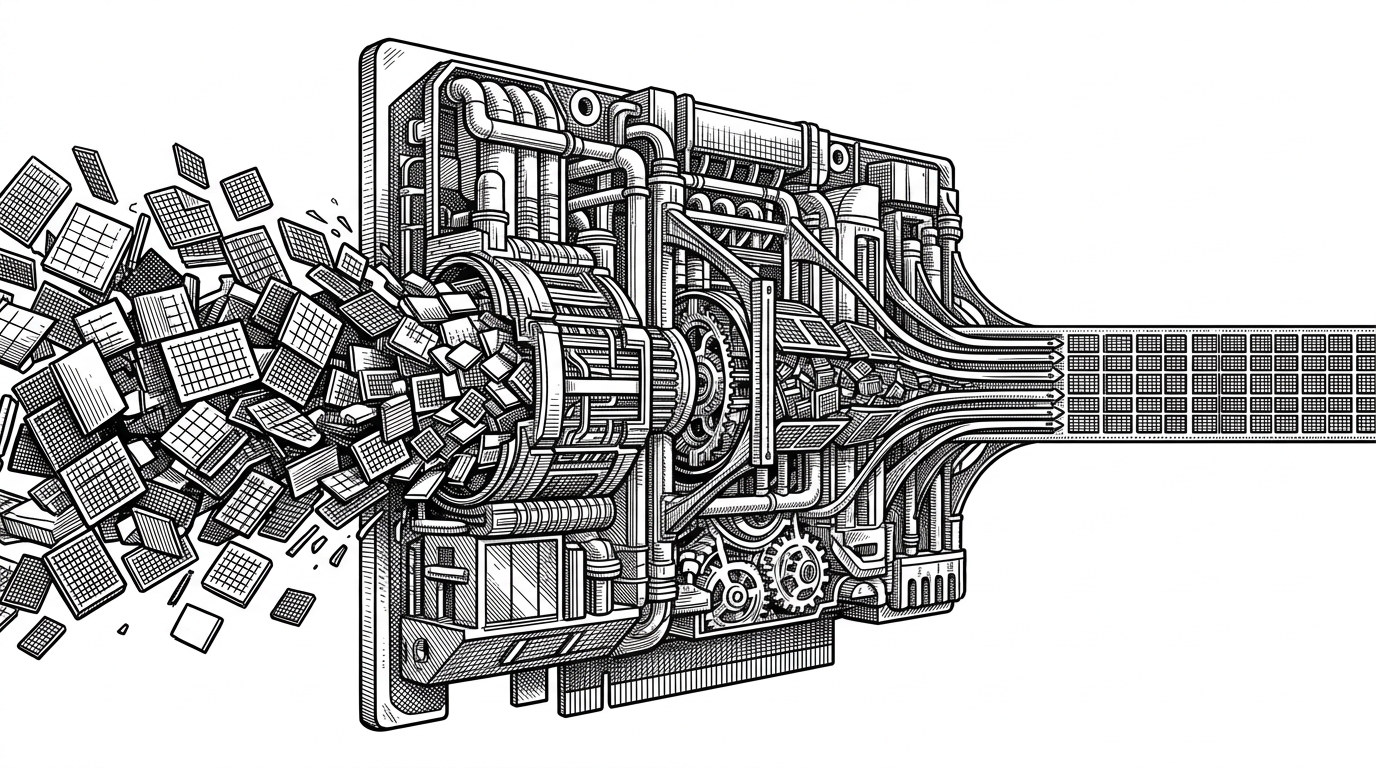
- SakanaAI’s real move is to treat sparsity as a hardware contract, not a mathematical curiosity.
- TwELL makes sparse activations usable on Hopper by packing them into a layout custom CUDA kernels can execute efficiently.
- The repo matters because it spans training, benchmarking, and energy measurement, so the speed claim is tied to a full engineering stack.
- This is a systems-first answer to a research problem: fewer active values only help when the GPU can keep moving.
The Zeroes Are Not the Point
The interesting thing about SakanaAI/sparser-faster-llms is not that it makes models sparse. It is that it tries to make sparsity survive contact with a GPU. That sounds obvious until you remember how many sparse ideas die the moment wall-clock time enters the conversation.
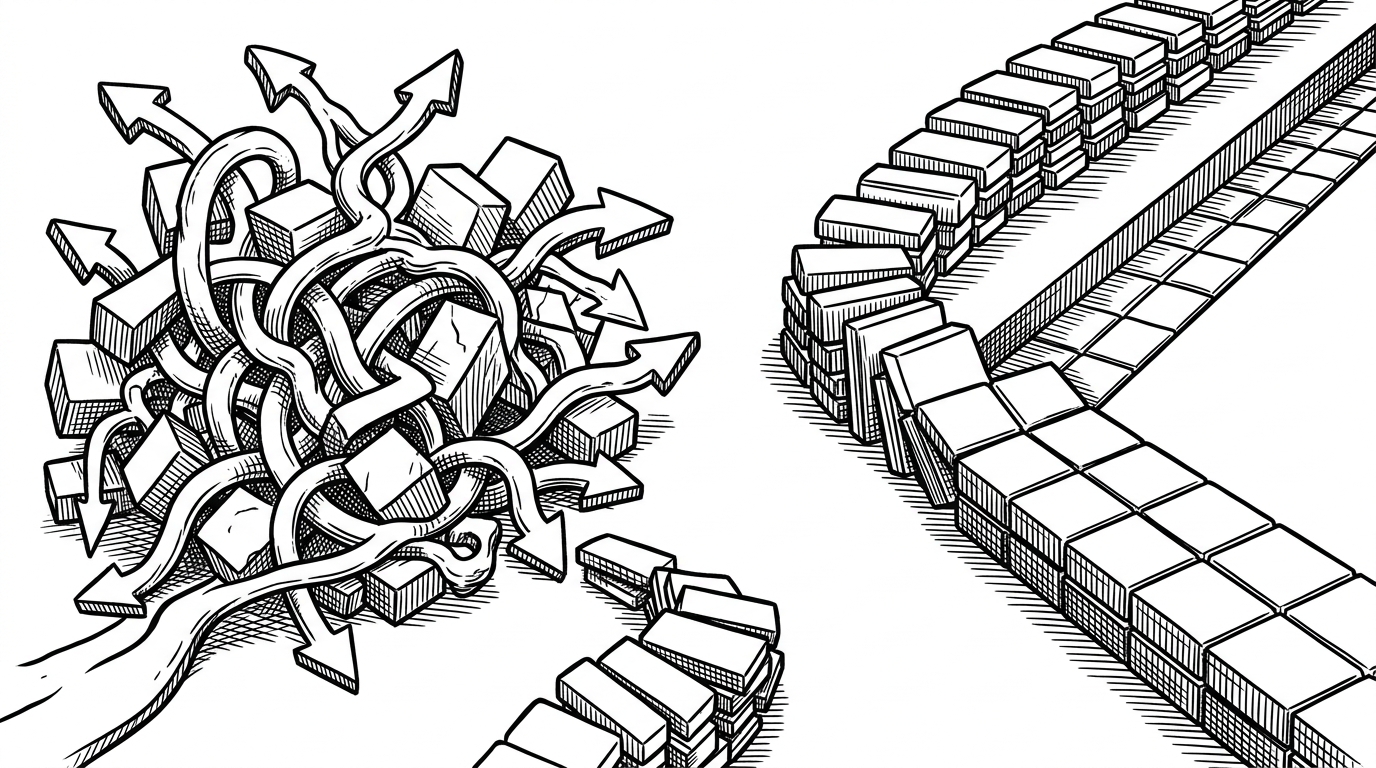
The repo is built around a simple but stubborn problem: fewer active weights do not automatically mean less latency. Dense GPU kernels are brilliant at regularity. Sparse models often destroy that regularity, then pay for it in divergence, awkward memory access, and kernel overhead.
Why Dense GPUs Make Sparse Models Slow
The mismatch is structural. GPUs want tiled, predictable, high-throughput work. Generic sparse formats tend to introduce exactly the opposite: uneven work distribution, extra indirection, and wasted movement through memory.
| Approach | Kernel regularity | Memory traffic | Speedup potential | Maps cleanly to GPU tiling | Complexity lives in |
|---|---|---|---|---|---|
| Dense baseline | High | High | None from sparsity | Yes | Large matmuls |
| Generic sparse representation | Low | Often still high | Unreliable | Usually not | Format conversion and branching |
| TwELL on Hopper | High | Lower | Real wall-clock gain | Yes | Packing format and custom CUDA kernels |
TwELL: The Packing Format That Fits the Machine
TwELL, short for Tile-wise ELLPACK, is the repo’s answer to the sparse-performance gap. The point is not just to store fewer values. The point is to store them in a way that keeps the compute path tiled, aligned, and friendly to Hopper-class execution.
That is why the repository leans so hard on custom CUDA. The packing format and the kernels are not separate stories. TwELL exists because the kernel needs a predictable shape, and the kernel works because the data has been repackaged to match that shape.
In practice, the repository’s kernel layer handles dense-to-TwELL and TwELL-to-dense paths, plus fused MLP execution. That matters because every extra pass over memory is another chance to lose the gains sparsity promised in the first place.
The Repo’s Two Jobs: Train Sparsity, Then Cash It In
The repo is not just an inference demo. It includes sparse model definitions, training code, benchmark scripts, and optional energy measurement. That makes it feel like a complete engineering artifact, not a one-off kernel drop.
# Typical repo-level flow, simplified
python train.py --config-name sparse_llama
python benchmark_inference.py --model checkpoints/sparse
python benchmark_inference.py --measure-energy true
That separation is the right one. Training has to discover and preserve useful sparsity. Inference then has to cash that sparsity in through custom execution paths that do not waste the savings on bookkeeping.
How do we make LLMs faster and lighter? Don’t force the GPU to adapt to sparsity. Reshape the sparsity to fit the GPU! ⚡️ Excited to share our new #ICML2026 paper in collaboration with @NVIDIA: "Sparser, Faster, Lighter Transformer Language Models". This work introduces new http
What the Paper Claims, What the Repo Ships
The paper makes the case for high activation sparsity with limited quality loss. The repo makes that claim testable by shipping code paths for checkpoints, benchmarking, and kernel execution rather than leaving the idea trapped in a chart.
That distinction matters. A lot of efficiency papers are strongest in presentation and weakest in reproducibility. Here, the implementation layer is the argument. The reader can inspect the packing, the kernels, and the measurement machinery that ties speed to actual GPU behavior.
| What you get | Paper | Repo |
|---|---|---|
| Sparsity target | Claims strong sparsity with limited downstream impact | Implements sparse model paths and checkpoints |
| Speed story | Reports throughput and efficiency gains | Provides benchmark scripts and kernel code |
| Energy story | Frames lower energy as part of the value | Includes energy measurement tooling |
| Engineering proof | Methodology and results | Executable implementation |
Where This Fits in the Efficiency Stack
TwELL does not replace quantization, pruning, or other efficiency methods. It sits in a narrower lane: making activation sparsity executable on Hopper without giving back the wall-clock gains to kernel overhead.
That is a useful correction to the usual efficiency conversation. Quantization reduces precision. TwELL changes the shape of the work itself. The payoff is not abstract elegance. It is that the GPU spends more of its time doing useful tiled math and less time untangling a sparse mess.
Bottom Line
SakanaAI/sparser-faster-llms is interesting because it treats sparsity as a systems problem. The repo’s real contribution is not the idea that zeros are good. It is the machinery that lets zeros become speed on actual hardware.
That is why TwELL matters. It is the missing middle layer between a sparse model and a fast one, and the repo ships that middle layer instead of assuming it will appear on its own.