Brain-Tumor-Detection: When a CNN Becomes a One-Click Medical Demo
A Flask front end, a pre-trained classifier, and a ZIP-bundled codebase turn MRI inference into a recruiter-friendly product. The interesting part is not just the model, but how the whole project is packaged to be understood instantly.
- This repo is interesting because it packages medical AI as a proof-of-work artifact, not a living open-source system.
- The project’s real product is the full flow from MRI upload to browser verdict, with Flask acting as the bridge between model output and human interpretation.
- The ZIP-bundled delivery makes the repo easy to hand off and hard to inspect, which is exactly why it feels recruiter-friendly and collaboration-light.
- Its four-class classifier and confidence score matter because they frame the output as decision support rather than a binary diagnosis switch.
Why This Repo Feels Like a Demo Kit, Not a Research Lab
The first clue is not the model. It is the packaging. Instead of an explorable repository tree, the project ships with a single archive, brain tumor detection.zip, alongside a README that does most of the explanatory work.
That choice changes the read of the whole project. This is not a repo asking for contributors, extensions, or long-lived maintenance. It is a handoff artifact built to say, here is the system, and it runs.

That matters because the audience for this kind of project is usually not a journal peer reviewer. It is a recruiter, a hackathon judge, or a future teammate scanning for proof that the author can stitch model code and web code into one coherent experience.
From MRI Upload to Prediction in One Flow
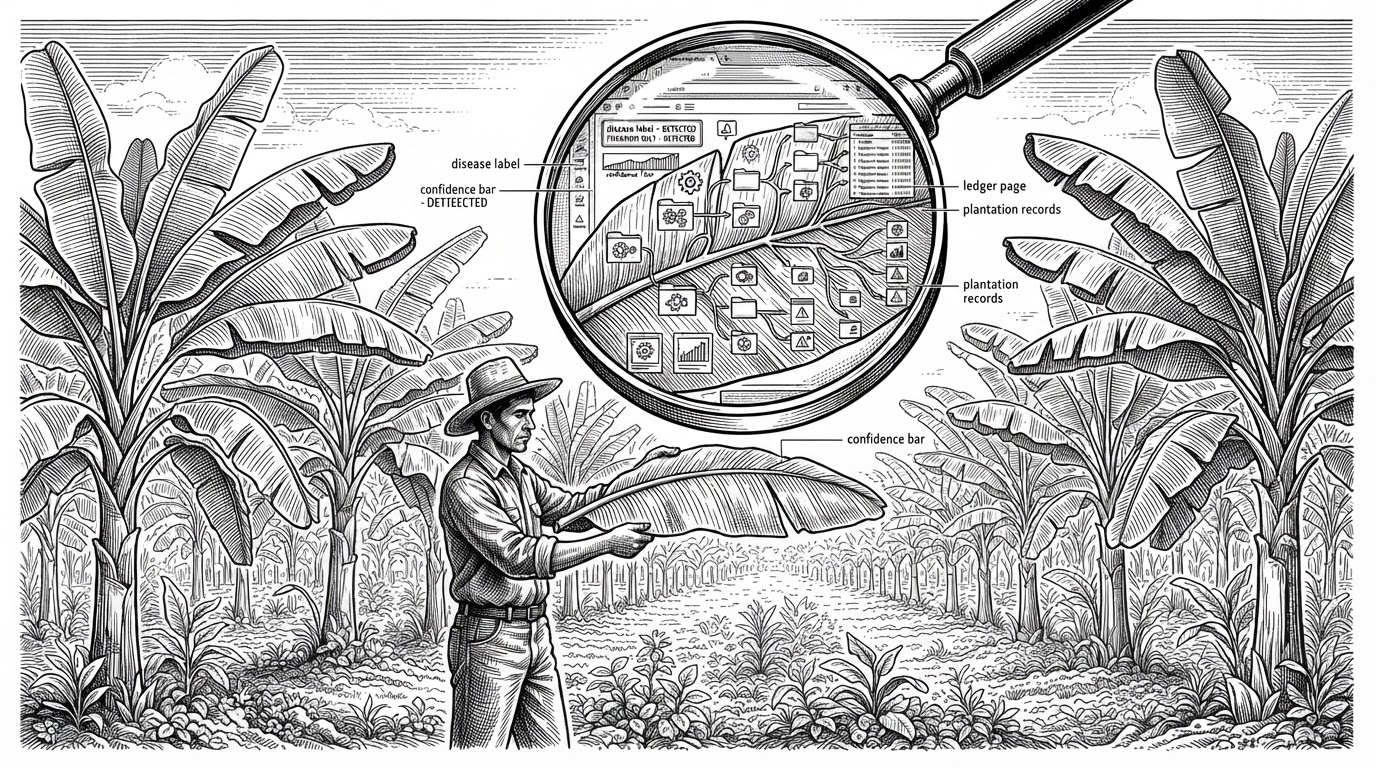
The README points to a simple journey: upload an MRI, preprocess it, run inference, and return a class label with confidence. The technical path is familiar, but the value is in how little friction sits between the user and the verdict.
The interesting technical detail is the contract between components. Flask handles the request and response, preprocessing converts the image into the model’s expected format, and the classifier returns a distribution rather than a single hard yes or no.
# Conceptual flow based on the README
image = request.files['file']
processed = preprocess(image, size=(224, 224), normalize=True)
probs = model.predict(processed)
label = class_names[probs.argmax()]
confidence = float(probs.max())
return render_template('result.html', label=label, confidence=confidence)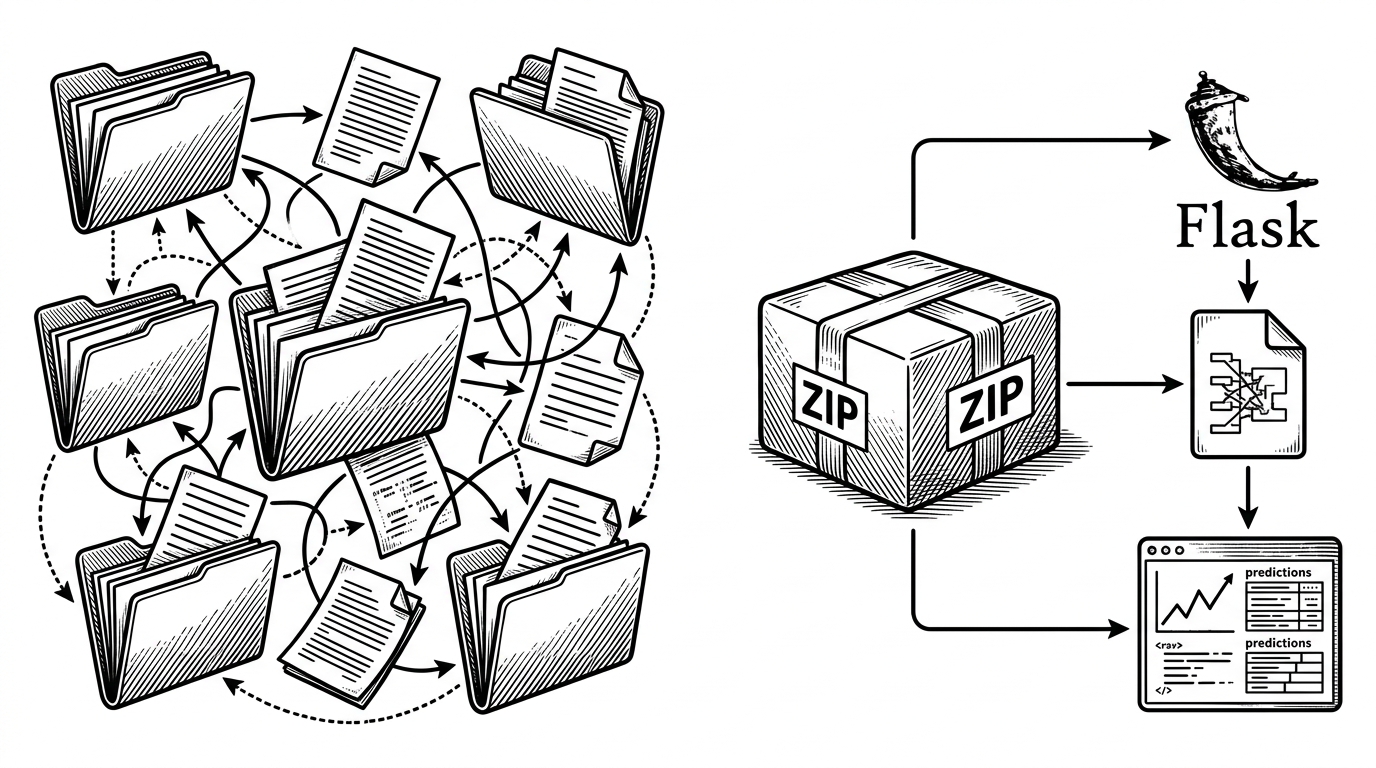
What the Classifier Is Actually Doing
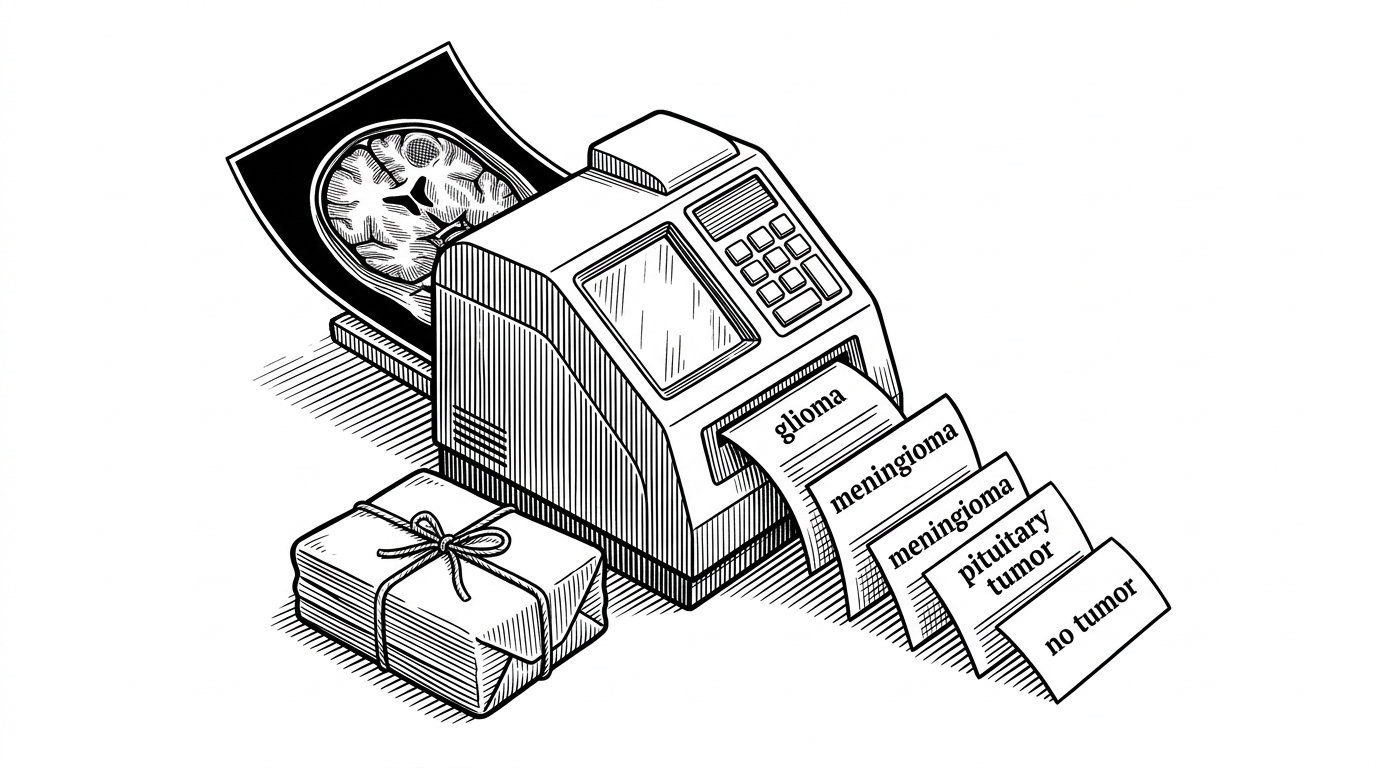
This is a four-class model, not a binary screen. The output space includes glioma, meningioma, pituitary tumor, and no tumor, which makes the classifier more specific than a simple tumor-or-not gate.
| Format | What it optimizes for | What it hides | Best audience | Main downside |
|---|---|---|---|---|
| Clean Git repo | Exploration, history, collaboration | Nothing much, if structured well | Open-source contributors, reviewers | Can feel incomplete to non-technical visitors |
| ZIP-bundled demo | Immediate download-and-run understanding | File structure, iteration, and context | Recruiters, judges, quick evaluators | Harder to inspect and extend |
| Production medical AI system | Reliability, auditability, monitoring | Almost everything behind controls | Clinical teams, regulators, operators | Complex and slow to build |
That specificity changes the story. The project is not trying to prove only that a CNN can detect abnormality. It is trying to show that a model can separate visually distinct categories and present the result in a way a human can read immediately.
Why the Confidence Score Matters More Than It Sounds
The confidence number is a design choice, not decoration. In a medical workflow, even a demo-grade one, a probability score signals uncertainty and keeps the output closer to decision support than diagnosis.
That is also why the UI matters so much. A naked label would flatten the experience into a claim. A label plus confidence says the system is making an inference, and a person still has to decide what to do with it.
The ZIP Choice: Convenient, Opaque, and Very Recruiter-Friendly
The archive format is the strongest clue about the project’s priorities. It maximizes portability, makes the repo easy to hand over, and creates an instant sense of completeness.
It also hides the details that open-source readers usually want first: file boundaries, naming conventions, commit history, and the path from experiment to interface. That is not a bug for a placement project. It is the point.
| Mode | Signal it sends | What a reader can inspect | What it is good for | Where it falls short |
|---|---|---|---|---|
| Exploded repo | Transparency and iteration | Everything in plain sight | Learning and collaboration | Can look unfinished |
| ZIP-bundled demo | Polished handoff and speed | Only what the bundle exposes | Portfolio reviews and quick validation | Weak provenance and discoverability |
| Clinical system | Operational rigor | Usually very little public detail | Safe use in practice | Not meant for public demo culture |
This is why the project feels recruiter-friendly. It compresses the technical stack into something legible fast. You do not need to understand the whole training pipeline to understand the product story.
What This Repo Gets Right, and What It Leaves Out
The project gets two things right. First, it connects model code to a visible user flow. Second, it gives the result a format that looks understandable to non-specialists.
What it leaves out is just as important. The repo does not make it easy to inspect training provenance, compare experiments, or evaluate how the model was validated. That keeps the story clean, but it also keeps the evidence thin.
| Strength | Why it matters | Limitation |
|---|---|---|
| End-to-end coherence | Shows the author can bridge model and UI | Does not prove research rigor |
| Fast demo readability | A reviewer can understand the point quickly | Can oversimplify the underlying model behavior |
| Four-class output | Feels more clinically specific than binary screening | Still needs careful validation before any real-world trust |
Taken on its own terms, though, the repo does exactly what it is built to do. It turns medical AI into a packaged demonstration of engineering range.