The End of the God Prompt: Inside VoltAgent/awesome-codex-subagents
How a library of 136 configuration files turns OpenAI Codex from an unpredictable chat interface into a tightly constrained, multi-agent engineering team.
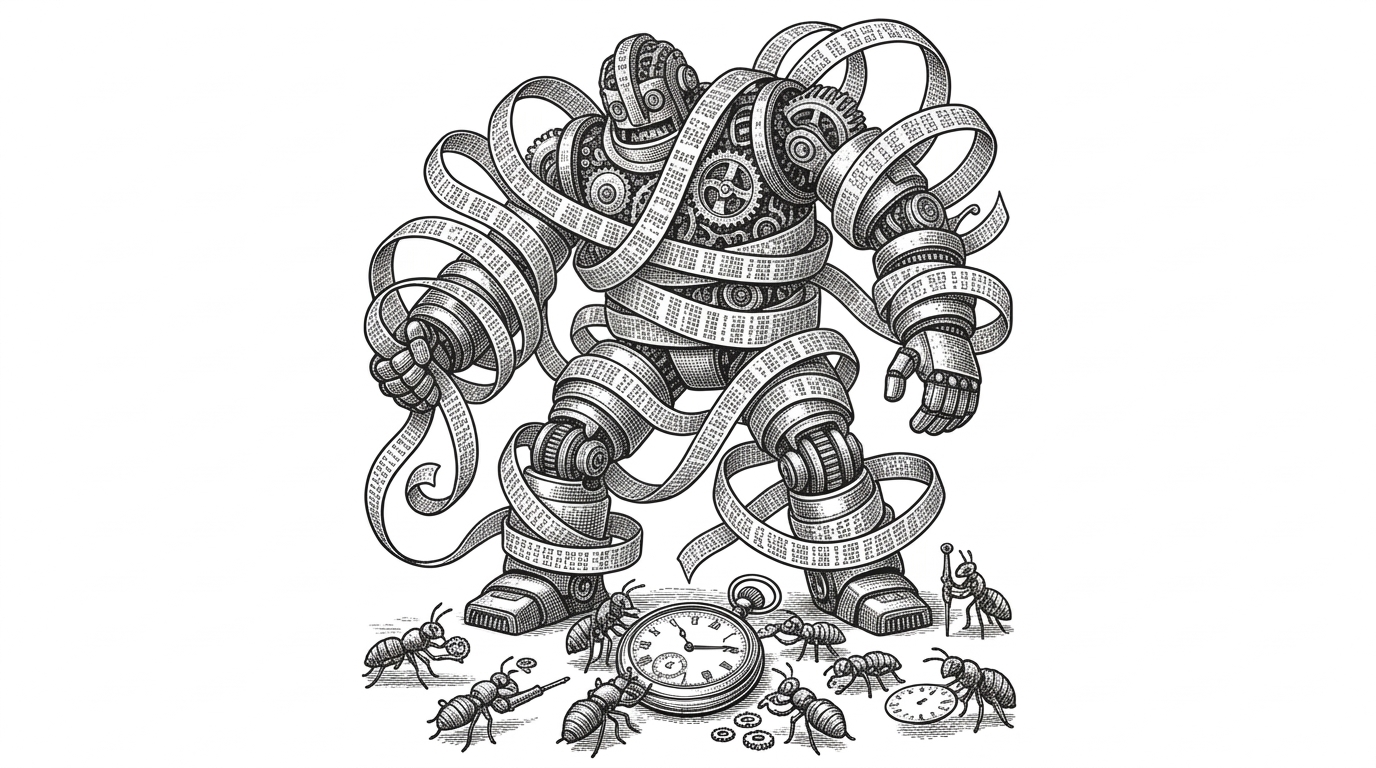

This repository serves as the definitive collection of Codex Subagents, specialized AI assistants designed for specific development tasks. Written specifically for Codex and aligned with the official docs.
- Shadow Precedence allows local configuration files to override global AI behavior for legacy or project-specific environments.
- The architecture enforces safety by separating read-only discovery agents from workspace-write execution agents.
- Native TOML configuration enables specialized subagents to operate with near-zero overhead compared to heavy Python frameworks.
- Smart Model Routing automatically assigns high-reasoning models to complex tasks while directing simpler work to faster, cheaper engines.
The era of the monolithic AI coding assistant is giving way to something far more modular. Feeding a massive system prompt into a single chat window often leads to context collapse. The AI forgets constraints, hallucinates APIs, and attempts sweeping refactors when asked for a simple bug fix. The solution is not a better prompt. The solution is microservices.
The awesome-codex-subagents repository proves that limiting an AI is the key to scaling its usefulness. By dropping simple TOML configuration files into a local directory, developers instantiate specialized, sandboxed experts. It treats AI not as a junior developer you chat with, but as an operating system of tightly scoped background processes.
The Microservice Architecture of AI
Instead of one massive system prompt, this architecture relies on 136 specialized TOML files. These files live in a strict filesystem hierarchy. Global agents reside in ~/.codex/agents/, while project-specific overrides live in a local .codex/agents/ folder.
This enables a pattern known as Shadow Precedence. A developer can maintain a global, modern dotnet-expert.toml for standard projects. However, if they enter a legacy code repository, a local dotnet-expert.toml configured specifically for .NET Framework 4.8 seamlessly overrides the global agent. The AI instantly adapts its context and constraints to the specific environment without requiring the developer to explain the legacy architecture in a chat window.
The configuration files themselves are minimalist by design. They act as native routing layers for the OpenAI Codex engine.
name = "ui-fixer"
description = "Specializes in CSS and component layout fixes."
model = "gpt-5.3-codex-spark"
sandbox_mode = "workspace-write"

[instructions]
role = "You are a UI specialist."
rules = [
  "Find the smallest defensible patch.",
  "Do not alter business logic or state management."
]
Constraint as a Feature: The Sandbox Philosophy
The most powerful feature of these subagents is their inability to act outside their designated scope. The framework utilizes Codex's native sandbox modes to enforce security boundaries.
Consider the difference between the code-mapper and the ui-fixer. The code-mapper operates strictly in a read-only sandbox. Its sole purpose is to explore the codebase, identify side-effect boundaries, and map domain logic. It cannot change a single line of code. Conversely, the ui-fixer operates with workspace-write permissions, but its instructions force it to find the smallest defensible patch. An agent must first map the code before a different agent applies a fix. This separates exploration from execution, dramatically reducing regression risks.

The Meta-Orchestrators
If you have 136 agents, you need a way to manage them. Category 09 of the repository introduces meta-orchestration agents. These agents never write implementation code. Their only job is to manage other AI agents.
The context-manager.toml agent is dedicated solely to pruning and synthesizing conversation history. Instead of passing an entire repository to a developer agent, the context manager creates a compact, execution-ready context packet. This acts as a data-transfer object between specialized agents.
Meanwhile, the multi-agent-coordinator.toml designs the parallel execution plan. It breaks down a user prompt into specialized tasks and assigns disjoint write scopes to prevent parallel editing conflicts. It hands the design phase to the api-designer (read-only) and the implementation phase to the backend-developer (workspace-write), waiting for the former to finish before triggering the latter.
The "App Store" for Codex
The competitive landscape for AI agents has historically been dominated by heavy Python frameworks or complex node-based ecosystems. The genius of the VoltAgent approach is its reliance on native configuration files rather than custom wrappers.
Heavy frameworks like AutoGPT require shared memory persistence and custom routing logic, leading to high overhead. Claude Code subagent ecosystems rely on markdown or JSON instructions that often lack native filesystem integration. By leveraging the Codex engine's native TOML parsing, these subagents operate with near-zero overhead.
Someone just gave OpenAI Codex its own App Store. 136+ subagents. Each one a specialist. Each one isolated. It's called Awesome Codex Subagents. → Code review agent with its own context window → Security auditor hunting only vulnerabilities → Debugger tracing root causes from scratch → Docs writer that never pollutes your main thread Drop .toml files into ~/.codex/agents/ and they're live globally.
| Feature | VoltAgent (Codex Subagents) | Claude Code Collections | Heavy Frameworks (AutoGPT) |
|---|---|---|---|
| Format | Native .toml configs |
.md or .json instructions |
Python-based wrappers |
| Routing | Smart Model Routing (GPT-5.4 to Spark) | Manual or Auto-delegation | Custom logic loops |
| Isolation | Strict read/write sandbox enforcement | Context-dependent boundaries | Shared memory persistence |
| Overhead | Near-zero (engine native) | Low (CLI native) | High (Requires runtime) |
Furthermore, the system implements Smart Model Routing directly in the configuration. A documentation writer agent is automatically routed to a faster, cheaper model, while a security auditor agent uses a high-reasoning model like GPT-5.4. This ensures that deep reasoning cycles are spent only where they are actually needed.
Sources: VoltAgent/awesome-codex-subagents, Threads Analysis.