DeepClaude: The Proxy That Turns Claude Code Into a Swappable Brain
A tiny Bash, PowerShell, and Node.js bridge that keeps Claude Code’s agent loop intact while rerouting the model layer to cheaper Anthropic-compatible backends.
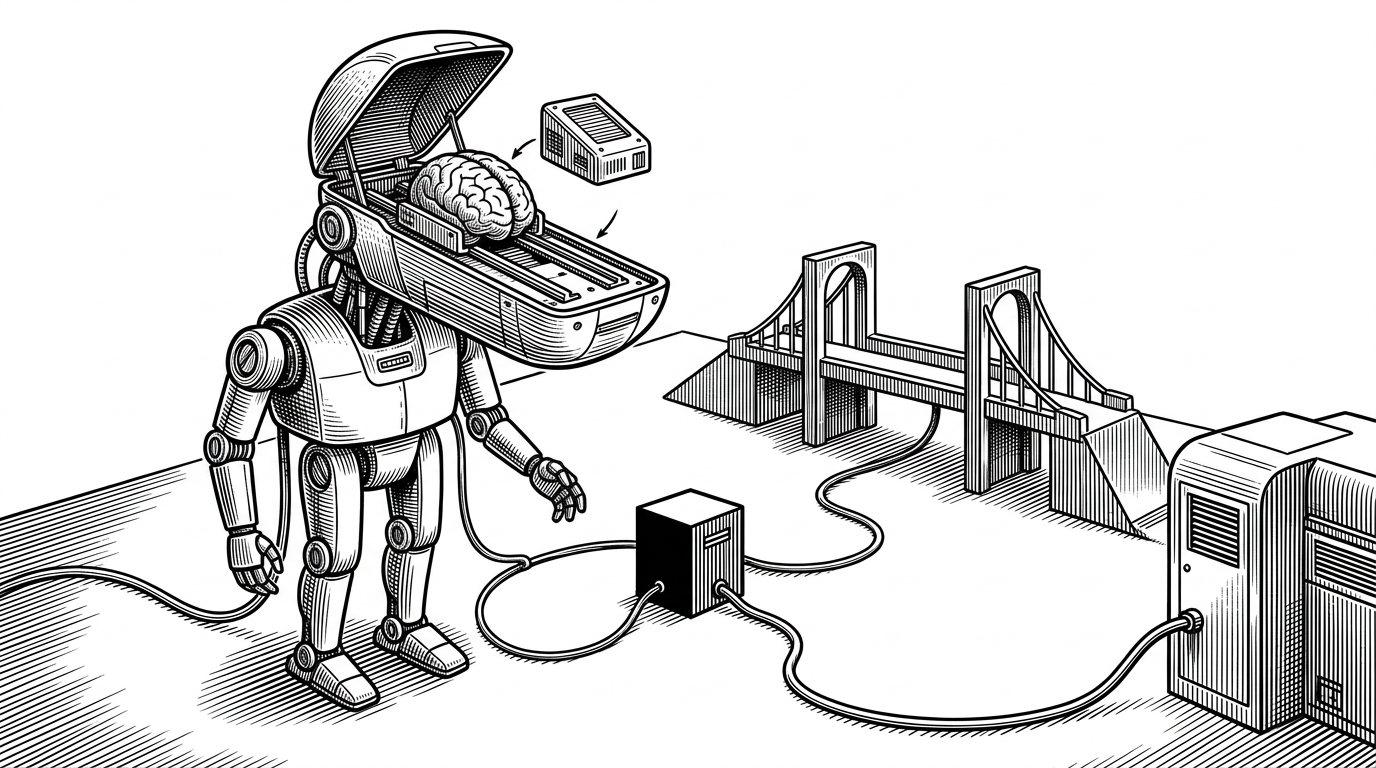
- DeepClaude’s real innovation is not a cheaper model, but a compatibility layer that preserves Claude Code’s agent loop while replacing the brain underneath it.
- Its proxy earns its keep by doing the messy work that wrappers usually avoid: routing traffic, rewriting models, and normalizing incomplete stream events in real time.
- The project shows why agent middleware matters now, because once the loop is reusable, the model becomes the part developers are most willing to swap.
- DeepClaude is less a competitor to Claude Code than a proof that proprietary agent UIs may become interchangeable surfaces over a proxy-controlled core.
The cheapest part of Claude Code is not the UI
DeepClaude is interesting because it refuses to rebuild what already works. Claude Code’s file edits, shell execution, subagents, and multi-step loop stay intact. Only the brain changes, and that is exactly the point.
The repo’s own framing is blunt: it swaps the brain while keeping the body. That is a useful mental model here. The body is the polished terminal experience. The brain is the model backend, which becomes interchangeable.
deepclaude swaps the brain while keeping the body: Your terminal +-- Claude Code CLI (tool loop, file editing, bash, git - unchanged) +-- API calls -> DeepSeek V4 Pro ($0.87/M) instead of Anthropic ($15/M).
How deepclaude slips between the CLI and the model
The implementation is small, but the choreography matters. Bash and PowerShell launchers set environment variables, start the proxy, and tear it down on exit. The proxy then intercepts Claude Code traffic and rewrites what needs rewriting for an Anthropic-compatible backend.
ANTHROPIC_BASE_URL=http://127.0.0.1:xxxx
ANTHROPIC_DEFAULT_OPUS_MODEL=deepseek-v4-pro
trap cleanup_proxy EXIT
./claude-code
The launch scripts are the orchestration layer. The Node proxy is the intelligence layer. That separation is what keeps the repo tiny and portable. It also keeps the trick legible: the shell starts the session, the proxy edits the stream, and Claude Code never fully realizes the backend has been swapped.
The part that actually keeps it from crashing
The hard part is not rerouting requests. It is making Claude Code accept the replies. The repo’s `UsageNormalizer` patches Server-Sent Events when backend responses arrive without the exact fields the CLI expects, especially usage data.

class UsageNormalizer extends Transform {
  _transform(chunk, enc, cb) {
    // parse SSE event
    // inject usage fields if missing
    // pass repaired event downstream
  }
}
That is the hidden value of the repo. A lot of tools can forward an API call. Fewer can preserve a picky autonomous CLI that expects a very specific event shape. DeepClaude treats compatibility as a first-class feature, not an afterthought.
The more interesting part of deepclaude is the local proxy it runs to switch models mid-session and do combined cost tracking.
The remote-control split is the most elegant trick
The most surprising part is the split route handling. DeepClaude can send model traffic to an alternate backend while preserving the Anthropic bridge path for the parts of Claude Code that still need it. That means one session can live across two trust domains without the UI falling apart.
That is why this repo feels bigger than a cost hack. It shows a pattern that could matter across the agent stack: keep the proprietary loop, own the middleware, and make the model layer replaceable.
| Tool | Product type | Own agent loop | Model swapping | Preserves Claude Code UX | Core differentiator |
|---|---|---|---|---|---|
| DeepClaude | Compatibility proxy | No | Yes | Yes | Routes Claude Code through a cheaper backend without rebuilding the loop |
| Claude Code | Proprietary CLI agent | Yes | No | N/A | The original body that DeepClaude preserves |
| Aider | Open-source coding agent | Yes | Yes | No | Built its own loop around model-agnostic pair programming |
| Cline | IDE agent extension | Yes | Yes | No | Agentic coding inside the editor, not a proxy for Claude Code |
| Cursor | Commercial IDE | Yes | Limited | No | Full editor product with integrated AI workflows |
The distinction matters. DeepClaude is not trying to win as a full product. It is a surgical compatibility layer. Aider, Cline, and Cursor are all complete experiences. DeepClaude is the shim that lets you keep a premium experience and swap the substrate.
Why this matters now
Autonomy gets cheaper when the brain gets cheaper. That changes behavior. When a single bug fix no longer feels expensive, people delegate more, retry more, and experiment more. The cost curve shapes the habit curve.
That is the business lesson hiding inside the repo. Proxies, stream patchers, and environment shims may become the quiet infrastructure of the agent era, especially as closed CLIs harden and the model underneath them becomes the easiest thing to replace.
- A cheaper backend makes autonomous coding feel less like a premium event and more like a default reflex.
- The value is in preserving the loop, because the loop is what users already trust.
- Compatibility middleware can be more durable than the UI it serves, because it controls the route instead of the surface.
What this repo really teaches
DeepClaude reads like a hack, but it is really a forecast. It suggests that future agent tools will be shaped by the layer in between, not just the model or the interface. Whoever controls the proxy controls the swap.
That is why the project stands out. It is a tiny repo with a large claim: the brain of an agent can become modular long before the product around it does.