OpenEvolve and the Survival of the Fastest
How an island-based evolutionary engine uses LLMs as mutation operators to discover algorithms that human engineers missed.
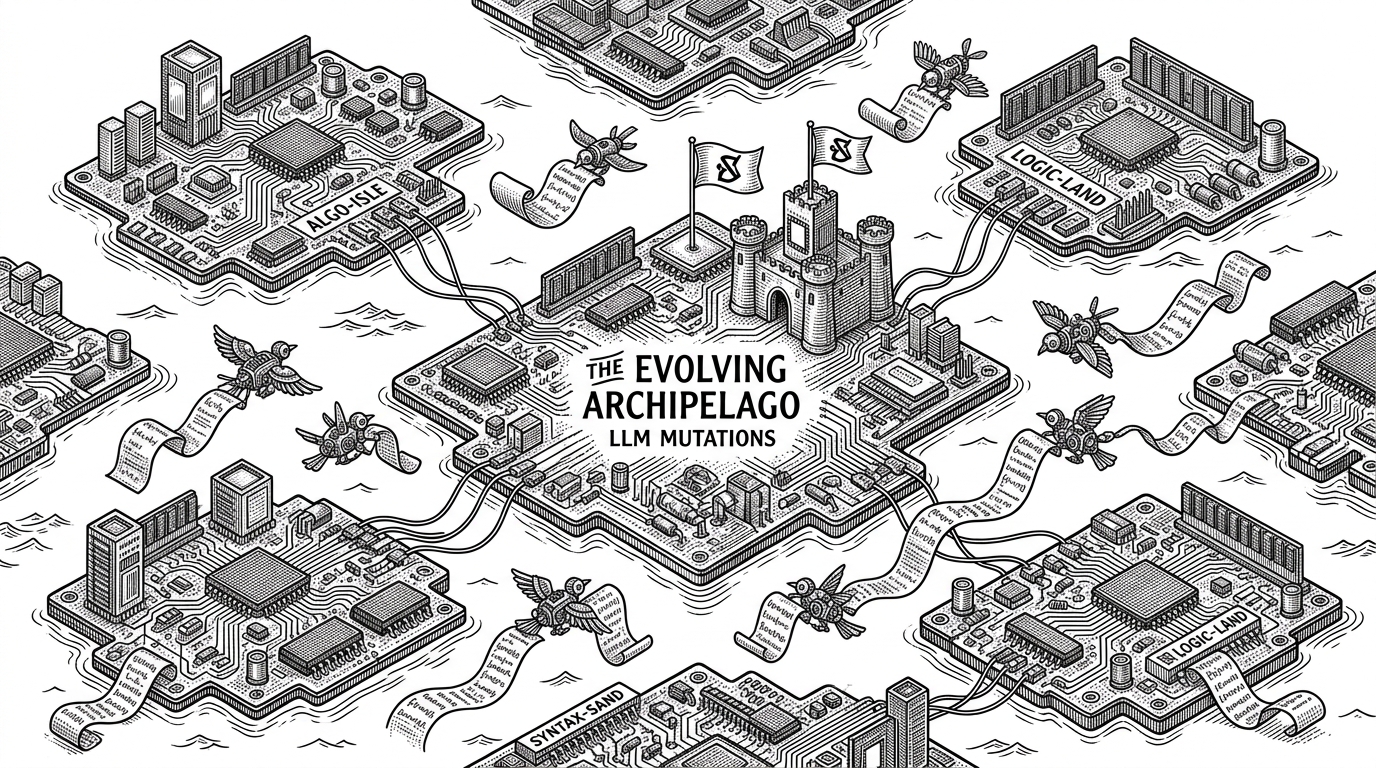
Traditional mutation operators would never discover scipy.minimize on their own, but our LLM-driven evolution did - showing how this approach can navigate complex solution spaces in ways classical genetic algorithms simply cannot.
- OpenEvolve uses LLMs as mutation operators to discover high-performance algorithms that surpass human-engineered benchmarks.
- The framework employs a MAP-Elites algorithm to maintain a diverse population of code based on complexity and execution speed.
- An island-based topology prevents the system from getting stuck in local optima by evolving independent code populations in parallel.
- A sandboxed feedback loop feeds execution traces and error logs back into the LLM to autonomously refine subsequent generations.
The Hardware-Aware Breakthrough
The novelty of AI coding assistants has started to wear off. We are accustomed to LLMs completing our boilerplate or writing basic Python scripts. OpenEvolve changes the game entirely. It does not just write code. It breeds it.
By treating LLMs as mutation operators within an evolutionary algorithm, OpenEvolve searches for novel solutions that human engineers often overlook. The system recently discovered a highly optimized Apple Metal kernel for attention mechanisms that outperformed human-written baselines by a factor of 2.8.
This is not a simple prompt-and-pray loop. OpenEvolve is a research-grade evolutionary framework based on DeepMind's AlphaEvolve. It treats hardware constraints as part of the fitness function, navigating complex solution spaces to find the absolute fastest execution path.
Beyond the "Best" Solution
Traditional AI agents often get stuck in a rut. They find a decent solution and endlessly iterate on it, falling into what researchers call a local optimum. OpenEvolve avoids this trap through a concept called Quality-Diversity search.
Instead of maintaining a single 'best' program, the system uses a MAP-Elites algorithm to curate a diverse zoo of high-performing code. It builds a multidimensional grid where algorithms are categorized by traits like complexity and execution speed. The system keeps the best program for each specific niche.
The Evolutionary Loop
The core orchestration happens inside the openevolve-run.py pipeline. The cycle begins with a seed program. An LLM acts as the mutation engine, tweaking the logic or rewriting entire blocks.
These mutations are immediately sent to a sandboxed evaluator. If the code crashes or runs slowly, OpenEvolve captures the error logs and execution traces. This data becomes an artifact side-channel fed right back into the LLM prompt. The AI learns exactly why its last offspring failed before generating the next.
To further prevent inbreeding, OpenEvolve groups programs into isolated islands. These populations evolve independently and only occasionally migrate their best code to other islands. This distributed approach allows the system to explore vastly different algorithmic paradigms simultaneously.
Digital Darwinism vs. Human Intuition
Most coding assistants are built for feature completion. They follow human intuition top-down. OpenEvolve works bottom-up, relying on stochastic discovery and massive parallel evaluation.
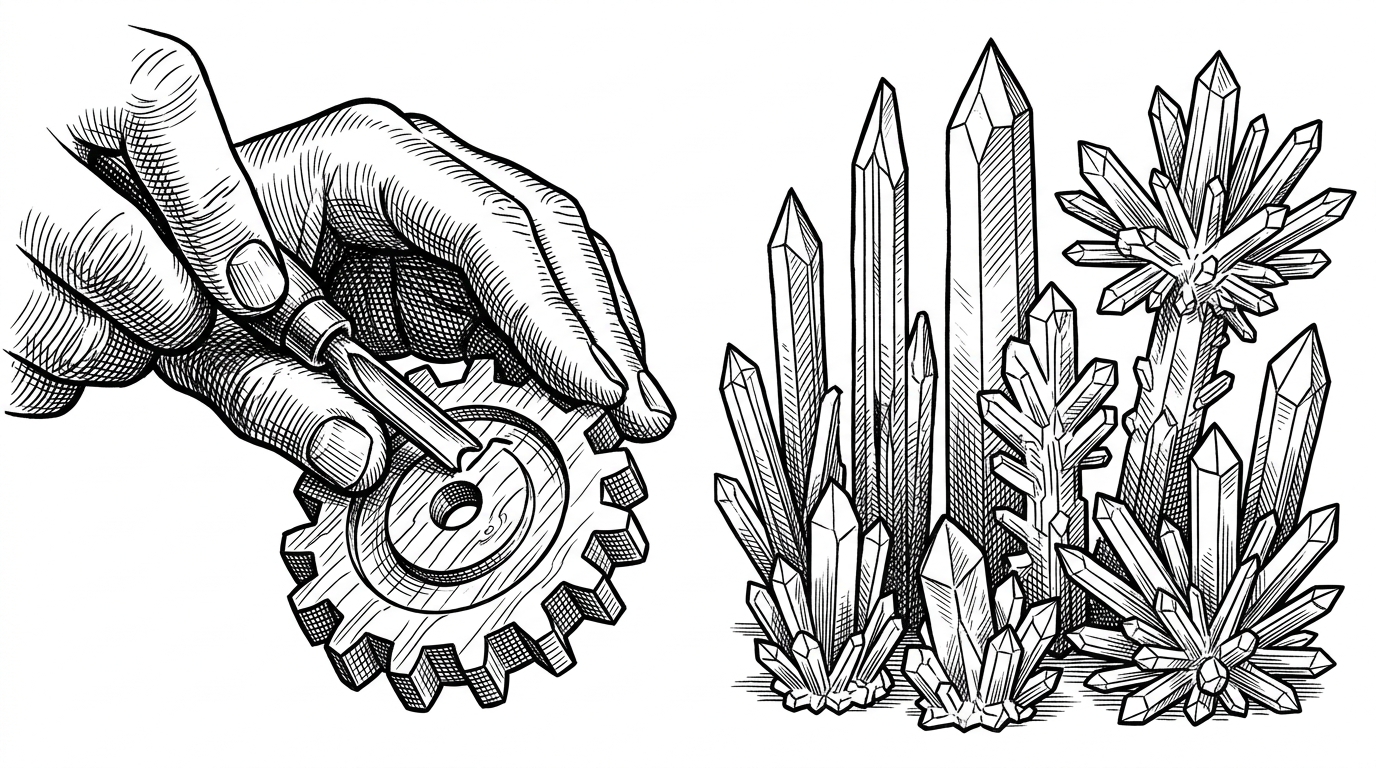
| Feature | Standard Copilots | OpenEvolve |
|---|---|---|
| Primary Goal | Feature completion and boilerplate generation | Algorithmic discovery and hardware optimization |
| Search Strategy | Linear iteration on a single file | Population-based MAP-Elites search |
| Failure Handling | Requires human developer to debug and re-prompt | Autonomous artifact side-channel feedback loop |
The future of software optimization might not be written by humans or even directly prompted by them. It will be grown, tested, and evolved in digital sandboxes until only the fastest code survives.