Agent-Learning-Hub: The roadmap that teaches agent builders to stop worshipping prompts
A curriculum-driven repository that turns AI agents into a staged engineering discipline, with outputs, harnesses, and a strong opinion about what actually matters.
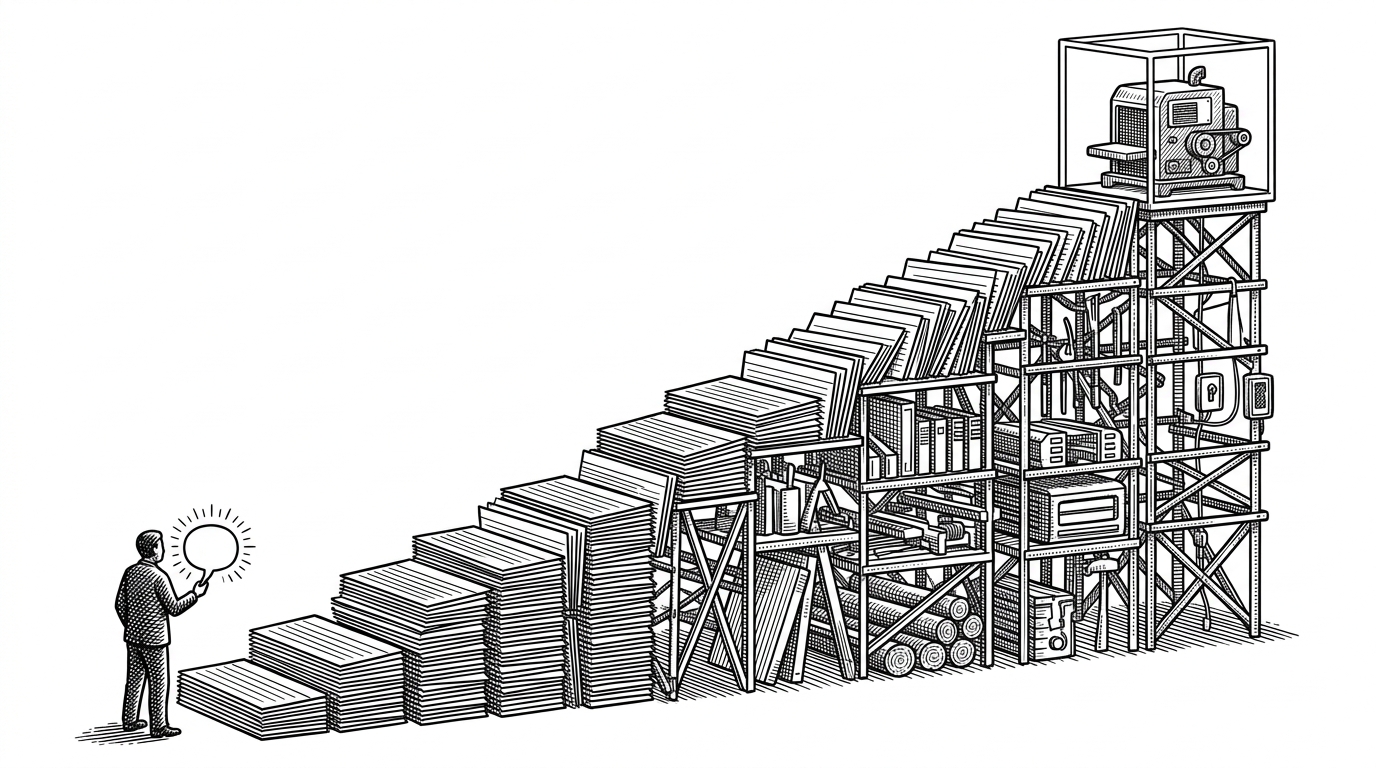
- Agent-Learning-Hub treats agent development as a ladder with gates, not a pile of links.
- Its real thesis is that the hard part of agents is the harness around the model, not the prompt inside it.
- The repo is opinionated enough to steer learners away from hype and toward state, tools, logs, and recovery.
- Compared with generic resource lists, it is useful because it forces progression and produces artifacts at each stage.
Why this repo is not an “awesome list”
This project does not behave like a dumping ground for agent links. It behaves like a syllabus. The difference matters, because a learner does not need more tabs open. They need a sequence that turns curiosity into working habits.
AI Agent 学习路线与资料库收集
That framing is the first clue that this repo has an opinion. It is built to move someone from API tinkering to agent engineering, and it assumes those are not the same skill. The repository’s README says the quiet part out loud: it is collecting learning routes, tutorials, open-source projects, and papers so people can learn and apply agent tech more effectively.
The repo’s real thesis: prompts are the easy part
本项目致力于收集、整理 AI Agent 相关的学习路线、教程、开源项目、论文等资源,帮助大家更好地学习 and 应用 AI Agent 技术。
| What you think you need | What actually matters |
|---|---|
| A clever prompt | A system that can observe, choose, recover, and log |
| A flashy multi-agent demo | Tool permissions, retries, traces, and state |
| More framework features | A harness that makes behavior reliable |
| Better wording | Better evaluation and operational control |
That is the repo’s sharpest move. It pushes readers away from old habits, especially the temptation to treat role-play multi-agent frameworks as the main event. The point is not that prompts are useless. The point is that prompts are the easiest thing in the stack to overvalue.
How the learning ladder works
The repository’s structure is pedagogically strict. Stage 0 gives you the conceptual loop. Stage 1 pushes you into a minimal working agent. Stage 2 adds memory and retrieval. Stage 3 moves into harness engineering, where the real challenge becomes operating the agent reliably.
That is why the repo feels different from a casual reading list. It does not just say what to study. It says what to build next. The outputs matter because they turn passive reading into enforced practice.
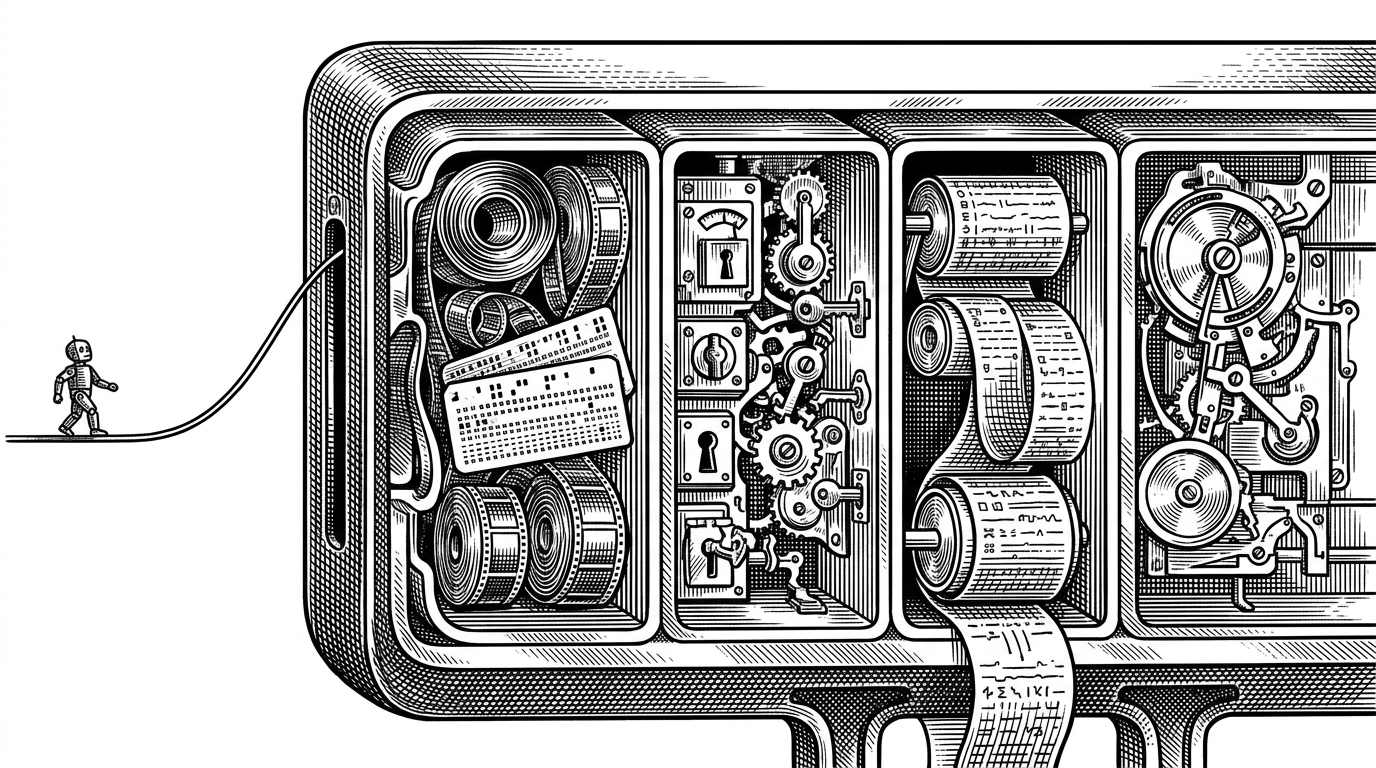
Why harness beats framework
This is the intellectual center of the repo. A framework gives you abstractions. A harness gives you operating conditions. That difference sounds small until something fails, because failure is where agent engineering reveals itself.
| Framework-first thinking | Harness-first thinking |
|---|---|
| Focuses on building blocks | Focuses on controlled execution |
| Shows what the model can do | Shows what the system can safely do |
| Optimizes for developer enthusiasm | Optimizes for traceability and recovery |
| Treats state as optional | Treats state, permissions, and logs as mandatory |
The repository keeps coming back to the same industrial idea: the model is only one component. The surrounding machinery is what turns it into something you can trust. That includes session management, observability, and the boring controls that make software survive contact with reality.
What the community is really curating
The project’s quality comes from curation discipline, not volume. Datawhale’s contribution guidelines reject link dumps and social reposts, which is exactly why the repo reads like a path instead of a feed. It has a point of view, and that point of view gives the material shape.
That matters for a learning resource. Good curation does not maximize quantity. It maximizes the chance that a reader will actually finish something useful. In that sense, the repository is closer to a workshop than a library.
How it compares to other paths
| Resource type | What it optimizes for | Weakness | What Agent-Learning-Hub does differently |
|---|---|---|---|
| Awesome list | Coverage | Becomes a directory fast | Organizes material into a progression |
| Framework docs | Depth inside one stack | Narrow scope | Stays framework-agnostic and comparative |
| Single-framework tutorial | Fast onboarding | Teaches one tool, not the field | Frames the field as staged learning |
| Generic roadmap | Orientation | Often too abstract | Requires outputs at each stage |
The repo is not trying to win on breadth. It is trying to reduce the gap between knowing the buzzwords and building something that works. That makes it less like a catalog and more like a filter.
The bigger shift this repo captures
Agent-Learning-Hub captures a real transition in the field. The center of gravity is moving from prompt craft to systems craft. The future it points toward is not a world of prettier chats. It is a world where agent behavior is observable, recoverable, and operationally bounded.
That is why the repo feels timely even though its lesson is durable. It teaches a way of thinking that should outlast the current wave of frameworks. Build the loop. Add tools. Add memory. Then build the harness that makes the whole thing dependable.