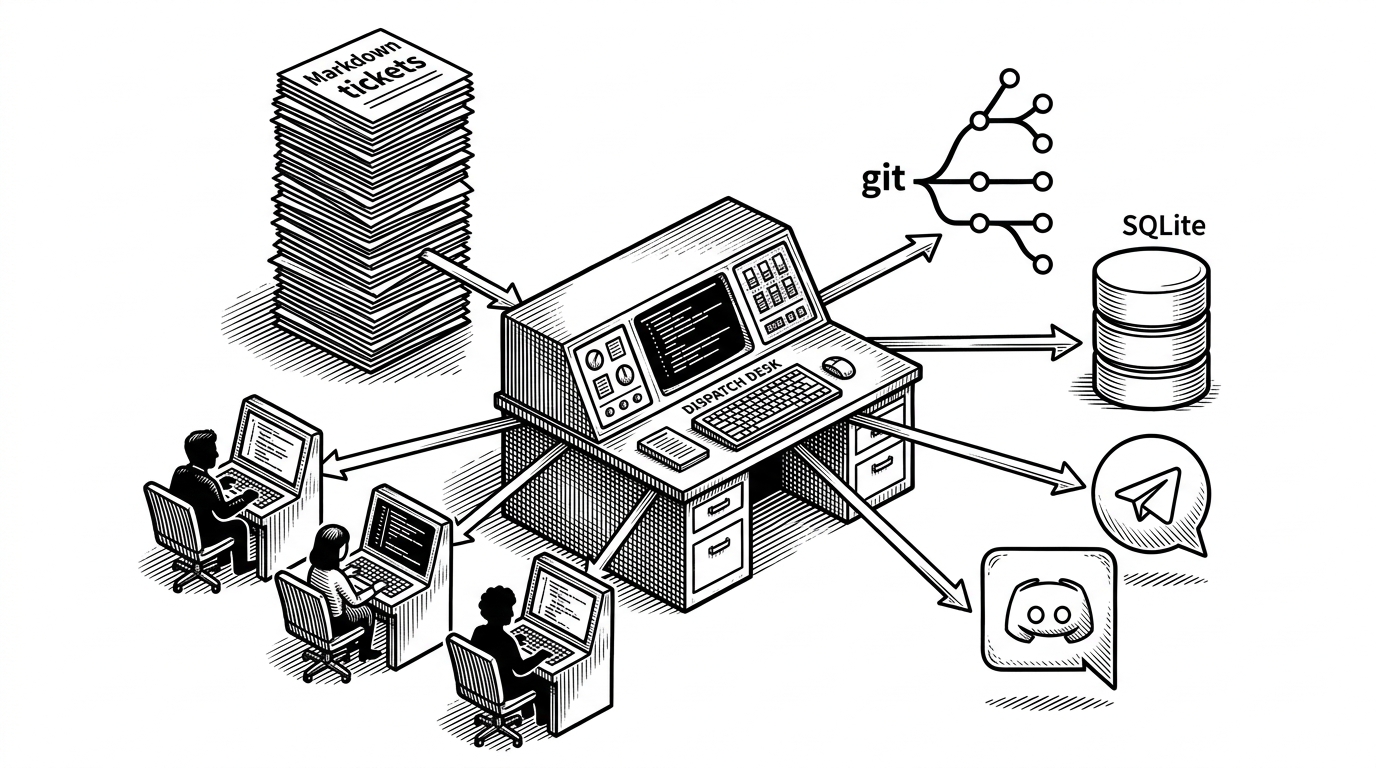
Claude SEO: The SEO Audit Where the Prompts Are the Code
A single slash command fans out to 18 specialist agents. The interesting part is the discipline that keeps their judgment from drifting into confident nonsense.

- claude-seo is mostly natural-language specification: 25 skills and 18 agents sitting on a thin Python toolkit that does only the deterministic work.
- Its prompts carry dated, corrective standards knowledge, including negative instructions like telling an agent to never reference FID.
- It models AI crawler access as a purpose-by-bot matrix rather than a single allow or block switch.
- Its credibility comes from refusals: no percentage Lighthouse scores, consent-gated WAF probing, and heuristics labeled as heuristics.
One Slash Command, Eighteen Specialists
Point Claude Code at a URL, type /seo <url>, and you get back a scored report, a phased action plan, and optionally an A4 PDF. Under the hood, up to 17 agents run concurrently and the whole audit is billed at 10 to 15 minutes. On the surface it looks like the thing SEO agencies charge thousands for, compressed into a terminal command.
- 25 sub-skills, each a
SKILL.mdfile with YAML frontmatter - 18 specialist agents, one Markdown definition each
- Runs on Python 3.11 to 3.14, distributed as a Claude Code marketplace plugin
- Free local-only tier that makes no external API calls, plus optional Google and MCP enrichment
- MIT licensed
That is the surface. The interesting part is what the "source code" actually is.
The Prompts Are the Code
Strip away the SEO framing and claude-seo is a case study in a new kind of software. The skills and the agents are natural-language specification. The Python underneath is deliberately small and tightly bounded: it fetches pages, parses HTML, calls APIs, renders PDFs. The intelligence lives in the prose.
That would be alarming if the prose were loose. It is not. Each agent file opens with frontmatter that reads like a manifest:
name: seo-technical
model: sonnet
maxTurns: 45
tools: Read, Bash, Write, Glob, Grep  # Write needed for report/data file output
Two things stand out. First, model tiering by task shape. The judgment-heavy agents (content, GEO, topic clustering, search-experience mismatch, drift) run on Opus. The mechanical ones run on Sonnet. Second, least-privilege tool lists. An agent gets exactly the tools it needs, and the inline comment justifies the one dangerous permission (Write) rather than leaving it unexplained.
This is the reveal. The prompts are not vibes. They are a maintained spec, and the model is treated as an unreliable component that has to be governed.
A Prompt That Says "Never Reference FID"
Here is the detail that convinces you the discipline is real. Inside the seo-technical agent, the prompt carries dated, corrective standards knowledge with an explicit negative instruction:
INP replaced FID on March 12, 2024. FID was removed from Chrome's
field-data tools on September 9, 2024. Never reference FID in any output.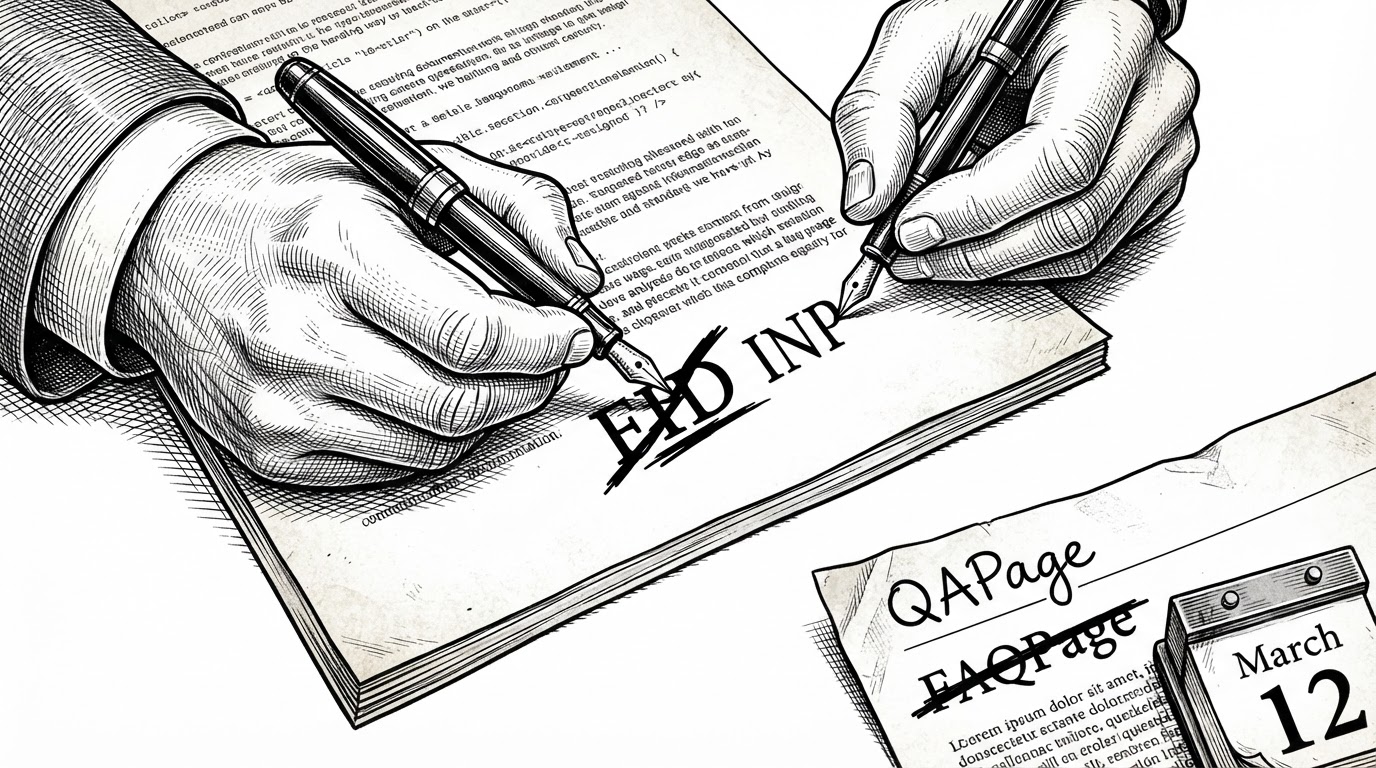
Most LLM tools trust the model to remember the world. This one refuses to, and writes the corrections down. The seo-schema agent does the same for structured data, listing deprecated types the agent must never recommend (HowTo, SpecialAnnouncement, CourseInfo, EstimatedSalary, LearningVideo) and defining the correct alternative: QAPage for genuine user Q&A.
Claude SEO is an open-source SEO analysis plugin for Claude Code.
The Crawler Matrix
The single most novel idea in the repo is how it models AI crawler access. Most SEO tooling treats "allow GPTBot" as one switch. claude-seo separates crawlers by the capability each one governs. GPTBot is OpenAI's training crawler, not the ChatGPT Search crawler. OAI-SearchBot governs ChatGPT search. Google-Extended governs training only and never affects AI Overviews, which follow Googlebot. Applebot-Extended governs training only.
Access policy stops being a boolean and becomes a grid of purpose by bot. The skill's own instruction is blunt: check and report each bot against the specific capability it governs.
How the Audit Actually Runs
The machinery is more careful than the SEO framing suggests. The launcher script is shell-only until it finds a usable Python, so it works even when Python is missing. It treats the CLAUDE_SEO_PYTHON environment variable as an executable path rather than a shell command, which prevents injection and supports paths with spaces. It orders interpreter selection so the built runtime stays valid, because switching interpreters would force a rebuild.
The orchestrator spawns specialists conditionally. A local SEO agent only fires for brick-and-mortar or service-area businesses. A Google agent only fires when a credential check passes. Credential detection is done by calling Python tools with --check flags, so the prompt decides and the tool probes.
Everything converges into a fixed audit-data.json envelope, with a summary, scored categories, and a four-phase action plan. A deterministic PDF renderer consumes that envelope, so the report can be produced even when Google API data is unavailable. And every specialist is told to write a partial findings file after its first pass, so a turn-budget stop never loses completed work.
The Guardrails
Why trust the output? Because the prompt refuses to overstate it. The Lighthouse rule is the clearest example. The agentic skill requires the score be reported as X/N exactly as computed, never converted to a percentage, because N varies by run and informative audits drop out. A percentage would look cleaner. The repo prohibits it.
WAF probing is gated on user authorization. The --ua-matrix flag sends requests carrying AI agents' user-agent tokens and must only be used when the user controls the site. Its results are described as behavior toward unverified traffic, never as proof that the real agent is blocked. The seo-geo prompt labels a 130 to 170 word answer block as a third-party heuristic, and notes that Google says content need not be chunked for AI. Heuristics get called heuristics.
It couldn't tell you your actual Core Web Vitals from the field, your real Search Console impressions, or your live backlink profile.
Where It Fits
claude-seo is not competing on measurement quality. It competes on synthesis and conversational iteration, and it says so itself.
| Project | Approach | Data access | AI-search focus |
|---|---|---|---|
| claude-seo | LLM synthesis inside Claude Code; 25 skills, 18 agents | Zero-network tier plus optional Google and MCP enrichment | GEO and agent-readiness checks |
| SEO Audit Skill / SEOmator | Deterministic rules engine; browser-based Core Web Vitals | Coded rules, repeatable, less conversational | Limited |
| geo-seo-claude | GEO-first toolkit | Citability and AI-crawler checks | Narrower traditional SEO |
| Marketing Skills | Broad marketing suite across many agents | Not a dedicated auditor | Broad, not SEO-specific |
| Screaming Frog / Ahrefs | Established specialist tools | Deep crawling and proprietary backlink data | Not agent workflows |
Screaming Frog crawls deeper and faster at the link-graph level; it is purpose-built as a crawler and Claude SEO does not attempt to replace it.
The Honest Limits
- Zero-network mode produces lab estimates and inferred indexation, not live field data.
- Credentials and MCP integrations change what is measurable at all.
- Agent readiness is a moving target built on drafts and proposals, and the repo labels them as such with check dates.
- The project says it complements rather than replaces specialist crawlers and backlink tools.
The real story is not that claude-seo audits websites. It is that it treats the prompt as a spec you have to maintain, with dated facts, negative instructions, and refusals baked in. That is what turns prompt engineering into actual engineering, and it is the part worth borrowing.