Claude-Code-Game-Studios: Claude Code Game Studios Turns One AI Session Into a Game Studio
A shell-driven hierarchy of agents, skills, hooks, and gates gives solo developers something closer to a staffed production pipeline than a prompt box.
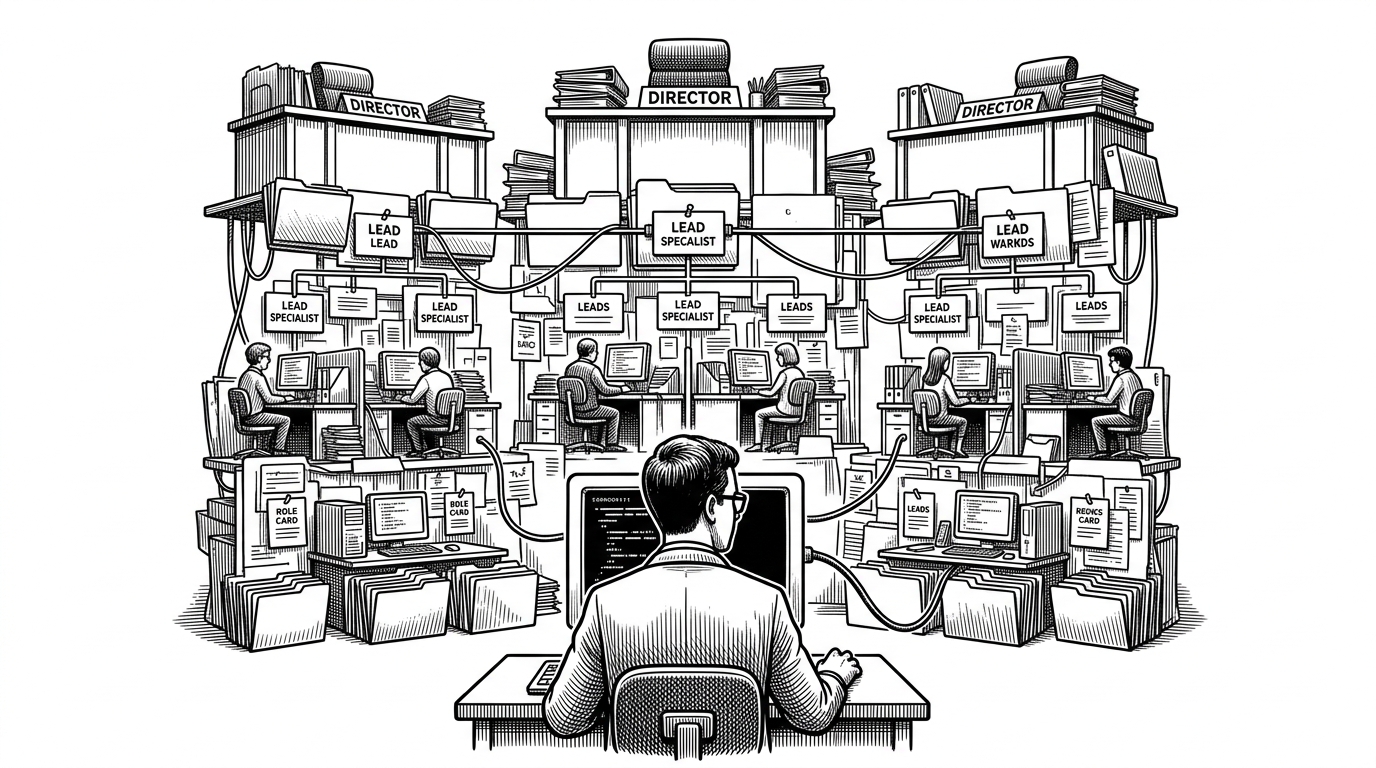
- Claude Code Game Studios treats AI like an organization, not a chat window, and that is what gives solo developers a usable production process.
- Its hierarchy saves expensive reasoning for directors and pushes routine work down to leads and specialists.
- The real power is in enforcement: hooks, skills, and gates turn intent into sequenced behavior.
- Path-scoped rules make the system adaptive, so the AI behaves differently in code, UI, network, and other domains.
Most AI coding tools try to remove friction. This repo adds it on purpose. That is why it stands out: Claude Code Game Studios wraps a single Claude Code session in a fake studio hierarchy, then makes that hierarchy do real work.
The result is not a clever prompt library. It is an operating model. Roles decide who thinks, workflows decide when work can advance, and hooks decide whether the session is even allowed to continue.
The Studio That Fits in a Terminal
The headline idea is simple: a solo developer can work inside a system that behaves more like a staffed game studio than an assistant. The repo organizes Claude Code around directors, leads, and specialists, so the model is not asked to improvise every decision from scratch.
Building a game solo with AI is powerful — but a single chat session has no structure. No one stops you from hardcoding magic numbers, skipping design docs, or writing spaghetti code. There's no QA pass, no design review, no one asking "does this actually fit the game's vision?"
That is the project’s thesis in plain English. The problem is not that AI cannot help. The problem is that unstructured help becomes unstructured output. This repo answers with process, not vibes.
Why the Repo Treats AI Like a Staff
The project borrows the logic of a real production team. Directors guard vision and make hard calls. Leads own domains. Specialists do the narrow work. The point is not just to distribute tasks. It is to distribute responsibility.
That changes how the model behaves. Instead of one assistant trying to be creative, technical, and editorial at once, the system narrows each role. The higher the stakes, the higher the tier.
The Hierarchy: Directors, Leads, Specialists
This repo’s clearest systems idea is the tiering. High-level reasoning is reserved for directors, routine coordination goes to leads, and execution lands with specialists. That is an economic model as much as an organizational one.
| Tier | Strength | Weakness | Best use case | What this repo adds |
|---|---|---|---|---|
| Directors | Strategic synthesis and final judgment | More expensive to run | Architecture, vision, gate checks | Keeps hard decisions at the top |
| Leads | Domain ownership and coordination | Can still drift without rules | Narrative, systems, QA, production | Turns domain work into managed lanes |
| Specialists | Focused execution | Narrow context | Code, art, audio, scripts | Reduces noise and encourages consistency |
That is why the repo can feel more disciplined than a general multi-agent setup. It is not just many agents. It is a deliberate cost ladder.
How the Hooks and Skills Turn Prompts Into Process
The machinery lives in the shell layer. Hooks run at lifecycle events. Skills package repeatable workflows into slash commands. Settings lock down what the session can do. Together they make the AI act less like a text box and more like a governed runtime.
# Simplified flow
SessionStart -> detect-gaps.sh
PreToolUse -> validate action
Skill command -> load workflow instructions
Gate check -> APPROVE | CONCERNS | REJECT

# The result
No work moves forward without the right artifacts, permissions, and review step.
That matters because the system is not depending on the model to remember discipline. The repo externalizes discipline into scripts, templates, and checks. In practice, that is the difference between a helpful suggestion and an enforceable workflow.
Path-Scoped Rules Are the Hidden Superpower
The most elegant piece is the rules directory. Behavior changes depending on where the AI is working. A file under a network path can trigger network-specific guidance. UI work can trigger UI-specific constraints. The model stops being generic at the exact moment the project needs specificity.
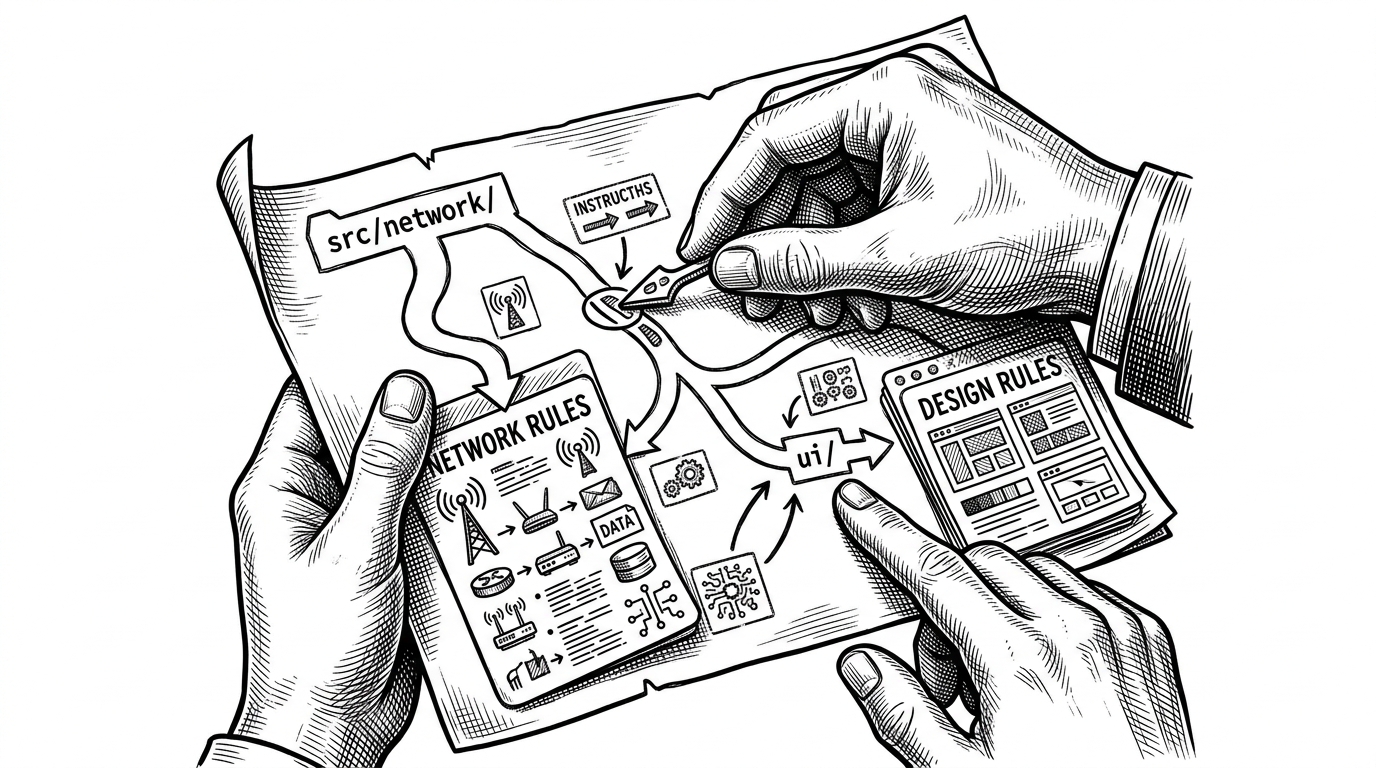
That is a strong fit for game development, where art, audio, code, narrative, and tooling all have different rules. A generic assistant can forget those boundaries. Path-scoped rules make the boundaries the default.
What This Beats, and What It Doesn’t
Compared with loose prompting, this repo wins on repeatability. Compared with generic multi-agent frameworks, it wins on domain fit. Compared with a single-agent coding workflow, it wins on governance.
| Approach | Strength | Weakness | Best use case | What this repo adds |
|---|---|---|---|---|
| Unguided chat prompting | Fast and flexible | Drifts, forgets, and skips process | Small experiments | Studio roles, gates, and path rules |
| Generic multi-agent framework | Good for broad automation | Often abstract and hard to adopt | Cross-domain orchestration | Game-specific workflows and engine-aware structure |
| Claude Code Game Studios | Enforced studio discipline | More setup and more overhead | Solo or small-team gamedev with process needs | A managed hierarchy with hooks, skills, and rules |
The trade-off is obvious. Complexity buys control. If you want quick answers, this is probably too much machinery. If you want an AI workflow that resists chaos, the machinery is the point.
The Bigger Idea: AI Needs Institutions, Not Just Prompts
The repo’s deeper argument is that useful AI systems will increasingly look institutional. They will have roles, review paths, memory, and guardrails. They will not just answer. They will operate inside policy.
That is a better fit for serious creative work than the fantasy of a single omniscient assistant. For game development especially, the hard part is not making something speak. It is making something stay in bounds, stay sequenced, and stay accountable.
Claude Code Game Studios is compelling because it treats bureaucracy as a feature. In the right hands, that is not overhead. It is how a solo developer gets the benefits of a studio without hiring one.