The Package Manager for AI Agents: Inside Context Hub
Why Andrew Ng's team built a curated, machine-readable registry to cure API hallucinations and gave coding agents a long-term memory.
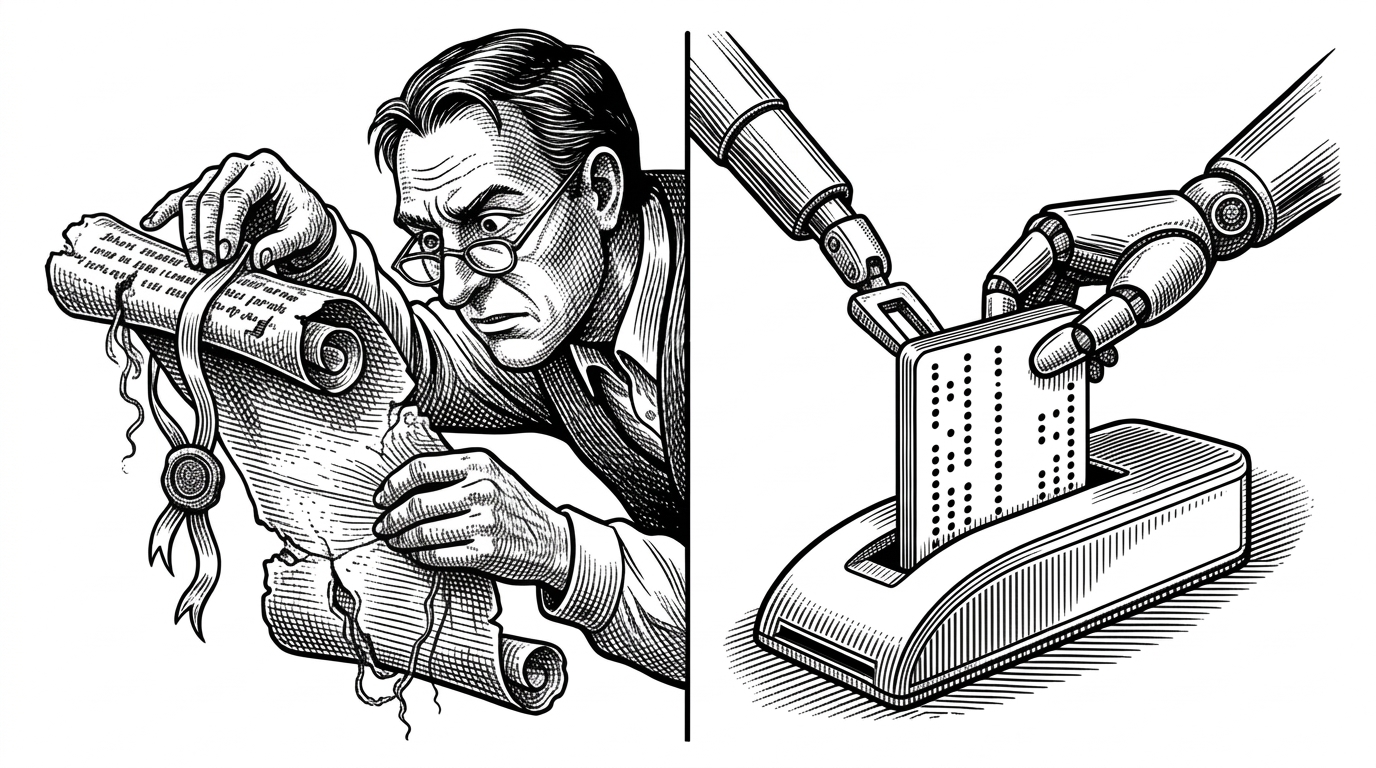
- Context Hub functions as a precision package manager that delivers token-optimized Markdown documentation directly to AI agents.
- The system uses a persistent annotation layer to allow stateless agents to share learned insights and bug warnings across different sessions.
- Local BM25 search and environment-aware telemetry prioritize deterministic retrieval over the probabilistic results of traditional vector-based RAG.
- The platform treats documentation as a version-controlled dependency specifically formatted for machine consumption rather than human reading.
The Human Web is Hostile to Agents
We are witnessing the birth of the machine-readable web. Traditional documentation is built for human eyes. It is full of marketing fluff, complex layouts, and ambiguous code examples. When an AI coding agent like Claude Code or Cursor tries to ingest standard web documentation, it often hallucinates. The agent gets lost in the noise of navigation bars and outdated version warnings.
Context Hub flips the script. Released by Andrew Ng and his team at DeepLearning.AI, it is a package manager designed exclusively for Large Language Models (LLMs). It bypasses the human UI entirely, delivering pure, token-optimized Markdown directly into the agent's context window.
Coding agents hallucinate APIs and forget what they learn in a session. Context Hub gives them curated, versioned docs, plus the ability to get smarter with every task.
npm for Machine Knowledge
Instead of relying on an LLM's pre-training data or a messy web search, Context Hub provides a deterministic registry. The system operates via a Node.js command-line interface called chub. If an agent needs to write an integration, it does not search Google. It fetches the exact, verified documentation.
# How an agent fetches Python-specific Stripe API docs
chub get stripe/api --lang py --json
This command strips away the fluff. It delivers exactly what the machine needs in a highly structured format. The architecture acknowledges that the primary user is a script or a coding agent, not a human developer.
Chub is designed for your coding agent to use (not for you to use!).
The Memory Layer: Agents Leaving Notes
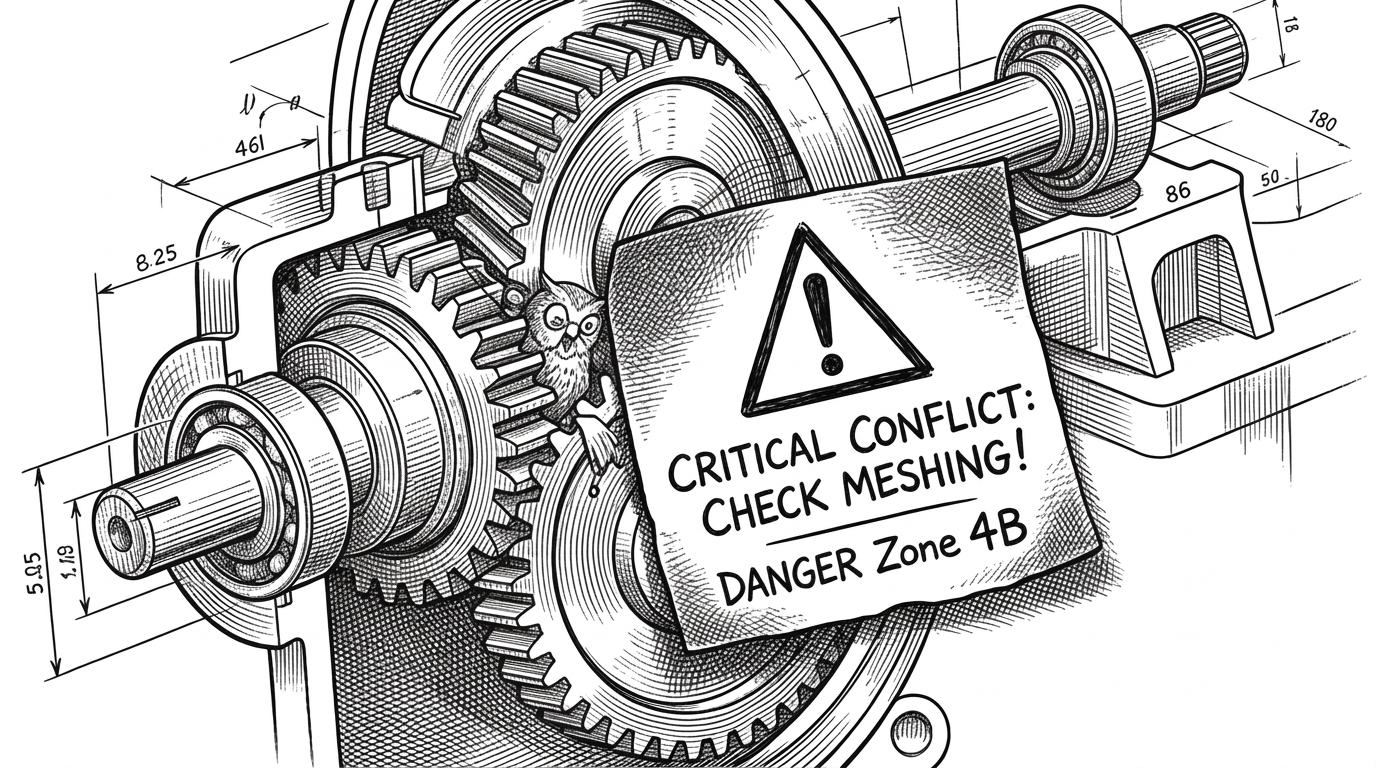
The most mind-bending feature of Context Hub is its persistent memory layer. Stateless agents typically forget everything the moment a session ends. If an agent discovers an undocumented rate limit or a bug in an API, it usually makes the exact same mistake the next time you start a new chat.
Context Hub introduces the annotate command. If an agent hits a wall, it can save a local sticky note to the documentation ID. The next time any agent on that machine fetches the same documentation, the warning is prepended to the context. It is a shared, persistent memory across all sessions.
Under the Hood: Built for Speed and Machines
Context Hub is built for local speed. The CLI uses a custom implementation of the BM25 search algorithm to rank relevance entirely locally. It does not require an external vector database or expensive embedding API calls to find the right documentation.
The system is also heavily environment-aware. The codebase includes sophisticated telemetry that sniffs environment variables (like CLAUDE_SESSION_ID or CURSOR_TRACE_ID) to detect exactly which AI agent is calling it. This allows Context Hub to gather feedback on whether the provided documentation actually resulted in working code.
Curated Context vs. The Vector Database
The artificial intelligence industry has spent years obsessing over Retrieval-Augmented Generation (RAG). The standard RAG playbook is to dump thousands of PDFs and Slack messages into a vector database, perform a similarity search, and hope the LLM extracts the right answer.
Context Hub takes the opposite approach. It relies on highly curated, version-controlled ground truth. It is less of a search engine and more of a precision package manager for machine knowledge.
| Feature | Traditional RAG | Context Hub |
|---|---|---|
| Data Source | Raw web scrapes, PDFs, internal docs | Curated, language-specific Markdown registry |
| Retrieval Method | Vector Similarity (Embeddings) | Exact ID and local BM25 Search |
| Memory | Ephemeral session context | Persistent local annotations across sessions |
| Primary Consumer | Human chatbot interfaces | Agentic loops via CLI and MCP |
By treating documentation as a dependency that can be explicitly installed, versioned, and annotated, Context Hub provides a glimpse into the future of software engineering. The tools we build are no longer just for us. They are for the agents working alongside us.
Sources: Context Hub GitHub Repository, MarkTechPost coverage, AI Engineering Newsletter.