opencode-beta: OpenCode Beta: The Repo That Ships the Product Without Showing the Code
A close look at how `anomalyco/opencode-beta` acts as a release gateway, a cross-platform distribution layer, and a clue to the real shape of OpenCode.

- `opencode-beta` is best understood as a release gateway, not a repository of implementation code.
- The repo turns a README into a manifest, which gives OpenCode control over distribution, updates, and platform parity.
- Its beta channel reveals product maturity in the shipping stack rather than in public source files.
- In a crowded AI coding market, control over delivery is part of the product, not just an operational detail.
The repo that exists to deliver, not to reveal
The first strange thing about anomalyco/opencode-beta is how little it tries to be a code repository. There is no sprawling source tree to inspect, no build graph to reverse, no obvious implementation to audit. What it does have is a public entry point for shipping OpenCode beta builds, and that makes it more important than a normal source repo in one narrow but revealing way: it controls how the product reaches users.
That shifts the question. Instead of asking what code lives here, ask what this repo makes possible. It gives the project a branded release surface, a stable URL family, and a public place where beta users can find installers without needing to understand the underlying pipeline.
What `opencode-beta` actually is
At a glance, the README behaves like a release manifest. It points users to platform-specific installers hosted on opencode.ai, covering macOS, Windows, and multiple Linux package formats. The repo is public, but the important machinery is elsewhere, probably in a private build system or a separate core repository.
The clearest way to describe it is simple: users arrive at GitHub, but they leave through a distribution layer that lives under a different domain. That is a different kind of public presence. It is not the repository as archive. It is the repository as gate.
OpenCode is built by neovim users and the creators of terminal.shop; we are going to push the limits of what's possible in the terminal.
Why the beta channel matters
A beta repo is rarely just a convenience. It is a control system. By separating beta distribution from the main project, the team can stage rollouts, keep update URLs stable, and preserve a cleaner story for the public product. That matters when your audience expects desktop installers, automatic updates, and a release cadence that feels deliberate rather than improvised.
| Launch model | What users see | Where binaries live | How updates flow | How much source is exposed |
|---|---|---|---|---|
| Traditional open-source source repo | Code, docs, issues, and releases in one place | Usually attached to the same repo | GitHub Releases or self-hosted assets | High |
| GitHub Releases-first workflow | Source may live elsewhere, but release page is public | GitHub release assets | Release page is the shipping surface | Medium |
| OpenCode beta repo model | A README that points to installers | A custom CDN under opencode.ai | Repo to CDN to installer to client | Low in this repo, higher elsewhere |
That control has strategic value. It lets the team own the download path, gather more detailed telemetry if they choose, and keep the public face of the product clean. It also signals maturity. Multi-platform delivery is not an afterthought here. It is baked into the launch model.
How the release pipeline works
The release pipeline is less mysterious than it looks. GitHub provides the visible front door. The README acts like a manifest. The CDN serves platform-specific artifacts. The installer lands on the user’s machine, then becomes part of a beta update loop that can stay stable even if the implementation behind it keeps changing.
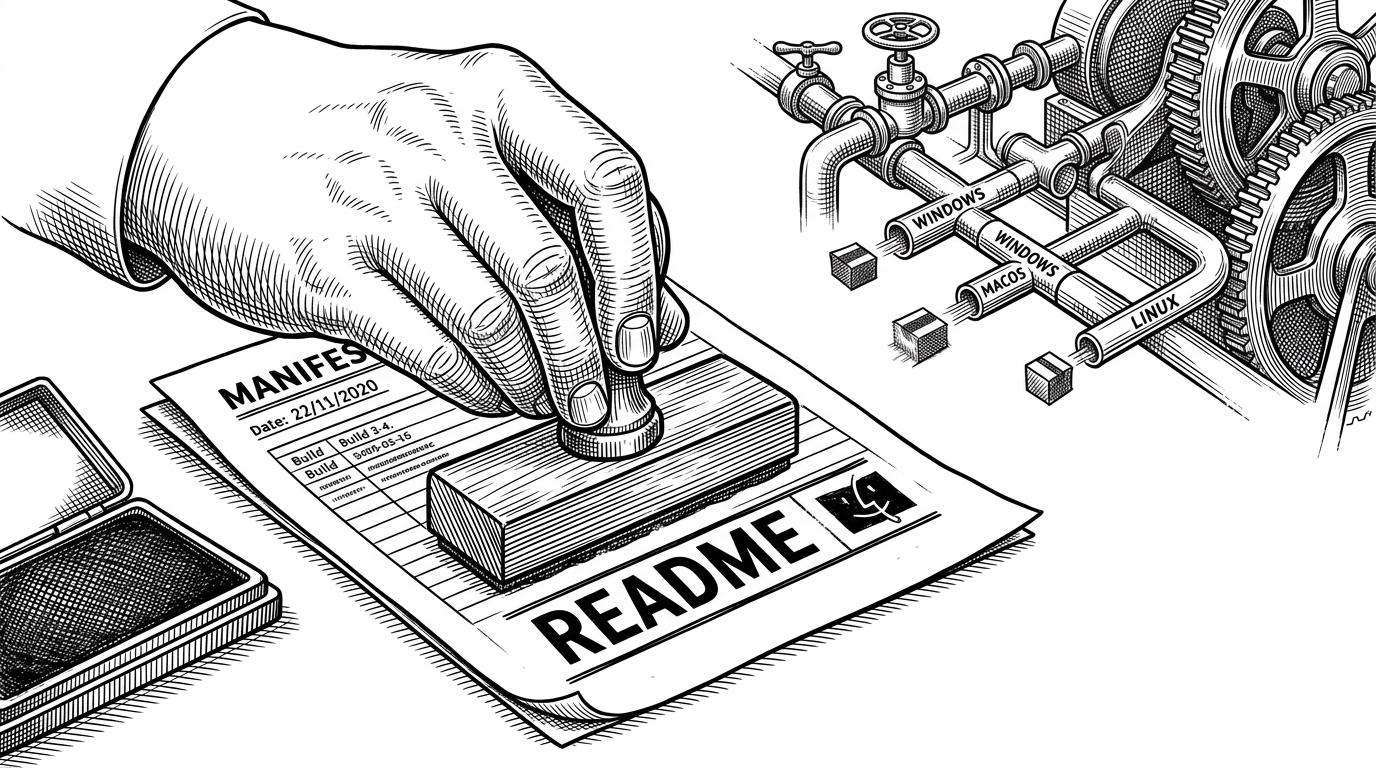
That structure matters because it supports predictable URLs and a clean separation between public branding and private implementation. A release channel can look simple on the surface while still carrying a serious operational load underneath.
What OpenCode is optimizing for
The beta repo becomes more interesting when you read it beside the main OpenCode project. The broader product is positioned as provider agnostic, terminal native, and tightly integrated with the Language Server Protocol. In other words, it is trying to be a serious coding agent without binding itself to one model vendor or one interface style.
| Dimension | What OpenCode appears to favor | Why it matters |
|---|---|---|
| Model strategy | Provider agnosticism | Avoids lock-in and broadens user choice |
| Interface | TUI-first workflow | Fits power users who live in the terminal |
| Editing loop | LSP integration | Turns diagnostics into an automated correction loop |
| Distribution | Custom beta channel | Keeps rollout and branding under one roof |
| Platform support | macOS, Windows, Linux | Signals a real desktop product, not a demo |
OpenCode takes a fundamentally different approach: it's a 100% open source coding agent that's completely provider-agnostic.
That combination is the point. OpenCode is not only competing on model quality or interface polish. It is also competing on how much of the experience the company can own without losing the credibility that comes with open tooling.
OpenCode beta versus the usual launch model
| Model | Strength | Weakness | Best fit |
|---|---|---|---|
| Traditional open-source source repo | Maximum transparency | Noisy release surface | Community-driven libraries and tools |
| GitHub Releases-only workflow | Simple to understand | Brand and update control are limited | Small apps and one-off binaries |
| OpenCode beta repo | Clear public gateway with controlled distribution | Implementation stays hidden here | Desktop AI products with beta cadence |
This is why the repo feels unusual. It sits between a project homepage and a shipping endpoint. It is public enough to trust, structured enough to scale, and opaque enough to suggest that the real engineering lives somewhere else.
That is not a bug. It is the thesis. The repo says the company values platform parity, release discipline, and control of the update path. The most interesting part of OpenCode may still be elsewhere, but this repo tells you how the company wants the world to meet it.