HolyCode turns OpenCode into a portable AI workstation
A single Docker image packages the agent, browser stack, developer tools, and persistent state so your setup survives rebuilds, host changes, and permission drama.
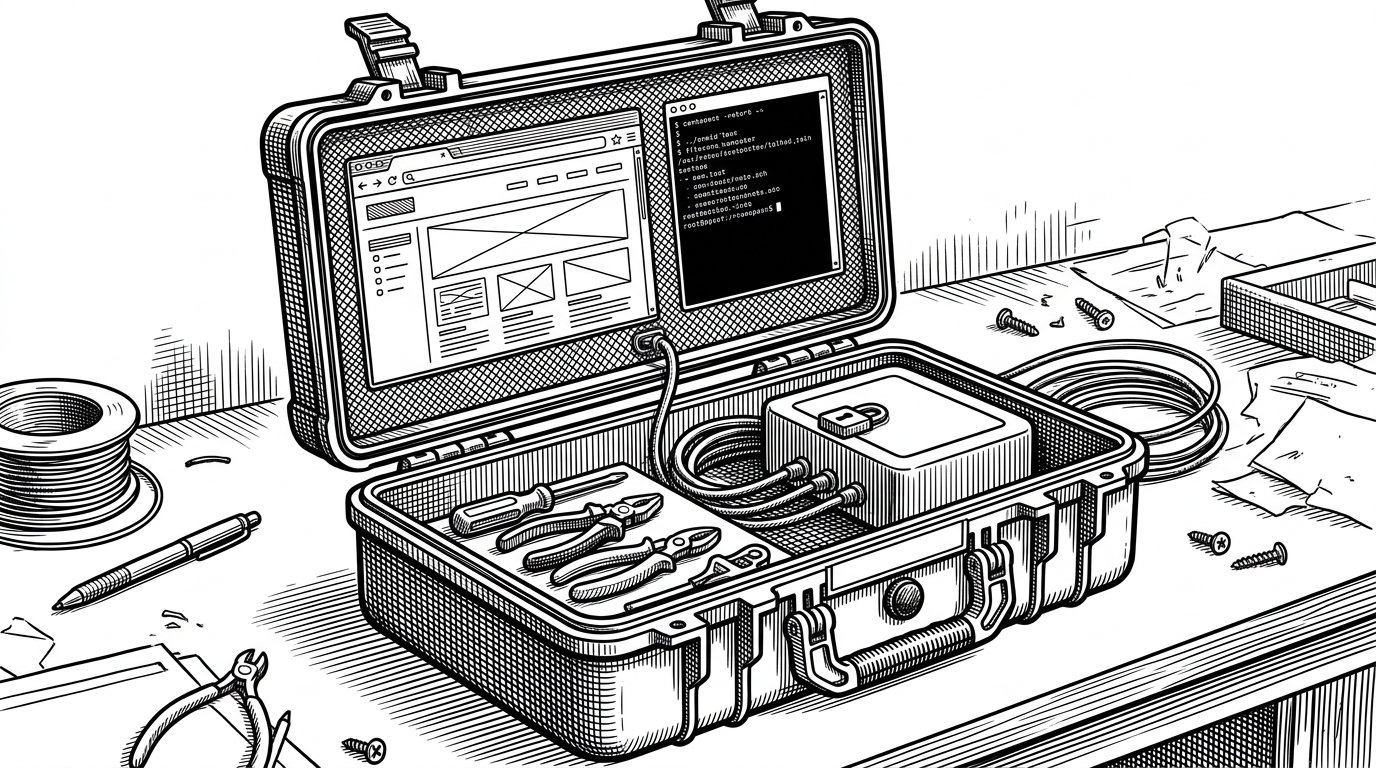
- HolyCode treats the development environment as a portable artifact, not a disposable container.
- Its real innovation is the glue between persistence, browser automation, and host user mapping.
- The project turns OpenCode into a full workstation by bundling tools, runtimes, and display services that agents usually inherit only after painful setup.
- It competes less with editors than with setup friction, which is why its value shows up most after rebuilds, migrations, and machine swaps.
Most AI coding tools ask what model you want. HolyCode asks a harder question: what if your agent also needs a browser, a terminal, a display server, a writable home directory, and a setup that survives the next machine swap? That is the real product here. Not a wrapper, but a workstation.
Why HolyCode exists
CoderLuii built HolyCode around a painfully familiar workflow. You get the environment right, then you rebuild the container, move to a new laptop, or mount your data from a NAS and the whole stack starts shedding pieces. HolyCode is a direct answer to that churn, with persistence, tooling, and browser automation baked in instead of bolted on later.
You get your dev environment exactly right. Then you switch machines. Or rebuild a container. Or your system decides today is the day it dies. Suddenly you're reinstalling tools. Hunting down config files. Re-entering API keys. Wondering why ripgrep isn't on PATH anymore. Figuring out why Chromium won't launch. Then Xvfb isn't configured. Then the UID inside the container doesn't match your host and everything is permission denied. I built HolyCode after solving every single one of those problems.
What it bundles into one image
The Dockerfile is doing more than installing OpenCode. It layers in a modern shell toolkit, a Python runtime, Node.js 22, Chromium, Playwright, Xvfb, emoji-capable fonts, and the kind of CLI utilities that make an AI agent immediately useful instead of technically functional. That matters because the agent does not just need to think. It needs to inspect code, browse the web, render pages, capture screenshots, and move through the filesystem without friction.
How it stays stable when Docker usually gets messy
- It remaps UID and GID through PUID and PGID so bind-mounted files stay writable by the host user.
- It uses a sentinel file during bootstrap so the expensive initialization work only happens once.
- It checks whether the backing filesystem can support SQLite WAL, which matters when the data lives on CIFS or NAS storage.
That is the underappreciated part of HolyCode. The flashy feature is that it runs OpenCode in one container. The real engineering is the glue: the entrypoint script, the sentinel-based bootstrap, the s6 process supervisor, and the filesystem checks that keep browser sessions and SQLite-backed state from collapsing the moment the container meets a real host.
How it compares
| Project | What you get | What you still assemble | Best for |
|---|---|---|---|
| HolyCode | A prebuilt OpenCode workstation with persistence, browser automation, tools, and multi-provider support. | You still choose the model provider and the machine it runs on. | Developers who want a durable AI lab instead of a disposable container. |
| OpenCode | An open-source agent client with broad provider support. | Your browser stack, toolchain, display plumbing, and persistence layer. | Tinkerers who want to compose their own environment. |
| Claude Code | A polished commercial agent tied to Anthropic. | Vendor lock-in and less control over the surrounding workstation. | Teams that want a managed, opinionated experience. |
| Cursor | A full commercial AI IDE experience. | Less self-hosting, less environment portability, less control over the container boundary. | Developers who want a tight editor-first workflow. |
The comparison is clear once you stop treating HolyCode like an app. It is infrastructure for an agent. If you want a simple chat box, it is overkill. If you want a machine that keeps its memory, tools, browser, and filesystem behavior intact across rebuilds, it is exactly the right amount of extra.
That also explains the project’s strategic edge. It sits between open-source flexibility and commercial convenience: provider agnostic, subscription-aware, and already wired for the ugly parts of real development work. HolyCode is not trying to be the smartest agent in the room. It is trying to be the room.