mini-rag: The RAG Tutorial That Teaches the Parts Everyone Skips
A production-minded walkthrough of the workers, factories, vector stores, and Arabic-first prompting that turn a basic retrieval demo into a real application.
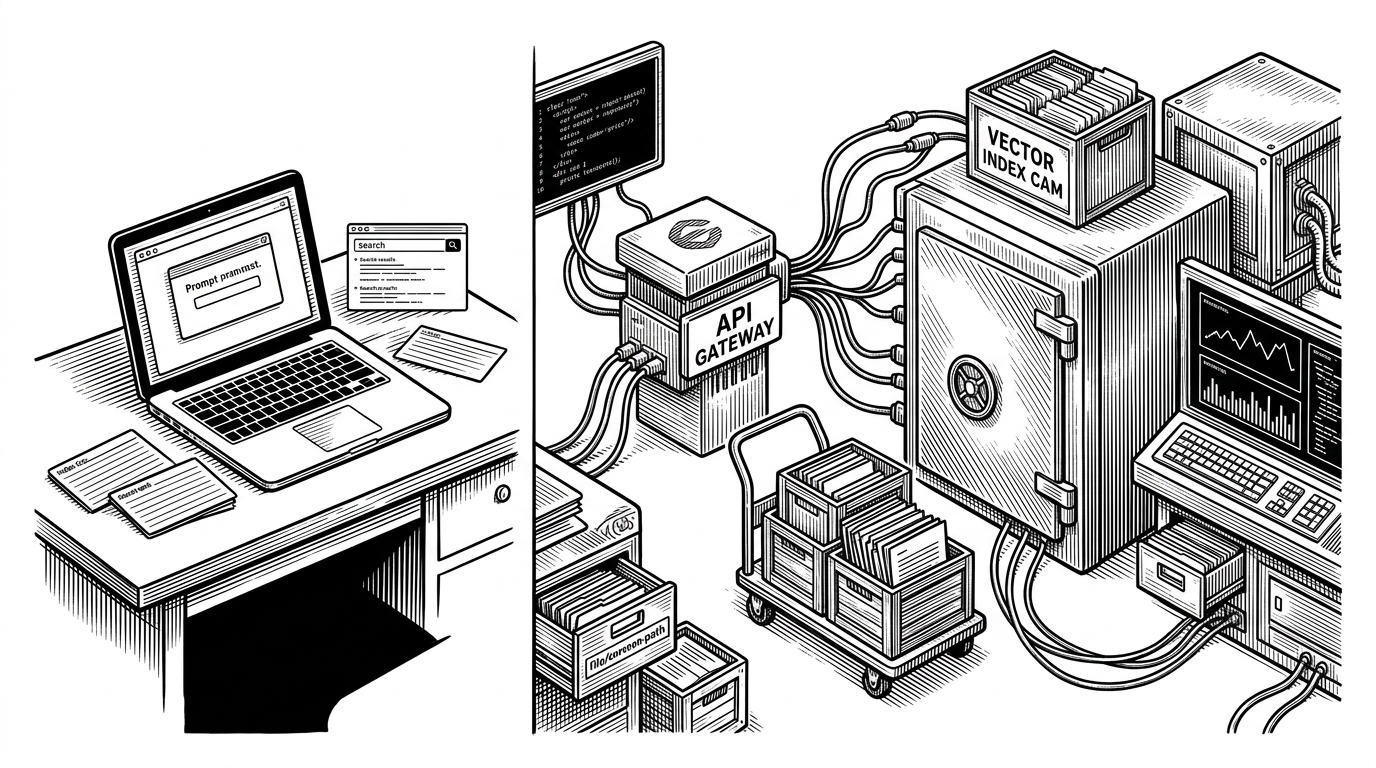

This is an educational project where all of the codes where explained (step by step) via a set of Arabic youtube videos.
- mini-rag treats the invisible plumbing of RAG as the lesson, not the prompt template.
- Its real value is the split between fast query handling and slow ingestion work handled by workers.
- The repo shows why factories, PostgreSQL metadata, and vector storage belong in the same mental model.
- Arabic-first prompting makes the project feel like a real product for a specific audience, not a generic demo.
RAG is easy until it has to run as a service. A notebook can retrieve chunks and call an LLM, but a real app needs queues, retries, migrations, storage boundaries, and a plan for when the slow stuff blocks the fast stuff.
That is why bakrianoo/mini-rag is more interesting than another chatbot demo. It turns the boring parts into the point, and that makes it a better map of how production RAG systems actually grow up.
Why This Repo Exists
The repository description is explicit: it is an educational project that teaches how to build a production-ready RAG app. That framing matters because it changes the reading of every design choice. The goal is not to hide complexity. The goal is to expose it in a sequence a learner can follow.
The tutorial structure, the Arabic video series, and the step-by-step commits all point to the same idea. This repo is trying to teach judgment, not just code. It shows what happens when a simple retrieval prototype becomes a system people can actually operate.
The Shape of the Stack
Under the hood, mini-rag is modular in the way a real service should be. FastAPI handles requests, Celery handles slower work, PostgreSQL stores metadata, and the vector layer can be swapped between backends such as PGVector and Qdrant. The design is less about any one tool and more about clean boundaries.
The factory pattern is the quiet hero here. Instead of binding the app to one model provider or one vector backend, the code routes those choices through abstraction layers. That makes the system easier to swap, test, and explain.
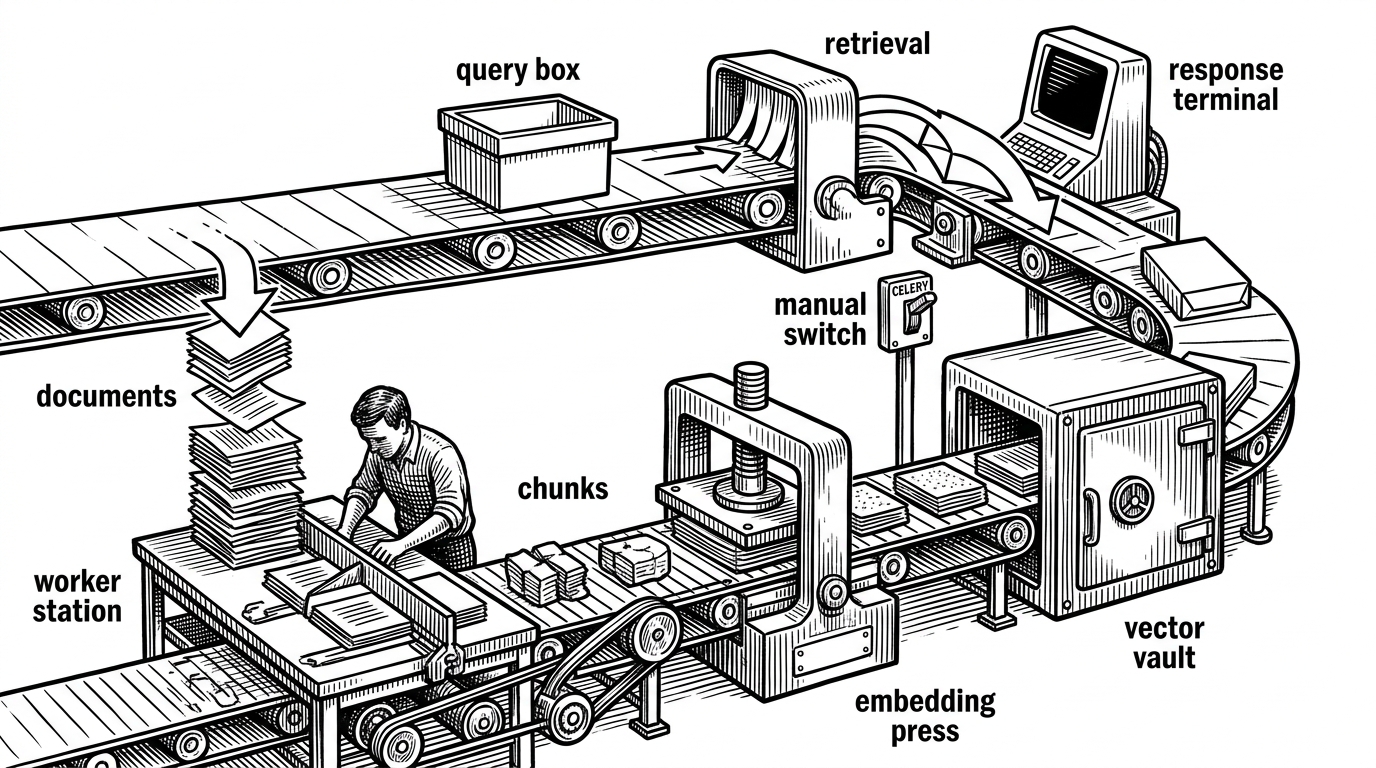
The Trick: Separate the Fast Path from the Slow Path
This is the architecture move that makes the project feel real. User questions should not wait behind file parsing, chunking, or embedding generation. Those jobs belong on the worker side, where retries and longer runtimes are acceptable.
That split is not just a performance detail. It changes the product shape. The API remains responsive, the ingestion path can fail independently, and the whole system starts behaving like software instead of a script.
How Retrieval Actually Happens
The retrieval flow is straightforward, but the implementation choices matter. The system retrieves relevant chunks, injects them into a localized prompt, and sends the augmented request to the model. That is the canonical RAG loop, but the repo makes it concrete instead of abstract.
One small production detail stands out: text gets truncated before it reaches the model. That is the sort of thing tutorials often skip, but it is exactly where cost control and context limits live. In a working system, token budgets are part of the product.
context = search_vector_db_collection(question)
prompt = TemplateParser(locale=PRIMARY_LANG).render(
    question=question,
    context=context,
)
answer = llm.generate(process_text(prompt, default_input_max_characters))
Why the Storage Choices Matter
mini-rag leans into PostgreSQL plus a vector extension rather than treating metadata and retrieval as separate worlds. That is a pragmatic choice. It keeps application state, document metadata, and embeddings close together, which simplifies migrations and day-two operations.
| Layer | mini-rag | Toy RAG demo | Heavy framework |
|---|---|---|---|
| Primary goal | Teach production boundaries | Prove the concept | Ship a broad abstraction layer |
| Ingestion | Async workers and retries | Usually synchronous | Often built in, but heavier |
| Storage | PostgreSQL plus vector backend | Single local vector store | Many pluggable stores |
| Learning value | Shows the middle layer | Shows the first step | Shows the ecosystem |
The point is not that Postgres wins every time. The point is that a single ACID-friendly home for metadata and vectors reduces mental overhead. That matters once the demo turns into a service.
Why Arabic Support Is Not a Side Quest
The localized prompting is not a decoration. The repository makes Arabic a first-class concern through language settings, templates, and right-to-left awareness. That choice widens the project’s audience and makes the design feel anchored in real use, not generic tutorial defaults.
It also changes the teaching value. A learner does not just see how to wire RAG together. They see how to adapt the stack for a specific language, a specific reading direction, and a specific community.
An Educational Project (step by step) to teach how to build a production-ready app for RAG application.
Where It Sits in the RAG Landscape
mini-rag lives in the middle of the pack, and that is exactly why it is useful. Minimal demos show the idea. Frameworks like LangChain and LlamaIndex show the ecosystem. mini-rag shows the missing middle, where service boundaries, workers, and storage decisions start to matter.
| Project type | What it optimizes for | What it leaves out | Where mini-rag fits |
|---|---|---|---|
| Minimal demo | Fast understanding | Operational realism | Below this layer |
| mini-rag | Production-minded learning | Broad framework abstraction | Right here |
| Large orchestration framework | Flexibility and integrations | Simplicity | Above this layer |
That is the article’s real takeaway. mini-rag is not a rival to full orchestration frameworks, and it is not just a toy. It is a bridge. It teaches the architecture you need before the bigger tools start to make sense.
What to Steal From It
- Use factories when your model or vector backend might change.
- Split ingestion from query handling so the API stays responsive.
- Treat token limits and truncation as product concerns, not cleanup tasks.
- Model RAG as a service with workers and storage, not as a single script.