Decoding the Noise: Inside llm_aided_ocr
How a hybrid pipeline pairs classic extraction with language models to turn garbage scans into perfect Markdown.
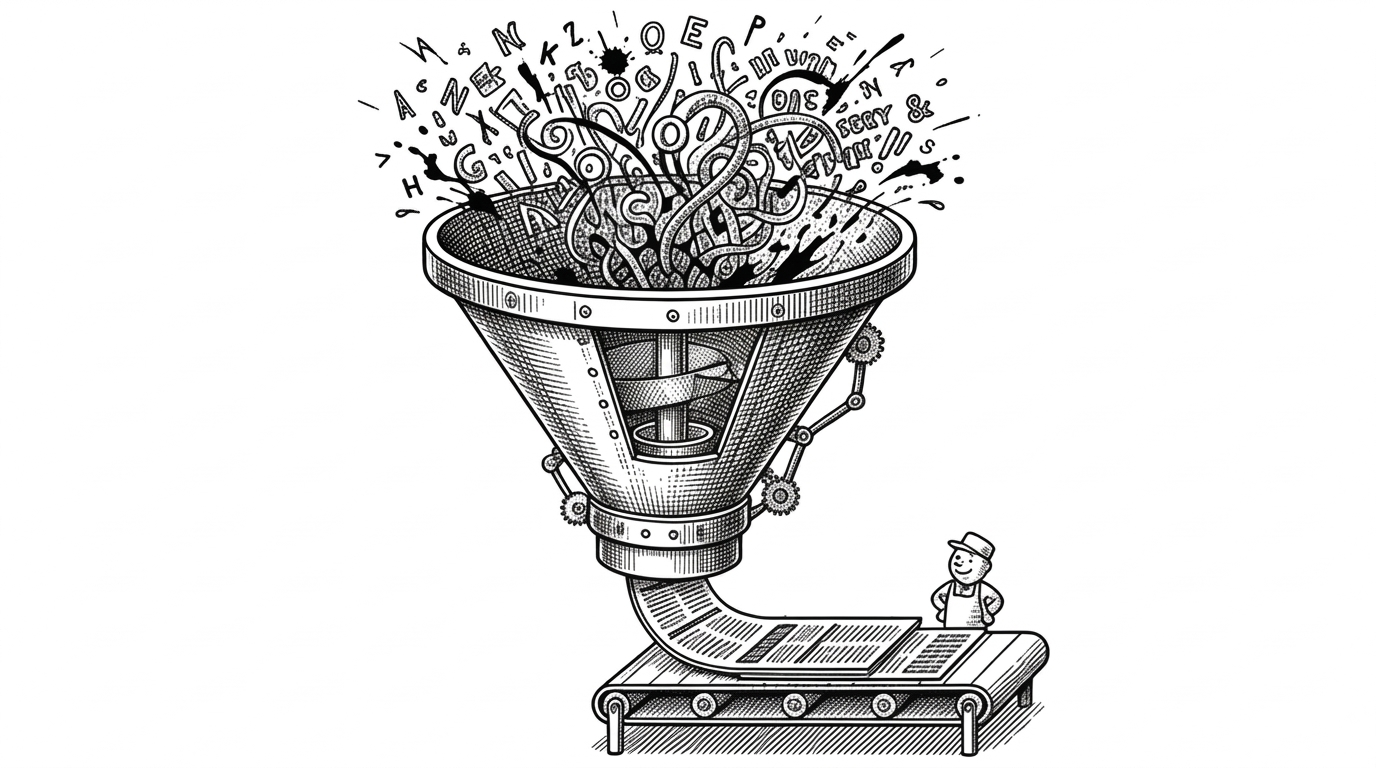

One interesting thing I found was that almost all my attempts to fix/improve things using "classical" methods like regex and other rule based things made everything worse and more brittle, and the real improvements came from adjusting the prompts to make things clearer for the model, and not asking the model to do too much in a single pass
- The pipeline uses LLMs as semantic filters to clean the noisy text output generated by traditional Tesseract OCR.
- Separating error correction and Markdown formatting into distinct processing stages prevents model hallucinations and data loss.
- Smart chunking with overlapping text windows preserves logical context and formatting consistency across long documents.
- The system supports local execution via GGUF models to ensure data sovereignty for sensitive documents.
The End of Regular Expressions
For decades, extracting text from scanned PDFs meant relying on Optical Character Recognition engines like Tesseract. Tesseract is exceptionally fast and deterministic. It is also easily confused by coffee stains, faded ink, and complex page layouts. The traditional engineering response was to write increasingly complex Regular Expressions to clean up the resulting mess of broken words and stray punctuation.
This approach scales poorly. A regex pattern that fixes a hyphenation error on one page often destroys a legitimate compound word on the next. The alternative, modern Vision-Language Models (VLMs), can read an image directly and output perfect text, but processing a 300-page book this way is prohibitively expensive and slow.
The llm_aided_ocr project proposes a highly pragmatic middle ground. It treats Tesseract's flawed output as a noisy signal. By passing this rough text to an LLM, the system leverages the model's semantic contextual awareness to fix errors that rules-based systems cannot catch.
The Hybrid Pipeline
The architecture is a linear pipeline built in Python. It begins by converting PDF pages into images using pdf2image. Before hitting the OCR engine, the system applies OpenCV preprocessing techniques, specifically Otsu's binarization and dilation, to maximize contrast and make the text as legible as possible for the machine.
Tesseract then performs the initial extraction. The resulting raw text is segmented and passed into an asynchronous orchestration layer. This layer manages concurrent calls to an LLM provider, transforming the garbled text into pristine Markdown.
The Multi-Stage Mindset
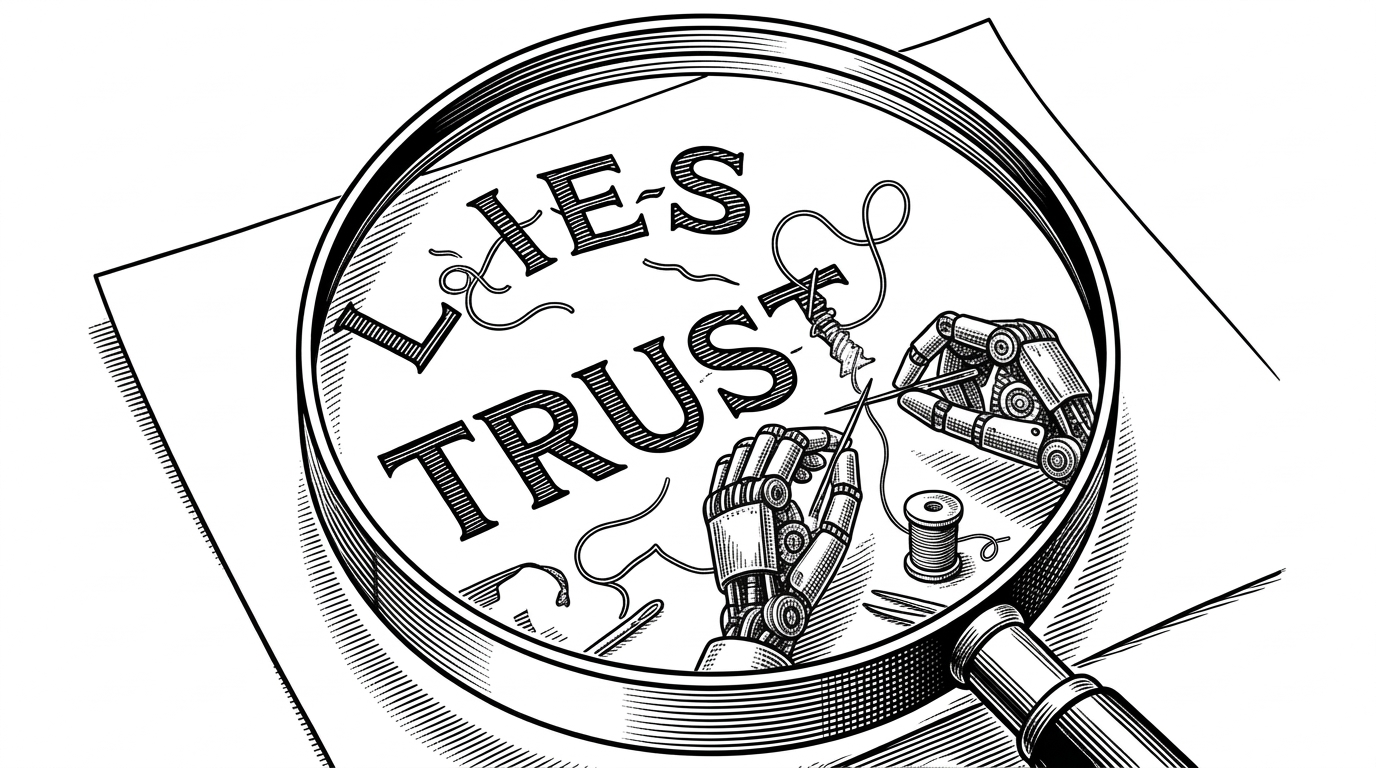
The most elegant architectural choice in the repository is its multi-stage prompting strategy. Early iteration revealed that asking a language model to simultaneously fix spelling errors, remove page numbers, and format headers resulted in hallucinations and dropped text.
Instead, the pipeline separates tasks into distinct, specialized passes. The first pass acts solely as a copy editor, fixing typos and stitching together broken words. The second pass acts as a typesetter, applying Markdown formatting and stripping out recurring artifacts like headers and footers. This separation prevents the LLM from becoming overwhelmed by conflicting instructions.
Smart Chunking
Processing long documents introduces the constraint of LLM context windows. Standard chunking methods split text at arbitrary character limits, which often slices a sentence in half. When an LLM receives a fragmented thought, it tends to invent the missing context.
The project implements a "Smart Chunking" algorithm. It scans for sentence boundaries to ensure logical splits. More importantly, it passes an overlapping window of text from the previous chunk into the current prompt. This sliding window provides the model with the necessary context to maintain consistent formatting and tone across a 300-page document.
Not only have models gotten a lot better, but the latest "low tier" offerings from OpenAI (GPT4o-mini) and Anthropic (Claude3-Haiku) are incredibly cheap and incredibly fast. So cheap and fast, in fact, that you can now break the document up into little chunks and submit them to the API concurrently... and assemble it all in a shockingly short amount of time, and for basically a rounding error in terms of cost.
Local Sovereignty vs. Cloud Speed
A striking feature of the repository is its balanced support for both cloud APIs (OpenAI and Anthropic) and local execution. By integrating llama-cpp-python, the system can run entirely offline using GGUF models, taking advantage of local GPU acceleration.
This is not a trivial addition. For legal, medical, or government applications, sending sensitive scanned documents to a third-party server is a non-starter. The hybrid pipeline allows organizations to maintain strict data sovereignty without sacrificing the semantic extraction capabilities of modern AI.
| Approach | Cost at Scale | Formatting Accuracy | Data Privacy |
|---|---|---|---|
| Traditional OCR (Tesseract) | Free (Compute only) | Low (Garbled layouts) | High (Local) |
| Pure Vision-LLM (GPT-4o) | Very High | Excellent | Low (Cloud dependent) |
| Hybrid (llm_aided_ocr) | Low to Medium | Excellent (Markdown) | Configurable (Local GGUF or Cloud) |
Sources: Code and architecture analysis based on the Dicklesworthstone/llm_aided_ocr GitHub repository. Additional context sourced from creator commentary on Hacker News.