Grounding the Black Box: How google/langextract Forces LLMs to Show Their Work
Extracting structured data from unstructured text is easy. Proving exactly where that data came from down to the character offset is the hard part. Here is how Google built an audit trail for generative extraction.
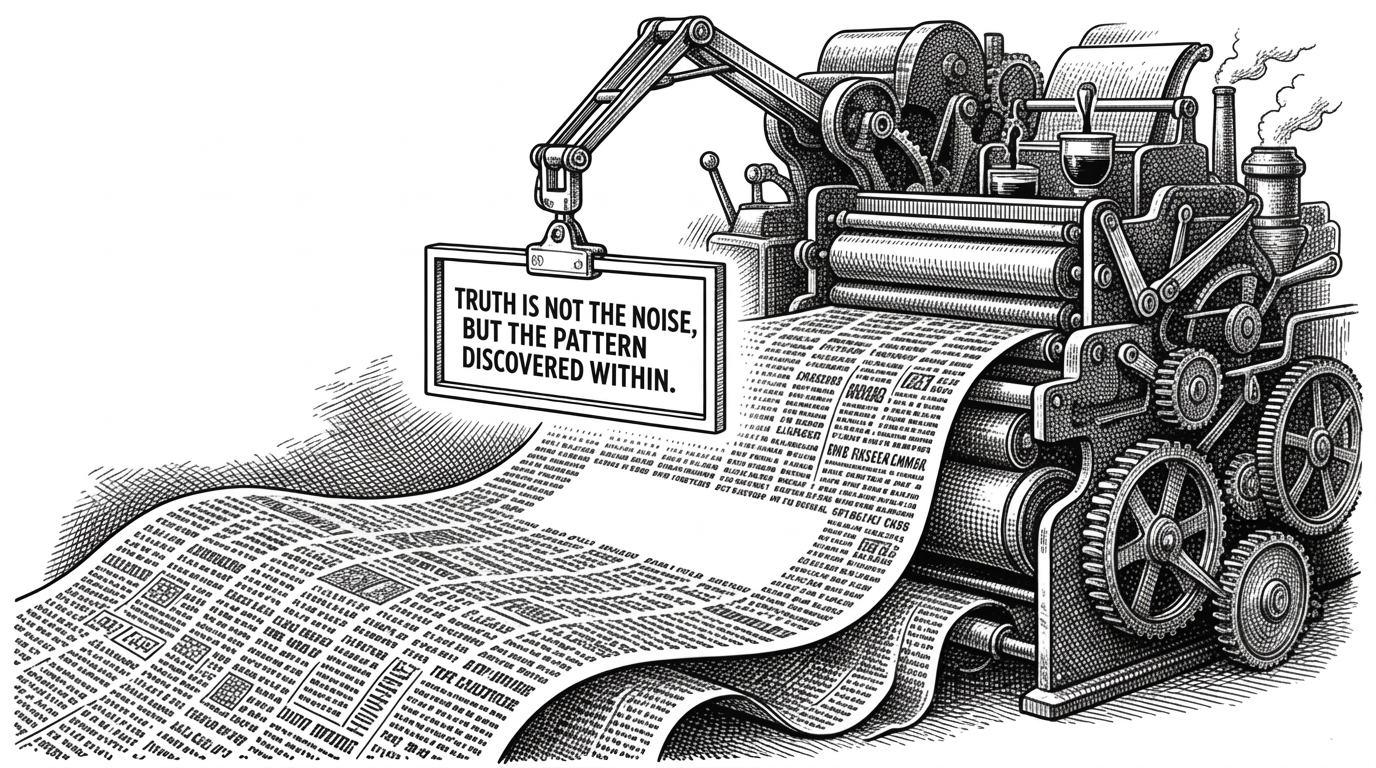
- LangExtract enforces source grounding by mapping every extracted data point to specific character offsets in the original text.
- The library uses a custom alignment engine to verify LLM outputs and nullify any facts that cannot be traced back to the source document.
- Developers define extraction schemas through few-shot examples rather than writing manual Pydantic models or complex regex patterns.
- Built-in document chunking and parallel processing allow the tool to maintain provenance even when extracting data from massive unstructured files.
The Illusion of Structured Output
Getting a Large Language Model to output valid JSON is largely a solved problem. Modern APIs offer strict schema enforcement, ensuring that a model returns a properly formatted response instead of conversational filler. But enforcing a shape does not guarantee truth. If an LLM hallucinates a perfectly formatted medical diagnosis that never appeared in the patient's chart, standard validation tools will pass it without a second glance.
This is the fundamental flaw in most enterprise extraction pipelines. They treat the LLM as a parser, forgetting that it is inherently a generative engine. To trust the structured output, you need a physical constraint on the model's creativity. You need source grounding.
The Audit Trail: Character-Level Grounding
Google's langextract library approaches the extraction problem with a deep skepticism of the LLM. It operates on a simple principle: if the model claims to have found an entity, it must point to the exact location in the original text. The library refuses to accept an extracted entity unless it can map the string back to a precise CharInterval (start and end offsets) in the source document.
But the killer feature isn’t the extraction itself — it’s source grounding.
If the model invents a fact, the alignment logic catches the discrepancy and nullifies the extraction. This granular tracking powers the library's built-in HTML visualizer. Users can click on a generated JSON key-value pair and see a smooth highlight sweep across the exact corresponding words in the source text. It transforms a black-box generation into a verifiable audit trail.
Under the Hood: Tokenization and Alignment
Extracting data from a massive document introduces the needle-in-a-haystack problem. LLMs perform poorly when asked to retrieve sparse facts from a massive context window. langextract solves this in its chunking.py module by breaking long documents into overlapping text windows.

These chunks are sent to the LLM (like Gemini or OpenAI) in parallel. Once the model returns its findings, the library faces a new challenge: stitching the results back together. The custom WordAligner and core/tokenizer.py resolve fuzzy LLM outputs back to strict source coordinates, ensuring that overlapping chunks do not result in duplicated or misaligned data.
Schema Inference: Killing the Regex
The developer experience in langextract represents a sharp departure from traditional validation libraries. Instead of forcing developers to write massive Pydantic models or complex OpenAPI schemas, the library relies on few-shot learning through ExampleData.
import langextract as lx

# Define the schema purely by example
examples = [
    lx.ExampleData(
        text="The patient was prescribed 50mg of Lisinopril.",
        extractions=[{"medication": "Lisinopril", "dosage": "50mg"}]
    )
]

# The library infers the schema and extracts grounded data
results = lx.extract(
    text="Patient history indicates a daily dose of 10mg Amlodipine.",
    examples=examples,
    model="gemini-2.5-flash"
)
You provide a few examples of the desired output. The GeminiSchema generator dynamically infers the types (strings, lists, integers) and builds the rigorous API constraints behind the scenes. It shifts the developer's focus from defining the structure to defining the truth.
The Extraction Landscape: Shape vs. Provenance
To understand where langextract fits, it helps to look at the broader ecosystem of LLM tooling. Tools like Instructor excel at enforcing shape, ensuring your application doesn't crash from malformed JSON. DSPy optimizes the prompt itself, finding the best instructions to elicit a good response.
| Feature | google/langextract | jxnl/instructor | stanfordnlp/dspy |
|---|---|---|---|
| Primary Goal | Provenance and auditability | Shape and validation | Prompt optimization |
| Schema Definition | Few-shot inference (ExampleData) | Explicit Pydantic models | Signatures and modules |
| Long Documents | Built-in chunking and alignment | Bring-your-own splitting | RAG pipeline integration |
| Auditability | Interactive visualizer (HTML) | Raw validated JSON | Execution trace logs |
LangExtract is built for environments where accountability matters more than raw speed. In legal tech, medical record processing, and financial auditing, a structured output is useless if you cannot prove where it came from. By enforcing source grounding at the framework level, Google has provided a tool that treats LLMs not as infallible data parsers, but as untrusted agents whose work must always be verified.
Sources: google/langextract; Google’s LangExtract Explained by Kamal Dhungana.