cloudflare/agents: Killing the Stateless API
How "Micro-Servers" at the edge are solving the AI amnesia problem by merging compute and memory into a single persistent entity.

the entire value prop of agents is their statefulness. if you need something lighter, the plain partyserver class would be a better fit.
- Cloudflare Agents collapse the traditional infrastructure stack by merging compute and memory into a single stateful entity.
- Embedded SQLite databases eliminate the latency and complexity of round-trips to external persistence layers.
- Native hibernation and alarm features allow agents to wait for human approval without losing their execution context.
- The framework replaces separate APIs, databases, and task queues with a single TypeScript class.
The Tax of Forgetfulness
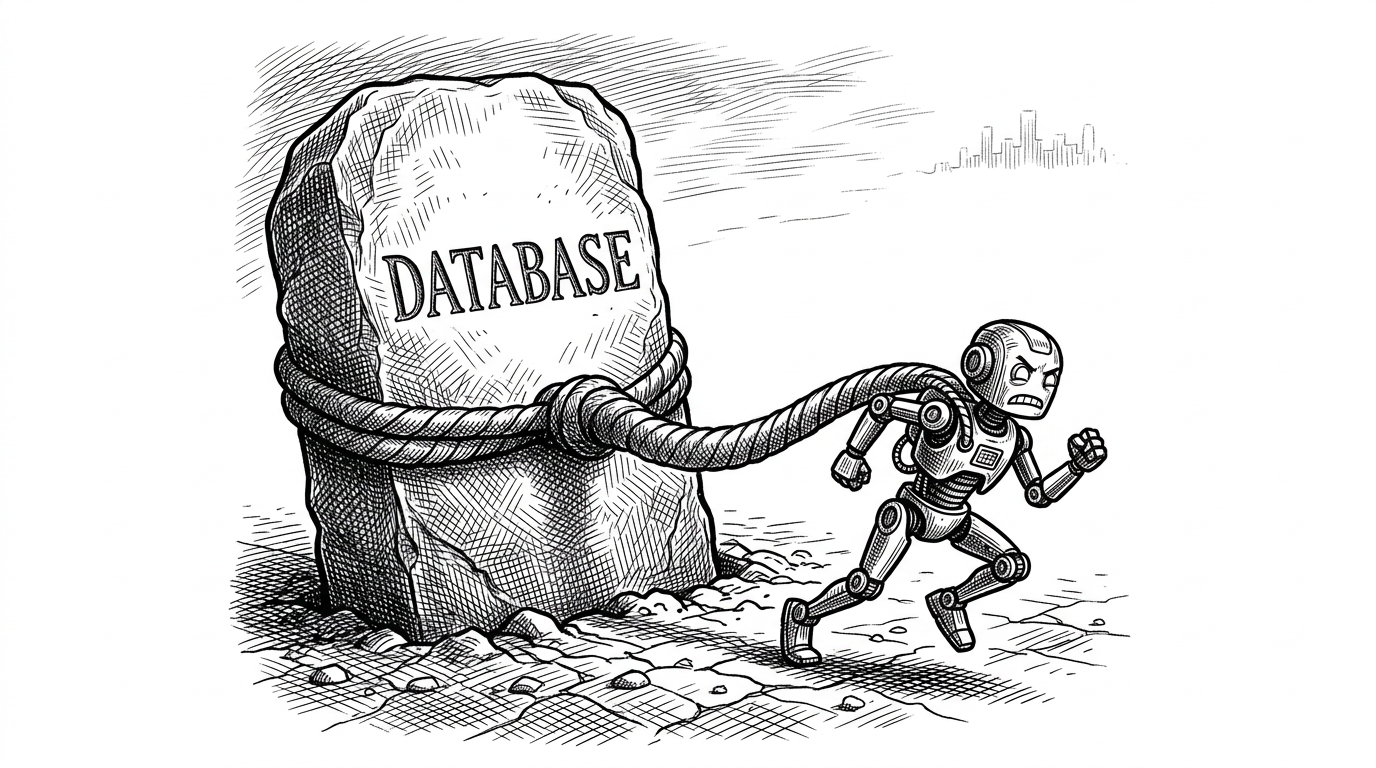
The "Serverless" revolution promised we could forget about servers. But it forced us to remember the database every single time. For AI agents, this stateless amnesia is a dealbreaker. Every turn of a conversation requires a round-trip to an external database just to remember what happened two seconds ago. Passing 50KB of context back and forth for a simple "Hello" introduces massive latency and architectural complexity.
Meet the Micro-Server
Cloudflare Agents changes the paradigm entirely. Instead of a stateless function querying a database, it treats the Agent as a physical, stateful object living at the network edge. Powered by Cloudflare's Durable Objects, each agent is a globally unique, addressable entity. It is a "Micro-Server" dedicated to a single user or task.
The SQLite Heart
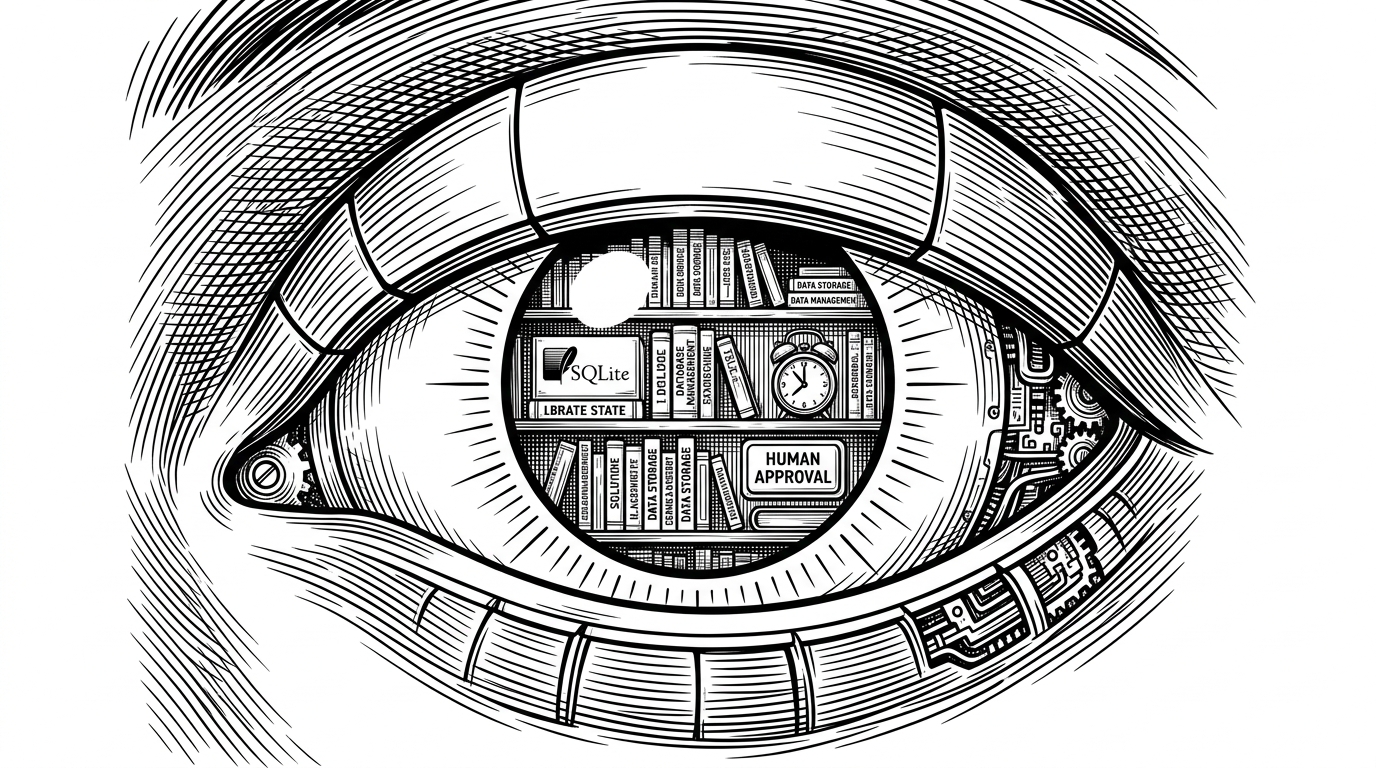
This architecture collapses the traditional backend stack. The agent is the data. It features an embedded SQLite database, eliminating external network calls for memory retrieval. A single line of code updates local memory, writes to SQLite, and broadcasts to connected WebSocket clients simultaneously.
Waiting for Humans
AI agents often need to wait for human approval before executing a sensitive tool. Traditional systems require complex cron jobs, task queues, and polling mechanisms to handle this "Human-in-the-Loop" problem. Cloudflare Agents solve this natively. They use built-in Alarms to pause execution for days without losing context. When a user finally clicks "Approve," the agent wakes up exactly where it left off.
Collapsing the Stack
Rebuilding a stateful chat app the old way requires a web of interconnected services. You need an API, a database, a pub/sub provider for real-time updates, and a background task worker. The cloudflare/agents framework reduces this entire infrastructure to a single TypeScript class.
| Feature | Traditional "Stateless" Agent | Cloudflare "Stateful" Agent |
|---|---|---|
| Persistence | External (Postgres/Redis) | Internal (Built-in SQLite) |
| Real-time Sync | Third-party (Pusher/Ably) | Native (Built-in WebSockets) |
| Background Tasks | Task Queue (Celery/BullMQ) | Native (Alarms/Workflows) |
| Cost when Idle | Server/DB Base Costs | $0 (Hibernation) |