ai-code-fusion: The Context Compiler That Treats Your Repo Like an Input Pipeline
A security-first Electron desktop tool that lets developers curate files, count tokens, and export repositories into LLM-ready Markdown or XML without turning context prep into a blind copy-paste job.
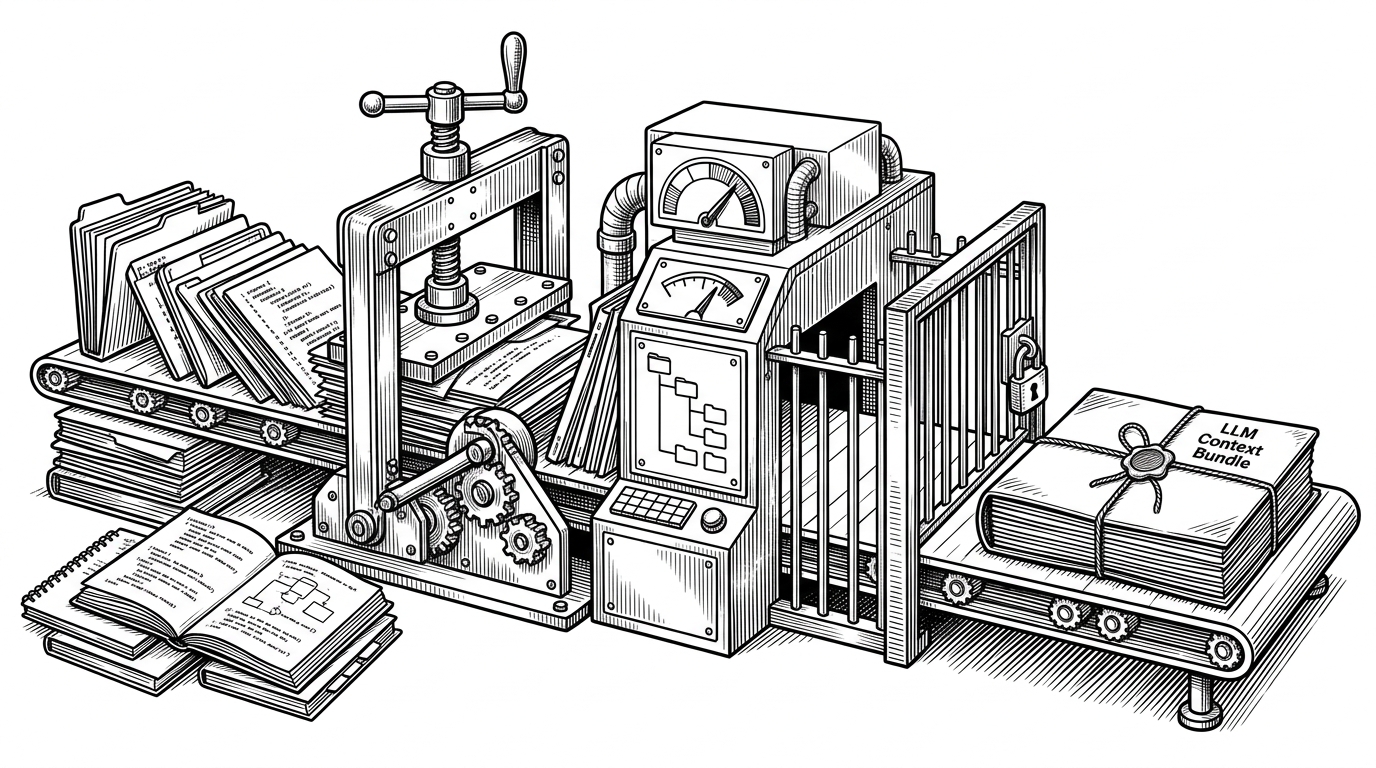
- ai-code-fusion treats repository prep as a distinct workflow, not a side effect of file concatenation.
- Its real differentiator is the combination of token awareness, file selection, and export control inside a security-conscious Electron shell.
- The project matters because it makes the trust boundary explicit, with preload isolation, path guards, and a processor that formats output deliberately.
- This sits between blunt repo-to-text tools and full AI coding agents by owning the prepare phase instead of the edit loop.
Why prompt packs are becoming a new developer primitive
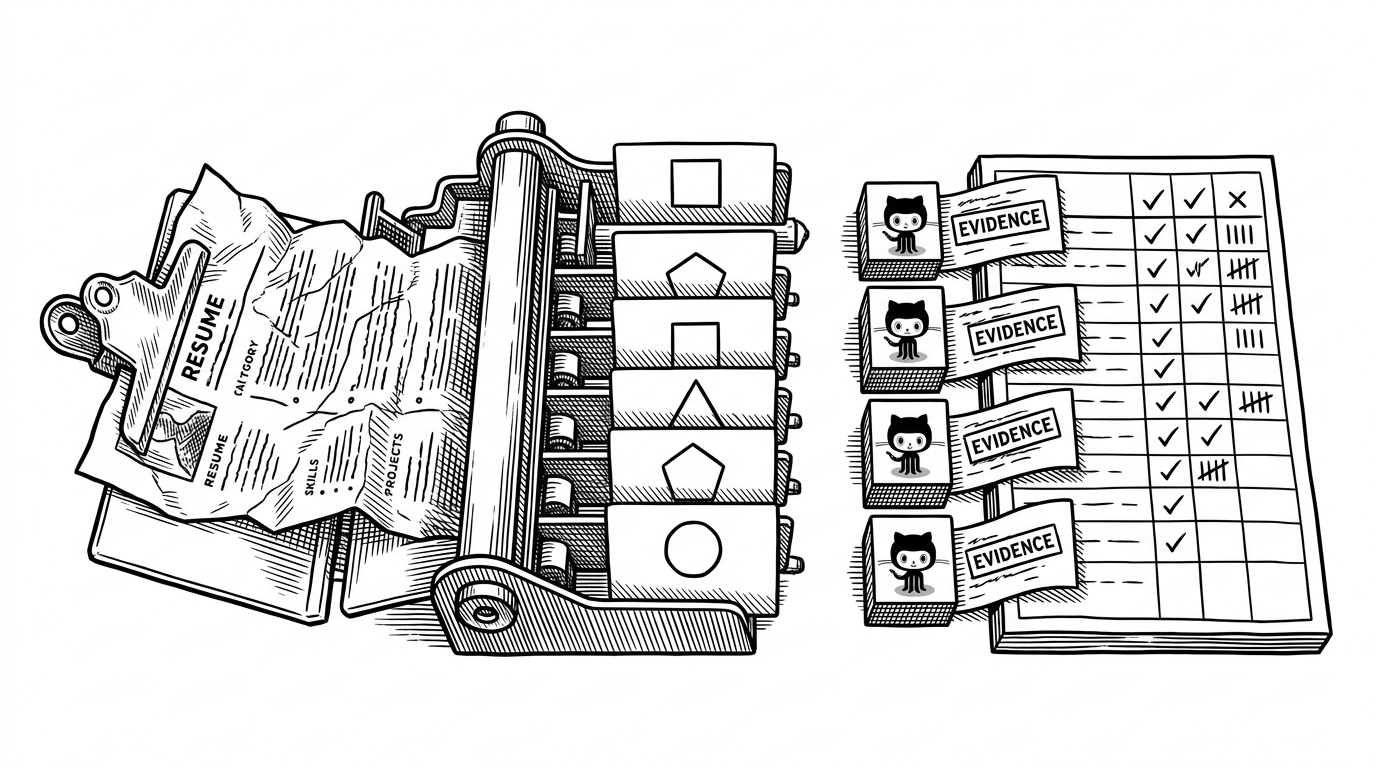
The basic problem is easy to miss. LLMs do not need more files. They need better context. `ai-code-fusion` takes that seriously and turns repo prep into a repeatable workflow instead of a copy-paste ritual.
That shift matters because the expensive part is not generating text. It is deciding what belongs in the prompt, what should stay out, and how much of the budget you are spending before you hit export.
Even with models that have huge context windows, a well crafted repo gets better results: ... use small "rules" markdown files per directory (`AGENTS.md`/`CLAUDE.md`) ...
The core workflow: select, measure, export
The app's value shows up in the sequence. Pick a repository root, select files, watch the token count move, then export a structured bundle in Markdown or XML. The UI is doing more than browsing a tree. It is making the cost of context visible before you commit.
The part most tools skip: safety boundaries
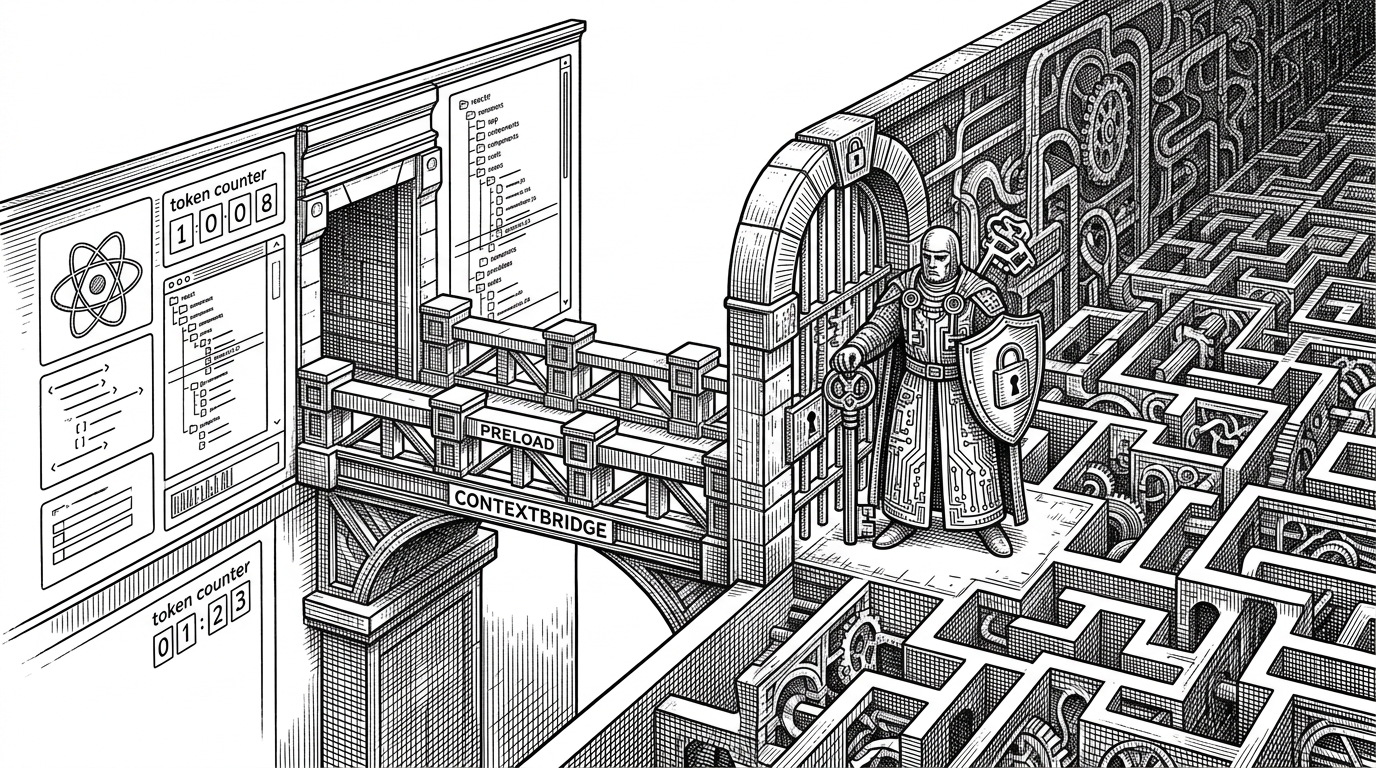
This is where the project gets interesting. The React frontend does not get free rein over the filesystem. `src/main/preload.ts` exposes a limited `electronAPI` through `contextBridge`, and the main process keeps file access inside an authorized root path.
That design sounds conservative, but it is the right kind of conservative. A tool built to ingest local code should be treated like a security-sensitive app, not a convenience script.
The guardrails matter because they shape behavior. `path-guard.ts` blocks traversal outside the selected root, navigation guards keep the shell from wandering, and the preload layer keeps the renderer from becoming a Node.js escape hatch.
Why the processor matters more than the UI
If the UI is the doorway, `repository-processing.ts` is the brain. It does the real work of turning a selected set of files into something an LLM can actually consume without ambiguity.
The processor renders a recursive tree, distinguishes Markdown from XML output, and wraps code safely with CDATA when needed. That last detail matters more than it sounds. XML is only useful if special characters do not break it.
// Conceptual shape of the export step
const bundle = repositoryProcessor.process({
  rootPath,
  selectedFiles,
  outputFormat: 'xml',
  tokenBudget
});

// The processor must preserve structure
// and keep file content valid for the chosen format.
The point is not just to merge text. The point is to preserve structure, preserve boundaries, and preserve enough metadata that the bundle still feels like a repository instead of a paste bin.
The app's second story is maturity
A lot of small AI tools feel like demos. This one feels like a product that expects to be maintained. The repo includes testing, stress checks, binary detection, freshness audits, and internationalization. That is a very different signal.
| Capability | ai-code-fusion | Simple repo-to-text tools | AI coding agents |
|---|---|---|---|
| Workflow stage | Prepare and export context | Flatten files into text | Edit and execute inside the loop |
| File selection UX | Visual and selective | Usually CLI or blunt include rules | Embedded in the assistant interface |
| Token awareness | Built in | Often absent | Sometimes present, but secondary |
| Security model | Preload isolation and path guards | Varies widely | Depends on host environment |
| Output control | Markdown or XML | Usually one format | No explicit context bundle concept |
| Best use case | Curated repo bundles for LLMs | Quick one-off dumps | Interactive coding and refactoring |
That matters because the project behaves like something intended to survive contact with real users. TypeScript discipline, QA scripts, and binary handling suggest a maintainer who is thinking about failure modes, not just feature count.
Where it sits in the AI coding landscape
`ai-code-fusion` does not try to replace an agent or an IDE assistant. It owns the prepare phase. That is its lane, and it is a useful one. Tools like repomix show the demand for repo-to-text workflows, while agentic systems such as Continue or OpenCode live deeper in the edit loop.
The difference is not cosmetic. One class of tools is asking, "What should the model see?" The other is asking, "What should the model do next?" `ai-code-fusion` answers the first question with more discipline than most.
| Question | Context compiler | Agentic coding tool |
|---|---|---|
| Primary job | Curate and package input | Generate, edit, and orchestrate work |
| Failure mode | Noise, missing files, bad formatting | Overreach, drift, or unsafe actions |
| User value | Cleaner prompt, better boundaries | Faster implementation loop |
| Mental model | Input pipeline | Execution environment |
What this project says about the future of context
The deeper lesson is that context is becoming something you engineer. As model workflows mature, the interesting tools are not just the ones that write code. They are the ones that help you build better inputs with fewer surprises.
`ai-code-fusion` gets that right. It treats a repository like a source system, a token budget like a real constraint, and export formatting like part of the product instead of a footnote.