effGen: The Agent Framework That Starts from Small Models, Not Big Ones
A look at the architecture, prompt compression, and routing tricks that make sub-10B models viable for real agent workflows.


We introduce EffGen, an open-source agentic framework optimized for small language models (SLMs) that enables effective, efficient, and secure local deployment.
- effGen is built around the assumption that small models are the default, so routing, compression, and memory are design primitives rather than afterthoughts.
- Its biggest trick is not a single optimization but a full execution path that decides how much reasoning budget a task deserves before the model spends it.
- The repo feels production-ready because the same codebase spans lazy imports, API compatibility, pooling, tenancy, telemetry, and deployment targets.
- Compared with generic agent frameworks, effGen is narrower and more opinionated, but that is exactly what makes it useful for constrained models.
The framework that assumes the model is small
Most agent frameworks are built around a quiet assumption: the model is strong enough to carry the system. effGen starts from the opposite premise. It treats limited context, brittle tool use, and shallow reasoning as the normal case, then builds the framework around those constraints.
Why small models need a different agent stack
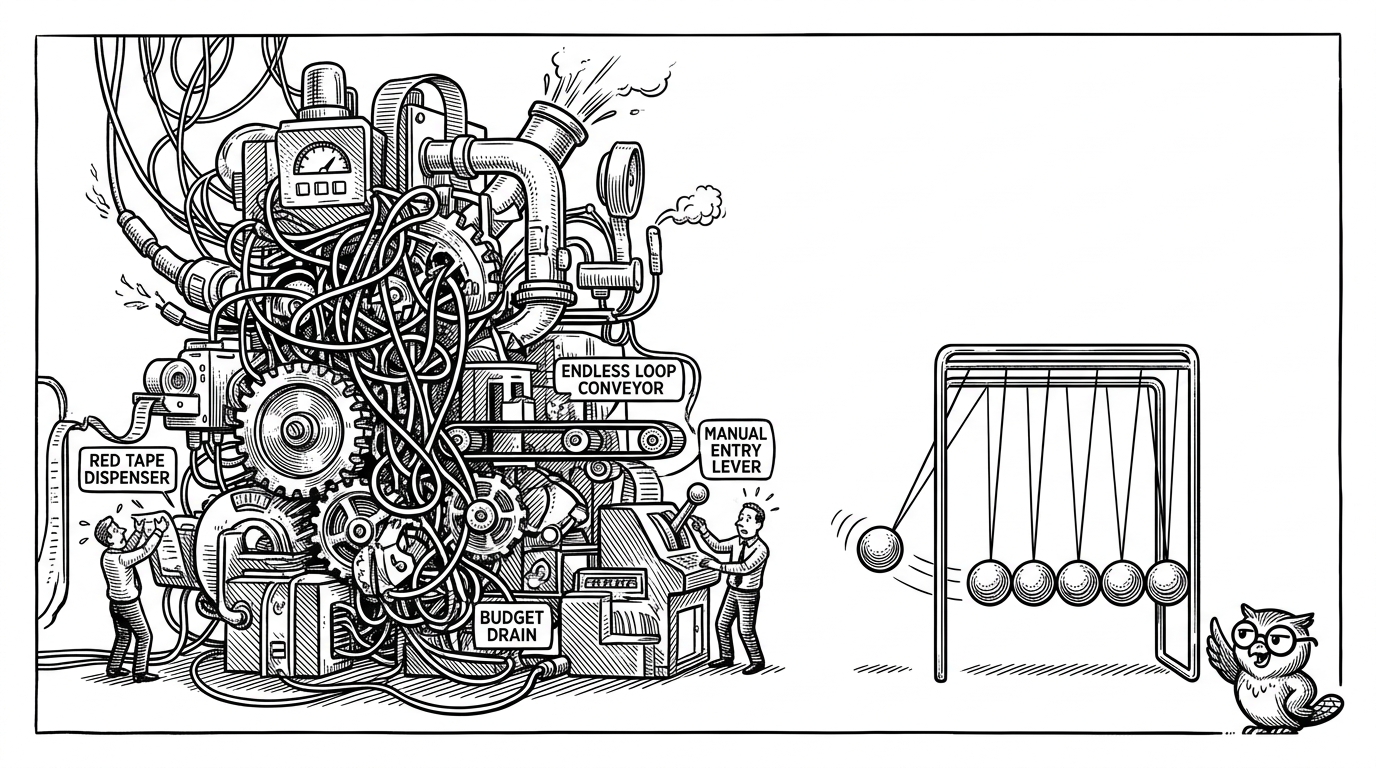
Small models do not just need fewer tokens. They need a different operating model. Long prompts waste their budget, vague task routing burns compute, and unmanaged memory turns every follow-up into a fresh failure mode.
| Capability | Generic agent frameworks | effGen |
|---|---|---|
| Default model assumption | Usually built for large, forgiving models | Built for small models first |
| Prompt handling | Often verbose and reusable | Compressed and simplified for context budgets |
| Routing / decomposition | Usually one generic execution path | Complexity-aware routing with task splitting |
| Memory strategy | Conversation history as-is | Compaction and selective retention |
| Local-first support | Often secondary | Core design goal |
| Deployment readiness | Frequently demo-first | API, tenancy, pooling, and deploy targets included |
| Best fit | General-purpose LLM apps | Constrained, cost-sensitive agent workflows |
The engine room: lazy imports, shared core, and runtime discipline
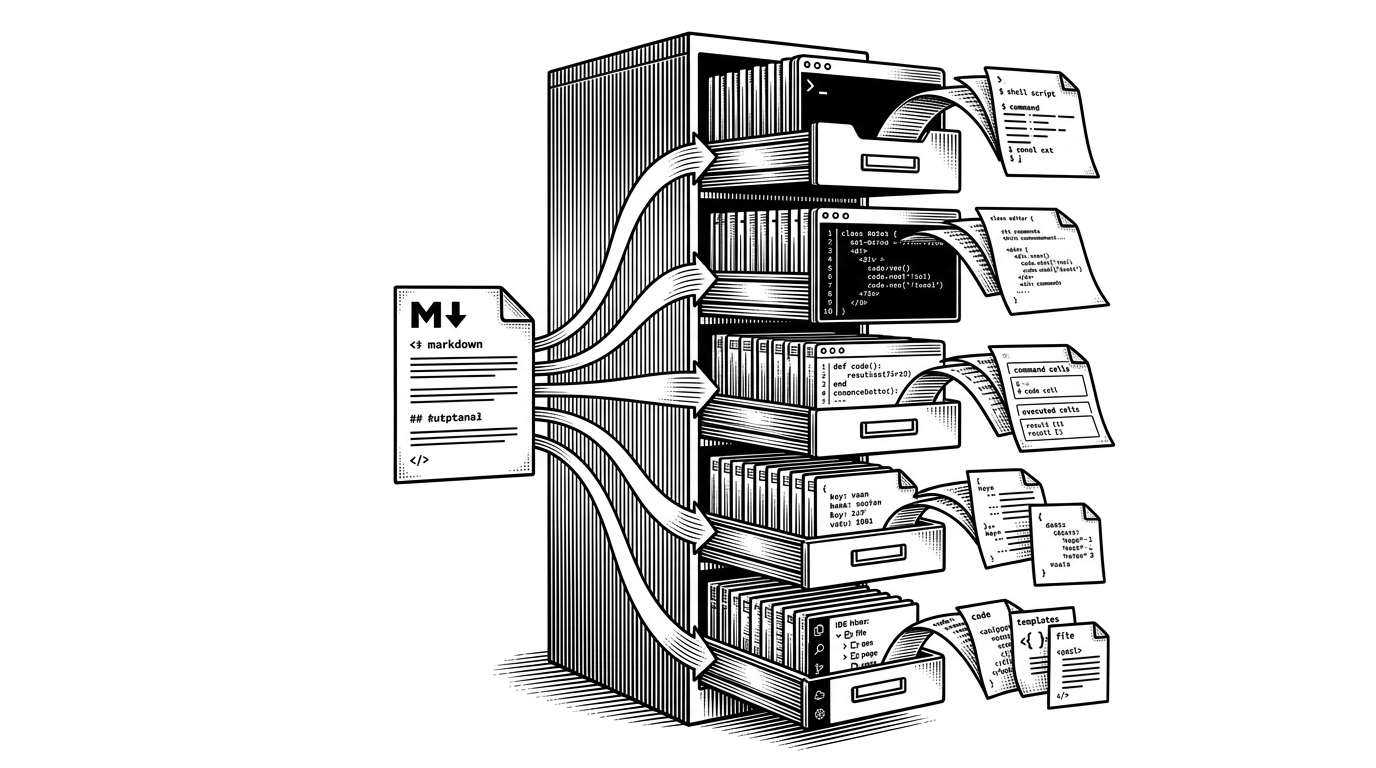
The repo’s structure is a clue. The top-level package uses lazy loading so heavy dependencies do not land unless they are actually needed. That matters in Python ML projects, where import time can become a hidden tax on every run, CLI invocation, and server startup.
Why the import layer matters
This is not cosmetic engineering. A lazy gateway keeps the framework cheap to inspect, cheap to start, and less punishing to extend. In a system that may be used locally, at the edge, or inside a service process, that discipline is part of the product.
The trick that makes the system teachable: routing, decomposition, and memory
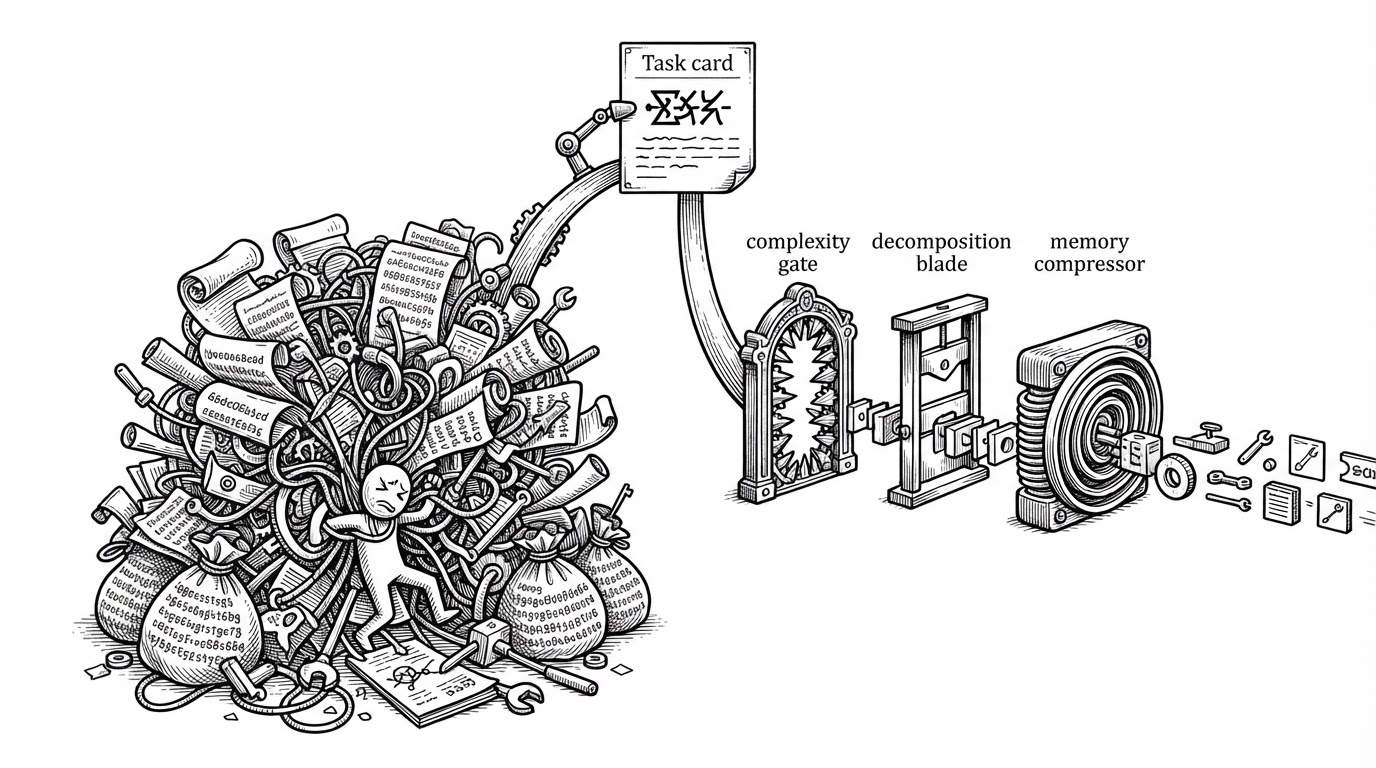
This is the center of gravity. effGen evaluates task complexity before it commits to a path. Simple jobs can stay compact. Hard jobs can be decomposed, routed through more steps, and then reconciled through a memory system that preserves useful state without dragging the full conversation forward.
- Complexity routing is the guardrail that prevents every task from becoming an expensive multi-step run.
- Prompt optimization makes small context windows feel larger by removing redundancy before execution.
- Task decomposition gives the framework a way to turn one hard request into several smaller, safer subproblems.
- Memory compaction keeps the system from drowning in its own history.
From research paper to something you can deploy
effGen does not stop at a paper-friendly API. The repository includes OpenAI-compatible serving, pooling for stateful agents, tenancy controls, telemetry, and deployment paths for Lambda, Kubernetes, Docker, and Cloudflare Workers. That combination says the same thing in five different ways: this was built to run as a service.
| Production concern | What effGen includes | Why it matters |
|---|---|---|
| API compatibility | OpenAI-compatible endpoint layer | Easier drop-in adoption for existing tooling |
| Agent lifecycle | Pool management for stateful agents | Avoids recreating expensive agent state on every request |
| Multi-tenancy | Tenant controls and quotas | Makes shared deployment sane |
| Observability | OpenTelemetry and Prometheus hooks | Lets operators see latency and failure modes |
| Deployment breadth | Lambda, Kubernetes, Docker, Workers | Supports edge, cloud, and containerized use cases |
What effGen is really competing with
effGen is not trying to win by being the broadest framework. It is trying to win by being the right framework for constrained models. That puts it in conversation with LangChain, AutoGen, and Smolagents, but on different terms.
| Framework | Operating assumption | Where effGen differs |
|---|---|---|
| LangChain | Model-agnostic application plumbing | effGen is more opinionated about small-model constraints |
| AutoGen | Multi-agent orchestration for capable models | effGen routes simpler tasks away from heavy orchestration |
| Smolagents | Lightweight agent ergonomics | effGen leans harder into compression, routing, and deployment surface |
The larger bet is clear. As teams push more work onto smaller, cheaper, or local models, the winning frameworks will not be the ones that pretend the model is infinite. They will be the ones that treat scarcity as a first-class design constraint. effGen is built on that assumption.