NATURALIS-FUTURA: The Bestiary That Makes AI Risk Navigable
A cartographic encyclopedia that turns abstract threat modeling into something you can explore, remember, and compare.
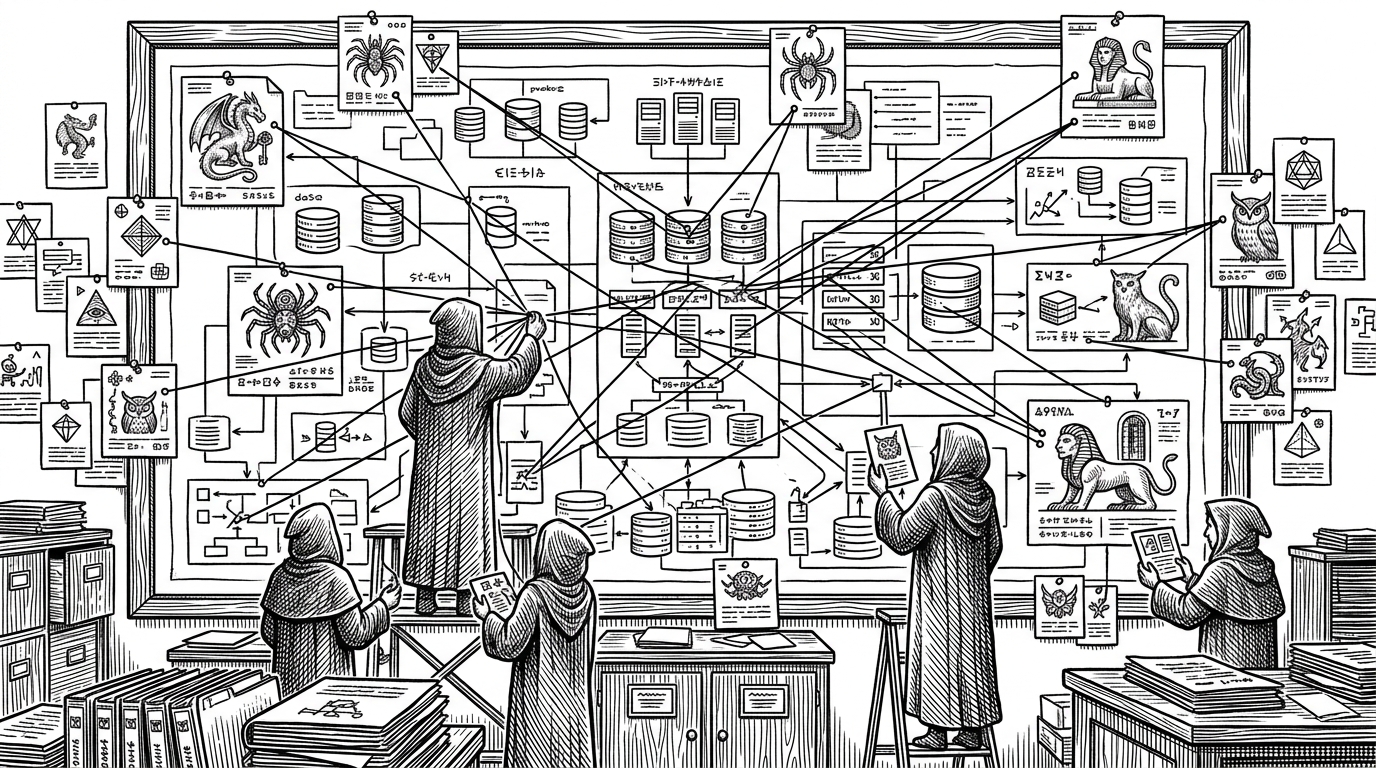
- NATURALIS-FUTURA turns AI risk into a navigable landscape, which makes complex threats easier to remember and compare.
- The repo's real invention is structural, because the mythic skin sits on top of a strict schema with risk scores, analogues, and countermeasures.
- Discovery mechanics matter as much as content here, since progression, regions, and view modes turn reading into guided exploration.
- The project argues that technical communication improves when information is spatial, layered, and earned instead of dumped all at once.
A map for the things we cannot see
Most AI safety writing is a stack of arguments. NATURALIS-FUTURA is a place. It turns 54 threats into creatures, places them across eight regions, and lets you discover them through movement, adjacency, and unlocks.
That shift matters because risk is easier to remember when it has geography. A threat list tells you what exists. A map tells you what touches what, what clusters, and what should make you uneasy before the formal analysis even starts.
The bestiary is a database, not a mood board
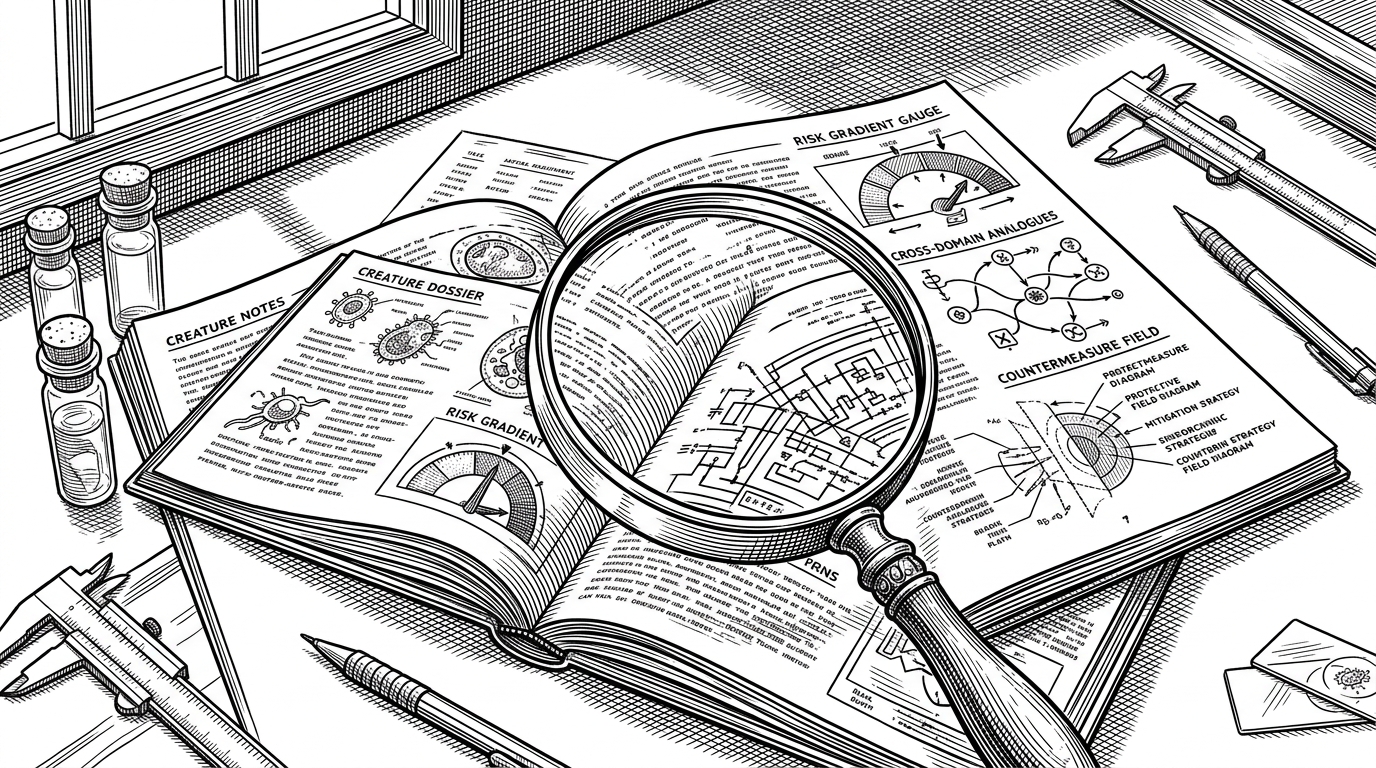
The creature cards are doing more than worldbuilding. Each record carries a threat gradient, a mythic origin, a natural analogue, a sci-fi echo, a technical spec, a countermeasure, and compound risk links. The folklore is the wrapper, but the schema is the engine.
That structure does a lot of editorial work. A novice can read the label and move on. A scholar can inspect the technical detail. A cartographer can think in regions, adjacency, and shared failure modes. The same record serves three levels of attention without collapsing into noise.
Discovery is the product
The repo does not dump everything on screen at once. `MapCanvas`, player progress state, and discovery triggers make knowledge arrive in layers. That is a small interface choice with a big effect: the content feels earned.
The view modes sharpen that idea. In novice mode, the reader gets the shape of the thing. In scholar mode, the technical layer comes forward. In cartographer mode, the spatial relationships take over. The app is not just rendering data. It is controlling how fast a reader can metabolize it.
Myth is the interface
Mythology is not decoration here. It is compression. Creature names let the project talk about recursive self-improvement, jailbreaks, embodied autonomy, and compound failure without forcing every reader through a wall of abstraction first.
That is why the project feels memorable. It connects technical risk, biology, science fiction, and psychology without pretending they are the same thing. The bestiary frame keeps the differences visible while still making the system legible as a whole.
What this replaces
| Format | What it does well | What it misses |
|---|---|---|
| Static AI safety paper | Makes a formal argument with precision | Keeps relationships buried in prose, footnotes, and separate diagrams |
| Risk dashboard | Lets you scan quickly | Often strips away narrative and context |
| Traditional wiki | Supports browsing and reference | Rarely guides discovery or hierarchy of concern |
| NATURALIS-FUTURA | Turns threat modeling into a spatial, memorable experience | Depends on the schema staying disciplined enough to support the metaphor |
Papers still matter. So do dashboards and encyclopedias. The point is not that a bestiary is better than formal analysis. The point is that it is better at pattern recognition, recall, and guided exploration.
Why this matters for technical communication
The lesson travels beyond AI safety. Any domain with dense, relational complexity can borrow this move. If the subject is hard to remember, stop asking for more text and build a spatial model that helps the reader see the system before they try to memorize it.
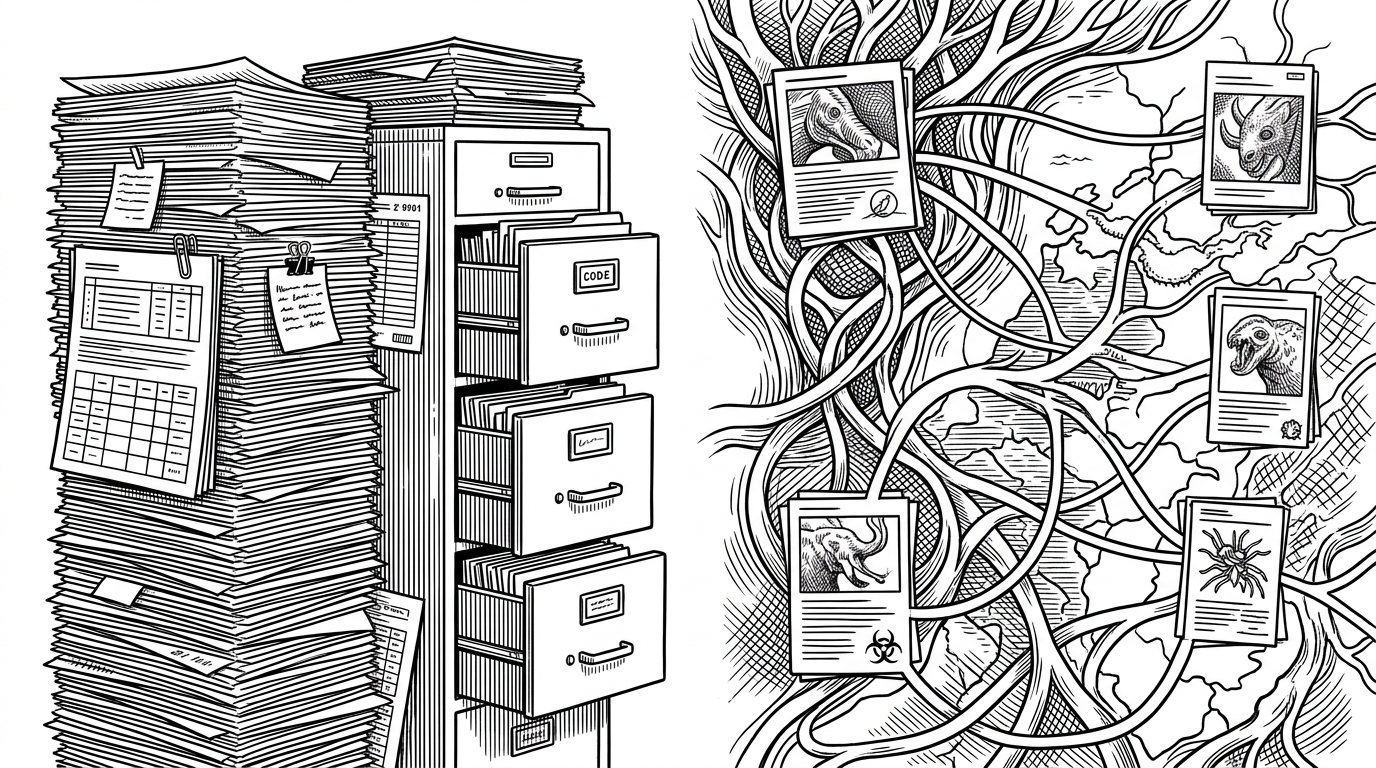
That is the real strength of NATURALIS-FUTURA. It treats complexity as something to be navigated, not merely described. The result is a repository that feels less like a file cabinet and more like a cognitive interface.