ASI-Evolve: The Research Loop That Lets AI Improve Its Own AI
A deep dive into the framework that separates literature memory from experiment history, then uses that split to evolve architectures, data pipelines, and learning algorithms through repeated trials.
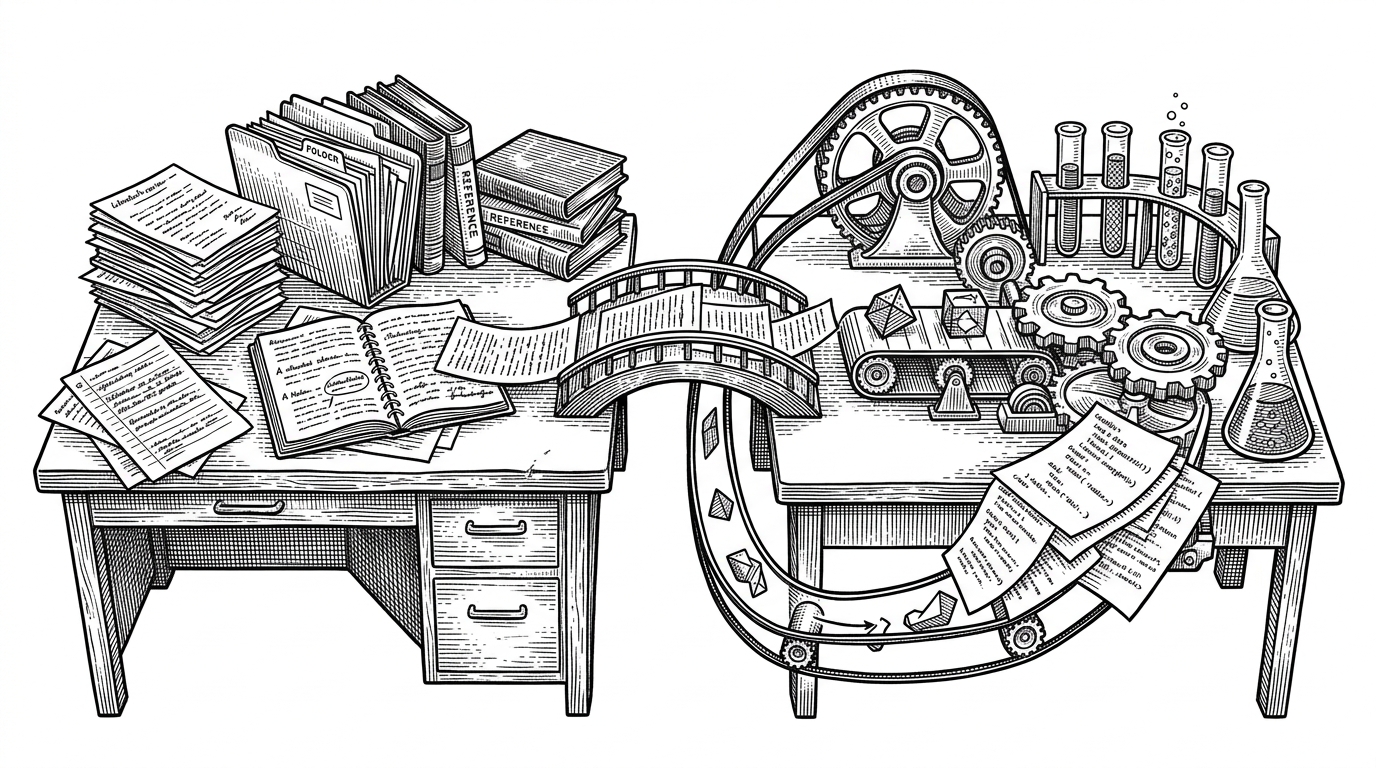
- ASI-Evolve is built around a two-memory model that separates stable literature knowledge from experimental history.
- Its main innovation is not a faster agent, but a research loop that can propose, test, compress, and promote ideas across rounds.
- Diff-based evolution and structured selection turn large-codebase experimentation into targeted search instead of brute-force rewriting.
- The framework is broad enough to span architectures, data curation, learning algorithms, and cross-domain transfer.
ASI-Evolve is not just an agent that runs experiments. It is a system that tries to make research itself behave like a search process, with memory, selection, and feedback built in.
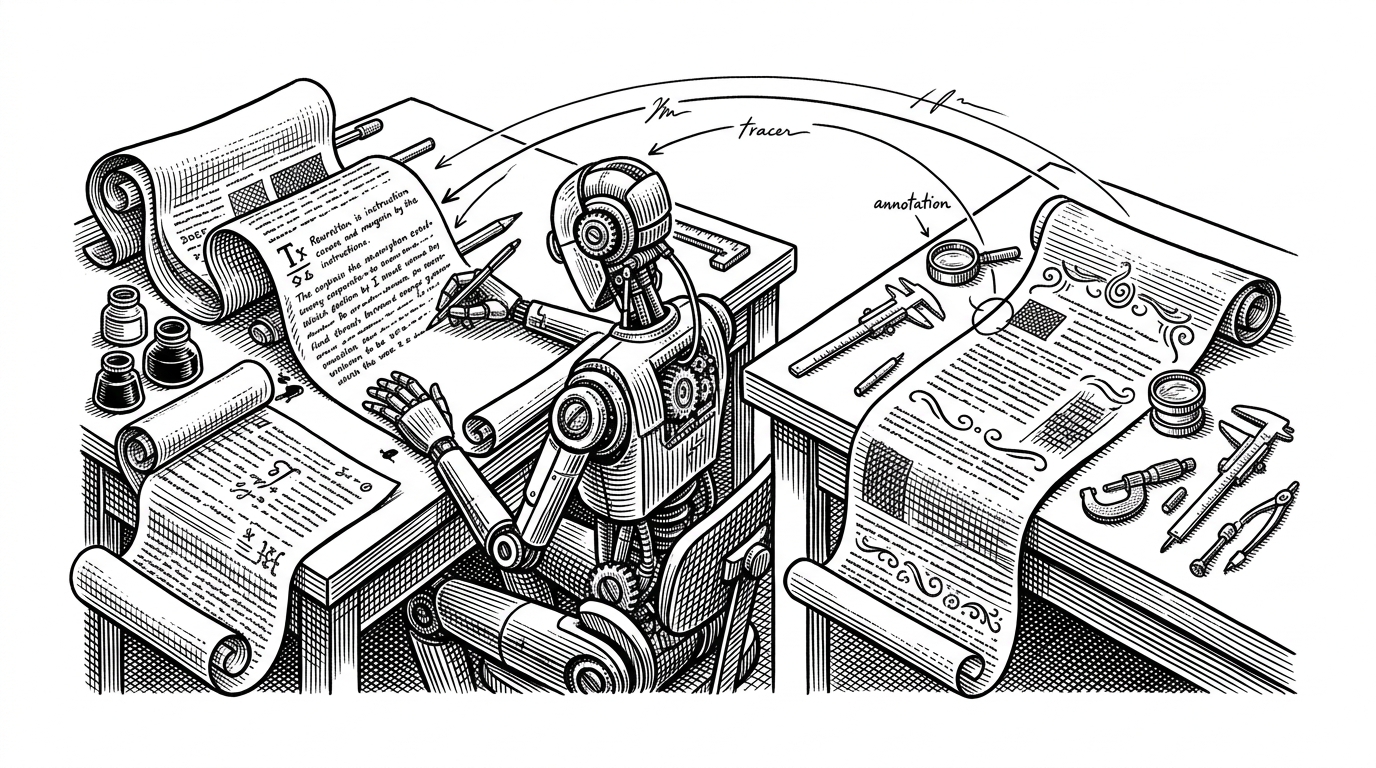
That is why the repo feels different from ordinary automation frameworks. It separates Cognition, the grounded literature base, from the Database, the lived history of trials, then lets those two stores shape the next round of discovery.
Why ASI-Evolve Feels Different
What if you could run a tireless AI researcher on your hardest problem — one that reads the literature, designs experiments, runs them, and learns from every failure?
That README question is the whole bet. ASI-Evolve treats research as a recurring process, not a one-shot prompt, and that shift changes everything from context selection to result interpretation.
Most agent systems keep all memory in one bucket. This repo splits the bucket in two, which is a small design choice with a large consequence: theory stays cleanly separated from evidence.
The Two-Memory Model
Cognition is the shelf. It holds papers, prior methods, and durable heuristics. Database is the lab notebook. It stores what happened when the system actually tried something, including motivations, code, scores, and lessons.
That separation matters because a researcher needs both kinds of context. If you mix them together, the model can start treating a failed trial like a fact, or a paper claim like a proven result.
ASI-Evolve's loop is built to keep those signals distinct. The Researcher can still read from both, but the system knows which source is grounding and which source is evidence.
How the Loop Runs
# Simplified view of the research loop
cognition = retrieve_literature(task)
parents = select_promising_trials(database, strategy="ucb1")
context = combine(cognition, parents)

proposal = researcher.generate(context)
candidate = apply_change(base_code, proposal)
result = engineer.run(candidate)
summary = analyzer.compress(result)

database.store({
    "proposal": proposal,
    "candidate": candidate,
    "result": result,
    "summary": summary,
})
The Manager frames the task. The Researcher proposes the next change. The Engineer executes it and measures the result. The Analyzer turns the raw outcome into compact lessons that can be reused.
That is a closed scientific loop. It is also the reason the repo is more interesting than a generic coding agent, because the goal is not just to ship code. The goal is to improve the search process that produces the code.
Why Diff-Based Evolution Matters
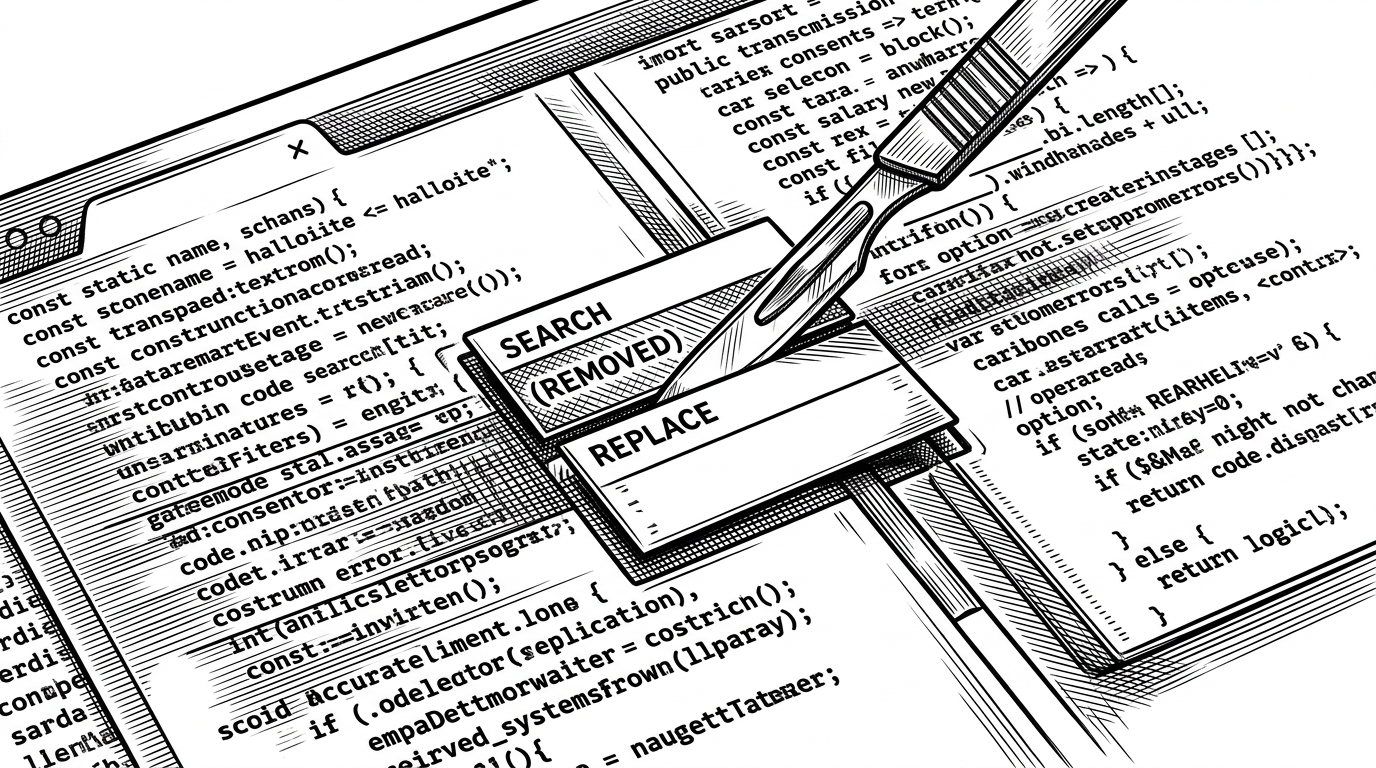
This is one of the smartest implementation choices in the repo. Instead of asking the model to rewrite an entire system, ASI-Evolve can work with SEARCH and REPLACE blocks, which makes evolution more surgical and less chaotic.
That matters at scale. Targeted diffs reduce token waste, limit accidental drift, and make it easier to preserve useful code while exploring new variants.
<<<<<<< SEARCH
return old_architecture(x)
=======
return improved_architecture(x, gating="top_k")
>>>>>>> REPLACE
The Selection Engine Behind the Evolution
| Dimension | ASI-Evolve | OpenEvolve | GEPA | MLE-bench | SWE-bench |
|---|---|---|---|---|---|
| Purpose | Scientific discovery loop | Code evolution | Program evolution | Agent evaluation | Software issue repair |
| Memory model | Cognition plus Database | Trial history | Program history | Task episodes | Benchmark instances |
| Output type | New architectures, data pipelines, algorithms | Improved code | Optimized programs | Scores on tasks | Patched repositories |
| Domain scope | Architecture, data, learning, transfer | Code-centric | Program-centric | Broad ML tasks | Software maintenance |
| Core behavior | Select, propose, execute, analyze, promote | Mutate and test | Optimize prompts or programs | Measure agent skill | Verify issue resolution |
| Main value | Discovery engine | Evolution utility | Optimization framework | Benchmarking | Benchmarking |
The selection layer is what turns trial-and-error into structured search. UCB1 balances exploration and exploitation, while island models keep separate populations alive so the system does not overfit to one local optimum.
In plain terms, the framework is not just generating candidates. It is deciding which candidates deserve more attention next.
That is a different class of system from a benchmark or a maintenance tool. Benchmarks measure the quality of a process. ASI-Evolve is trying to become the process itself.
What the paper says it can discover
| Discovery target | What changed | Why it matters |
|---|---|---|
| Neural architectures | The system evolved architectures over many rounds and found designs that beat the baseline | Architecture search becomes a repeatable loop instead of a manual guess |
| Data curation | It designed cleaning strategies for a massive pretraining corpus | Data quality becomes an optimization problem, not a fixed preprocessing script |
| Learning algorithms | It invented new RL algorithms that outperformed the reference method | Algorithm design becomes something a system can explore directly |
| Cross-domain transfer | It was applied to drug-target interaction prediction | The framework is not trapped inside one benchmark family |
To our knowledge, Asi-Evolve is the first unified framework to demonstrate AI-driven discovery across three central components of AI development: data, architectures, and learning algorithms.
That claim is ambitious, but the structure behind it is clear. The repo is not trying to win one task by accident. It is trying to systematize the way better ideas are found.
Where It Fits in the Competitive Landscape
| Project | Best fit | What it is not |
|---|---|---|
| ASI-Evolve | Discovery engine for AI research | Just another agent benchmark or code helper |
| OpenEvolve | Evolution of code-focused solutions | A full research memory system |
| GEPA | Program evolution and optimization | A broad AI-for-AI discovery stack |
| MLE-bench | Evaluation of ML engineering agents | A discovery framework |
| SWE-bench | Software issue resolution benchmark | A scientific experimentation loop |
The easiest way to misread ASI-Evolve is to lump it in with agent eval suites. That misses the point. It is closer to a recursive laboratory than a scorecard.
Its real differentiator is the combination of memory separation, diff-based evolution, and parent selection. Put those together and you get a system that can keep iterating without forgetting why earlier rounds mattered.
The Bigger Bet
The recursive loop is closed. AI is building AI. And on these benchmarks, it's already better at it than we are.
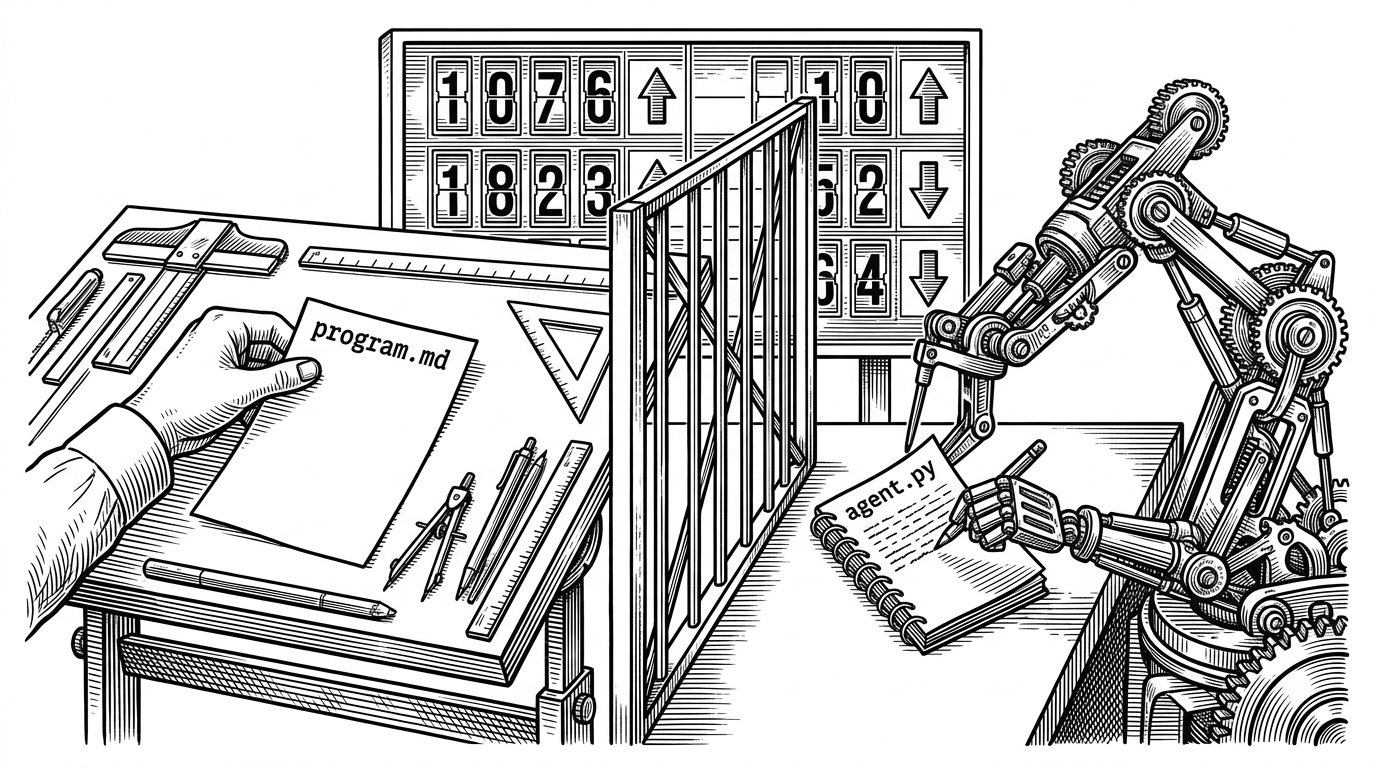
The provocative version of this story is about replacement. The stronger version is about leverage. Humans still define the objective, choose the priors, and decide what counts as success.
ASI-Evolve handles the repetitive grind in between. It reads, proposes, tests, learns, and carries forward what worked, which is exactly the kind of loop that makes scientific progress feel less like inspiration and more like accumulation.