The quiet newsroom inside HypeTranslator
A Python pipeline that turns noisy AI posts on X into structured GeekNews-style reading, then keeps the whole system maintainable with async workers, dependency injection, and a disciplined data model.
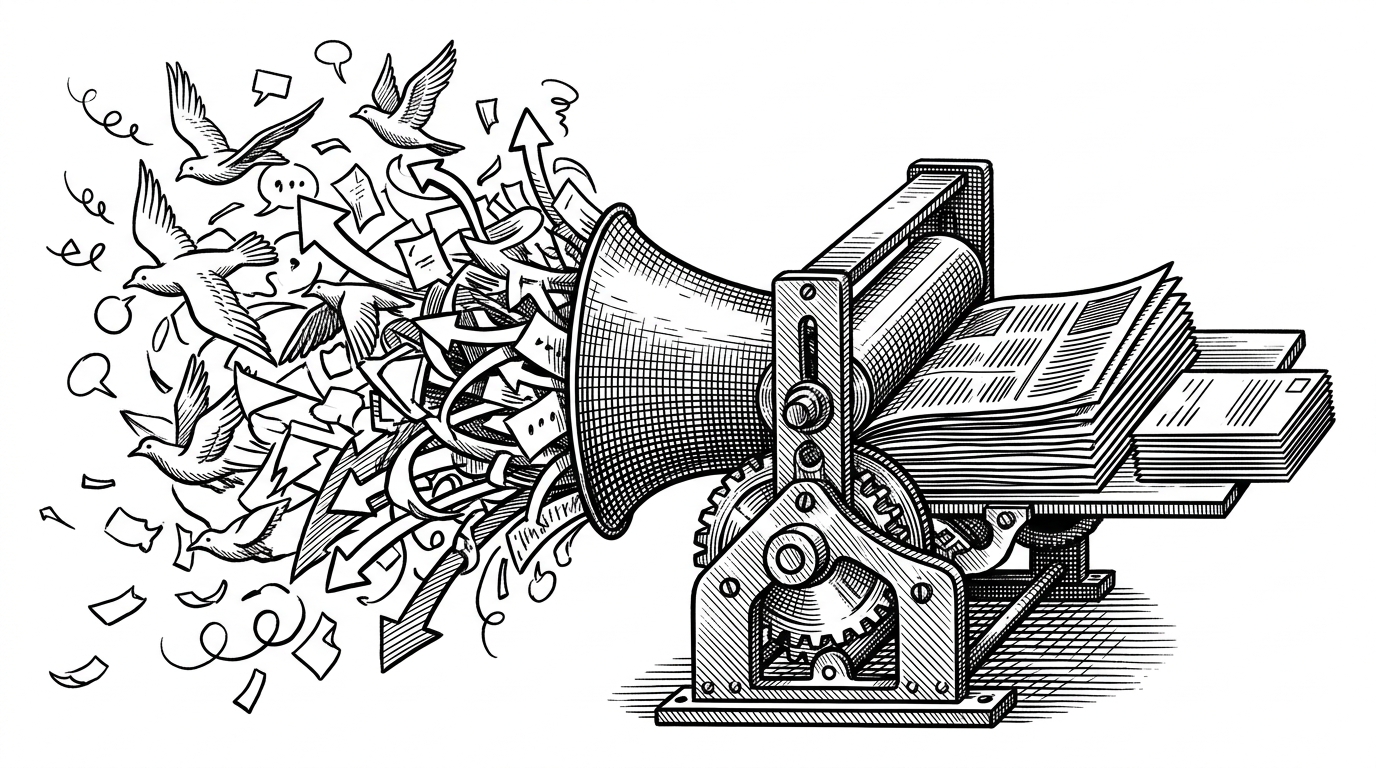
- HypeTranslator is best understood as a feed compiler, not a translator, because it turns scattered posts on X into structured reading for a specific audience.
- Its strongest design choice is architectural discipline, with dependency injection, async trackers, and DTO handling that make a brittle upstream source easier to manage.
- The project leans on unofficial X access, so it uses delays, shuffling, and de-duplication to reduce the cost of a hostile dependency.
- The stack looks ambitious for a small codebase, but uv, FastAPI, SQLAlchemy 2.0, and Nix give it a production-shaped core without framework sprawl.
If you follow AI on X, the hard part is not finding information. It is extracting signal from velocity. HypeTranslator is interesting because it refuses to treat the feed as the product. It treats the feed as raw input, then reshapes it into something closer to a newsroom.
A Korean lens on global AI noise
The README frames the project as experimental code for turning AI hype into a GeekNews-style reading experience for Korean AI enthusiasts. That is a narrow brief, and that is why it works. The project is not trying to be a universal social client or a generic summarizer. It is a curation machine with a very specific reader in mind.
That focus matters because it changes the architecture. Instead of optimizing for endless scrolling, the repo optimizes for collection, classification, and output. The nouns in the codebase tell the story: tracker, organizer, article, collect_article. This is not a timeline. It is a pipeline.
The architecture is the point
The codebase is organized like a service, not a script pile. backend/app.py uses a container to wire the database, the X client, and the domain modules together. That keeps source handling, article processing, and user-follow logic separated, which matters when the upstream source can change without warning.
That separation is also what makes the project feel more mature than its size suggests. The repo leans on dependency injection so the database engine and the X client are not hard-coded into business logic. In practice, that means the system can be tested, swapped, and reasoned about in smaller pieces instead of as one tangled automation blob.
The visual reason this matters is simple. X is a volatile source, so the system cannot assume clean order, stable timing, or unique inputs. HypeTranslator answers with a queue, concurrent workers, and a persistence layer that filters duplicates before they become content. It is a pipeline built for disorder.
How the tracker loop behaves
The collector uses multiple trackers at once, then pushes their results into an async queue. The worker model keeps each source fetch isolated, which helps when one source is slow or fails. After that, the service checks URLs against the database before saving anything, so the same post does not turn into repeated output.
There is also a more subtle detail in the data layer. SQLAlchemy sessions can expire before related objects are serialized, which creates the sort of bug that only appears after everything else seems to work. In backend/article/dto.py, the code pre-fetches related Organizer records before the session closes. That is the kind of defensive move that keeps async ORM code usable instead of mysterious.
The X integration is just as pragmatic. The project uses twikit, an unofficial client for X's internal APIs, then adds an action_delay function with a 10 second pause plus random jitter. It also shuffles the list of users before fetching. Those choices do not solve fragility, but they reduce how predictably the automation behaves.
A modern Python stack, chosen for control
The rest of the stack points in the same direction. uv handles the package workflow, FastAPI exposes the web layer, SQLAlchemy 2.0 and aiosqlite keep persistence asynchronous, and Nix with direnv makes the environment reproducible. This is a toolchain built for speed and hygiene, not for ceremony.
That matters because the project is small enough to feel personal, but structured enough to survive change. Modern Python makes it easy to throw together a scraper. It is much harder to build one that still makes sense after the upstream source shifts, the schema grows, and the output format changes. HypeTranslator is clearly trying to be the second kind.
What it gives up, and what it gains
| Dimension | Manual X reading | HypeTranslator |
|---|---|---|
| Primary job | Scan the timeline and hope the good posts surface | Collect from tracked accounts and reshape the output |
| User effort | Constant attention and manual filtering | Automated collection with organized articles |
| Failure mode | Attention fatigue and missed signal | Upstream fragility and maintenance work |
| Best for | Casual browsing | Readers who want curated, structured AI updates |
The tradeoff is clear. HypeTranslator gives up the stability of an official API-first workflow and accepts the maintenance burden of an unofficial client. In return, it gets control over timing, ordering, persistence, and presentation. That is a very different bargain from building a social app. It is closer to building a private newsroom.
That, ultimately, is what makes the repo worth a look. It is not flashy. It is a careful answer to a real problem: how to turn a noisy global feed into something local, legible, and worth reading. The codebase does not just translate language. It translates attention.