bb25: When BM25 Stops Being a Score and Starts Being a Probability
A Rust implementation of Bayesian BM25 that calibrates lexical relevance into probabilities, then fuses sparse and dense signals with log-odds instead of guesswork.
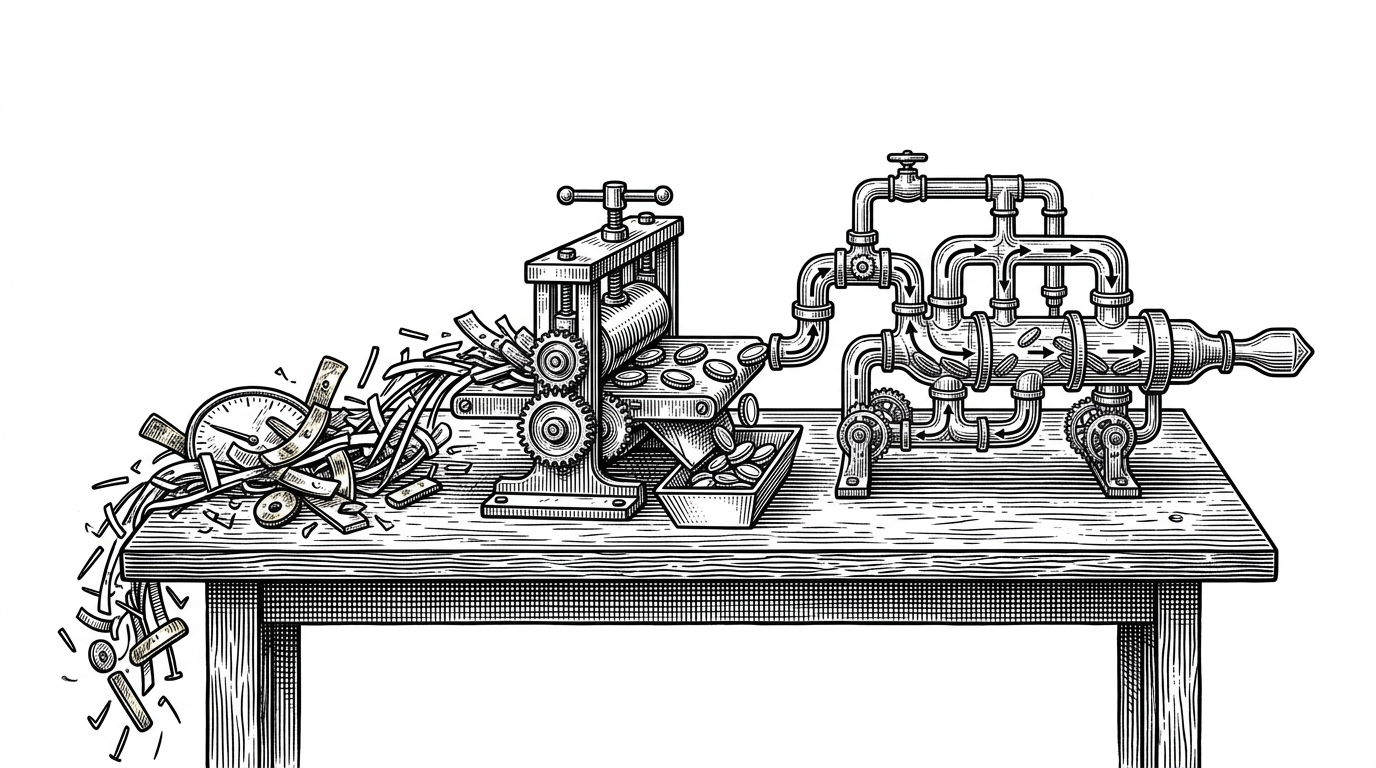

bb25 is a fast, self-contained BM25 + Bayesian calibration implementation with a minimal Python API.
- bb25 matters because it turns BM25 from a ranking score into a calibrated probability that can be compared with dense retrieval on the same scale.
- Its real innovation is log-odds fusion, which replaces arbitrary weighted sums with a cleaner way to combine sparse and dense evidence.
- Rust is the implementation advantage, but the product idea is a Python-friendly retrieval core that keeps the math fast enough to use.
- The repo is best read as a calibrated search component, not a full search engine or a simple BM25 clone.
Hybrid search usually starts with a lie. BM25 and cosine similarity do not live on the same scale, but weighted sums pretend they do. bb25 fixes the mismatch at the source by turning lexical evidence into a calibrated probability before anything gets fused.
The hybrid search problem is not retrieval, it is incompatible scales
Classic BM25 is a ranking signal, not a probability. Dense retrieval scores are usually bounded and easier to normalize, while BM25 can stretch in ways that make a hand-tuned 0.7 * BM25 + 0.3 * vector mix feel precise when it is mostly guesswork. The result is a system that looks numeric but behaves like a policy debate.
bb25's thesis is blunt: if the units are wrong, the merge is wrong. So it calibrates the lexical score first, then lets fusion happen on a shared mathematical footing.
Where bb25 comes from
The repo is a Rust core with a Python-facing API, and it follows the Bayesian BM25 lineage from the original Python implementation in cognica-io/bayesian-bm25. That makes bb25 less like a greenfield search engine and more like a performance-minded port of a specific idea: take a lexical score, make it probabilistic, and keep the workflow usable from Python.
That origin matters because this is not a notebook that wandered into production. It is a deliberate translation of a scoring idea into a compact Rust package that still feels natural to call from Python.
Turning BM25 into a probability
The scorer does not just renormalize the output. It builds a composite prior from term frequency and document length, then passes the result through a sigmoid-style likelihood. An optional base rate nudges the answer toward corpus reality when the local evidence is thin.
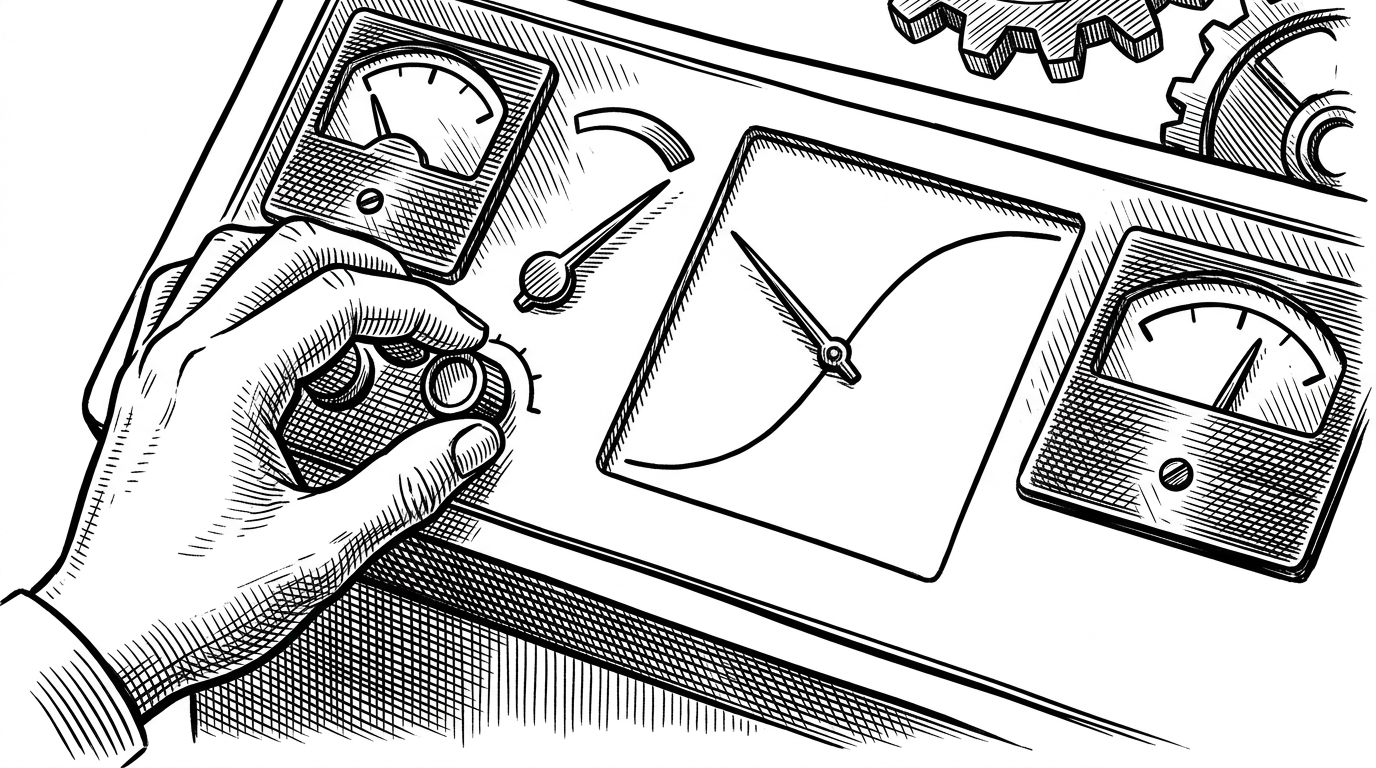
That is the semantic shift. After calibration, a BM25 result is no longer just a ranking score. It is an estimated relevance probability that can be compared, combined, and reasoned about like any other probabilistic signal. The repo also supports calibration methods such as Platt scaling and isotonic regression, so the mapping can be learned rather than guessed.
The fusion trick is the point
Once BM25 is a probability, the interesting math moves to fusion. bb25 uses log-odds conjunction, which adds evidence in log space instead of pretending that lexical and vector scores are naturally commensurate. That is cleaner than a weighted sum, and much harder to fool with arbitrary coefficients. The n^alpha scaling also matters because it keeps combined signals from collapsing as you stack more evidence.
The repo also exposes gating choices like ReLU, Swish, and GELU. That is a strange sight in an IR library, but it makes sense if you think of fusion as a learned response to sparse signals, not a spreadsheet formula.
The diagram is the thesis in one view. Calibration changes the unit, and fusion consumes that unit. Once you see that, the weighted sum starts to look like the workaround it always was.
Why Rust matters here
Rust is not the headline, but it is what keeps the idea practical. PyO3 gives the project a Python shell, PyCorpus shares corpus state without copying, math_utils handles numerical stability, and block_max_index can skip work when a block cannot beat the current top-k threshold.
That combination matters because calibration is only useful if it is fast enough to sit inside a real retrieval loop. bb25 is trying to be that loop's scoring component, not its entire universe.
What bb25 replaces, and what it does not
Here is the cleanest way to place it: bb25 is not a general search engine, and it is not a bare BM25 clone. It is a calibrated retrieval component for teams that care about what a score means before they care about what it ranks.
| Project | What the score means | Fusion method | Best at | Breaks down when |
|---|---|---|---|---|
| bb25 | A calibrated relevance probability derived from lexical evidence | Log-odds conjunction with optional gating | Hybrid search where sparse and dense signals need a common scale | It is a component, not a full search stack |
| Standard BM25 or bm25s | An unbounded lexical ranking score | None inside the model | Fast lexical ranking | It stays a score, so it is awkward to fuse honestly with embeddings |
| cognica-io/bayesian-bm25 | A Bayesian relevance probability | Bayesian fusion and online learning | Reference implementation and experimentation | Python-first ergonomics can limit throughput |
| Naive weighted sum | A hand-tuned mix of incomparable numbers | <code>a * BM25 + b * cosine</code> | Quick prototypes and baseline comparisons | Weights drift, scales fight, and interpretation gets fuzzy |
If you only need lexical ranking, standard BM25 is enough. If you need a bridge between sparse and dense retrieval that treats scores as probabilities instead of vibes, bb25 is the sharper tool.