The Agentic Search Factory: How context-1-data-gen Solves Context Rot
Inside Chroma's specialized pipeline for generating high-fidelity, multi-hop retrieval tasks that teach models to ignore the noise.
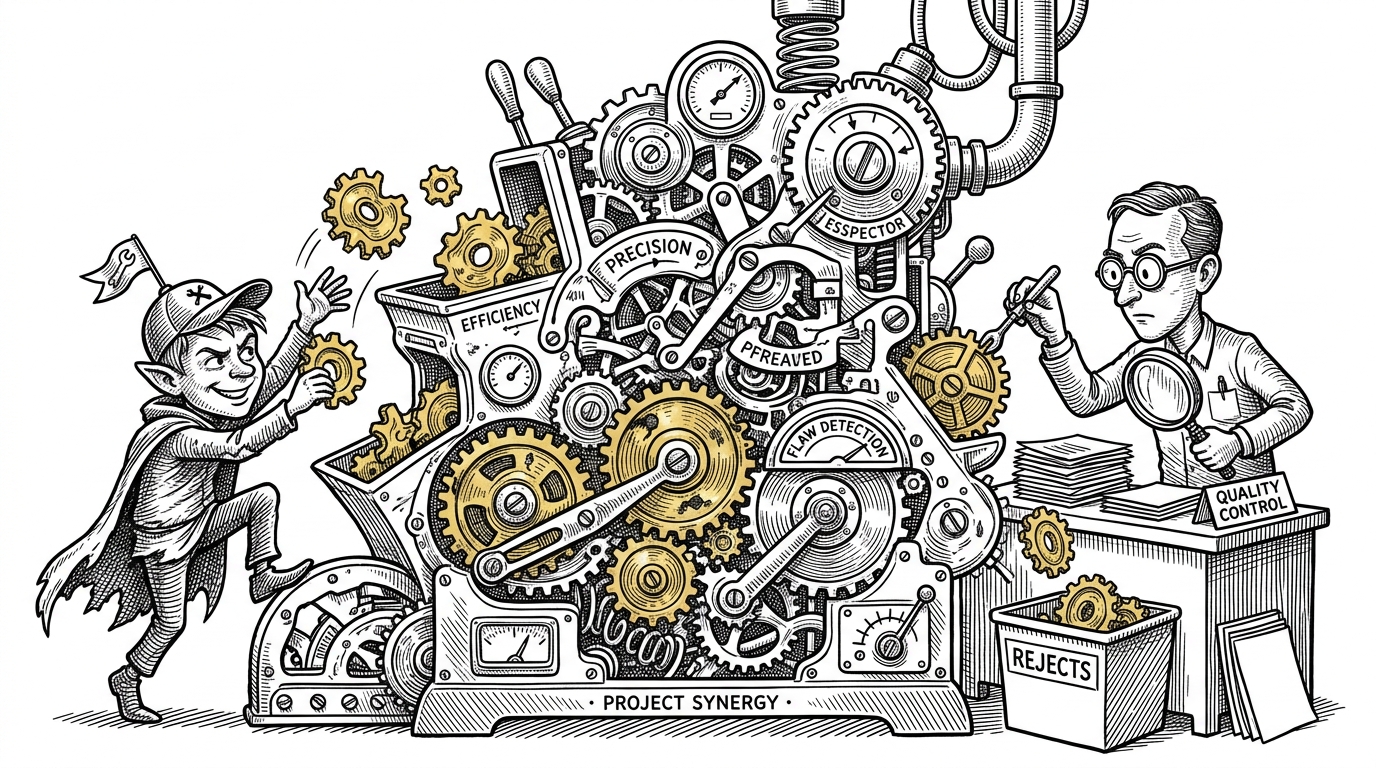
- The pipeline uses specialized Distractor Agents to generate "hard negatives" that teach models to ignore misleading but thematically similar information.
- Chroma industrializes the creation of multi-hop retrieval traces across diverse domains like SEC filings and patents to simulate complex human research.
- A fuzzy-to-strict matching gauntlet in the codebase prevents LLM hallucination by enforcing literal quote verification against source documents.
- The system prioritizes self-editing and retrieval performance over creative generation to combat the degradation of reasoning caused by large context windows.
The Architect of Doubt
The most compelling story in modern synthetic data is not about expanding what a large language model knows. It is about teaching the model to ignore things. As context windows grow to millions of tokens, models suffer from "Context Rot," a phenomenon where injecting more information degrades reasoning performance. The solution requires a fundamental shift from treating AI as a creative writer to treating it as a rigorous, self-editing researcher.
Chroma's context-1-data-gen repository is the blueprint for this shift. It is the exact synthetic data engine used to train Context-1, a 20B parameter model specialized as a retrieval subagent. Rather than focusing solely on finding the right answers, this pipeline is obsessed with manufacturing the wrong ones.
The villain of this codebase is the BaseDistractorAgent. In standard retrieval datasets, negative samples are often random noise that a model can easily dismiss. Chroma's Distractor Agent is engineered to be as misleading as possible. It hunts for documents that share keywords, themes, and structures with the "truth" but lack the specific factual link required to answer the query. By industrializing these "hard negatives," Chroma forces the downstream model to earn its conclusions.
Beyond the Single-Turn Lookup
Standard Retrieval-Augmented Generation (RAG) datasets focus on single-turn lookups. A user asks a question, and the system retrieves a single document containing the answer. Reality is rarely that neat. Real knowledge work requires "multi-hop" reasoning, where a seed fact leads to a bridging document, which in turn unlocks the final answer.
To generate these complex traces synthetically, the repository employs a standardized "Agentic Lifecycle" across four distinct domains: Web, SEC filings, Patents, and Emails. The process mimics a human researcher building a case file.
The Gauntlet of Truth
Generating multi-hop data using LLMs is inherently prone to hallucination. An agent might invent a logical leap that does not actually exist in the source text. To prevent this, Chroma implements a rigorous gatekeeper in core/utils.py.
When an agent claims a specific quote supports an answer, the text_contains_quote function runs a "Fuzzy-to-Strict" matching gauntlet. It does not rely on simple string matching. Instead, it normalizes whitespace, strips Markdown links and HTML tags, and converts "smart quotes" to standard ASCII. If a direct match fails, it falls back to a non-greedy regex pattern checking for partial sequence matching.
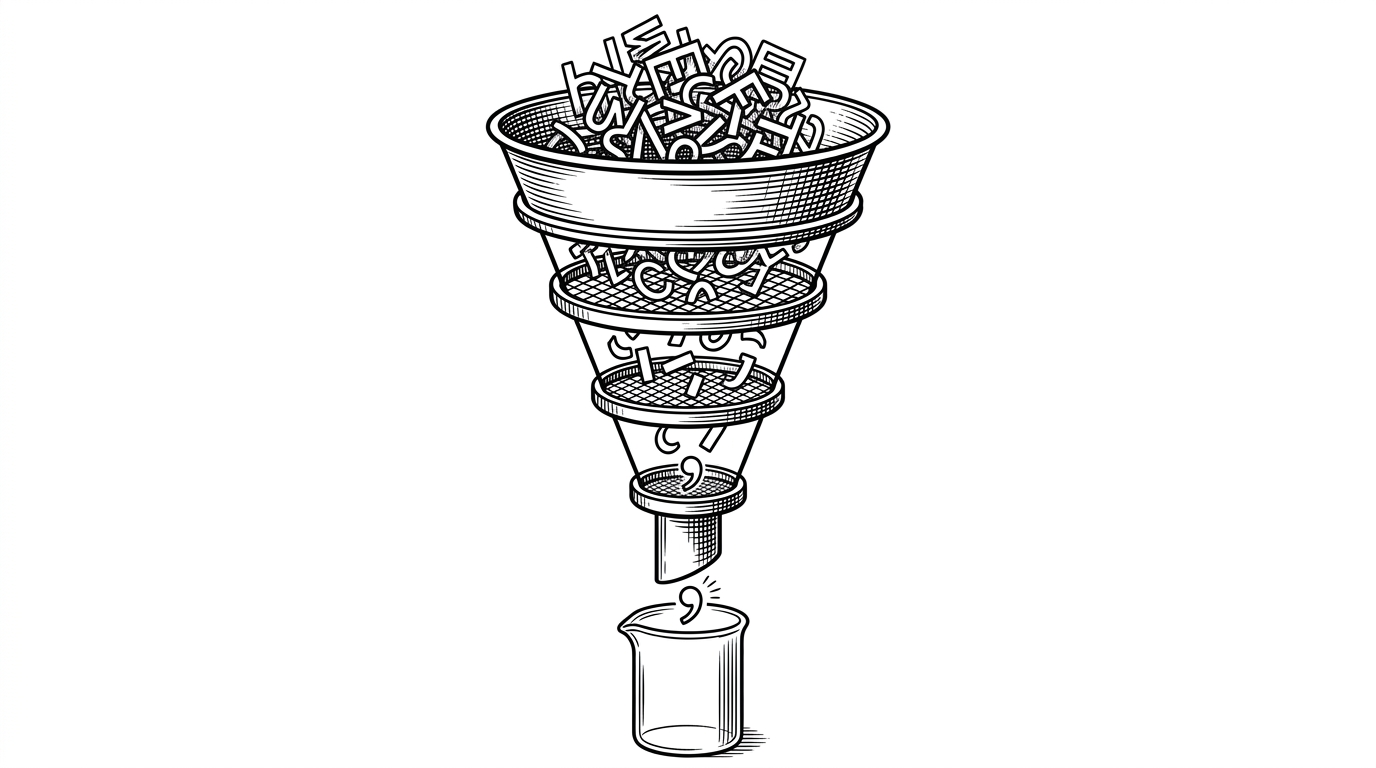
This defensive programming ensures that the resulting dataset is grounded entirely in reality. The system enforces a "2/3 majority" heuristic for required matches, accepting that LLMs are messy while demanding a high enough threshold of evidence to prevent context rot.
The Agentic Shift
The competitive landscape of synthetic data has largely been defined by "Evol-Instruct" frameworks, which mutate simple prompts into complex ones in a vacuum. Chroma's approach represents a vector-native evolution of this concept.
| Feature | Standard Evol-Instruct | Chroma Agentic Data Gen |
|---|---|---|
| Primary Focus | Instruction following and reasoning | Multi-hop retrieval and self-editing |
| Negative Sampling | Randomized or generic noise | Agent-driven "hard negatives" |
| Verification | LLM-as-a-judge scoring | Fuzzy-to-strict literal quote matching |
| Context | Generated in a vacuum | Grounded in real-world document corpora |
By cleanly separating the search phase from the generation phase, context-1-data-gen produces retrieval traces rather than simple Q&A pairs. This architectural choice is what allows a 20B parameter model to achieve frontier-level retrieval performance against models three times its size.
Context-1 operates as a retrieval subagent: rather than answering questions directly, it returns a ranked set of supporting documents to a downstream answering model, cleanly separating search from generation.