The Database That Writes Its Own Firmware: Inside chroma-core/chroma-cookbooks
Why the creators of Chroma built a type-safe, self-correcting orchestration kernel hiding in plain sight as a repository of tutorials.

- Chroma Cookbooks operates as a monorepo hiding a production-grade, self-correcting agent framework.
- The system bypasses generic wrappers by enforcing strict TypeScript and Zod schemas within a Planner, Executor, and Evaluator state machine.
- Agents solve the context window limitation by dynamically writing their own operating rules back to ChromaDB as permanent vector memory.
- The framework uses reciprocal rank fusion to combine dense and sparse embeddings for deterministic search results.
Hiding in Plain Sight
Most database cookbook repositories are collections of disconnected Jupyter notebooks. They serve as basic starting points for new users. The chroma-core/chroma-cookbooks project looks similar at first glance. It contains standard tutorials and guides for vector search.
Look closer and you will find a sophisticated TypeScript monorepo. It houses an orchestration kernel called agent-framework. This codebase is a living laboratory for production Agentic RAG. It pushes developers past basic vector search and into the realm of autonomous agents.
The Chroma Cookbooks provide guides and complete code examples for building AI applications powered by Chroma. Comprehensive guides for these projects can be found on Chroma's docs.
The Type-Safe State Machine
The core of this framework is the BaseAgent architecture. It abandons simple prompt chains for a strict state machine. Data flows through a continuous Planner, Executor, and Evaluator loop.
Zod enforces strict JSON schemas for every Large Language Model output. If the model hallucinations a step, the framework catches it at the boundary. The true power lies in the Override pattern. When an Executor fails to complete a task, the Evaluator triggers an override. The agent abandons the failing path entirely and forces the Planner to generate a brand new strategy.
Memory as Custom Firmware
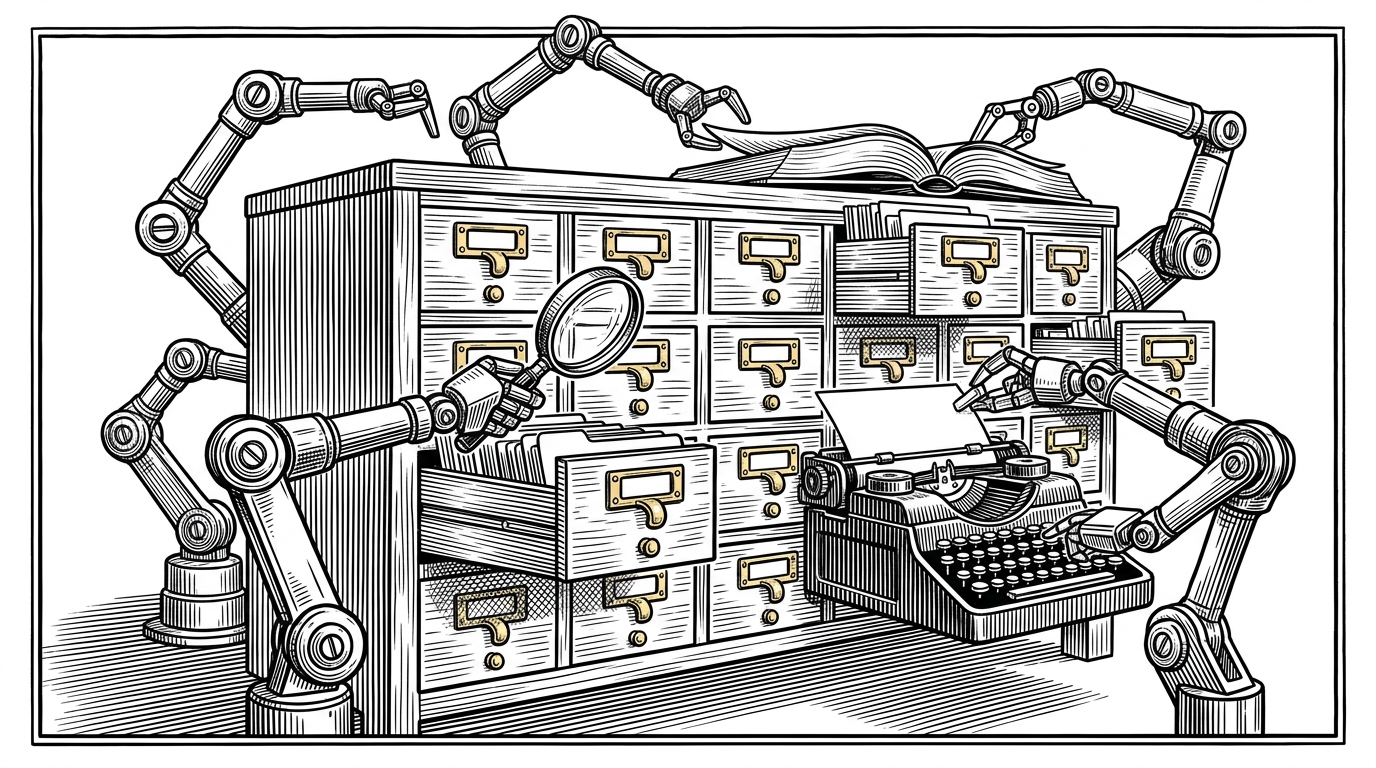
The InboxAgent implementation treats vector databases as behavioral memory. After a task completes, the agent extracts lessons from its own execution history. It identifies mistakes and successful strategies.
It synthesizes these lessons into new rules and saves them back to ChromaDB. Before planning future tasks, the agent queries this memory. It effectively writes its own custom firmware. This solves the context window limitation by allowing the agent to recall specific operating procedures only when relevant.
The End of Pure Semantic Search
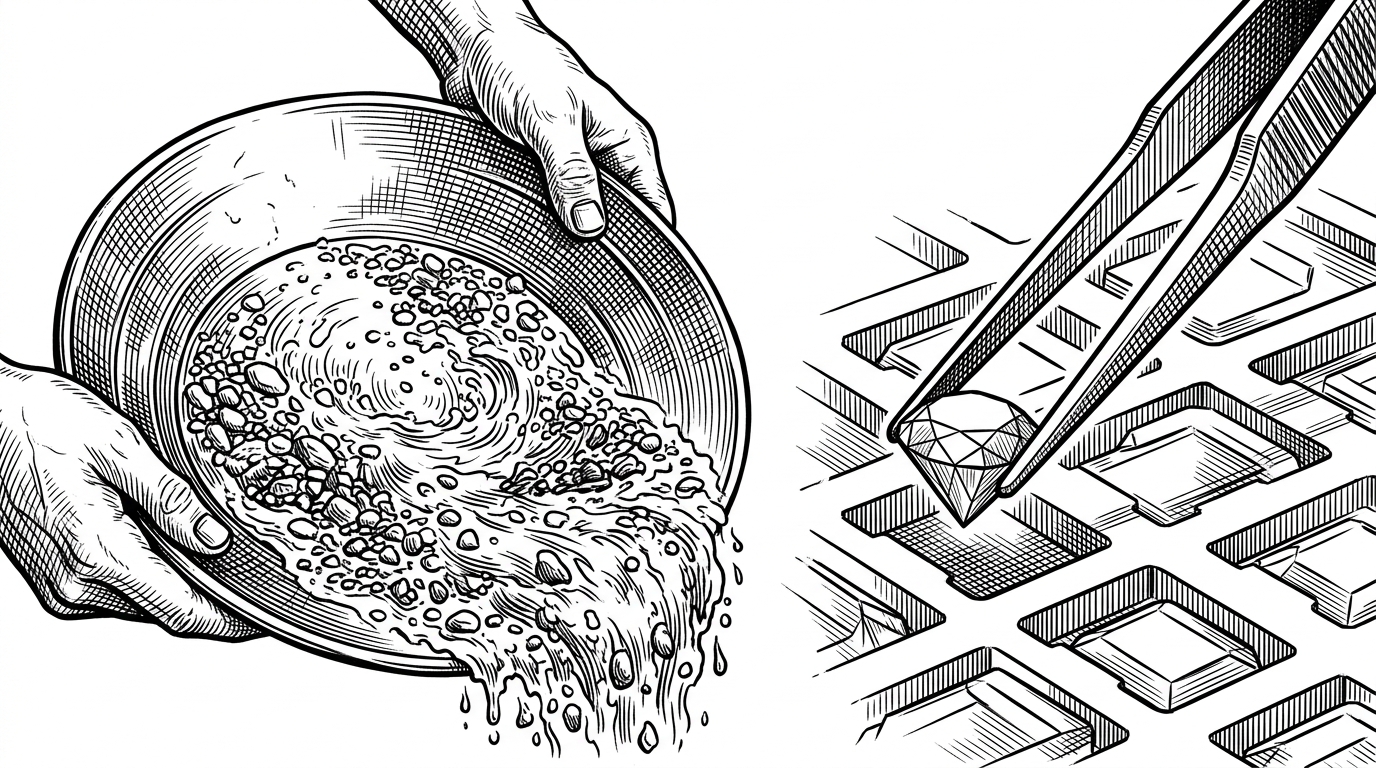
Semantic search fails when agents need exact keyword matches or specific IDs. The agentic-search module solves this critical flaw. It implements Reciprocal Rank Fusion to combine dense and sparse embeddings.
This hybrid approach guarantees agents find exact matches without losing semantic context. It provides robust tools that do not fail when a user relies on specific jargon.
Bypassing the Wrappers
Developers often default to massive frameworks for agent orchestration. The Chroma approach proves that building directly on database primitives yields more predictable systems.
By enforcing strict typing and leveraging the database for long-term behavioral memory, developers get a debuggable orchestration kernel. It hides in plain sight, ready for production.
| Feature | Standard Framework Agent | Chroma Native Agent |
|---|---|---|
| Orchestration | Text-based Chain of Thought | Typed State Machine (Planner/Executor/Evaluator) |
| Error Handling | Appends 'Try again' to prompt | Strict plan Override and graph regeneration |
| Behavioral Memory | Static system prompt | Dynamic rule consolidation in vector DB |
| Data Validation | Best effort parsing | Strict Zod schema enforcement |