iptv-org/iptv: The GitHub Repo That Treats TV Streams Like Living Data
A community-maintained IPTV index that parses, tests, geofences, and republishes public streams as a constantly repaired data pipeline.
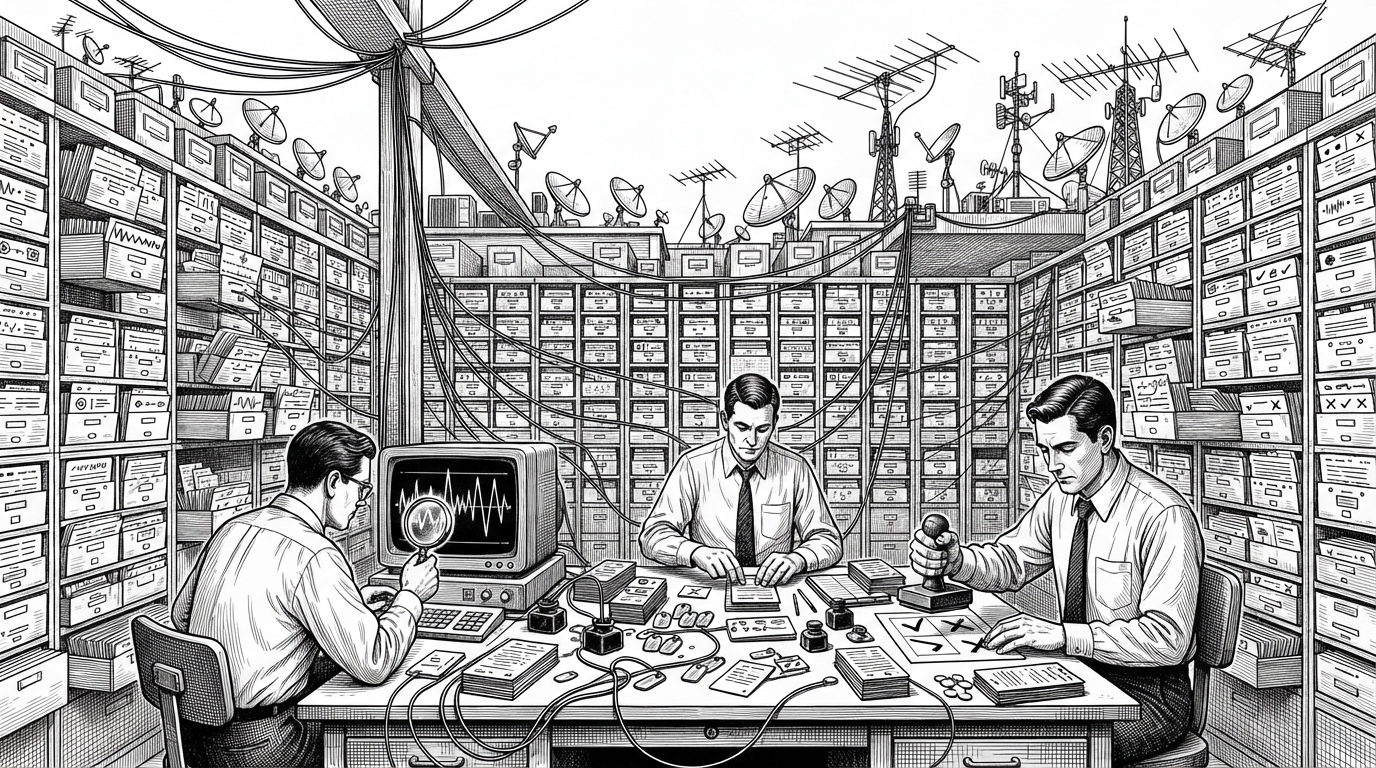
- iptv-org/iptv is best understood as a repair system for volatile live streams, not as a simple playlist dump.
- The repo turns raw M3U text into typed records, then verifies those records with media-aware tests before publishing them.
- GitHub Issues, TypeScript scripts, and CI together act like a lightweight operating system for global TV links.
- Its real differentiator is governance at scale, where validation and geo-awareness matter as much as aggregation.
Most IPTV repos are just collections. iptv-org/iptv behaves more like infrastructure. It ingests fragile public links, normalizes them into structured records, tests whether they are actually playable, and then republishes the survivors into playlists that downstream players can trust a little more than the raw web can.
That is the weird and useful part. The project is not trying to freeze the internet into a neat catalog. It is trying to keep up with a moving target, where links expire, geoblocks appear, and metadata drifts out of date without warning.
The iptv-org project was originally created solely as a collection of publicly available links to TV channel broadcasts and consisted of a single repository iptv.
How a Stream Becomes a Record
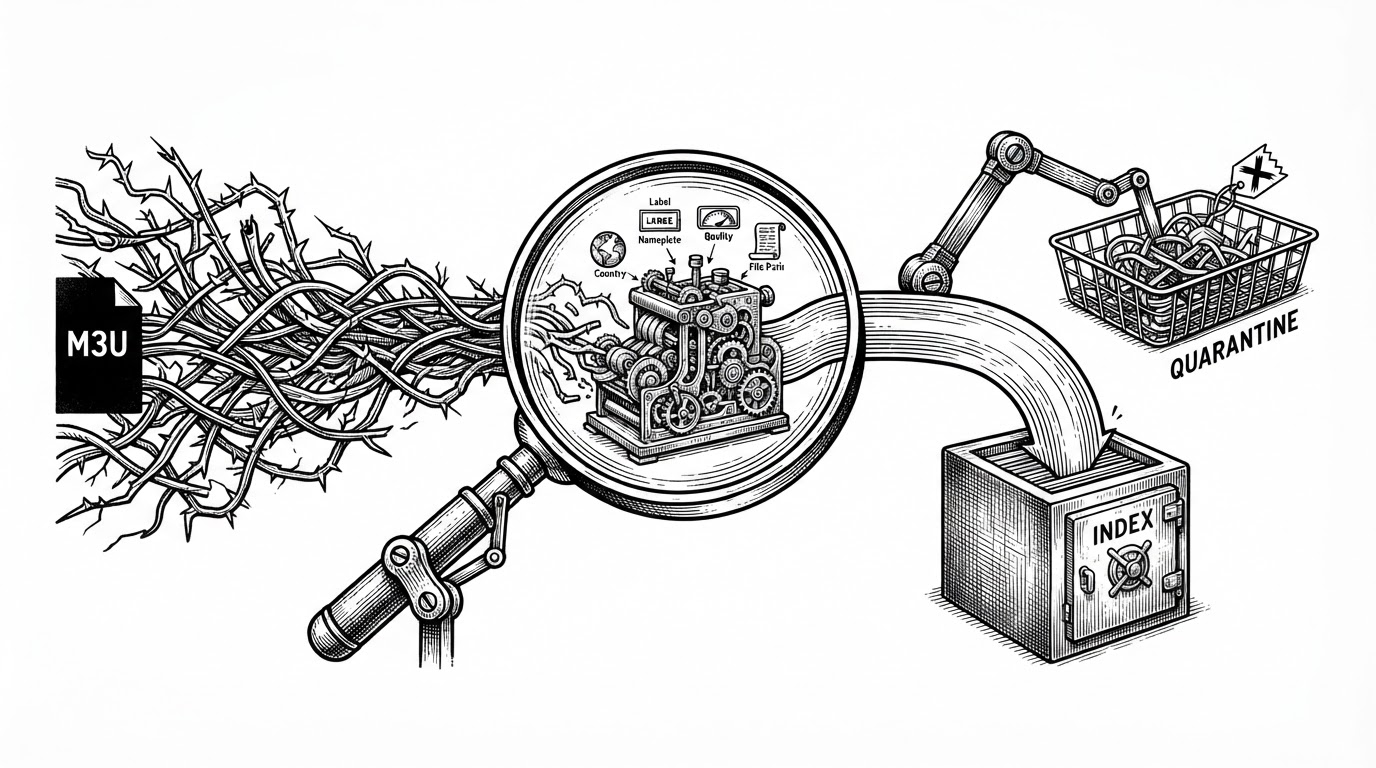
The repository’s first trick is making untrusted text legible. A raw M3U line carries a URL, a label, maybe a country hint, maybe a quality tag, and maybe nothing useful at all. The code in `scripts/models/stream.ts` turns that string into a typed object with file paths, line numbers, label fragments, and guide data, which means the rest of the system can reason about it.
const stream = Stream.fromPlaylistItem(item, {
  filepath: 'streams/us.m3u',
  line: 184,
});

if (stream) {
  console.log(stream.title);
  console.log(stream.country?.code);
  console.log(stream.quality);
}
That matters because it changes the job description of the repo. The file on disk is not the product. The product is the transformation from messy contributor input into a governed dataset that can be linted, filtered, sorted, and regenerated.
The Test Is Not “Does It Load?”
The project’s most important line of defense lives in `scripts/core/streamTester.ts`. A 200 response is not enough. The tester fetches the endpoint, inspects the returned buffer with `mediainfo.js`, and only treats the stream as healthy if the media actually contains track data.
| Naive link check | iptv-org/iptv validation |
|---|---|
| Looks for HTTP success only | Checks for playable media and track data |
| Treats a response like proof | Treats a response as a clue |
| Fails to separate dead endpoints from fake positives | Maps failure modes into standardized error codes |
| Assumes one network path | Can branch through proxy-aware regional testing |
That distinction is the whole point. At this scale, a link that answers but cannot play is just another kind of failure. The repository classifies those failures so contributors and automation can react consistently.
GitHub Issues as the Intake Valve
The intake path is elegant because it lowers the barrier without lowering the bar. Contributors can submit streams through GitHub Issues, but issue parsing still forces structure onto the submission before it can flow into the system. Human-friendly entry, machine-enforced governance.
| Issue-based intake | Traditional curation |
|---|---|
| Uses a familiar GitHub workflow | Usually depends on a maintainer-only queue |
| Parses text into fields automatically | Often requires manual copying and cleanup |
| Feeds validation and playlist generation | Ends with a human decision and little automation |
| Lets non-technical contributors participate | Privileges people who already know the format |
This is the subtle shift. GitHub is not just a hosting platform here. It is the front door, the schema validator, and part of the operations layer.
Why Geo-Blocking Changes the Whole Design
A global IPTV index cannot assume that a stream is globally visible. The repo’s proxy support exists because availability depends on geography, routing, and provider policy. In practice, the validation pipeline has to think like a network engineer, not a playlist curator.
That is why the repository distinguishes between a failure, a geofenced stream, and a stream that needs a different test path. The design assumes that “works for me” is a meaningless verdict at global scale.
What the Alternatives Optimize For
The comparison is not about winners. It is about priorities. iptv-org/iptv optimizes for breadth, automation, and a broad public index. Free-TV/IPTV is tighter and more curated. Matt Huisman’s regional scripts are often sharper for specific markets. xTeVe and Threadfin sit downstream as ecosystem tools that help users consume M3U sources inside media servers.
| Project | Primary strength | Tradeoff |
|---|---|---|
| iptv-org/iptv | Breadth plus automated validation | Some links are inevitably volatile |
| Free-TV/IPTV | Tighter curation and stability | Less breadth |
| Matt Huisman scripts | Strong regional focus and custom scrapers | Narrower geographic scope |
| xTeVe / Threadfin | Playback integration and proxying | Not a source of streams |
That makes the repo look less like a competing channel list and more like a standardization layer. It is the place where many brittle sources become one usable interface.
Why This Repo Matters
The broader lesson is bigger than television. A public GitHub repository can function as a lightweight operating system for messy, distributed data if it has the right mix of typed models, validation, automation, and community input. `iptv-org/iptv` proves that the most durable part of a data product is often the repair loop.
It also shows how far a repository can go when it does not confuse openness with chaos. The project does not promise every stream will work forever. It promises to keep testing, cleaning, and republishing the map as reality changes.