`short-video-generator-AI`: The Free Shorts Maker That Looks Like Three Other Projects Wearing One README
A forensic read on a repo that promises YouTube-to-Shorts automation, then reveals a tangled mix of video tooling, trading logic, scraping code, and in-memory module loading.

- The repo’s real story is not Shorts automation, but the gap between its README and the source tree underneath it.
- `src/` behaves like a stitched bundle of unrelated systems, which makes the project feel more like a Franken-repo than a focused app.
- The most surprising mechanism is its memory-first module loading path, which pushes the code beyond normal filesystem assumptions.
- The broader lesson is that “free AI tools” can hide far more operational and trust complexity than their landing pages suggest.
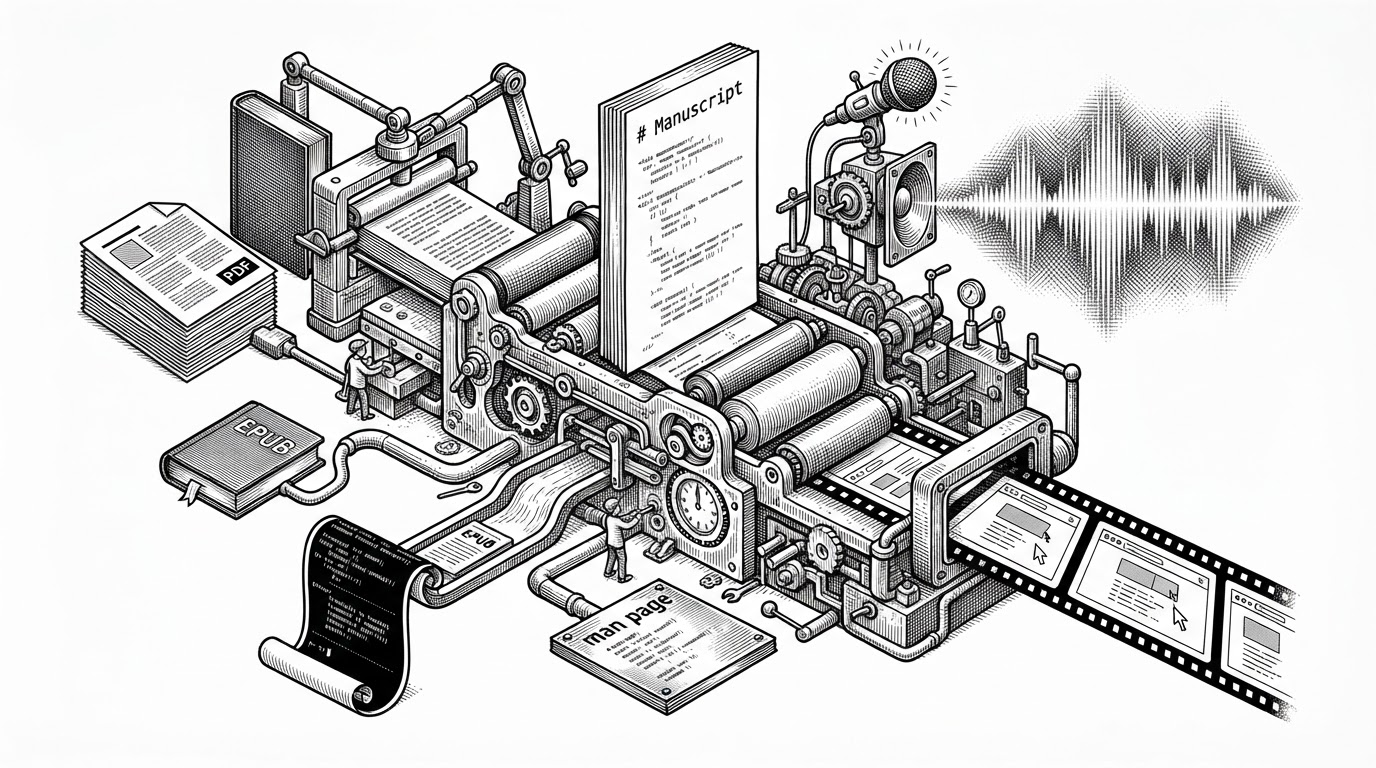
The headline promise is simple. Paste in a YouTube link, get back a vertical clip with subtitles and voiceover. But the source tree does not read like a clean video product. It reads like a stack of borrowed parts, repurposed modules, and execution paths that do not belong in the same house.
That mismatch is the hook. The README sells a creator tool. The code suggests a much stranger object, one where video automation shares oxygen with trading logic, scraper-style routines, and a loader that can bring code into memory without behaving like a normal filesystem app.
The README Promises a Shorts Factory. The Code Tells a Different Story.
That sales pitch is attractive because the market is real. Clip generators are expensive, watermark free tiers, and often fence off serious upload limits. A free alternative that claims to extract viral moments, crop them vertical, and add narration is exactly the kind of shortcut creators want.
| Surface claim | What the code suggests | Why it matters |
|---|---|---|
| A YouTube-to-Shorts generator | A repo with video orchestration plus unrelated automation code | The product boundary is blurry before you even run it |
| A single-purpose creator tool | Trading, scraping, Telegram session handling, and loader logic live nearby | Maintenance and trust become much harder to reason about |
| A straightforward local app | Execution paths that can bypass normal filesystem expectations | The repo is no longer just an editing utility, it is also an execution environment |
The simplest way to describe the project is this: the README describes a factory, but the codebase looks like a storage unit where several different businesses left their equipment behind.
What Lives in the Same `src/` Folder
The codebase layout matters because it tells you how the project was assembled. The video layer exists, but it sits beside files that point elsewhere. In the research pass, the sharpest oddities were `src/analyzer.py`, which behaves like a Binance trading bot, and `src/launcher.py`, which includes Telegram session handling and references to a separate bot lineage.
That is not a normal reuse pattern. A healthy monorepo usually has boundaries. Here, the boundaries feel porous, and the adjacent code looks imported from other missions rather than designed as part of a single product roadmap.
| Module | Observed role | Fit with the Shorts promise |
|---|---|---|
| `main.py` / `server.py` | CLI entry and FastAPI wrapper | Fits the promise |
| `src/analyzer.py` | Trading bot logic with market monitoring | Does not fit |
| `src/launcher.py` | Telegram session management and bot references | Only loosely fits |
| `src/base/*` and scraper-like paths | Downloader and content extraction behavior | Partly fits, but broadens the mission |
| `src/fs.py` | Bootstrapper that loads code into memory | Technically interesting, but far outside a simple video editor |
The Most Interesting Trick: Loading Code Without a Normal Filesystem

`src/fs.py` is the detail that pushes the repo from messy to genuinely unusual. The research notes describe a bootstrapper that can fetch and execute modules directly in memory, using `types.ModuleType` and `exec()` instead of a normal disk-first path. That is a very different kind of system from a plain video tool.
For a reader, the important point is not the implementation trick by itself. It is what the trick implies. A project that already mixes unrelated code becomes harder to trust when part of its execution story depends on remote loading and RAM-only assembly.
# Simplified shape of the idea, not the exact file
module = types.ModuleType(name)
exec(source_code, module.__dict__)
sys.modules[name] = module
That pattern is powerful in the right context. It is also a red flag in the wrong one. In a creator tool, you expect the path from source to output to be boring. Boring is good when the job is to edit media and ship a clip.
Why This Feels Like a Free SaaS Clone, Not a Clean Open-Source App
That quote captures the market pressure well. A free tool with ambitious output has obvious appeal. It also creates room for a very specific kind of repository: one that markets convenience first, then resolves the details with whatever code it can gather.
| User expectation | Operational reality | Risk |
|---|---|---|
| Upload video, get clips | A chain of downloader, transcriber, scorer, editor, and wrapper code | Any broken link can fail the whole flow |
| Open source means inspectable | Hidden remote loading complicates inspection | Security review gets harder |
| One app, one purpose | Multiple automation domains share a codebase | The maintenance surface expands fast |
That is why this repo feels less like a polished alternative to a SaaS product and more like a proof that the category is lucrative enough to attract improvisation. The promise is straightforward. The implementation is not.
The broader lesson is bigger than this one repository. Open-source AI tools now compete in a market where speed of release often matters more than architectural purity. The result is a growing class of Franken-repos, where the README is the brand and the codebase is whatever made the demo possible.
The Real Lesson: Franken-Repos Are a Pattern, Not an Accident
If you read this repo as a product, it looks unstable. If you read it as a specimen, it is much more interesting. It shows how far a free AI tool can drift from its own advertised identity when convenience, reuse, and ambition all pull in different directions.
So the right question is not whether it can make Shorts. The right question is whether the README still describes the thing you are actually about to run. In this case, the answer appears to be no, or at least not fully.