LiteLLM and the Quest for the Universal LLM Socket
How a "thin" translation layer became the load-balancing backbone for the world’s most complex AI agents.

- LiteLLM unifies fragmented provider schemas into a single OpenAI-compatible wire protocol.
- The routing layer provides production reliability by automatically shifting traffic away from failing or rate-limited endpoints.
- The proxy server enables centralized governance through virtual keys and real-time budget tracking across an entire organization.
- A deliberate focus on thin API translation allows the library to serve as a modular foundation for complex agentic frameworks.
The Fragmentation Tax
The generative AI boom created a massive integration headache. Every new model release required a new SDK and a different JSON schema. Switching from OpenAI to Anthropic or Google Vertex meant rewriting network logic, updating error handling, and redefining data structures.
This fragmentation imposed a heavy tax on engineering teams. Developers became full-time API translators. They spent less time building application logic and more time tracking down proprietary payload differences. LiteLLM emerged to solve this exact problem.
The project made a single, highly successful bet. It assumed the OpenAI API format would become the permanent wire protocol for machine intelligence. By mapping every other provider to that standard, LiteLLM turned 100 warring dialects into a swappable utility.
Mapping the Tower of Babel
The core of LiteLLM lives in its provider adapters. The repository contains a dedicated module for every supported LLM vendor. When an application calls the standard completion function, LiteLLM intercepts the payload and routes it to the correct transformation logic.
This translation layer handles the nuances of each dialect. It maps OpenAI roles to Anthropic roles. It converts modern chat arrays into legacy text prompts for older models. It unifies exception handling so that proprietary rate limit errors all surface as standard exceptions.
This dynamic mapping system is deliberately thin. It does not attempt to orchestrate complex chains or manage prompt templates. It simply ensures that input and output formats remain perfectly consistent regardless of the underlying infrastructure.
When Models Fail: The Router's Logic
Standardizing the API format only solves half the problem. Production applications need reliability. When a provider goes down or enforces strict rate limits, the application must recover gracefully. LiteLLM handles this through its routing abstraction.
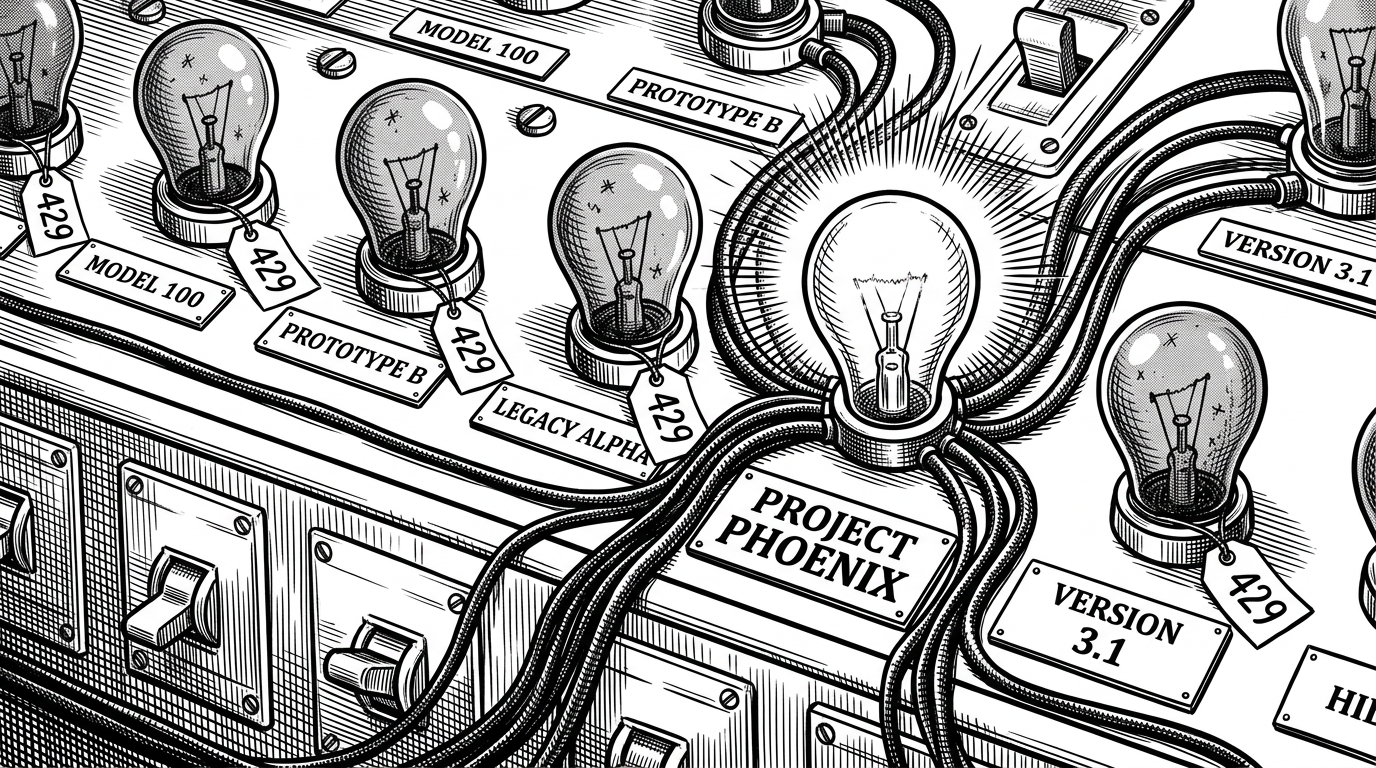
The router manages a pool of model deployments. It implements sophisticated cool-down logic. If a specific Azure or OpenAI endpoint returns a 429 status code, the router temporarily removes it from the active pool. Traffic automatically shifts to fallback providers without interrupting the user experience.
The Gateway Strategy
While the Python SDK is powerful, the real enterprise value lives in the LiteLLM Proxy Server. The proxy acts as a centralized command center for an entire organization. It intercepts all LLM traffic before it reaches external vendors.
This architecture enables strict governance. The gateway uses virtual keys to track spend by team or project. It enforces budget limits in real time using a dual-cache strategy with Redis and PostgreSQL. Authentication, logging, and guardrails are handled at the network edge rather than inside individual applications.

| Feature | LiteLLM SDK | LiteLLM Proxy Server |
|---|---|---|
| Integration Point | Application Codebase | Network Infrastructure |
| Primary Use Case | API Normalization | Centralized Governance |
| State Management | Stateless | Stateful (Redis / Postgres) |
| Cost Tracking | Manual Logging | Automated Virtual Keys |
The Philosophy of Thin Software
LiteLLM won developer mindshare by remaining remarkably unopinionated. Orchestration frameworks like LangChain dictate how you should structure your application. They introduce heavy abstractions for memory, agents, and prompt templates. LiteLLM takes the opposite approach.
It is a library, not a framework. It provides the plumbing required to execute reliable network calls, and nothing more. This restraint is exactly why it became the default underlying infrastructure for autonomous agents and complex orchestration systems. It solves the hardest networking problems while staying entirely out of the developer's way.
Sources