RouteRiders: The Bus Booking App That Treats Seats Like Real Inventory
A Flask and vanilla JS travel system with atomic seat allocation, relational booking logic, and a ticket-counter UI that makes digital reservations feel physical.
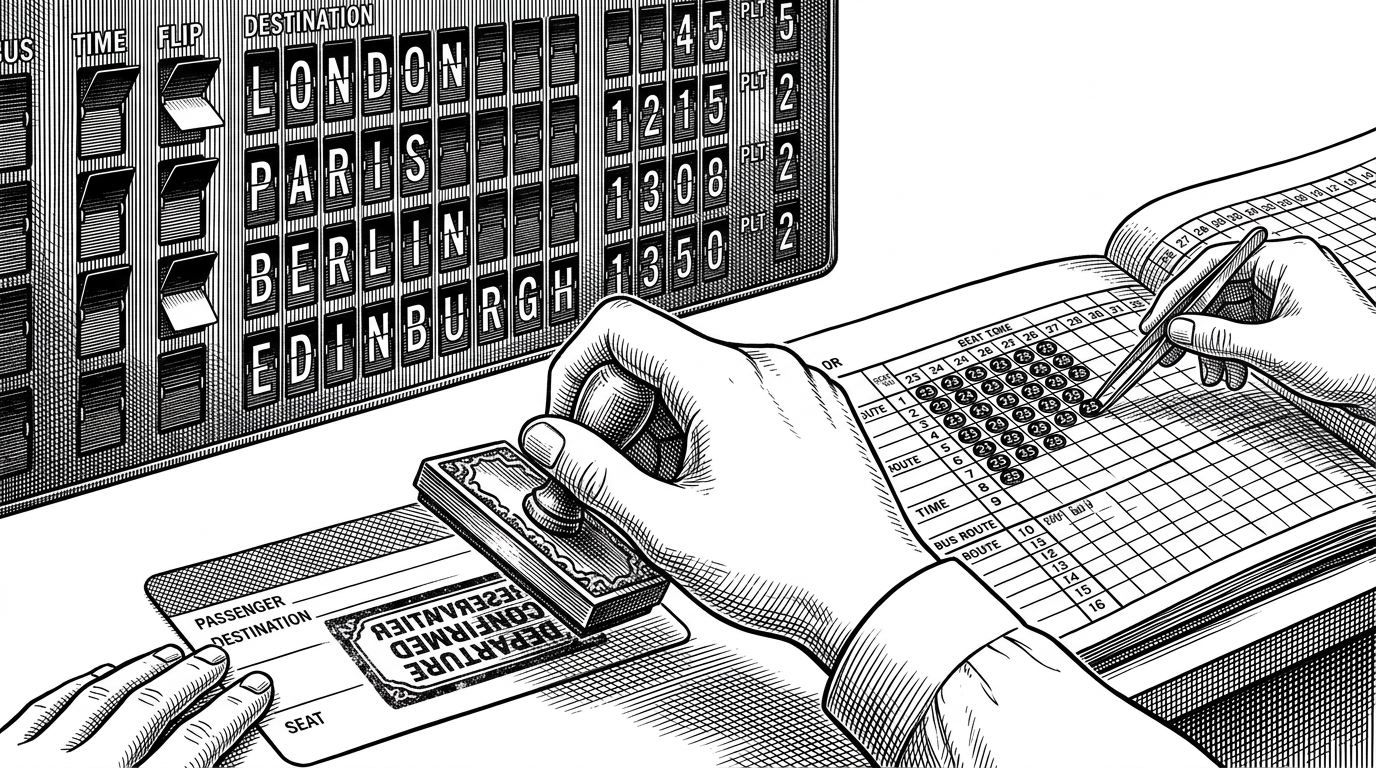
- RouteRiders is most interesting because it treats a bus seat as a real inventory object with identity, date, and conflict risk.
- Its booking flow is built around correctness first, with relational checks and transaction order doing the hard work before the UI ever looks polished.
- The ticket-counter visual language is not decoration, because it makes the booking model feel legible and physically grounded.
- The project stands apart from generic CRUD booking apps by matching a serious seat-allocation backend with a memorable transit interface.
Most booking apps only need to look complete. RouteRiders needs to be correct. Its real job is to stop two people from claiming the same seat on the same journey date, while still letting one reservation fan out into multiple passenger-specific seat records.
That makes the repository feel more ambitious than a typical student Flask app. It is not just storing forms and rows. It is trying to model a small slice of transit inventory, where a booking is a transaction and a seat is a scarce object.
Why this booking engine matters
The core promise here is simple: seats should behave like inventory, not counters. A naive system can subtract from a total available count and call it done. RouteRiders goes further by checking specific seat availability against a journey date and by tying each reserved seat to a passenger name.
That matters because bus reservations are not abstract ledger entries. They are conflict-prone, date-specific, seat-specific commitments. If the system gets that wrong, the whole app collapses into false availability.
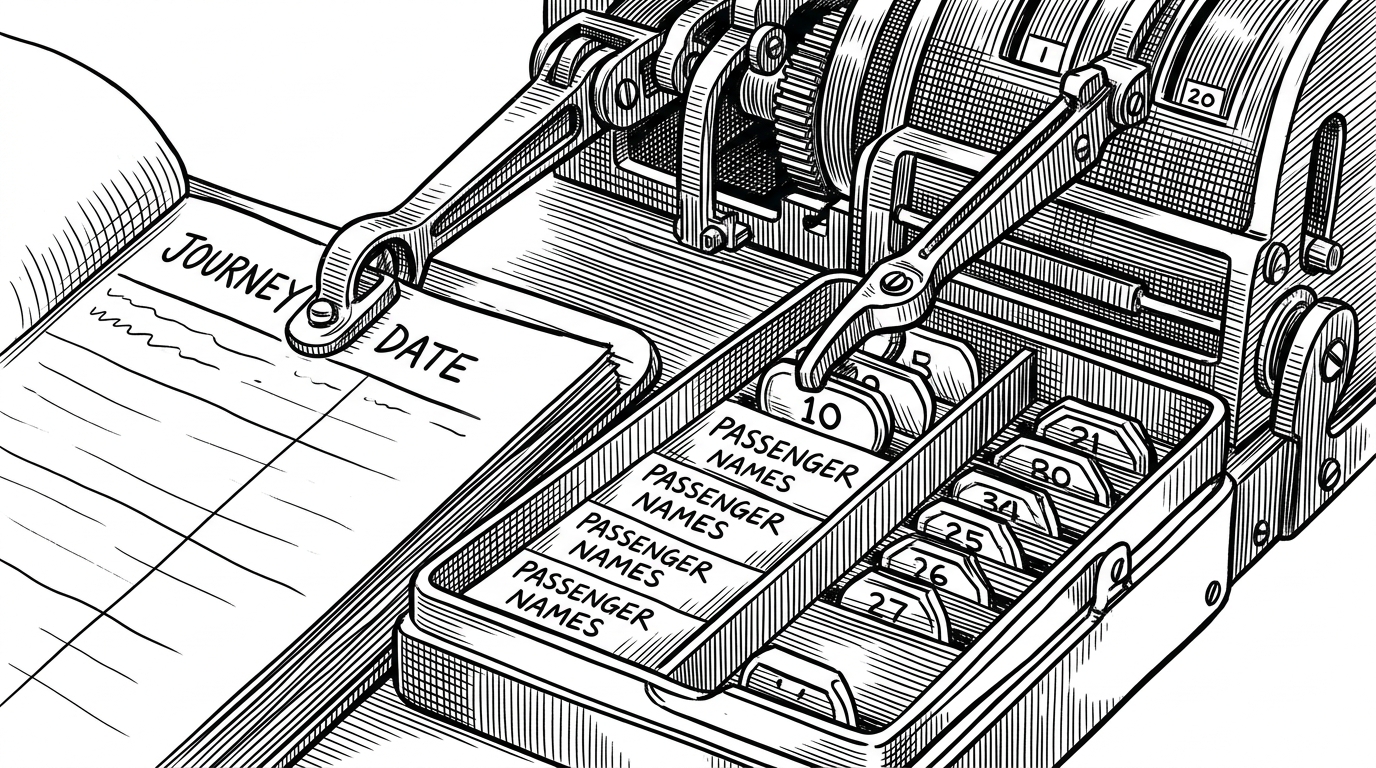
The moment a seat becomes real
The most important move in the booking code is not flashy. It is procedural. The app checks availability first, then creates the booking, then flushes the session so the booking ID exists, and only then creates the child seat rows.
That ordering is the difference between a tidy demo and a believable transaction. Without the flush, the system cannot safely attach multiple `BookedSeat` rows to the parent booking before the commit. With it, the booking becomes addressable in the middle of the transaction, which is exactly what the seat fan-out needs.
# Simplified from backend/app/routes/bookings.py
new_booking = Booking(user_id=user_id, bus_id=bus_id, journey_date=journey_date)
db.session.add(new_booking)
db.session.flush()  # booking.id now exists

for seat_no, passenger_name in requested_seats:
    seat = BookedSeat(
        booking_id=new_booking.id,
        seat_number=seat_no,
        passenger_name=passenger_name
    )
    db.session.add(seat)

db.session.commit()
The availability check is equally important. The code does not trust a UI-side seat count. It uses a join between `BookedSeat` and `Booking` so the query can reason about actual seat ownership on the requested date. That is the right shape for a system where the same bus can be reused across days.
A data model that matches the real world
RouteRiders’ schema is small, but it carries real intent. `User`, `Route`, `Bus`, `Booking`, and `BookedSeat` are not just table names. They mirror the way a traveler thinks about a trip and the way a transport operator thinks about inventory.
The smartest piece is `BookedSeat`. It turns one reservation into many seat-level records without losing the parent booking. That is what makes multi-passenger reservations feel natural instead of hacked together.
| Concept | Simple seat-count app | RouteRiders |
|---|---|---|
| Seat identity | Only tracks remaining capacity | Tracks specific seat numbers and passenger names |
| Multi-passenger booking | Often awkward or manual | One booking can fan out into several booked seats |
| Availability checks | Usually a count decrement | Join-based checks against booked seats on a journey date |
| Correctness | Easy to overbook under race conditions | Transaction order and flushed IDs support safer writes |
| User experience | Generic admin form | Ticket-counter UI with transit character |
That table is the real story. RouteRiders is not just prettier than a simple booking tool. It is more specific about what a booking means.
Why the UI feels like a station, not a form
The frontend leans into transit culture on purpose. Split-flap boards, ticket edges, and counter-like spacing make the app feel like it belongs in a station, not a SaaS dashboard. That is more than style. It frames the interaction as a reservation at a desk, which is exactly how many users still understand travel booking.
That visual language also helps the data model land. When the interface looks like a ledger, it is easier to believe that the system cares about seat identity, not just seat totals.
The project’s design strength is restraint. It does not over-explain itself with framework chrome or heavy component libraries. It uses a custom static UI to make the booking process feel tactile, familiar, and memorable.
What it chooses not to be
RouteRiders is best understood by its trade-offs. It is not a framework-heavy frontend app. It is not a generalized logistics engine. It is not a payments product. It is a focused travel reservation system with a clear core.
| Question | RouteRiders | Generic CRUD booking app |
|---|---|---|
| What does one booking mean? | A parent record plus seat-level children | A single form submission |
| How are conflicts prevented? | By checking booked seats on a specific date | Often by trusting counts or UI state |
| Does the UI reinforce the model? | Yes, with ticket-counter styling | Usually no, the UI is generic |
| Is it production complete? | No, it still points to future work like payments and QR codes | Usually not, but often without a coherent core |
That honesty matters. The repository already shows a competent booking spine, but the obvious future features still sit outside the safety and reliability story. Payments, live tracking, and QR codes are not cosmetic. They would add new failure modes, which is why the current prototype should be respected as a prototype.
In other words, RouteRiders has a clear center of gravity. It knows what problem it is solving. It also knows where the hard edges still are.
Where it stops being a prototype
This is already interesting because it gets one important thing right: a seat is not a number on a page. It is a constrained object with identity, date, and collision risk. RouteRiders respects that.
It is not production-complete for money-moving workflows yet, and that is fine. The value of the project is that it demonstrates how a travel system can feel physically grounded without sacrificing backend discipline. The design sells the idea, but the data model earns it.