odoo-hackathon: TRANSITOPS Turns a Trip Into the Boss of the Fleet
A Django logistics system where dispatch updates vehicles, drivers, audits, and dashboards automatically, so the database mirrors the real world instead of fighting it.
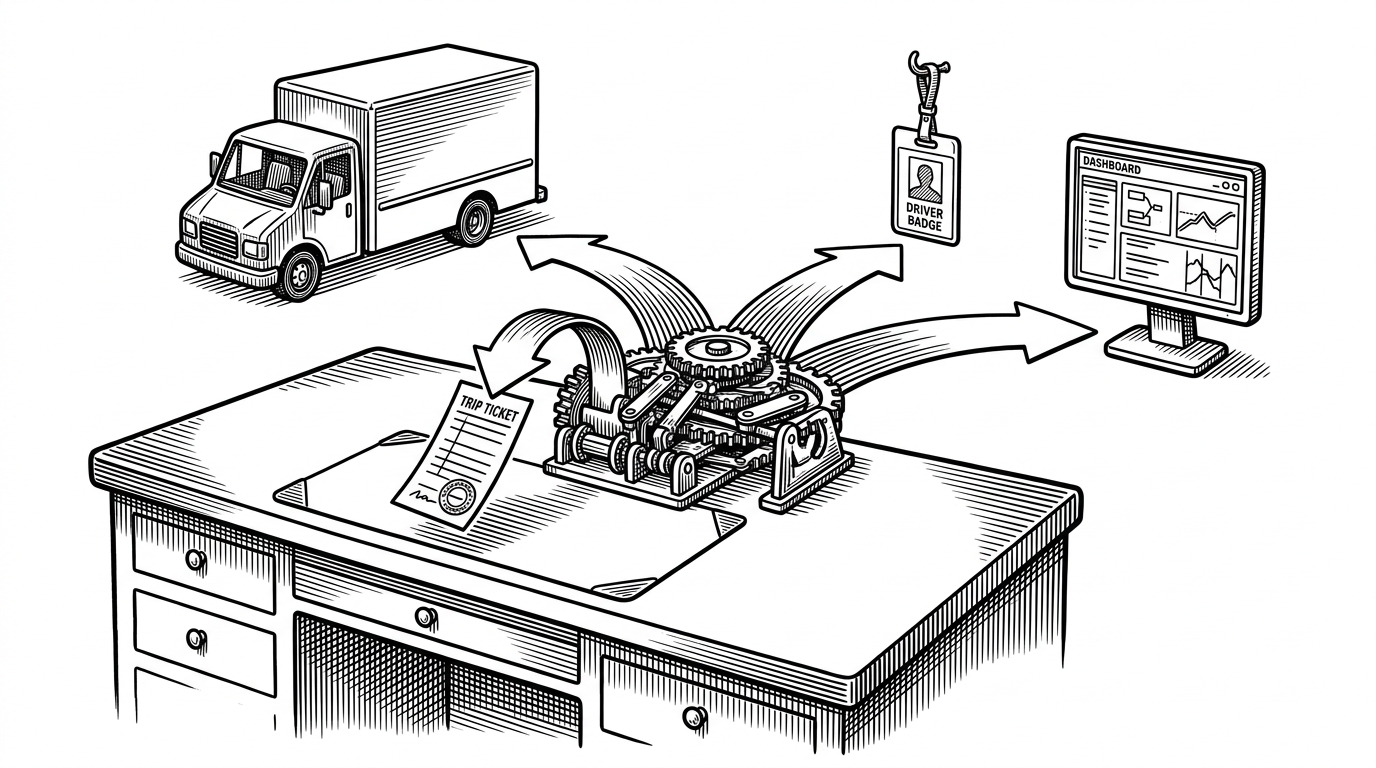
- TRANSITOPS is built around a simple but strong idea: a Trip is the source of truth, and dispatch ripples outward to vehicles, drivers, audit logs, and dashboards.
- The project’s real intelligence sits in signals, middleware, and RBAC, not in the UI chrome that sits on top of them.
- Its dashboard is a readout of operational state, not a manual control panel, which keeps the interface aligned with the underlying model.
- The stack is intentionally practical, with Django, Tailwind, Vanilla JS, Chart.js, PostgreSQL, SQLite fallback, and portable deployment choices.
When a Trip Changes, the Fleet Changes
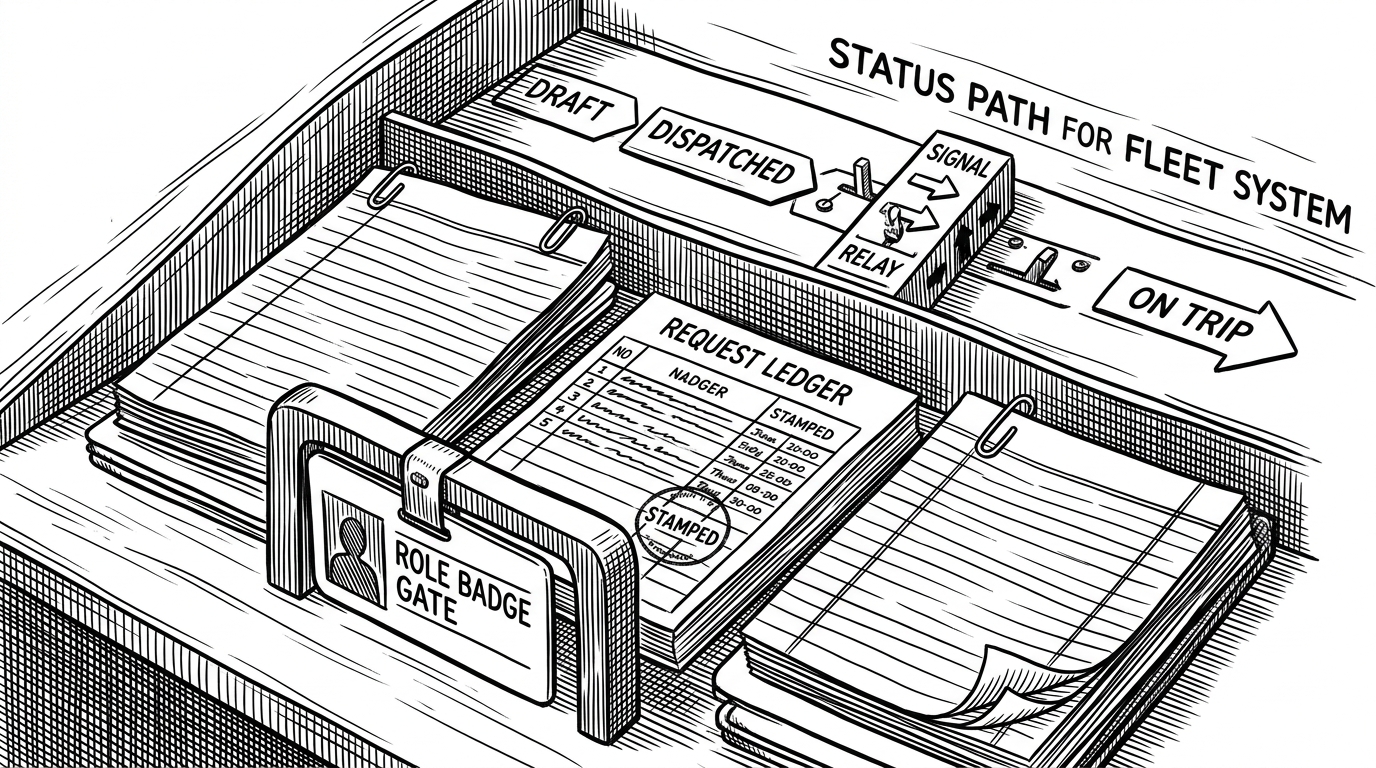
TRANSITOPS is interesting because it treats dispatch as a state machine, not a form submission. When a Trip flips to DISPATCHED, the linked vehicle and driver are pushed to ON_TRIP, and the system writes the change down for auditability.
That matters because logistics breaks when digital status drifts away from physical reality. A truck is out, a driver is busy, a dashboard still says available, and somebody makes the wrong call five minutes later. TRANSITOPS tries to make that drift hard to create.
Why This Matters in Fleet Ops
A typical fleet app asks people to keep records aligned by habit. TRANSITOPS assumes that discipline will fail, then bakes the discipline into the model. That is the difference between a dashboard that reports reality and a dashboard that slowly drifts away from it.
| Concern | Typical fleet app | TRANSITOPS | Why it matters |
|---|---|---|---|
| Trip dispatch | Manual status edits in several places | One trip change propagates to related records | Fewer mismatches between operations and reporting |
| Driver and vehicle state | Easy to forget or update late | Derived from dispatch workflow | The fleet view stays synchronized with the field |
| Auditability | Often bolted on afterward | Captured as part of the state change path | Compliance becomes a property of the system |
| Dashboard accuracy | Depends on people keeping inputs fresh | Built from the underlying operational model | Managers see the system’s actual state, not a wish |
The comparison is not about feature count. It is about trust. If the database is the place where operations live, then the database needs to behave like a live coordination system, not a spreadsheet with permissions.
Inside the Control Layer: RBAC, Middleware, and Audit Logs
The control layer is where TRANSITOPS gets serious. Four roles shape access: FLEET_MANAGER, DRIVER, SAFETY_OFFICER, and FINANCIAL_ANALYST. Views are guarded by a custom @role_required decorator, so sensitive actions do not leak across the org chart.
@role_required('FLEET_MANAGER')
def vehicle_delete(request, pk):
    vehicle = get_object_or_404(Vehicle, pk=pk)
    vehicle.delete()
    return redirect('fleet:vehicle_list')
Two middleware pieces make the system more observable. RateLimitMiddleware throttles abuse with cache-backed IP limits, while CurrentRequestMiddleware keeps request context available where Django would normally lose it. That second piece is what lets audit logs capture who did what, from where, and with which browser context.
| Layer | What it does | Design payoff |
|---|---|---|
| Role decorator | Blocks unauthorized actions at the view boundary | Simple access control that is easy to read |
| Rate limiting | Caps repeated requests per IP | Protects the app without extra infrastructure |
| Request-local middleware | Makes request metadata available in signals | Lets audit logs include IP and user agent |
| Audit log | Stores before and after values | Creates a durable history of operational changes |
This is the part of the repo that feels quietly well thought out. The application does not merely track that something changed. It preserves enough context to answer the better question later: who changed it, under what conditions, and what exactly changed?
The Dashboard Is Not the Product. It Is the Readout
The dashboard reads like a command center, but it behaves more like an instrument panel. Django aggregate, Count, and Q filters assemble live summaries from the operational tables, which means the charts and cards are outputs of the system, not a separate truth source.
That separation matters. Drivers see personal trips. Managers see fleet-wide health. Safety and finance can be filtered into their own interpretation of the same core state. The UI changes by role, but the underlying model stays one model.
In a weaker app, the dashboard becomes the place where humans patch over missing logic. Here, the dashboard is honest. If the state is wrong, the readout is wrong, which is exactly what you want from an operations surface.
A Modern Monolith for a Boring Problem
The stack is pragmatic. Django 6, Tailwind, Vanilla JS, Chart.js, PostgreSQL with SQLite fallback, WhiteNoise, Vercel, and S3 all point toward a repo designed to ship without ceremony. That is not glamorous, but it is coherent.
| Choice | What it suggests | Trade-off |
|---|---|---|
| Django monolith | One codebase owns the workflow end to end | Less microservice overhead, more discipline inside the app |
| SQLite fallback | Easy local onboarding | Production parity depends on environment setup |
| Chart.js | Fast dashboarding without a heavy frontend stack | Limited to the charts the app actually needs |
| Vercel plus WhiteNoise | Portable static delivery | Requires care around runtime assumptions |
The result is a high-fidelity operations prototype that already knows where the hard parts are. It is more convincing than a flashy demo because it is built around state discipline, access control, and deployment reality.
What TRANSITOPS Gets Right, and What It Still Suggests
The strongest thing about TRANSITOPS is its consistency. The data model, permissions, middleware, and dashboard all point in the same direction: make operational truth harder to corrupt and easier to inspect.
| Strength | What the repo shows | What it suggests next |
|---|---|---|
| State discipline | Trip-driven propagation keeps related records aligned | More event history could make the workflow even more transparent |
| RBAC boundaries | Role-gated views reduce accidental misuse | Granular permissions could deepen separation of duties |
| Auditability | Before and after values are captured | Longer retention and richer diffs would help in larger orgs |
| Portable deployment | The stack is easy to understand and ship | Production hardening would be the next maturity step |
It does not read like a giant enterprise platform. It reads like a sharp, high-confidence prototype that understands the job: keep the fleet record synchronized with the fleet itself. For a logistics tool, that is the right obsession.