Langflow and the Architecture of Visible Reason
How a visual-first IDE is bridging the gap between fragile AI prototypes and resilient agentic systems.
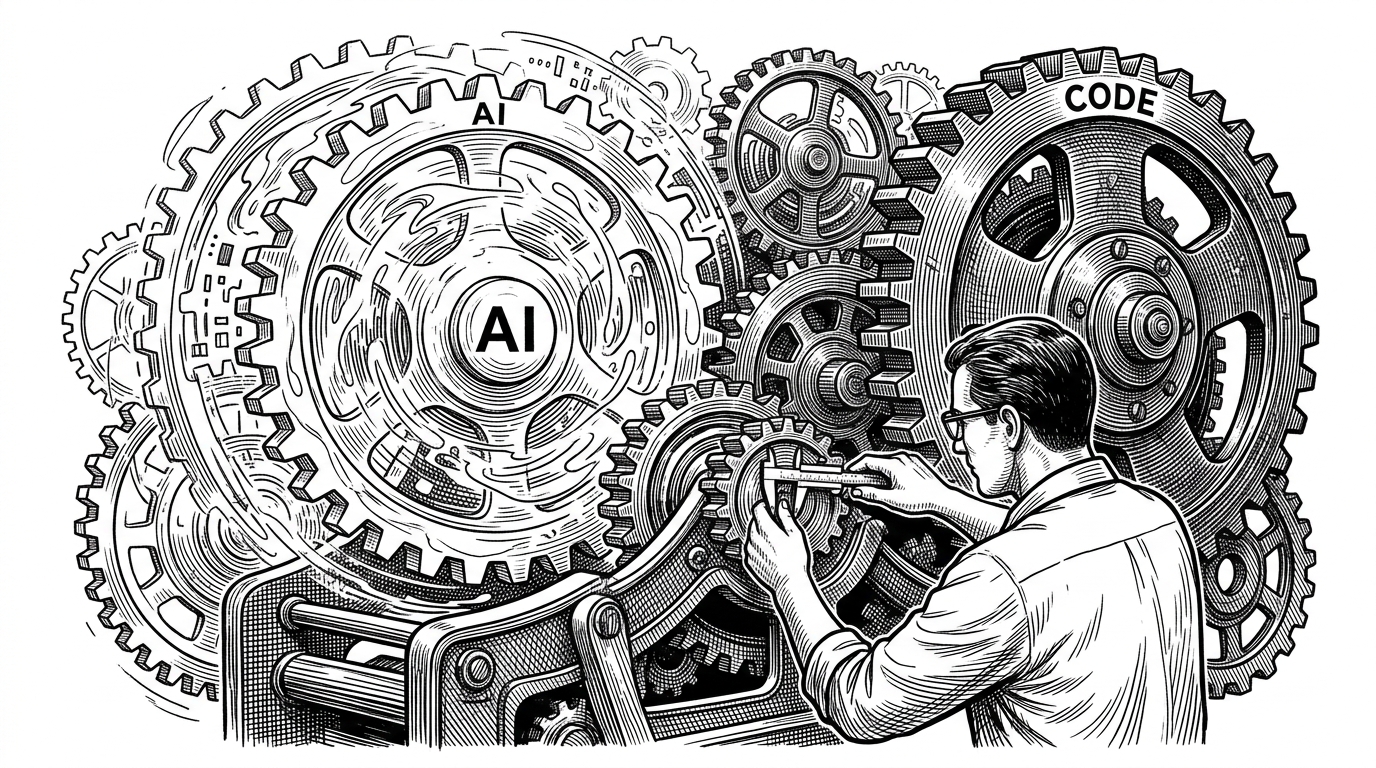
- Langflow renders non-deterministic LLM chains as transparent visual graphs to simplify debugging.
- The platform acts as a visual compiler by mapping React Flow nodes directly to executable Python classes.
- Bi-directional editing allows developers to modify underlying Python code directly within the visual interface.
- Adopting the Model Context Protocol transforms Langflow into a middleware hub that exposes complex flows as tools for external agents.
The Debugging Blindspot
The reality of building agentic software is non-deterministic chaos. You chain together a language model, a vector store, and a tool. It works perfectly once. It fails spectacularly the next time. Debugging this multi-step reasoning process in a terminal feels like reading the matrix.
Langflow changes the paradigm. It turns the black box of LLM orchestration into a transparent pane of glass. By rendering Python logic as a visual graph, it allows developers to see the exact state of a chain at any given node. The reasoning becomes visible.
Compiling the Canvas
This is not merely a drawing tool for prompt engineers. Langflow acts as a visual compiler. Every node on the React Flow canvas maps directly to a Python class in the FastAPI backend.
The bi-directionality is the core differentiator. Developers can double-click any node and edit the underlying Python code directly in the browser. The UI and the execution environment remain in perfect sync. When you change the Python class, the visual node updates its inputs and outputs automatically.
Security and the Cost of Execution
This architectural power comes with severe responsibilities. Because Langflow executes dynamic Python code based on user-defined flows, the boundary between data and instruction is razor thin. If unauthenticated users can submit flows, they can run arbitrary code.
I found the same class of vulnerability on a different endpoint. Same codebase. Same`exec()` call at the end of the chain. Same zero sandboxing.
The project has had to mature rapidly to handle these threats. Recent architecture updates focus heavily on secure execution environments, acknowledging that a visual IDE for AI is fundamentally a remote execution engine by design.
The Python-Native Stronghold
The orchestration landscape is crowded. To understand Langflow, you must look at the alternatives. It rejects the JavaScript-only approach of Flowise. It rejects the heavy, opinionated LLMOps suite of Dify. Langflow remains strictly Python-native, aligning perfectly with the language of AI research.
| Feature | Langflow | Dify.ai | Flowise |
|---|---|---|---|
| Primary Stack | Python / React | Python / Next.js | TypeScript |
| Core Philosophy | Visual IDE for Code | Full-suite LLMOps | No-code for JS |
| Code Access | Inline Python Editing | UI Configuration Only | UI Configuration Only |
| Ecosystem | LangChain Native | Agnostic | LangChain.js Native |
From Builder to Universal Tool
The architecture is actively shifting. By adopting the Model Context Protocol (MCP), Langflow transforms from a standalone destination into a middleware hub. A visual flow can now be exposed as a single tool to an external agent like Claude.
It bridges the gap between the prompt engineer's vision and the software engineer's production environment. The reasoning is finally visible, testable, and ready to deploy.