Dify and the Rise of the LLM Engine
How a decoupled, API-first orchestration layer is replacing the "spaghetti code" of early AI agents.
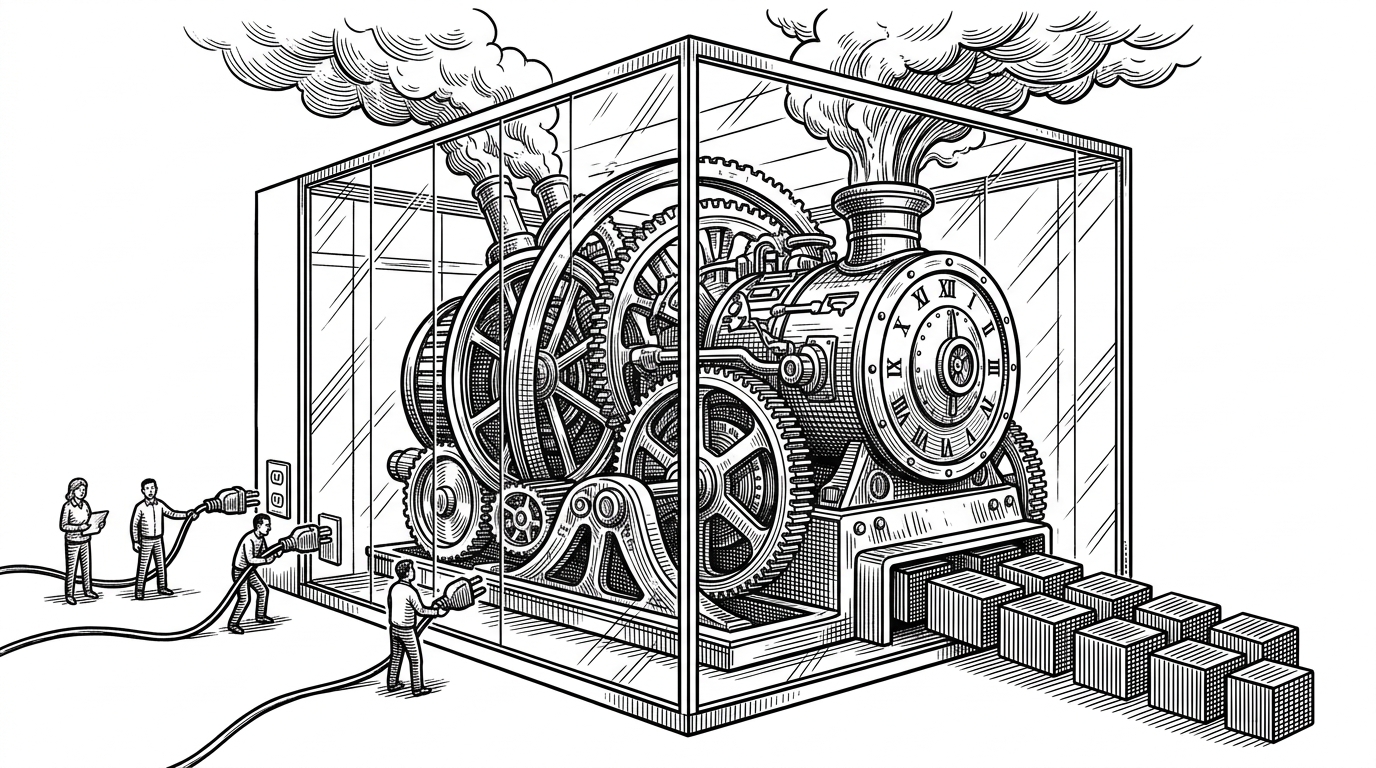
- Dify functions as a Backend-as-a-Service that automatically converts visual workflows into production-ready REST APIs.
- A custom version-tracking system for context variables prevents sensitive user data from leaking across reused server threads.
- The platform offloads document processing to asynchronous workers to ensure the RAG pipeline remains scalable and industrial-grade.
- Dify provides pre-built infrastructure for state management and observability that replaces the manual boilerplate required by code-first libraries.
The first generation of AI applications was built on a fragile foundation. Developers glued together prompts, API keys, and chunking scripts using libraries that were never designed for production scale. The result was often a fragile, stateful mess that broke the moment a user did something unexpected.
Enter Dify. While it presents itself as a visual workflow builder, under the hood, it is a sophisticated Backend-as-a-Service (BaaS) for Large Language Models. It doesn't just help you build a prompt chain; it generates a robust, observable REST API that you can rely on in production.
The API is the Product
Most visual builders trap your logic within their platform. You build a flow, and you interact with it through their chat interface. Dify inverts this model. The drag-and-drop canvas is merely a graphical user interface for defining a complex state machine. The moment you hit save, Dify exposes that state machine as a fully documented API endpoint.
This 'API-symmetry' is what separates Dify from prototyping toys. It allows front-end developers to treat complex agentic workflows—complete with tool calling, context memory, and document retrieval—as simple backend services. They don't need to know how the RAG pipeline works; they just need to know the endpoint URL.
Cleaning the "Dirty" Thread
Serving LLMs at scale in Python presents a unique concurrency challenge. Web servers like Gunicorn often reuse threads across multiple HTTP requests to save overhead. In an AI application, where context (like user ID or session history) is paramount, thread reuse can lead to catastrophic data leaks if variables aren't strictly managed.
Hidden deep within Dify's backend architecture is a custom implementation called RecyclableContextVar. This wrapper around Python's native context variables ensures multi-tenant safety by implementing a version-tracking system.
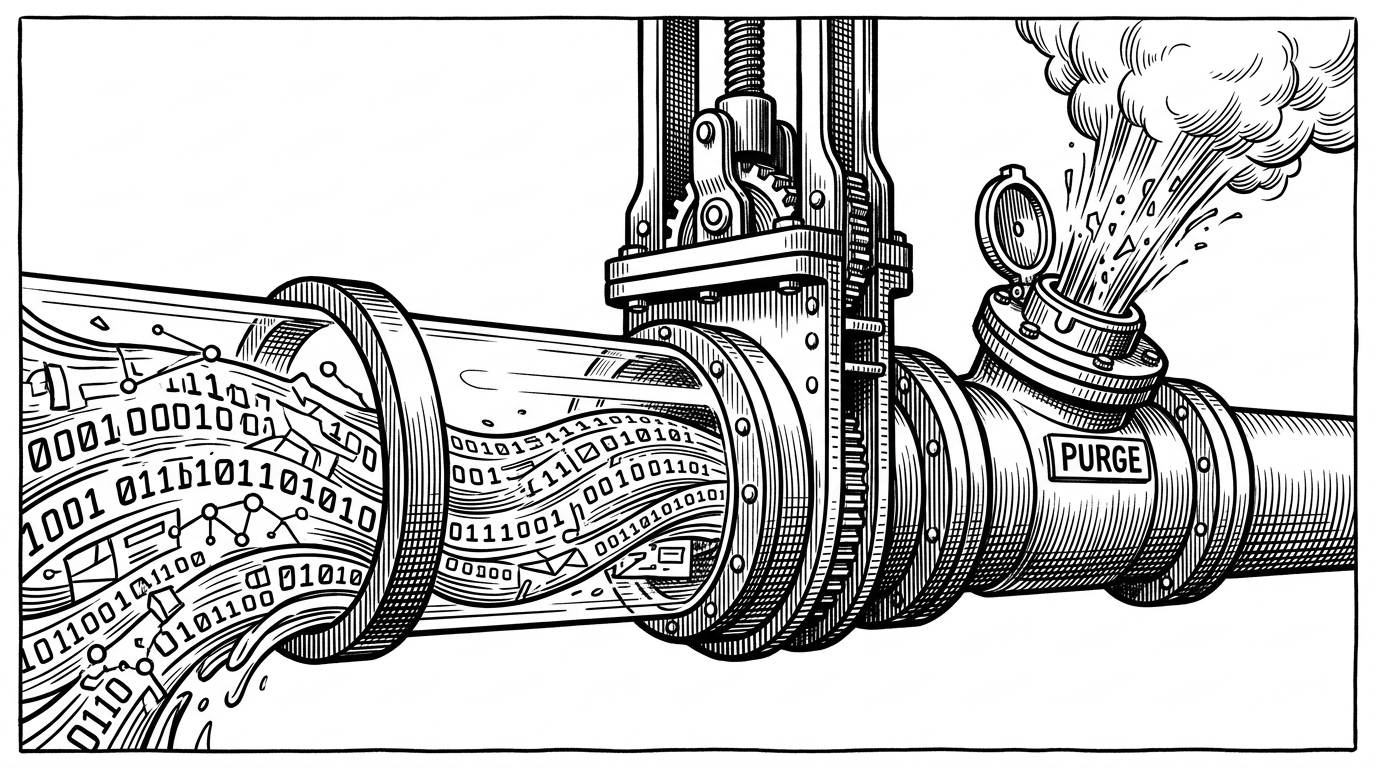
Instead of manually wiping every variable at the end of a request—a process prone to human error—Dify uses a monotonic counter to track how many times a thread has been recycled. If a variable's internal 'update version' is older than the thread's 'recycle version', the data is logically invisible. One user's prompt can never bleed into another's session.
The RAG Pipeline as a Factory
Retrieval-Augmented Generation (RAG) is easy to demo but notoriously difficult to run in production. Dify treats RAG not as a single function call, but as an asynchronous industrial pipeline.
When a document is uploaded, the Flask API doesn't process it. Instead, it hands the task off to Celery workers. These workers handle the heavy lifting: text extraction, cleaning, chunking (with configurable overlap), embedding generation, and finally, indexing into one of the many supported vector databases (like Milvus, Qdrant, or PGVector).
Beyond the Library
To understand Dify's place in the ecosystem, it helps to contrast it with the library-first approach popularized by LangChain.
| Feature | Library Approach (e.g., LangChain) | Platform Approach (Dify) |
|---|---|---|
| Architecture | Code-first framework | API-first platform |
| State Management | Developer implements custom database | Built-in PostgreSQL/Redis persistence |
| RAG Pipeline | Bring your own chunking/embedding logic | Integrated asynchronous Celery workers |
| Observability | Requires external integration (e.g., LangSmith) | Built-in logging, tracing, and annotation |
While libraries give you the raw materials, Dify gives you the scaffolding, the plumbing, and the electrical wiring. You just need to bring the logic.

Orchestrating the Chaos
As the ecosystem matures, the monolithic LLM application is giving way to federated systems where specialized agents interact with specific tools. Dify has recognized this shift, introducing a robust plugin architecture that allows external services to be integrated dynamically.
Plugins are modular components that extend AI applications with plug-and-play simplicity. Now you can assemble external services and custom functionalities with your Dify apps effortlessly.
This decoupling of tools and models means Dify is no longer just an orchestrator of prompts; it is becoming an orchestrator of capabilities. By handling the complex, unglamorous backend work—concurrency, state isolation, asynchronous processing, and API generation—Dify allows developers to build the next generation of AI applications on a foundation of solid engineering, rather than a house of cards.