Archon: The Workflow Engine Turning AI Coding Into a Repeatable System
A deep dive into the open-source harness that wraps LLMs in YAML workflows, isolated worktrees, and human approval gates so software development stops depending on model mood.
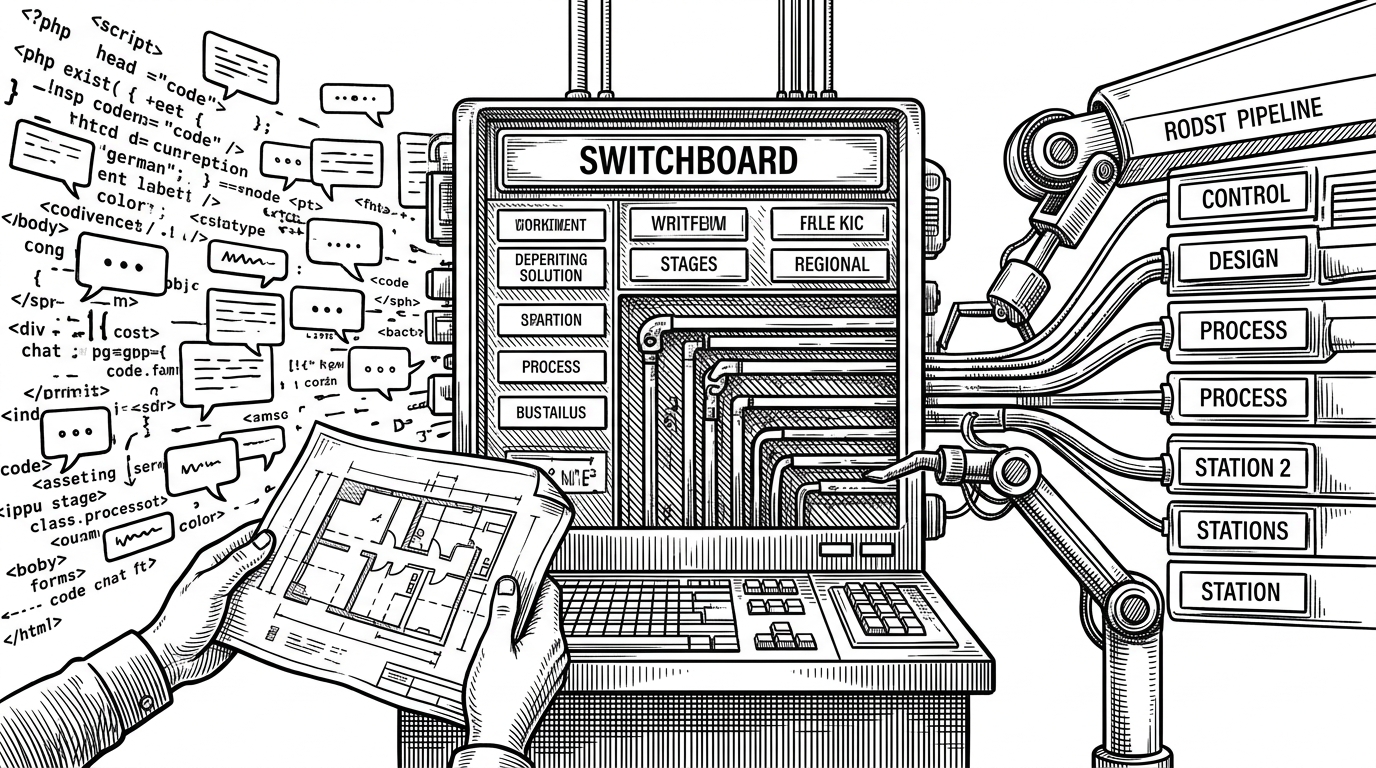
- Archon’s core idea is not better generation, but tighter control over when and how AI is allowed to act.
- Its YAML workflows turn coding tasks into a deterministic pipeline with validation gates, loops, and explicit dependencies.
- Git worktrees are the quiet superpower because they let parallel AI runs stay isolated and conflict-free.
- The project sits between coding assistant and automation platform, which makes it more like process infrastructure than a chatbot.
Archon’s big move is simple: it refuses to let AI freeload on the messiness of a chat thread. Instead, it asks you to encode a development process, then executes that process through a harness that knows where AI should think, where bash should run, and where a human should stop the loop.
That makes the repo feel less like a coding assistant and more like a control plane. The README frames it plainly: Archon is a workflow engine for AI coding agents.
Archon is a workflow engine for AI coding agents. Define your development processes as YAML workflows - planning, implementation, validation, code review, PR creation - and run them reliably across all your projects.
The real product is control, not generation
The easiest mistake is to file Archon under “AI coding tools.” That undersells it. The repo is really about taking software work that used to live in a developer’s head and turning it into something the system can enforce, stage by stage.
That means the user is not asking for a one-shot answer. They are defining a sequence: plan, confirm, implement, validate, review, fix, summarize. The AI supplies execution inside those boundaries, but the boundaries themselves are the product.
That architecture is why Archon can feel boring in the best possible way. Predictable systems are easier to trust, easier to debug, and easier to hand off to a team.
YAML turns coding into a repeatable pipeline
The core trick lives in the workflow files under .archon/workflows. A typical workflow reads like a DAG rather than a conversation: each stage declares what it depends on, which steps get fresh context, and where the loop can continue until a condition is satisfied.
name: archon-idea-to-pr
steps:
  - id: plan
    type: ai
  - id: setup
    type: bash
    depends_on: [plan]
    context: fresh
  - id: implement
    type: ai
    depends_on: [setup]
  - id: validate
    type: bash
    depends_on: [implement]
  - id: review
    type: ai
    depends_on: [validate]
  - id: fix
    type: ai
    depends_on: [review]
    loop_until: approved
  - id: summary
    type: report
    depends_on: [fix]
That structure matters because it breaks the false equivalence between “agent” and “free-form chat.” Archon lets the model make decisions, but only inside a process that can be checked, repeated, and rerun.
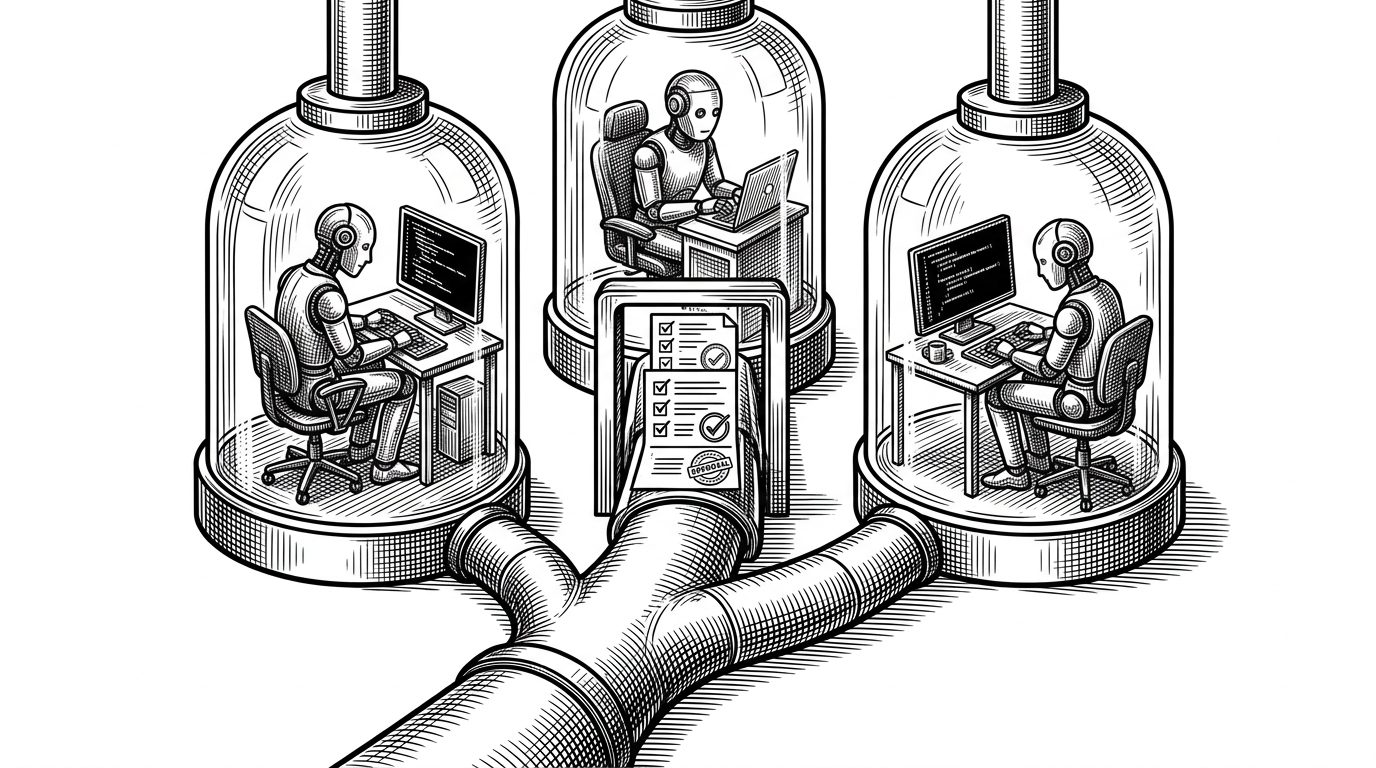
The important detail is freshness. Archon deliberately resets context between phases, which reduces drift and keeps the workflow from accumulating invisible assumptions. In other words, it tries to prevent the model from inheriting its own mistakes.
Why isolated worktrees are the quiet killer feature
The repo’s isolation layer is one of its sharpest ideas. By forcing each run into a dedicated git worktree, Archon avoids the two classic AI coding failures: context bleed and file collisions.
| System | Primary purpose | Determinism | AI involvement | Isolation model | Best fit | What it is not |
|---|---|---|---|---|---|---|
| Archon | Managed AI coding workflows | High | Built in | Git worktrees per run | Feature work, fix loops, review pipelines | A general chatbot |
| Claude Code alone | Interactive coding assistance | Low to medium | Central | Shared repo context | One-off coding help | A workflow harness |
| GitHub Actions | Automation for CI/CD | High | Optional | Ephemeral runners | Build, test, deploy | An active development control plane |
| n8n | General workflow automation | Medium | Optional | External nodes and integrations | Cross-tool business automation | Code-first agent orchestration |
That isolation is what makes parallelism practical. One machine can host several independent tasks without asking the model to behave like a disciplined human developer in a shared working tree.
The routing agent is a command router, not a chatbot
Archon’s routing layer does something subtle. It does not assume every message should become a reply. It first decides whether the input belongs in conversation mode or should become a structured command that launches a deterministic workflow.
// Pseudocode for the routing idea
const route = await aiClassify(message)

if (route.kind === 'command') {
  return runWorkflow(route.workflowId, route.args)
}

return respondNormally(message)
That bridge matters because it keeps the natural language front door without turning the whole system into mush. The AI helps interpret intent, then hands execution back to the machine.
Archon teaches the AI how to use Archon
The .claude layer is the project’s most meta move. It ships its own skills, rules, and agent instructions so the AI working inside Archon can learn the repository’s vocabulary and constraints from the repository itself.
That is a powerful pattern. The tool does not merely depend on an external prompt file or a hidden operator handbook. It packages the operating doctrine alongside the code, which makes the system easier to reproduce across machines and teams.
Archon becomes a Control Plane that dispatches YAML workflows to the remote-coding-agent, tracks execution state, handles human-in-the-loop approvals, discovers automation patterns, and provides a full workflow editor UI.
What Archon replaces, and what it does not
Archon is easiest to understand by contrast. Compared with raw Claude Code, it adds structure. Compared with GitHub Actions, it moves upstream into the development loop. Compared with n8n, it becomes opinionated about code, worktrees, and review gates.
| Tool | Closest analogy | Where it wins | Where Archon differs |
|---|---|---|---|
| Claude Code | Coding assistant | Fast, direct interaction | No workflow harness or isolation by default |
| GitHub Actions | CI automation | Strong build and deploy automation | Not designed for active AI-led development loops |
| n8n | General workflow builder | Broad integration support | Not specialized for software engineering worktrees and code review |
The category Archon is carving out is narrower and more interesting than general automation. It is process infrastructure for AI-assisted software engineering.
That makes it useful to teams who do not want AI to invent a new workflow every time it touches code. They want the opposite: a system that keeps the process stable while the model handles the parts that still benefit from flexibility.
Why this project matters now
Archon is built as a TypeScript monorepo around Bun, with Docker discipline, PostgreSQL-backed state, and adapters for CLI and chat surfaces. The implementation signals matter because they match the thesis: a workflow engine has to behave like infrastructure, not a demo.
The project also points toward a bigger shift. If AI coding is going to be adopted broadly, teams will need more than a smart assistant. They will need an execution layer that can constrain it, audit it, and repeat it. Archon is one of the clearest open-source bets on that future.