loansight: LoanLens AI: The Lending Pipeline That Treats Documents Like Evidence
A tri-service React, Node, and Python system that extracts financial data, cross-checks claims, caches expensive AI work, and turns loan review into an explainable workflow.
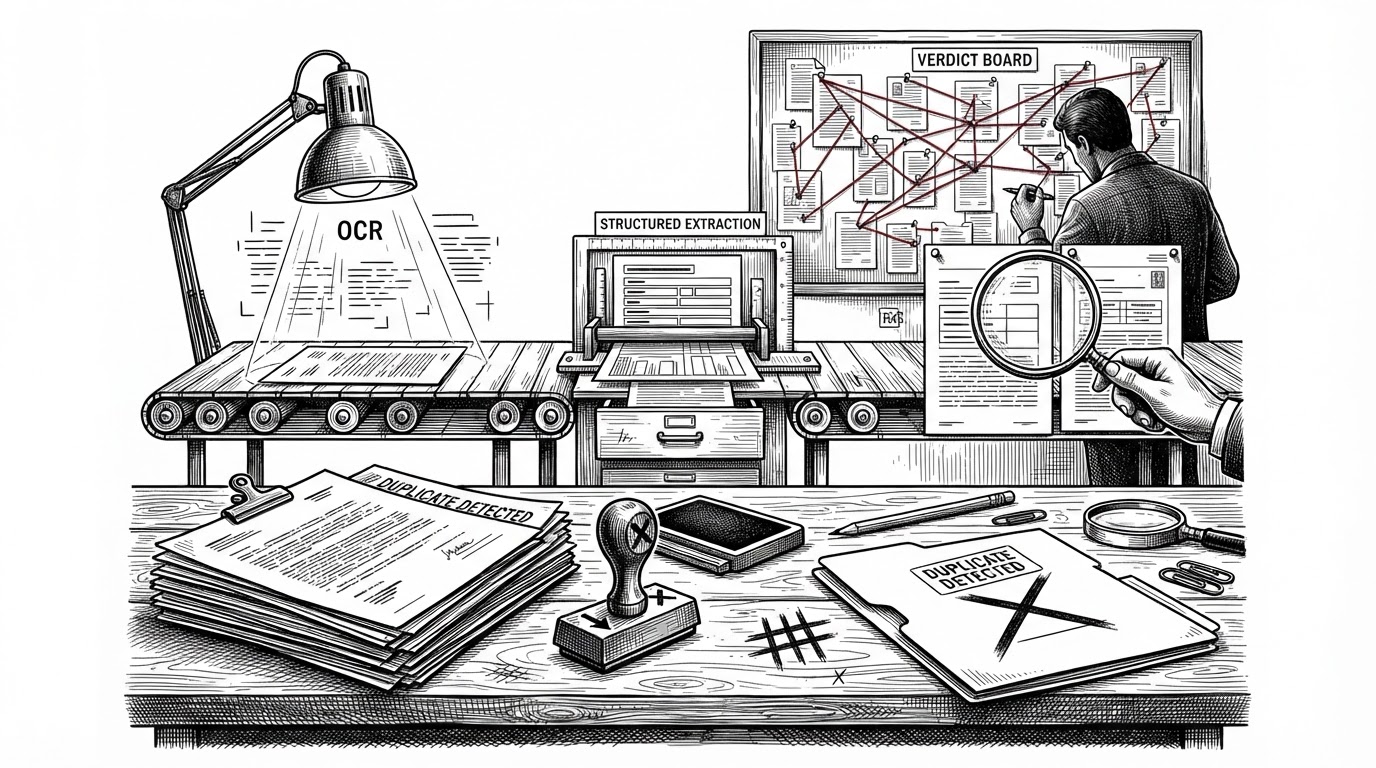
- LoanLens AI is built around evidence handling, not a single prediction step, so every document can be reused, cross-checked, and reviewed.
- Its real differentiation is orchestration: hashing, queueing, schema-bound extraction, and safe fallback behavior keep the workflow explainable under load.
- The architecture splits responsibility cleanly between the React frontend, Node backend, and Python AI service, which keeps intelligence separate from process control.
- The project feels more mature than a typical demo because it tracks confidence, extraction method, stale state, and review status as first-class data.
Why Loan Review Needs More Than a Model
Most loan tools chase the wrong problem. They try to score risk in one shot, as if underwriting were just classification with nicer UI. LoanLens AI starts with a more realistic premise: lending decisions are built from documents, claims, exceptions, and human review.
That changes the architecture. The system has to ingest files, extract structured fields, compare them with what the applicant said, and keep a record of how confident each step was. If the AI is uncertain or unavailable, it should not fake certainty. It should route the case to review.
That is why the project feels less like a demo and more like a loan-review operating system. The interesting thing is not that it uses AI. It is that it limits where AI gets to speak.
The System Reads in Stages, Not in One Shot
LoanLens AI separates orchestration from intelligence. The frontend serves applicants and officers. The Node backend handles uploads, persistence, and workflow control. The Python service does the heavy lifting: OCR, extraction, and validation logic.
| Layer | What it does | Why it matters |
|---|---|---|
| React frontend | Applicant and officer workflows | Keeps the user experience separate from AI internals |
| Node backend | Uploads, persistence, queueing, and orchestration | Controls document flow and prevents repeated expensive work |
| Python AI service | OCR, extraction, reasoning, validation payloads | Lets the system treat model calls as a specialized service, not a hidden side effect |
This split is the first maturity signal. The frontend is not trying to be smart. The backend is not pretending to be a model. And the AI service does not own the whole product, which makes failures easier to isolate.
The Clever Part: Cache, Queue, Reuse
The strongest engineering decision in the repo is also the quietest one: aiService.js does not process everything at once. It hashes files, checks for duplicates, and caps concurrent OCR work so the system does not drown itself when uploads spike.
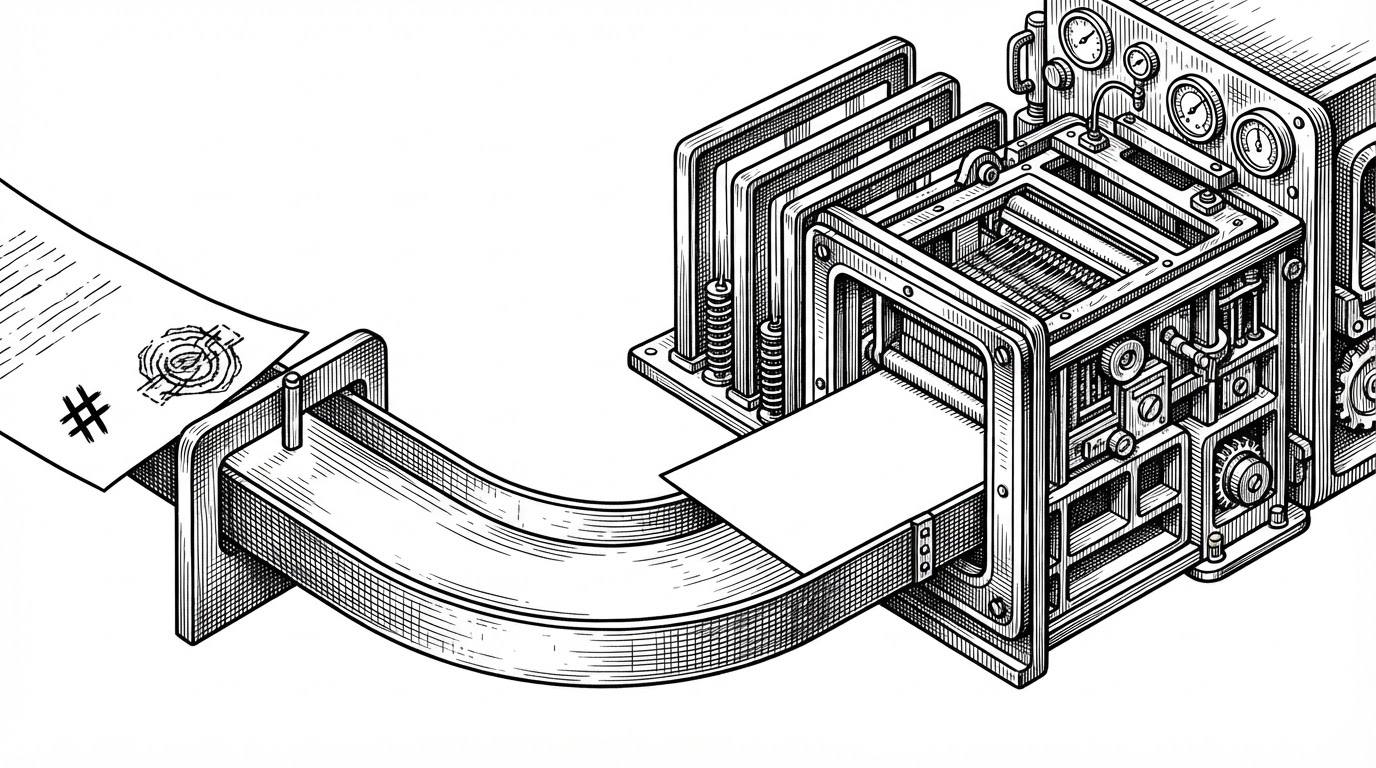
That matters because AI systems fail in expensive ways. A repeated PDF should not trigger a repeated extraction cycle. A burst of uploads should not overwhelm a service that was designed for one document at a time. The queue and hash logic turn model calls into managed infrastructure.
const fileHash = await computeFileHash(filePath);
const existing = await Document.findOne({ fileHash });

if (existing?.aiProcessing?.extractedData) {
  return existing.aiProcessing.extractedData;
}

if (activeJobs >= MAX_CONCURRENT_OCR) {
  queue.push(job);
  return;
}

activeJobs += 1;
try {
  const result = await processDocument(filePath);
  await Document.updateOne({ _id: docId }, { $set: { aiProcessing: result } });
} finally {
  activeJobs -= 1;
}
From Raw OCR to Structured Evidence
The Python service is where raw text becomes something the rest of the app can trust. Instead of treating extraction as a blob of text, it maps document types to specific prompts and schema-backed outputs. A PAN card should not be interpreted like a salary slip, and the code reflects that.
That constraint matters more than model choice. Pydantic-style structure forces the output into known fields, which makes downstream validation possible. The system is not just asking what the document says. It is asking for fields it can compare.
This is the difference between a chatbot and a pipeline. One improvises. The other produces evidence-shaped data.
How the Validator Balances Determinism and Probabilistic AI
Validation is where the repo stops being a parser and starts acting like a review system. The backend compares borrower claims against extracted document values, then layers AI findings and risk scoring on top. The deterministic part checks whether the numbers line up. The probabilistic part explains what those mismatches might mean.
| Approach | Strength | Weakness |
|---|---|---|
| Basic OCR pipeline | Extracts text quickly | Leaves humans to reconcile everything by hand |
| Black-box scoring model | Outputs a fast risk label | Hides the evidence behind the score |
| LoanLens AI | Extracts, compares, and explains | Requires more orchestration, but stays auditable |
The fallback path is the most telling detail. When the AI service is unavailable, the system does not invent a result. It marks the case for review and escalates risk. That is the right failure mode for lending, where false certainty is worse than delay.
Why This Feels More Mature Than a Typical Hackathon Build
Stage-one projects usually expose their seams. LoanLens AI does the opposite. It keeps explicit state for confidence, extraction method, and stale validation. It separates raw OCR from structured intelligence. It even recognizes that document updates can invalidate a previous decision.
Those details are easy to miss, but they are the difference between a prototype and a system designed for repeated use. The repo is still clearly in foundation mode, yet the shape of the architecture is already disciplined. You can see the intended operating model before every feature is finished.
That is the real signal here. The project does not just ask whether AI can read documents. It asks how a lending workflow should behave when documents, models, and people all disagree.
What It Competes With, and What It Is Really For
LoanLens AI sits between three common patterns. It is more than OCR, less opaque than a black-box scoring model, and more structured than a chatbot workflow. That middle ground is where explainable lending software lives.
| System | What it is good at | What it misses |
|---|---|---|
| Basic OCR parser | Turning PDFs into text | No real decision layer or workflow control |
| Black-box loan model | Fast scoring and ranking | Weak auditability and poor explanation |
| Generic chatbot workflow | Flexible conversation over documents | Unreliable structure and weak reuse |
| LoanLens AI | Evidence-driven lending review | More engineering, but much better control |
The point is not to replace underwriters. It is to give them a workflow that preserves evidence, reuses expensive computation, and fails in a visible way. That is a better fit for real review than a single model ever would be.