codecrafters-redis-rust: The Redis Clone That Starts by Pretending to Be a Client
A Rust server that teaches Redis from the wire up, with RESP parsing, passive expiration, and a replication handshake that does just enough to look real.
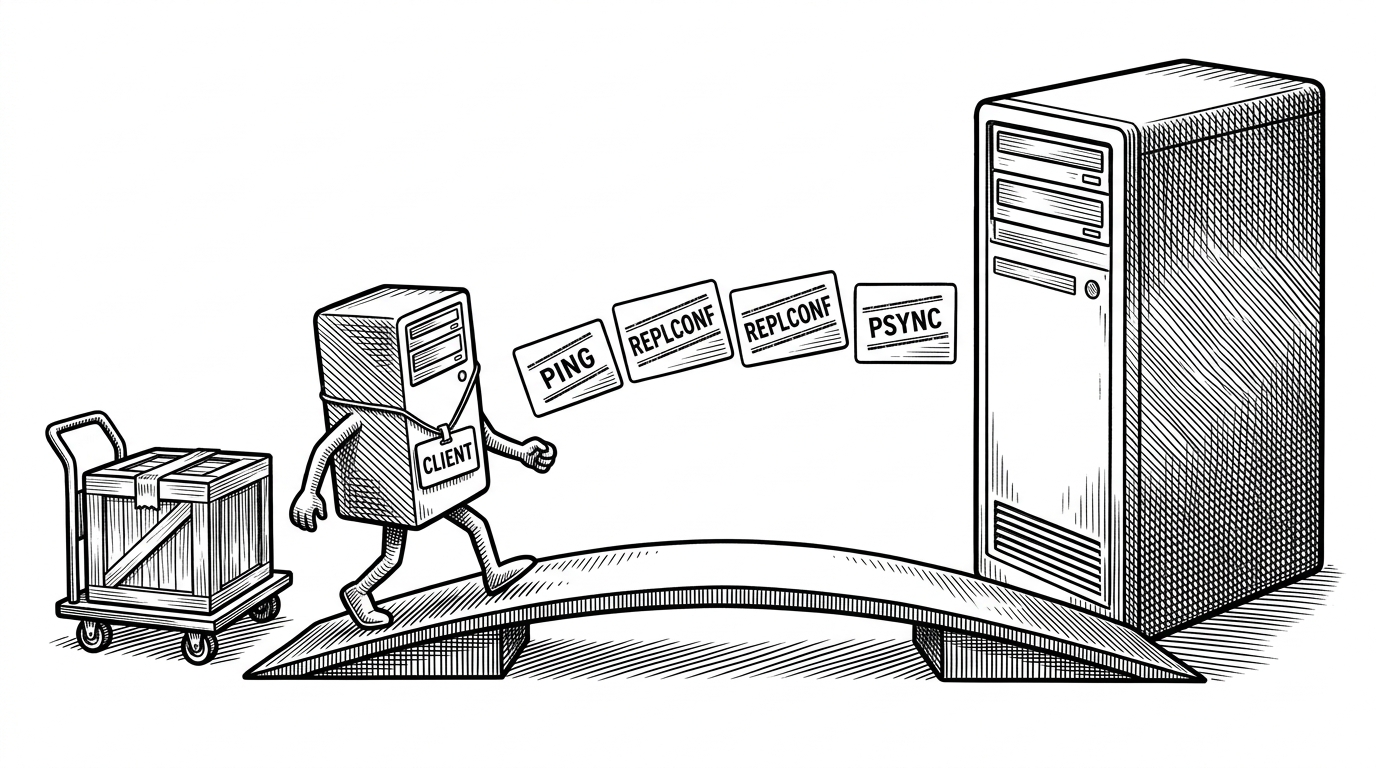 PING, REPLCONF, REPLCONF, PSYNC. Behind the smaller node sits a sealed crate on a dolly, hinting at an empty database payload waiting to be handed over. The artist uses tightly packed crosshatching lines layered at different angles to build up shadow and form, with clean open areas of white for highlights. The line work has the quality of a classic metal engraving, precise and deliberate, with varied line weights where bold contour lines define shapes and finer interior lines create tonal depth. The overall style evokes vintage newspaper editorial illustrations from The Economist or Wall Street Journal. No color, no gradients, no grey fills. Only black lines on white. The background MUST be pure white #FFFFFF. No paper texture, no cream, no off-white, no noise, no grain. Perfectly clean flat white background." loading="lazy">
- This repo teaches Redis by making the server perform the replication handshake before it can behave like a replica.
- RESP maps cleanly onto Rust enums and dispatch, which turns a byte protocol into a typed state machine.
- Passive expiration is the right shortcut for a learning server because it keeps cleanup on the read path.
- The hardcoded empty RDB is not a cheat, it is the point, because protocol correctness matters more than full persistence here.
The moment the clone stops being a clone
The most interesting thing in jnsahaj/codecrafters-redis-rust is not `SET` or `GET`. It is the moment the server has to speak Redis before it can act like Redis. A replica does not just connect. It performs a sequence of protocol moves, `PING`, `REPLCONF`, `REPLCONF`, `PSYNC`, and only then does it earn the right to listen for live updates.
That sequence is the article in miniature. The clone is not proving feature breadth first. It is proving that it can negotiate state correctly, and that is a better lesson for distributed systems than a pile of commands with no conversation.
Why this repo exists at all
This is a CodeCrafters project, which changes how you should read the code. The goal is not Redis parity. The goal is to internalize the protocol shape, the event loop, the data flow through `main.rs`, `resp/parser.rs`, `store.rs`, and `redis.rs`, and the way a small Rust program can hold those pieces together without a lot of ceremony.
In this challenge, you'll build a toy Redis clone that's capable of handling basic commands like `PING`, `SET` and `GET`. Along the way we'll learn about event loops, the Redis protocol and more.
That README sentence is the right frame. The repository is not trying to hide its educational purpose. It is trying to make the protocol legible, and that constraint explains why the implementation makes a few sharp, deliberate shortcuts.
RESP becomes Rust types
The parser does not treat RESP as magic text. It turns bytes into a Rust `DataType`, then hands that structured value to a command evaluator. That is the elegant part of the repo: the wire format and the language type system line up cleanly, so the protocol can become code without losing its shape.
pub enum DataType {
    SimpleString(String),
    BulkString(Option<String>),
    Array(Vec<DataType>),
}

fn eval_dt(dt: DataType) -> Command {
    match dt {
        DataType::Array(items) => Command::from(items),
        _ => Command::Unknown,
    }
}
That mapping matters because it makes the parser, the dispatcher, and the response serializer feel like one pipeline instead of three unrelated subsystems. In Rust, a tagged protocol like RESP is a natural fit for enums, traits, and a small amount of glue.
Expiration happens only when you ask for the key
The expiration policy is one of the smartest tradeoffs in the codebase. There is no background janitor thread. Instead, `store.rs` checks whether a key has expired when the key is read, and removes it at that moment if needed. That keeps the implementation small and makes the cost of expiration visible where it matters.

if let Some(record) = self.records.get(key) {
    if record.is_expired(now) {
        self.records.remove(key);
        return None;
    }
    return Some(record.value.clone());
}
That is a clean engineering compromise for a learning server. Read latency absorbs the work, but the system avoids the complexity of a sweeper, a scheduler, or a second moving part that students would have to understand before they understand the protocol itself.
The empty RDB shortcut is the real flex
The most delightful trick in the repo is the hardcoded empty RDB payload during `PSYNC`. In production Redis, replication needs real persistence machinery behind it. Here, the code satisfies the protocol requirement with the smallest possible valid artifact. That is not a fake system. It is a disciplined one.
let empty_db = EMPTY_RDB_BYTES;
stream.write_all(b"+FULLRESYNC ...\r\n").await?;
stream.write_all(&empty_db).await?;
stream.write_all(live_replication_stream).await?;
What this repo teaches that Redis itself cannot
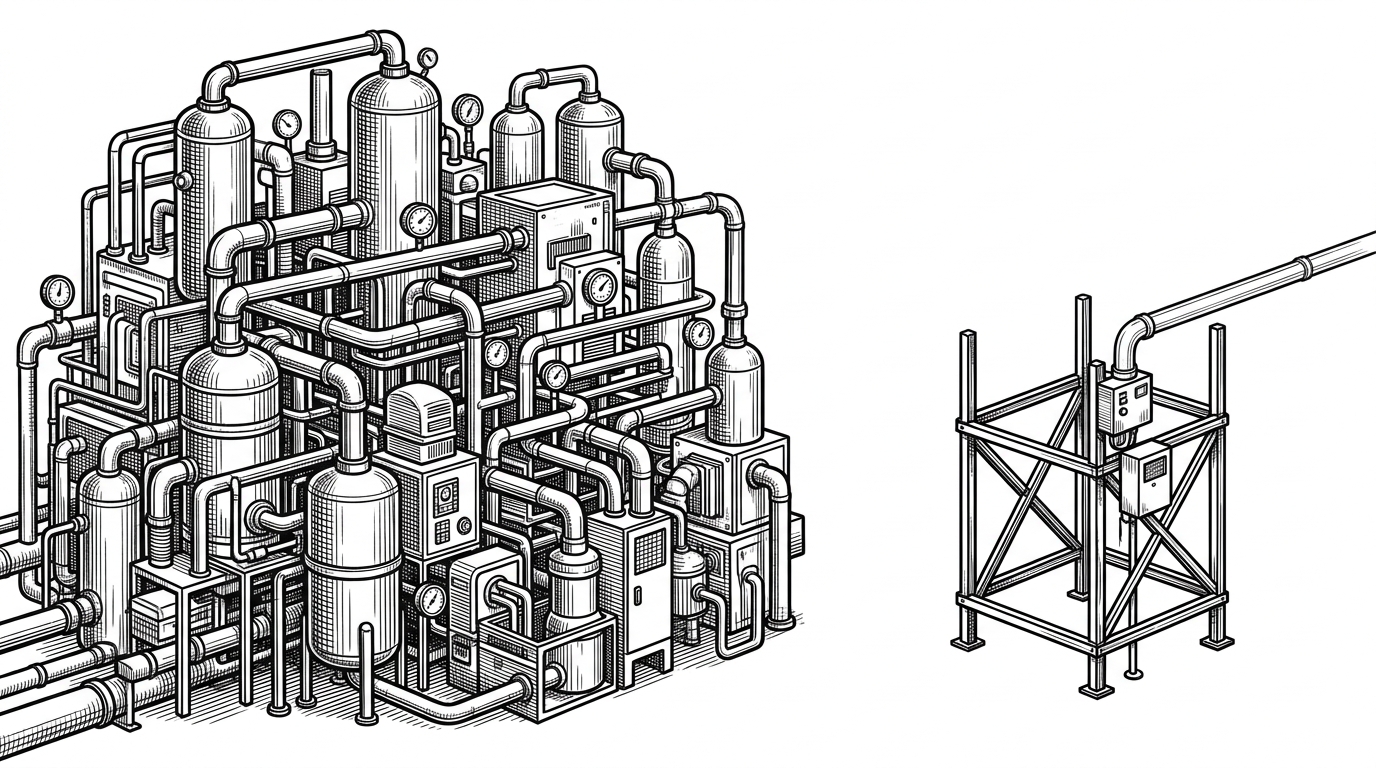
Redis proper is the benchmark, but this repo is a better teacher in one narrow sense. It strips the system down to the parts that create understanding: the protocol contract, the replication handshake, the state transition from client to replica, and the expiration policy. What disappears is scale, not meaning.
| Dimension | codecrafters-redis-rust | Redis proper |
|---|---|---|
| Purpose | Learn Redis by rebuilding the wire protocol and replication path | Serve as a production in-memory data store |
| Protocol handling | Manual RESP parsing into Rust enums and commands | Industrial networking, many commands, broad compatibility |
| Replication | Handshake-driven, with a small protocol sequence and an empty RDB shortcut | Full replication behavior with mature persistence backing it |
| Expiration | Passive, on read | More complete lifecycle management across the system |
| Persistence | Minimal scaffolding for the exercise | Real persistence formats and operational guarantees |
| Audience | Learners who want to understand Redis from the wire up | Users who need a production database |
That is why the project lands. It does not compete with Redis by imitation. It competes by focus. If you want to understand why a distributed system feels alive at the wire, this repo gives you just enough machinery to see the joints.