OpenMythos: The Recurrent Transformer That Tries to Think Before It Stops
A deep dive into the looped backbone, adaptive halting, and depth-aware attention behind an open reconstruction of Claude-like architecture.

OpenMythos is a framework designed to enable the creation of highly-reliable, long-context understanding models by strictly adhering to the architectural principles inferred from the Claude research.
- OpenMythos argues that depth should be reused recursively, not just stacked once and forgotten.
- Its main novelty is compute that can stop early, so easy tokens do not pay for hard-token reasoning.
- The stability story matters as much as the loop itself, because repeated execution only works if the recurrent core stays bounded.
- The repo is best read as an executable hypothesis about iterative reasoning, not as a finished open-weight model.
OpenMythos is interesting for one reason: it treats depth as a decision, not a structure. Instead of paying the same compute bill for every token, it reuses a shared core, adds light depth-specific adaptation, and lets halting logic decide when to stop.
Why This Model Loops Instead of Simply Growing
The headline idea is simple: the same block can be reused several times. That changes the meaning of depth. In a standard transformer, depth is fixed at build time. In OpenMythos, depth behaves more like a runtime choice.
That is the cleaner story than "bigger model" or "more layers." Reuse gives you a chance to spend compute only where the token earns it. Easy material can leave early. Hard material can keep going.
The Three-Stage Pipeline: Prelude, Recurrent Block, Coda
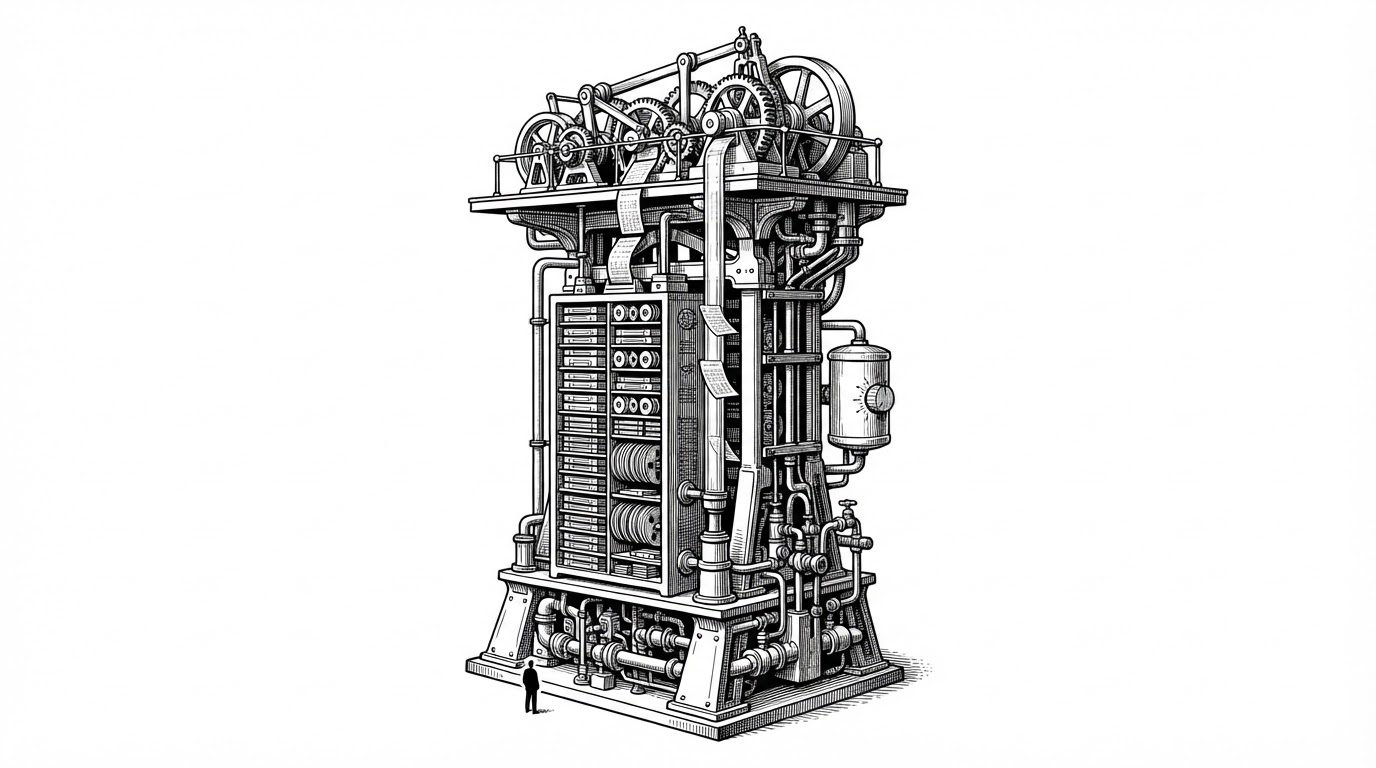
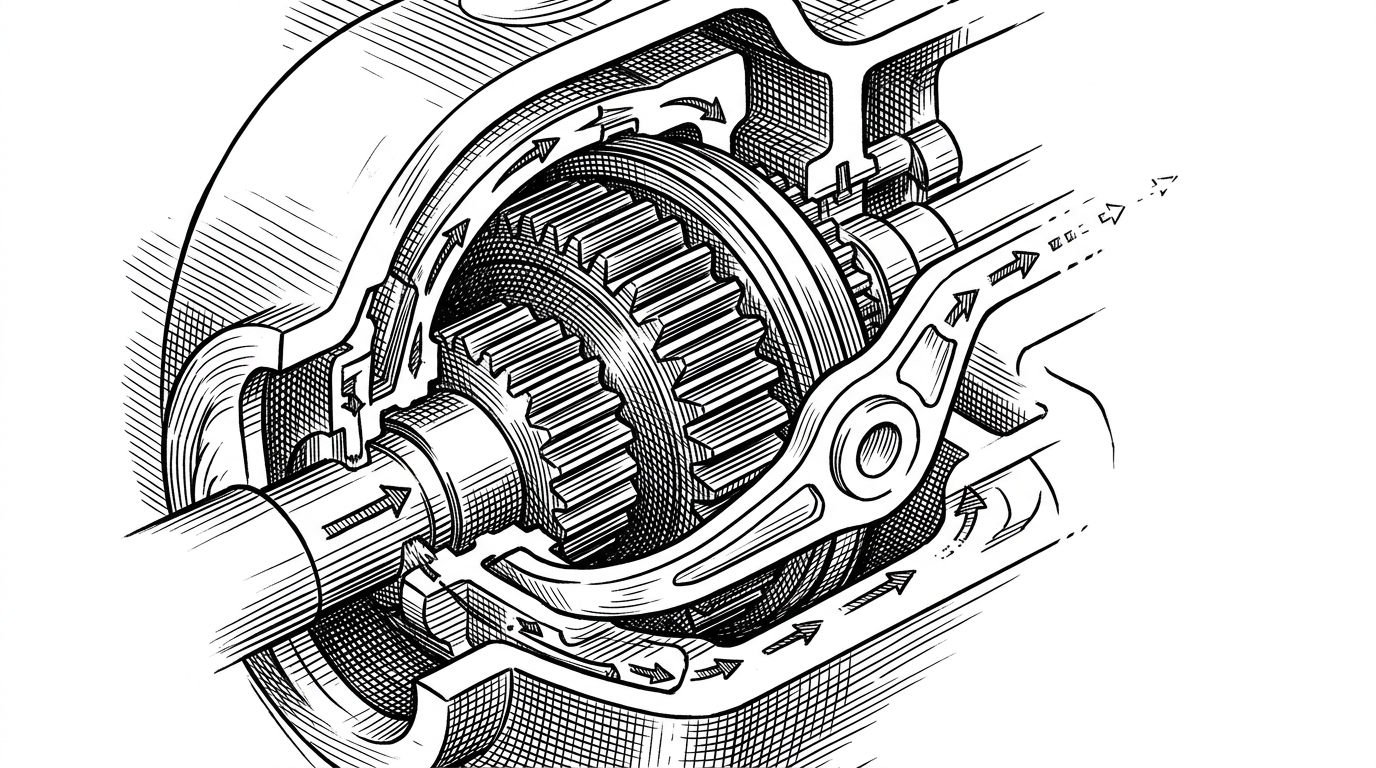
OpenMythos is easier to understand if you strip away the buzzwords and look at the shape. First comes a Prelude that prepares the signal. Then comes the Recurrent Block, which can run multiple times. Finally, the Coda cleans up and refines the result before output.
That structure matters because it turns architecture into policy. The network is no longer only a stack of transformations. It is a controller that decides how much work each token deserves.
class OpenMythos(nn.Module):
    def forward(self, x):
        x = self.prelude(x)
        state = x
        for i in range(self.max_loops):
            state = self.recurrent_block(state, loop_idx=i)
            if self.act_halting.should_exit(state):
                break
        return self.coda(state)
How the Loop Does Not Collapse
A repeated block is only interesting if it stays numerically sane. Recurrent systems can drift, blow up, or fade away. OpenMythos addresses that by treating the loop like a controlled dynamical system, not a casual layer repeat.
The repo's answer is LTI injection plus a spectral-radius constraint. That keeps the recurrent path bounded so the model can iterate without turning the hidden state into noise or infinity.
What the guardrails are doing
The point of the stability machinery is not elegance. It is survival. If the same block is reused several times, tiny numerical problems get multiplied. OpenMythos borrows from control theory to keep the loop inside a safe region.
That is a useful signal about the project's priorities. It is not merely trying to mimic a transformer and call it recurrent. It is trying to make recurrence trainable.
Why Some Tokens Get More Thinking Time
ACT halting is the part that makes the architecture feel alive. A token that is easy to resolve does not need the full loop budget. A token that is ambiguous can keep iterating until the confidence threshold is satisfied.
That is more than an efficiency trick. It makes compute conditional. Two tokens in the same prompt can pay very different costs, which is closer to how a human spends attention than how a static stack spends FLOPs.
The Attention Stack Is a Greatest-Hits Compilation, on Purpose
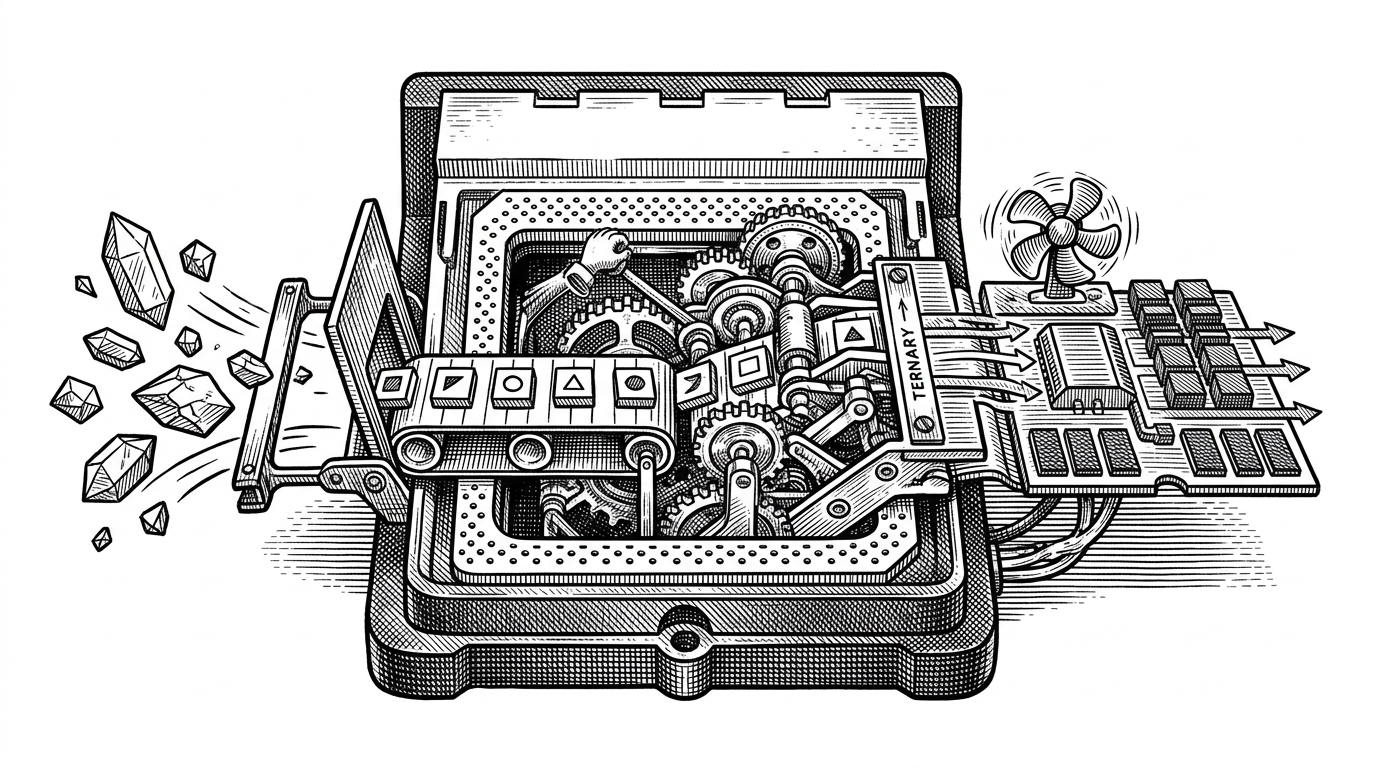
OpenMythos does not invent every submodule from scratch. It composes recent ideas that all solve adjacent problems: compressed KV storage, grouped attention, and sparse expert routing. The code reads like a deliberate synthesis of current efficient-model practice.
| System | Depth usage | Compute allocation | Stability mechanism | What it is optimized for |
|---|---|---|---|---|
| Standard transformer | Fixed stack used once | Same cost for every token | Implicit, via architecture depth | Predictable throughput |
| OpenMythos recurrent depth | Shared block reused across loops | Variable cost per token | LTI injection and spectral-radius control | Iterative reasoning with early exit |
| Llama or Mistral-style open model | Static backbone, sometimes MoE | Mostly fixed, sometimes sparse | Standard training and scaling choices | Strong general-purpose open weights |
The interesting detail is not that OpenMythos borrows ideas. It is which ideas it chooses to borrow together. Depth reuse, adaptive halting, and sparse experts all push toward the same end: spend more where the task is harder.
OpenMythos Is Trying to Spend Compute Like a Human Thinker
The cleanest way to read the repo is as a bet on uneven cognition. Humans do not think with constant effort per sentence. They skim simple things and dwell on hard things. OpenMythos tries to bake that behavior into the model itself.
That is why the loop matters, why the halting matters, and why the stability machinery matters. Together they turn depth into a decision loop, not a static staircase.
| Trait | Standard stack | OpenMythos |
|---|---|---|
| Depth | Preallocated at design time | Reused dynamically across passes |
| Stopping rule | None at token level | ACT halting can exit early |
| Adaptation | Uniform across layers | Light per-pass variation via low-rank adaptation |
| Mental model | Feed-forward processing | Conditional iteration until confidence is enough |
What It Aims to Beat, and What It Is Really Competing With
OpenMythos is not competing only with a single open-weight model family. It is competing with a design philosophy. Llama-style systems optimize the standard transformer path very well. Mistral and Mixtral-style systems push efficiency through strong engineering and sparsity. OpenMythos asks a different question: what if the model itself decides how much depth it needs?
That makes it less of a product benchmark and more of a research thesis. If the thesis is right, then a model can be both economical and reflective, because compute no longer has to be flat.
Why This Repo Matters Even Without Trained Weights
The repo matters because it makes an architectural claim inspectable. You can read the code, trace the loop, and question the assumptions. That is valuable even if the project is still at the level of theory.
In that sense, OpenMythos is an executable hypothesis. It argues that reasoning should be recurrent, stability should be explicit, and inference should spend effort unevenly. Whether the final answer is right is a separate question. The important part is that the question is now concrete.