OpenMythos: The Transformer That Thinks by Looping the Same Brain
A theoretical recurrent-depth architecture that treats depth as a runtime choice, stabilizes recurrence with control-theory logic, and uses halting plus shared weights to make inference feel like adjustable thought.
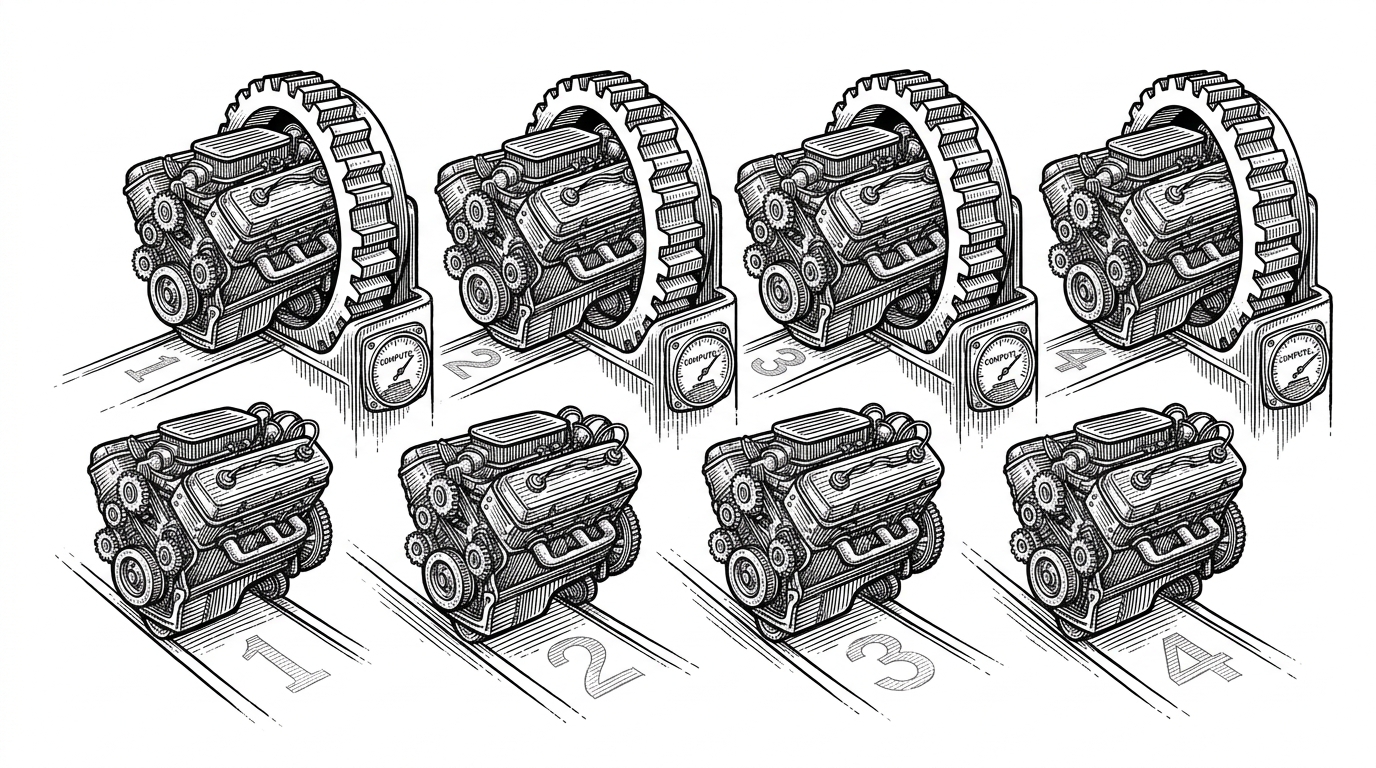
- OpenMythos argues that depth should be an iteration budget, not just a layer count.
- The recurrent block is interesting because the same weights can be reused across passes while loop-specific signals keep each pass distinct.
- Adaptive halting turns extra compute into an explicit choice, so easy inputs can exit early and harder ones can keep thinking.
- The repo treats stability as a control problem, which is what makes the looped architecture feel technically credible instead of merely clever.
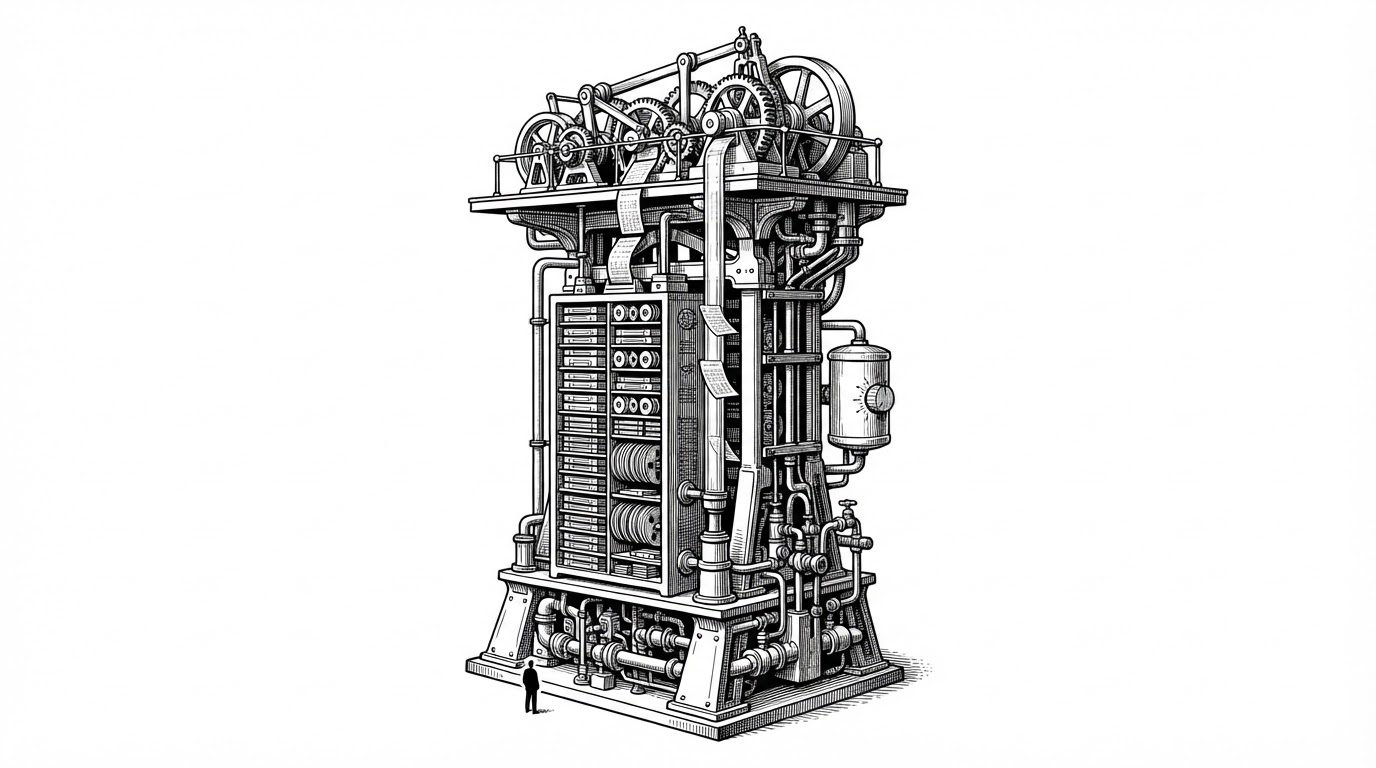
OpenMythos is not trying to win by piling on more layers. Its pitch is sharper: reuse the same block, let the model loop, and decide at runtime how much internal work a prompt deserves.
That shift matters because it changes the unit of capability. In a normal transformer, depth is mostly baked in. In OpenMythos, depth becomes elastic, and that makes inference-time scaling the central idea rather than a side effect.
Why this model cares about loops, not layers
The first thing to notice is that OpenMythos does not equate depth with a longer feed-forward stack. It separates the model into a prelude, a shared recurrent block, and a coda, then lets the middle section run multiple times.
That is a different mental model from standard transformers. Instead of asking how many layers the model has, OpenMythos asks how many passes the model should take before it stops.

Inside the recurrent block
The architecture reads like a pipeline, but the interesting part is the repeated center. The prelude shapes the input, the recurrent block processes it again and again, and the coda turns the final hidden state into logits.
# Conceptual shape of the loop
h = prelude(x)
for t in range(n_loops):
    h = recurrent_block(h, loop_index=t)
    if halting_gate(h):
        break
logits = coda(h)
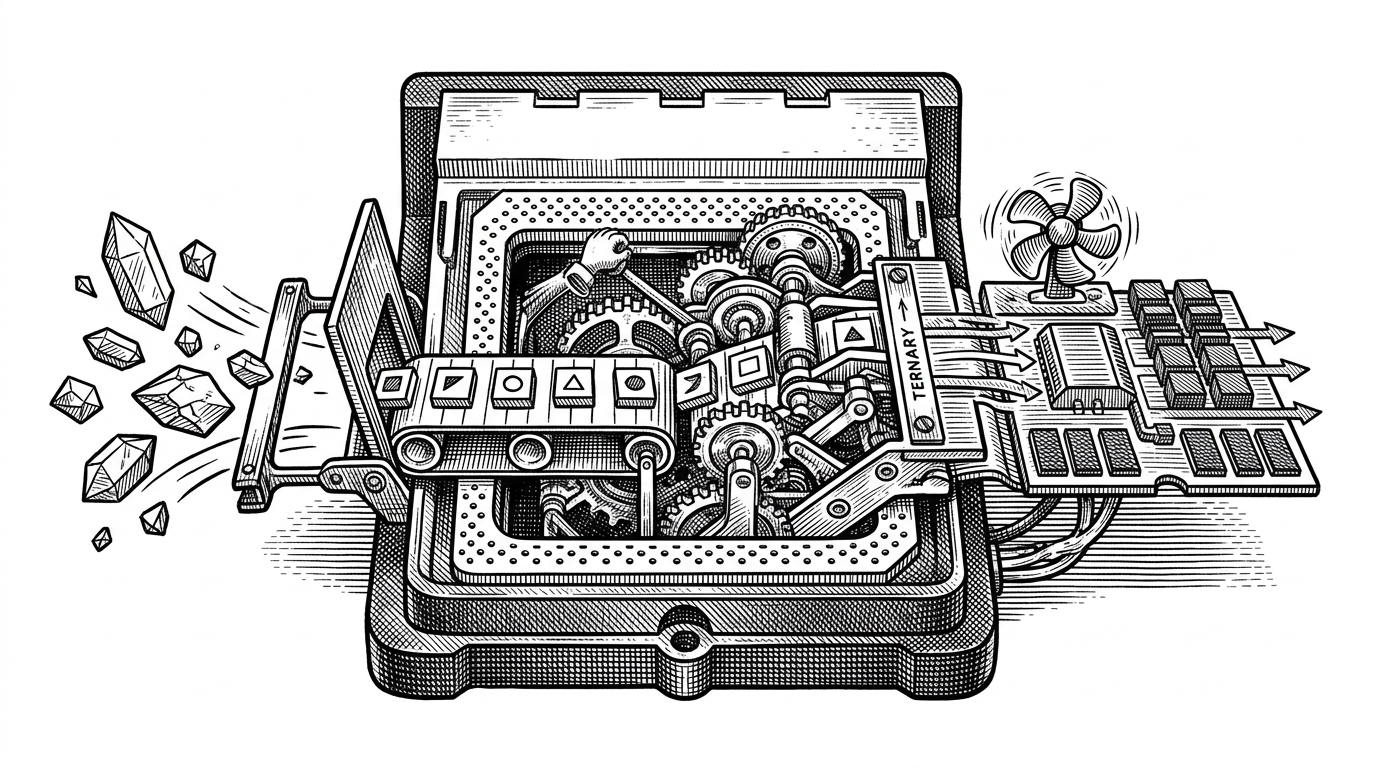
The repo’s technical choices reinforce that structure. LTI injection keeps the hidden state update within a controlled linear system, while the spectral-radius check acts like a guardrail against runaway recurrence.
Open source is better than closed source in every way.
That quote is blunt, but the code is more interesting than the slogan. OpenMythos is really arguing that architectural leverage, not scale alone, can make a smaller system feel larger at inference time.
How the model decides to stop thinking
ACT halting is the product idea hiding inside the architecture. It means the model can spend more latent work on hard prompts and less on easy ones, without changing the outer interface.
That is why this project feels less like a static model sketch and more like a runtime policy. It is not just about what the network can represent. It is about how much of that representation it chooses to use.
Why MoE and attention variants matter here
| Component | Why it matters in a looped model | Practical effect |
|---|---|---|
| Standard FFN | Dense compute every pass | Simple, but expensive when loops increase |
| MoE FFN | Sparse experts can stay selective | More capacity without paying full cost on every iteration |
| MLA | Compresses KV memory for long-context work | Helps when recurrence and context both demand memory discipline |
| GQA | A familiar efficiency trade-off | Simpler than MLA, easier to reason about in some deployments |
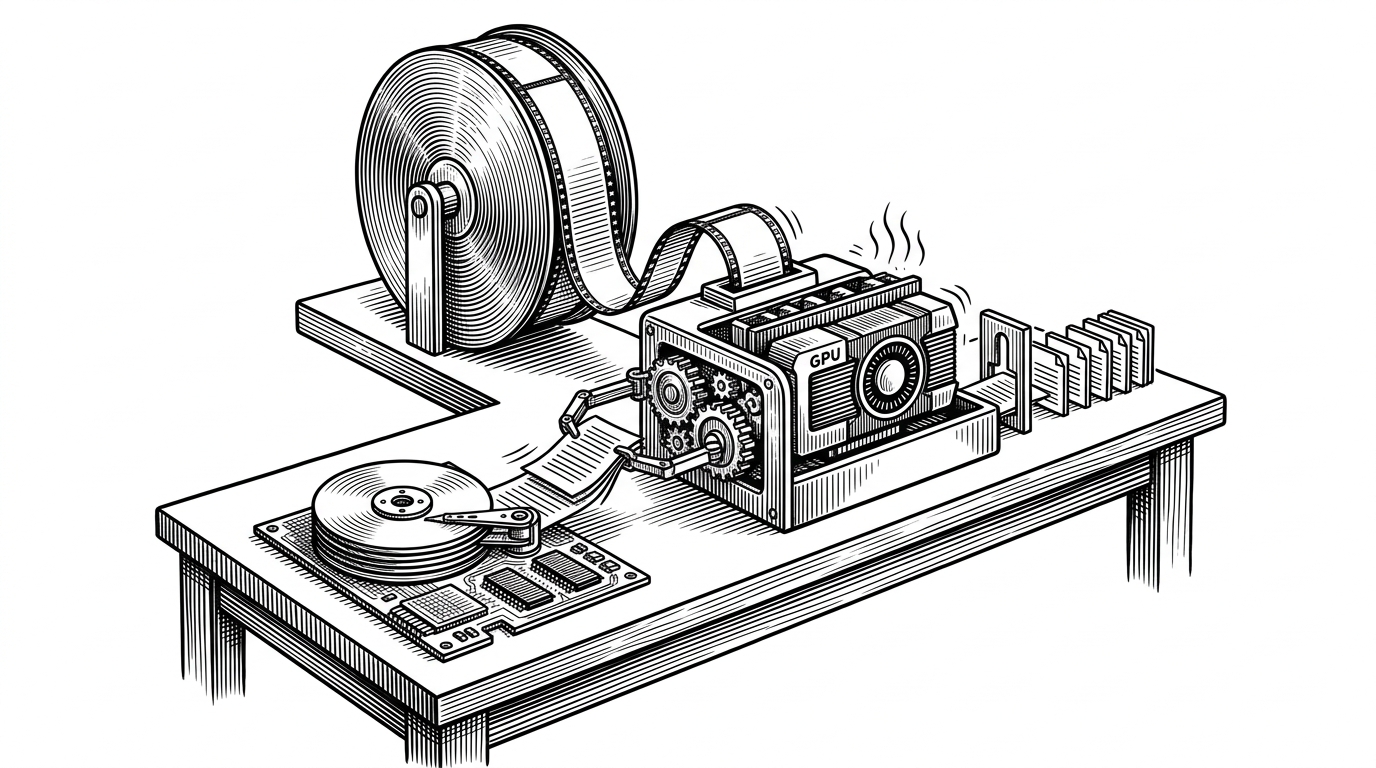
In a looped architecture, efficiency is not a polish layer. Every extra pass multiplies memory pressure and compute cost, so sparse experts and attention choice become part of the architecture’s core economics.
That is why the repo’s MLA versus GQA split matters. It is not a footnote. It is the difference between a loop that is elegant on paper and one that is actually usable.
The stability trick most readers will miss
The quiet insight in OpenMythos is that recurrence is dangerous unless the hidden state stays bounded. That is where the control-theory flavor shows up most clearly.
Spectral-radius checks are not decorative math. They tell you whether repeated application of the update rule will settle into a stable orbit or spiral out of control as the loops accumulate.
What OpenMythos is really arguing about
| Question | Standard transformer answer | OpenMythos answer |
|---|---|---|
| What is depth? | A fixed stack of layers | A runtime budget of passes |
| Can the model think more at inference? | Only indirectly, with larger models or longer prompts | Yes, by looping the same block more times |
| How do you keep recurrence safe? | Usually by architectural convention | By explicitly checking stability |
| What makes it smarter? | More parameters and more layers | Better control over when and how computation repeats |
This is the deeper thesis. OpenMythos suggests that smaller systems can sometimes think deeper if they are allowed to reuse computation intelligently.
That does not eliminate the value of scale. It does challenge the reflex that more parameters are always the cleanest answer to harder reasoning.
Where this sits in the landscape
| Model shape | Depth representation | Early halting | Stability risk | Main benefit |
|---|---|---|---|---|
| Standard transformer stack | Fixed layers | No | Low | Straightforward training and inference |
| Fixed-depth recurrent model | Repeated block with fixed passes | Usually no | Moderate | Weight reuse and parameter efficiency |
| Dynamic halting model | Repeated block with learned stopping | Yes | Moderate to high | Compute adapts to difficulty |
| OpenMythos style looped inference | Shared block, loop index embeddings, bounded recurrence | Yes | Managed explicitly | Runtime depth becomes a control knob |
The cleanest way to read OpenMythos is as a thesis about inference-time control. It is not just a smaller model. It is a model that tries to make reasoning budget visible, adjustable, and stable.