Spite-Driven Development: Unpacking magnum6actual/flipoff
How a developer used zero dependencies, Vanilla JavaScript, and pure spite to clone a mechanical split-flap display for any browser.
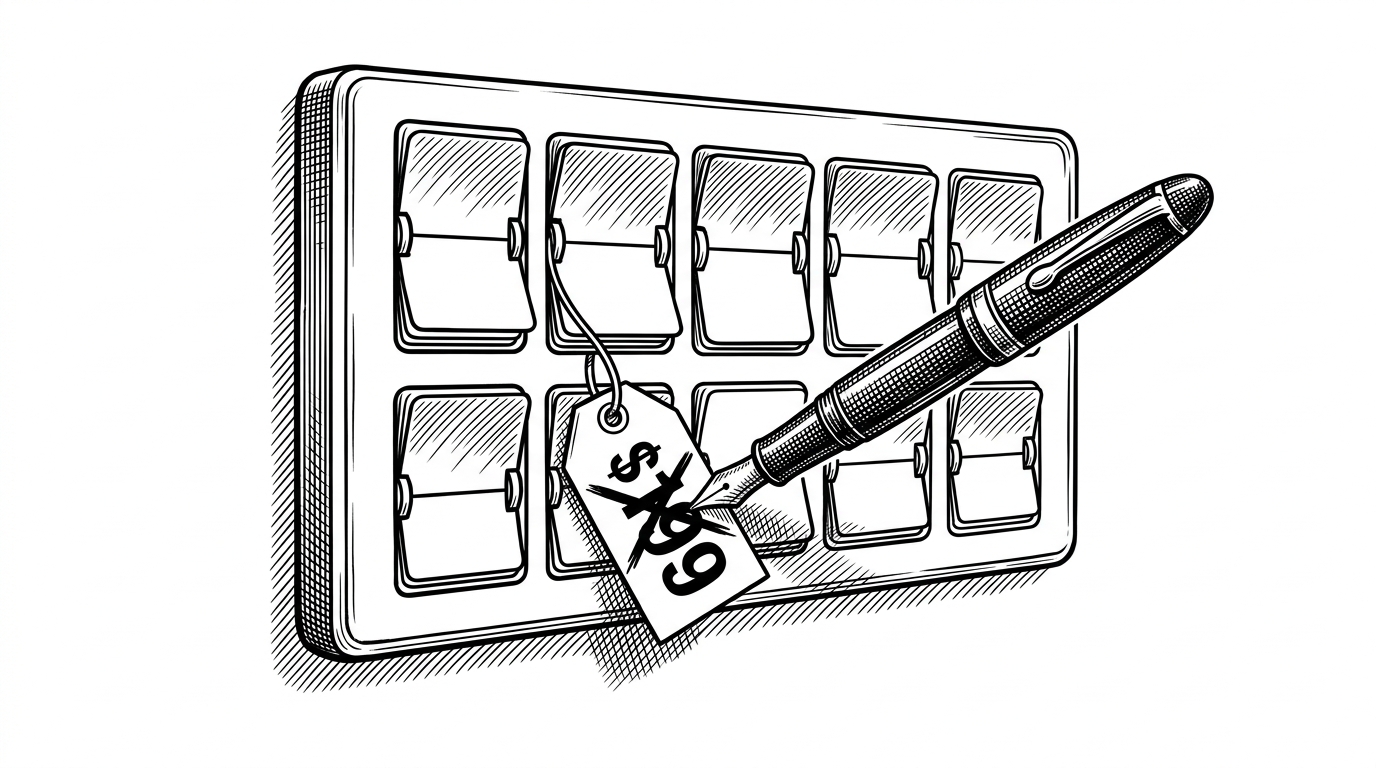

Turn any TV into a retro split-flap display. The classic flip-board look, without the $3,500 hardware. And it's free.
- FlipOff is a high-fidelity, web-based emulator of mechanical split-flap displays built entirely without modern frameworks or build tools.
- The project was born from 'open-source spite' after a commercial entity attempted to charge $199 for a similar, basic web UI.
- To achieve zero-latency mechanical sound in a browser, the application embeds a high-quality audio recording as a Base64 string directly in a JavaScript file.
- Instead of physically accurate linear letter flipping, FlipOff employs a randomized 'scramble' effect coupled with CSS opacity flashing to preserve browser performance.
The $199 Provocation
Sometimes the best motivation is pure, unadulterated aggravation. The origin story of FlipOff begins with a commercial entity attempting to charge $199 for a digital split-flap display emulator—a piece of software that essentially ran in a web browser. Developer Wayne Culbreth (magnum6actual) saw this and decided the open-source community could do better, for free.
The result is a zero-dependency, highly polished piece of digital signage. It’s a direct response to the grift of overcharging for basic web UIs, and a testament to the self-correcting nature of open-source ecosystems.
Someone tried charging two hundred bucks for a web version, so a developer got mad and built FlipOff out of pure open-source spite!
The "View Source" Rebellion
If you open the FlipOff repository expecting a package.json, a Webpack config, or a React component tree, you will be disappointed. Or perhaps, relieved. FlipOff is an exercise in extreme technical minimalism.
It uses ES6 modules natively in the browser. There is no build step. You can literally double-click the index.html file on your local machine and it works immediately. For a single-purpose UI like digital signage—which might be running on a low-powered smart TV browser or a Raspberry Pi—this lack of overhead is a massive advantage.
// Clean, native ES6 module imports
import { Board } from './js/Board.js';
import { SoundEngine } from './js/SoundEngine.js';
import { KeyboardController } from './js/KeyboardController.js';

const soundEngine = new SoundEngine();
const board = new Board(soundEngine);
const controller = new KeyboardController(board);
Engineering the Mechanical Clack
A visual flip without the mechanical sound feels hollow. The illusion of a $3,500 Vestaboard requires high-fidelity sensory feedback. However, triggering dozens of individual <audio> tags simultaneously in a browser usually results in catastrophic audio clipping and phasing.

FlipOff solves this by bypassing standard audio loading entirely. It embeds a high-quality recording of a real board transition as a Base64 string directly in js/flapAudio.js. This avoids CORS issues and guarantees zero-latency playback via the Web Audio API as soon as the script loads.
The Scramble vs. The Flip
Real physical split-flap boards must linearly cycle through the alphabet (e.g., from A to Z) to reach a target letter. Replicating this strictly in the DOM would require rendering 26 distinct 3D rotations per tile, per update. Multiply that by a full grid, and you have a recipe for dropped frames.
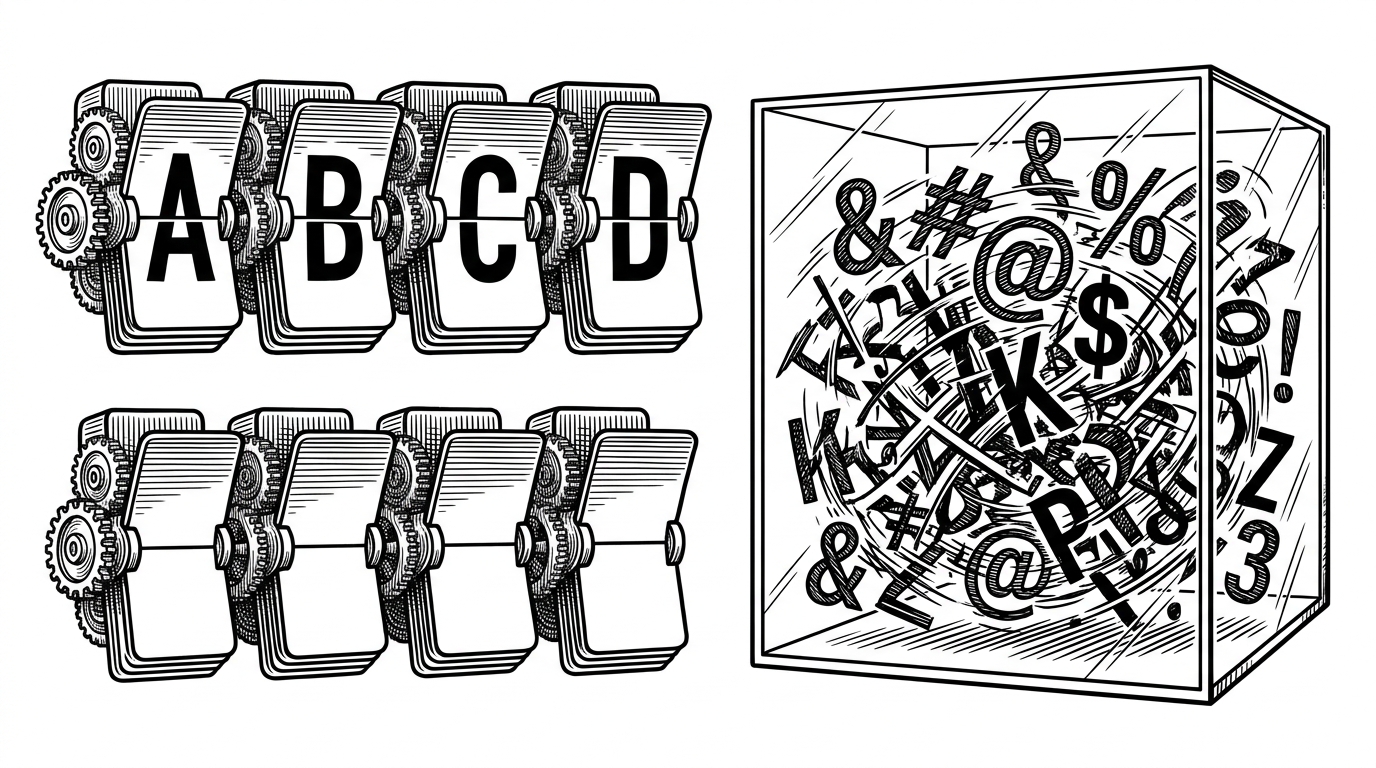
FlipOff employs a brilliant technical compromise: the 'scramble'. It uses a randomized cycling effect combined with a clever CSS opacity flash. It prioritizes the feeling of the mechanical update and overall browser performance over strict physical realism. Furthermore, the Board.js logic only updates tiles where the character has actually changed, exactly like a real board.
The Digital Signage Spectrum
FlipOff sits in a fascinating spot in the current landscape of digital signage. It provides the aesthetic of high-end hardware without the cost, and the functionality of paid SaaS without the subscription.
| Feature | Vestaboard (Hardware) | The $199 Web Clone (SaaS) | FlipOff (Open Source) |
|---|---|---|---|
| Cost | $3,500+ | $199 | Free |
| Tech Stack | Physical Mechanics | Unknown Web Framework | Vanilla JS / CSS3 |
| Maintenance | Motor replacements | Subscription / Updates | Zero-maintenance static files |
| Audio Latency | Zero (Physical) | Network dependent | Zero (Web Audio API) |
It is a perfect artifact of the 'Small Web' movement: a tool built to do exactly one thing perfectly, with no desire to monetize the user or complicate the stack.