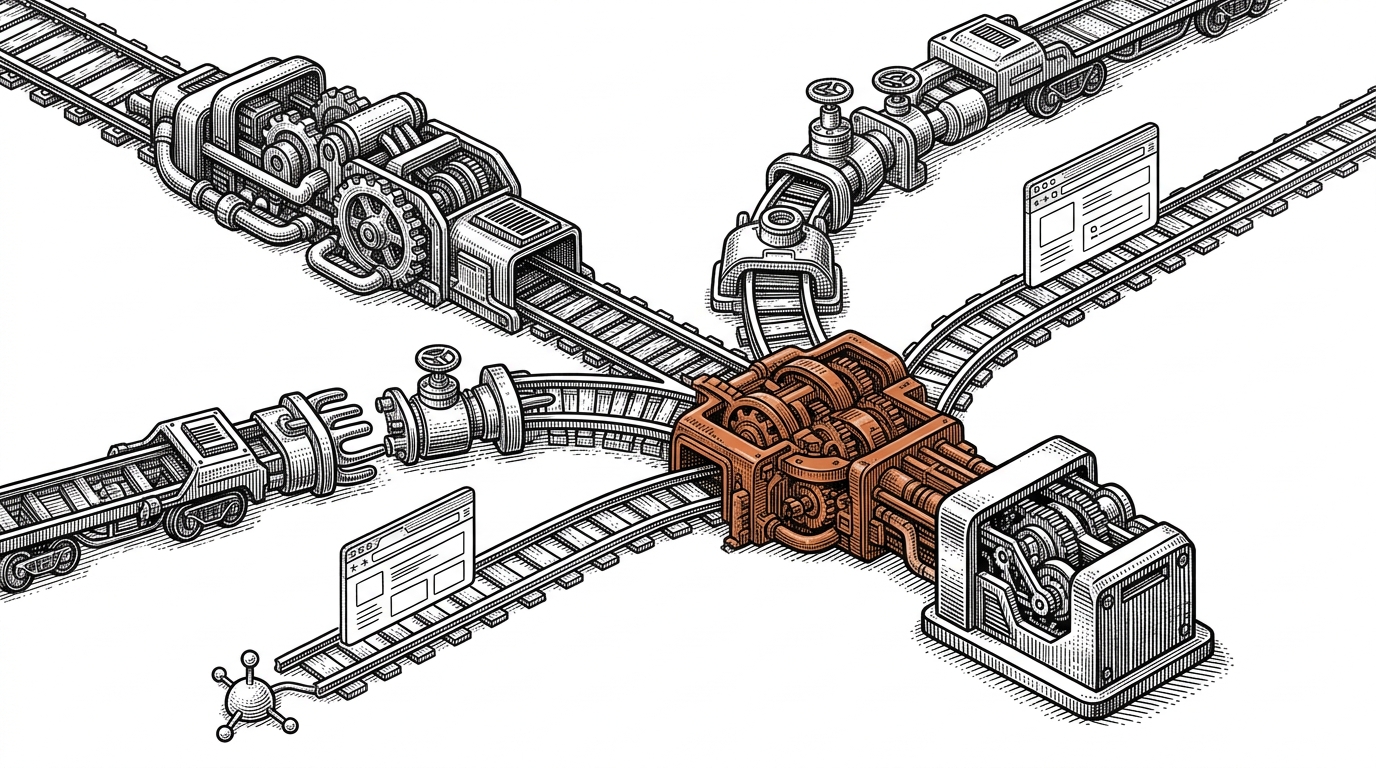
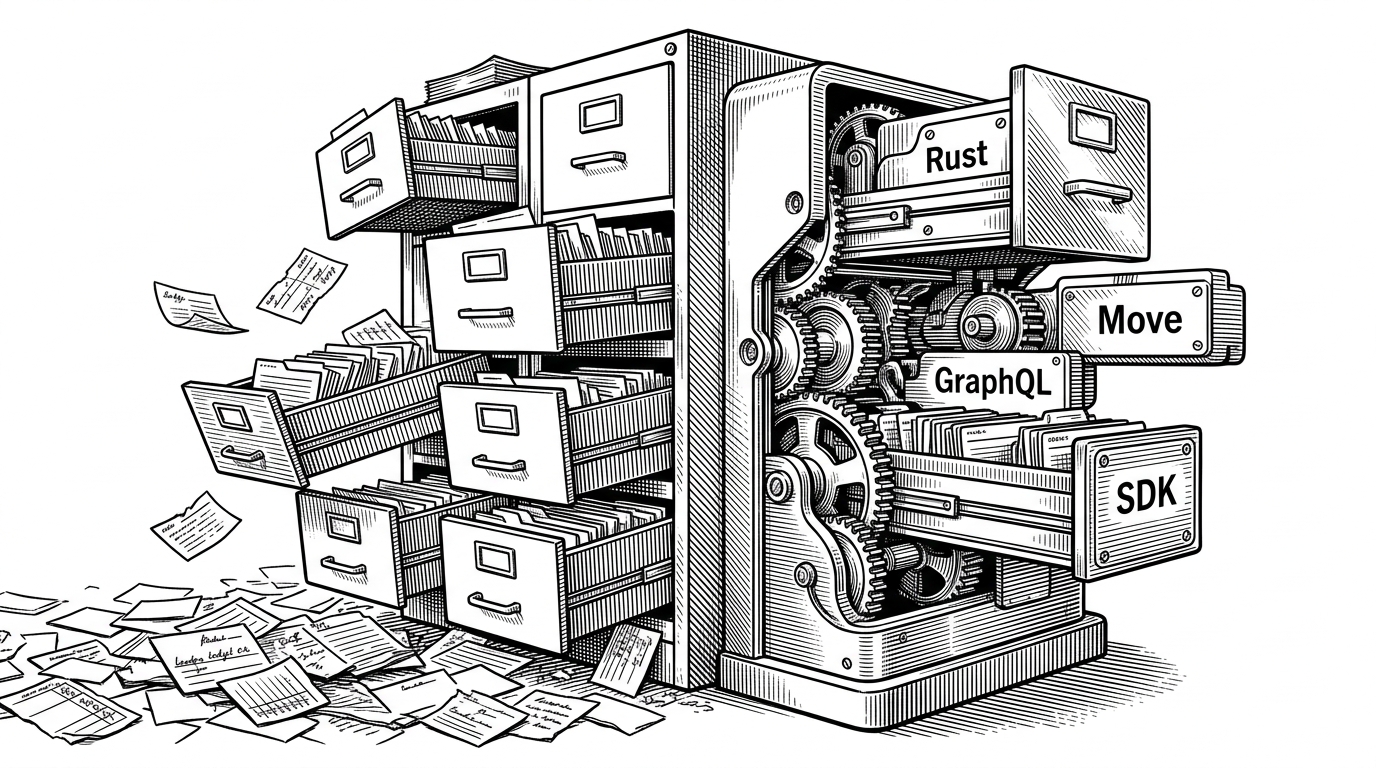
Nodos Workspace: The Rust-Controlled Build System That Makes C++ Plugins Feel Like Packages
Manifest-first tooling, automatic SDK resolution, and Flatbuffers generation turn a traditional C++ plugin ecosystem into something closer to Cargo or npm.
- Nodos Workspace treats C++ plugins like packages, not loose source trees, and that shift is the real product.
- Rust handles orchestration while CMake handles compilation, which keeps the build logic centralized without forcing a full rewrite.
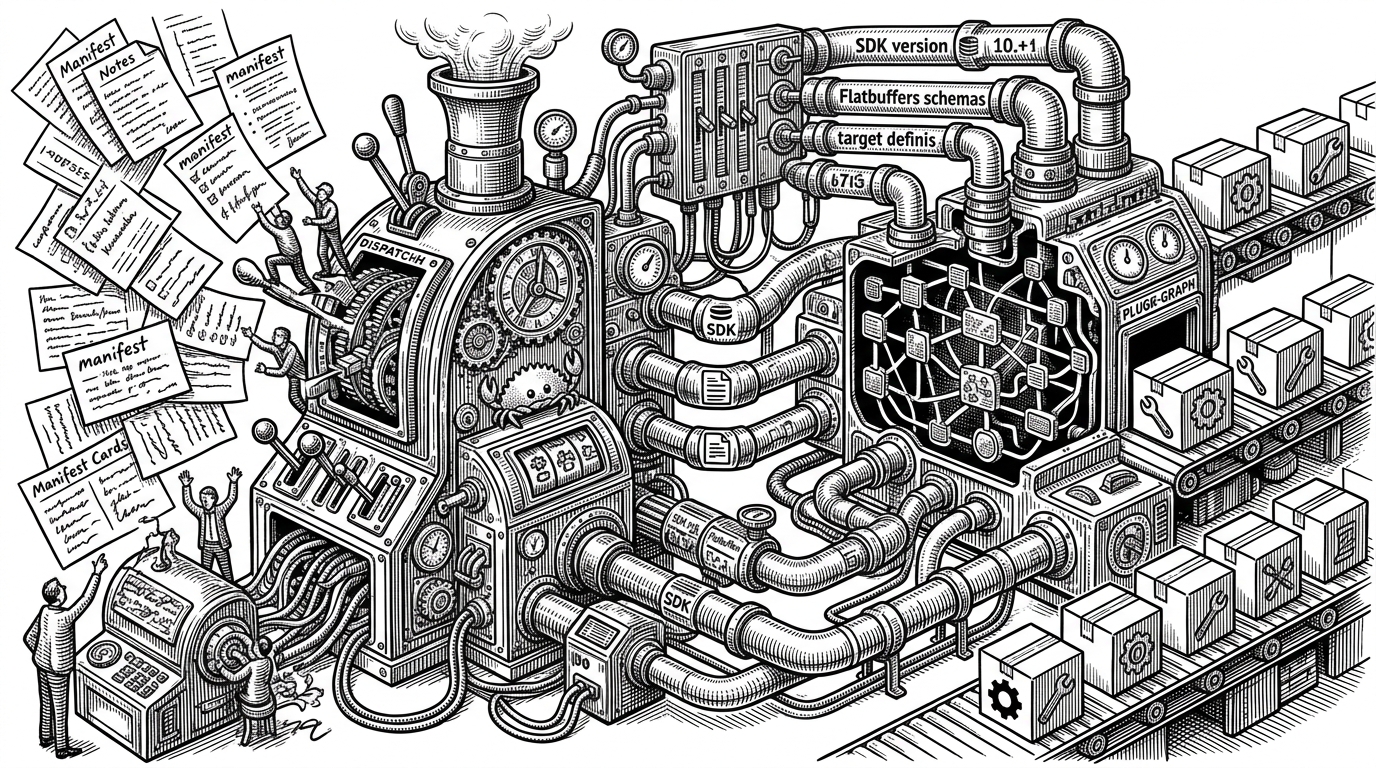
- The manifest-driven pipeline absorbs SDK lookup, dependency wiring, and Flatbuffers generation, so developers write less glue code and repeat less setup.
- The build system is really infrastructure for an ecosystem, because node-graph platforms only scale when plugin authors can move quickly without fighting the toolchain.
C++ Without the Ritual
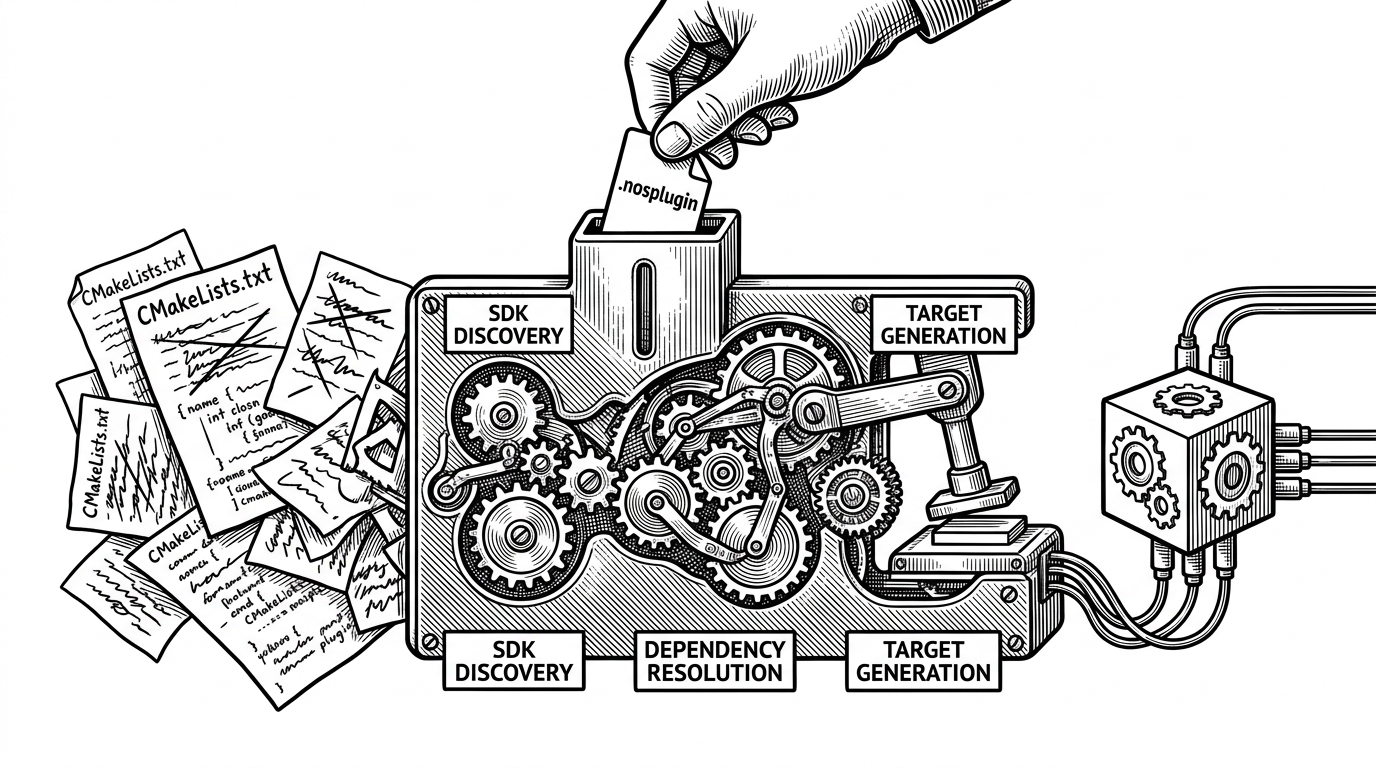
Traditional C++ plugin work has a familiar tax: hand-written targets, version mismatches, repeated dependency setup, and build scripts that grow barnacles. Nodos Workspace pushes back by making the manifest the primary unit of intent. Instead of asking developers to spell out every build detail in CMakeLists.txt, it lets the tooling infer the wiring.
That matters because the repo is not trying to make C++ trendy. It is trying to make plugin development behave like a package ecosystem, where a module declares what it is and the platform assembles the rest.
The Manifest Is the Contract
The center of gravity is the .nosplugin manifest. It declares the plugin, its SDK expectations, and the metadata the toolchain needs to do the rest. That changes the developer experience from authoring build machinery to declaring a package contract.
| Manual CMake workflow | Nodos Workspace workflow |
|---|---|
| Target definition | Developers author targets by hand and keep them in sync with the source tree. |
| Target definition | The manifest triggers generated plugin targets with standardized wiring. |
| SDK version selection | Version selection is often pinned or manually adjusted per project. |
| SDK version selection | The toolchain resolves compatible SDK versions automatically. |
| Flatbuffers generation | Schema codegen is another build step the developer must remember to wire up. |
| Flatbuffers generation | Flatbuffers compilation is part of the platform contract. |
| Shared plugin configuration | Common settings are duplicated across plugins or factored into fragile helper scripts. |
| Shared plugin configuration | Shared hooks apply consistent plugin defaults across sub-projects. |
| Cross-project consistency | Each project drifts unless maintainers police conventions aggressively. |
| Cross-project consistency | The workspace enforces a repeatable package model across plugins. |
| Developer overhead | Every new plugin starts with ceremony. |
| Developer overhead | Every new plugin starts with a manifest. |
Rust Runs the Control Plane
The CLI brain is nosman, the Rust tool that handles init, create, dev, install, publish, and SDK lookup. That separation is the key architectural move. Rust orchestrates, CMake executes, and C++ compiles.
This is a smart split. The control plane can stay fast, deterministic, and easy to distribute as a single binary, while the build layer keeps doing the work it is already good at.
How Auto-Target Generation Cuts Through CMake
The sharpest implementation detail lives in GeneratePluginTargetsAuto.cmake. It scans for manifests, resolves SDK versions, queries nosman for metadata, and generates targets automatically. That is where the repository stops looking like a helper library and starts looking like a system.
# Conceptual shape of the workflow
scan_for_manifests()
for each manifest:
  sdk = resolve_sdk_version(manifest)
  meta = query_nosman(manifest)
  configure_plugin_target(manifest, sdk, meta)
  add_flatbuffers_codegen_if_needed(manifest)
  finalize_target()
The interesting part is not that CMake can generate targets. It is that Nodos uses a manifest to decide what the target should be, then layers shared behavior on top. That is the difference between a script and a platform.
SDK Drift Gets Normalized
The SDK lookup logic in FindNodosSDK.cmake is built to reduce breakage. If an exact version is not available, it falls back to compatible matches by major version and then chooses the best minor or patch release it can find.
| Exact pinning | Nodos compatibility matching |
|---|---|
| When the requested SDK is missing, builds stop immediately. | When the requested SDK is missing, the closest compatible version is chosen. |
| Every update requires manual version edits across projects. | Minor and patch updates can often be absorbed without touching manifests. |
| Maintenance gets brittle as the ecosystem grows. | Maintenance gets smoother because compatibility is encoded in the lookup step. |
| Developers spend time chasing environment drift. | Developers spend time shipping plugins. |
That sounds small, but in a plugin ecosystem it is huge. Version drift is how platforms accumulate friction, and friction is how ecosystems die quietly.
Flatbuffers as the Glue
Flatbuffers is not treated as an isolated serialization choice here. It is folded into the build flow, which means schema generation becomes part of the same contract that defines the plugin. The repo tracks timestamps, injects include paths, and makes code generation feel native to the workspace.
That is the right move for a node platform. If nodes exchange structured data, schema compilation should be as automatic as target creation. Otherwise the platform ends up with two kinds of drift: code drift and data drift.
Why This Matters for a Node Platform
Nodos Workspace is infrastructure for an ecosystem, not just a repo. A node-graph platform only scales if plugin authors can add capability without learning a dozen local conventions first.
| Classic plugin stack | Nodos workspace model |
|---|---|
| Source files and build scripts are the main interface. | The manifest is the main interface. |
| Tooling is fragmented across ad hoc helpers. | Tooling is centralized in nosman and shared CMake logic. |
| Data schemas are a separate concern. | Flatbuffers generation is built into the workflow. |
| Version compatibility is mostly manual. | SDK compatibility is resolved automatically. |
| The platform grows by accepting more complexity. | The platform grows by hiding repetitive complexity from plugin authors. |
That is why the repo feels more ambitious than a build utility. It is trying to make C++ plugin work feel modern without pretending C++ itself has changed.