openai/NavierStokesAndEuler: How OpenAI Turned a Millennium-Scale Fluid Proof into a Lean Contract
A deep dive into the Comparator pattern, the induction machinery behind singularity, and why this repo feels less like a paper and more like a verification pipeline.
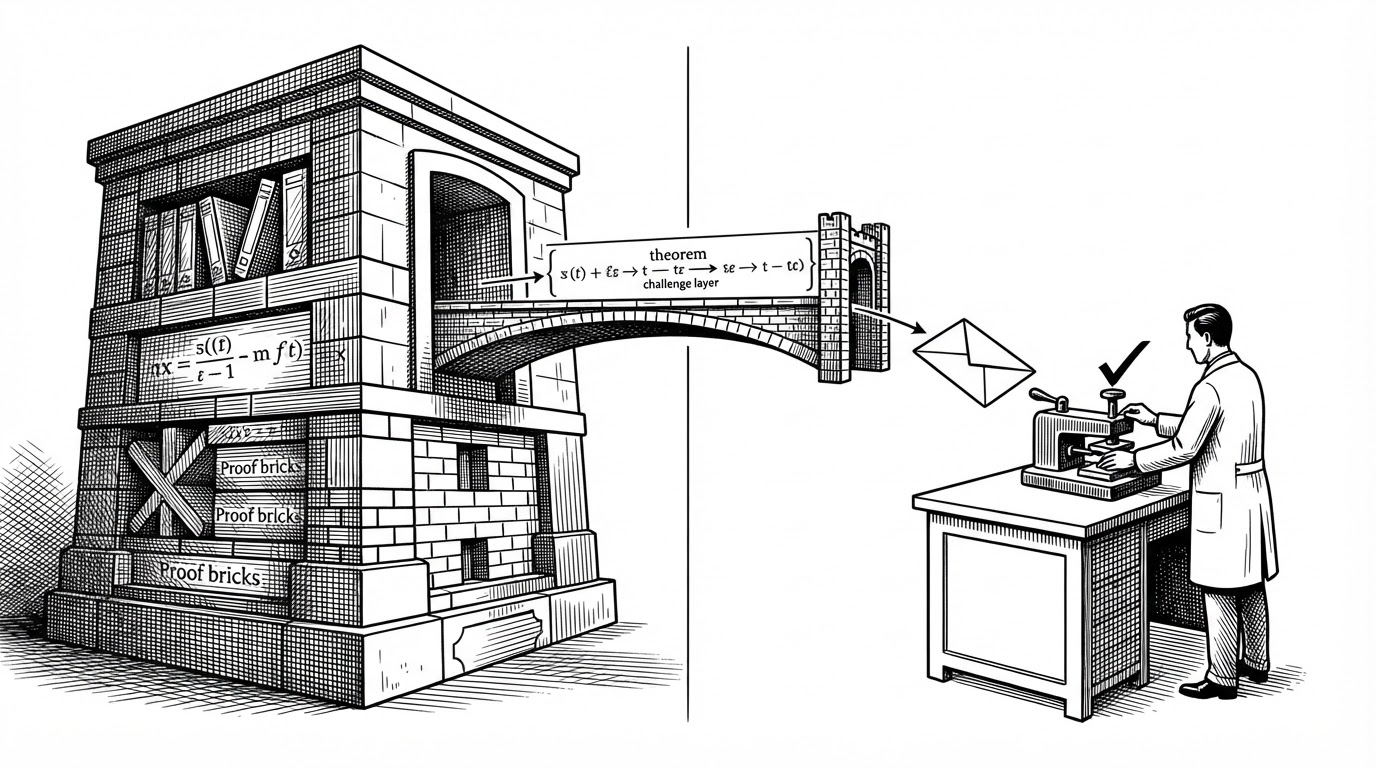
- The repo’s real novelty is its contract-first proof architecture, not only the fluid result it formalizes.
- ComparatorChallenges lets readers and tools check the theorem statement before the full Lean development becomes a burden.
- The proof builds bad initial data indirectly, using a curl-based potential so incompressibility is automatic rather than expensive.
- The whole project reframes mathematical publishing as a staged verification pipeline instead of a single paper drop.
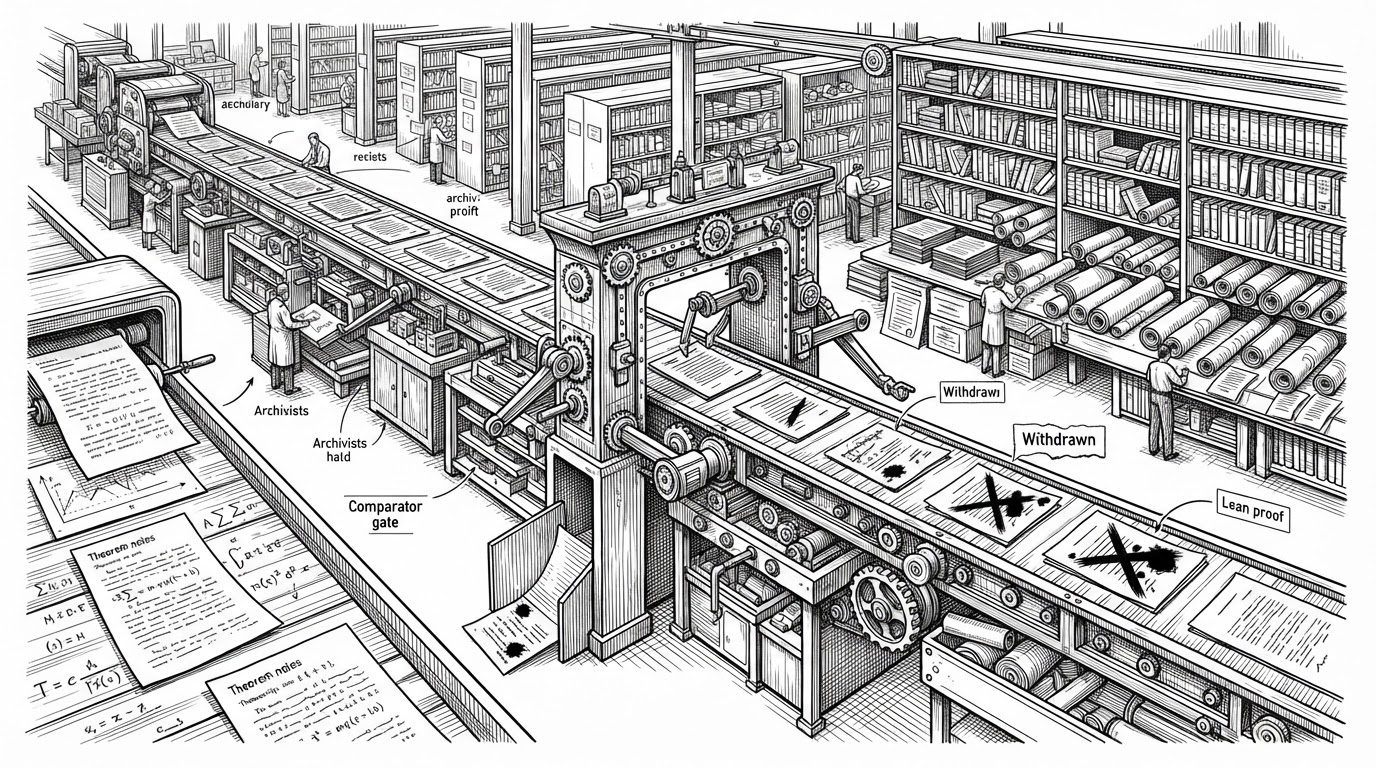
The strangest thing about openai/NavierStokesAndEuler is not that it formalizes a fluid singularity. It is that it refuses to treat the proof as a single blob of authority. The repository splits the claim into a challenge layer and a proof layer, so the statement can be checked before the machinery even starts.
The proof is split in two before it even starts
| Model | What is verified | Cognitive load | Failure mode | Why it matters |
|---|---|---|---|---|
| Traditional paper | A human-readable argument | High, because the full chain lives in prose | Ambiguity in the statement or a hidden gap | It communicates ideas, but trust is social as well as formal |
| Lean proof without a challenge layer | The theorem and the proof together | Very high, because the reader enters the full proof maze | The claim and the proof can be too tightly coupled to inspect cleanly | It is formal, but not always easy to audit at the level of intent |
| ComparatorChallenge + full repo | The contract first, then the proof body | Lower at the boundary, higher inside the proof | A bad statement is caught before the proof is trusted | It turns a giant theorem into a staged verification pipeline |
That split matters because the repository is aimed at a problem where wording is not a detail. A Millennium Prize claim lives or dies on exact formulation. OpenAI’s own writeup says, “This proof, produced by an internal OpenAI system, shows that the dynamics of the Navier-Stokes equations for fluid motion can develop a singularity in finite time. We’re sharing both a writeup of the proof and a formalization in Lean.” The repo is the formalization part, but the Comparator layer is what makes the claim legible as an artifact.
This proof, produced by an internal OpenAI system, shows that the dynamics of the Navier-Stokes equations for fluid motion can develop a singularity in finite time. We're sharing both a writeup of the proof and a formalization in Lean.
What the theorem actually claims
At the surface, the claim is simple. There exist smooth initial conditions for the 3D Euler and Navier-Stokes equations that do not stay smooth forever. In plain English, the flow can develop a singularity in finite time, which is exactly the kind of failure the Millennium problem asks you to settle with precision.
The repository handles two regimes. Euler is the cleaner unforced case. Navier-Stokes adds viscosity and forcing, which makes the formal statement more elaborate but keeps the same core phenomenon: a smooth solution does not persist globally.
How the bad initial data is built
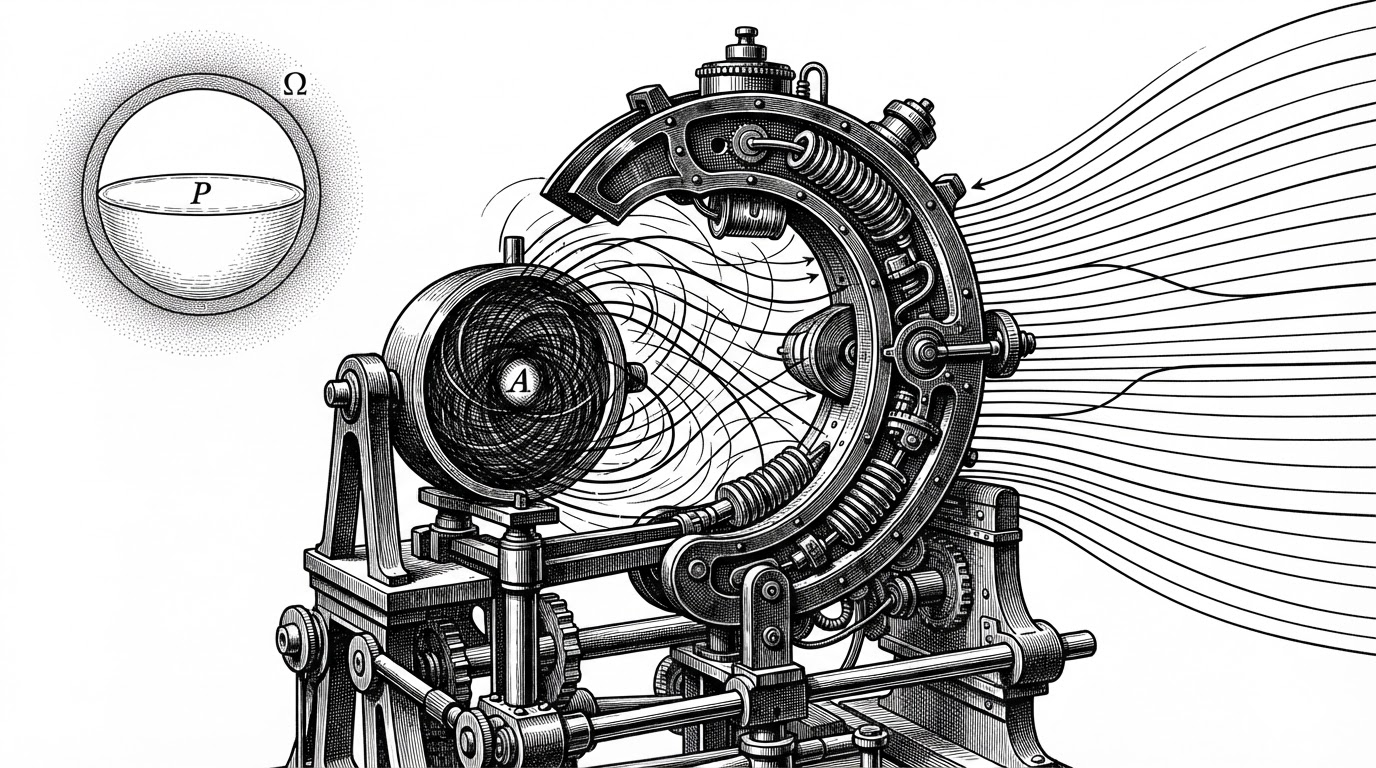
This is where `Euler/BaseEulerDatum.lean` becomes elegant instead of merely large. The velocity is defined as the curl of a potential, which bakes in divergence-free behavior by identity. That means the proof is not spending effort proving incompressibility from scratch. It is engineering it into the object from the start.
The other important move is the plateau. Inside a controlled region, the velocity behaves like a specific linear map. Outside that region, a cutoff shell keeps the field tidy. That gives the induction argument a stable zone to push on.

Why the induction matters
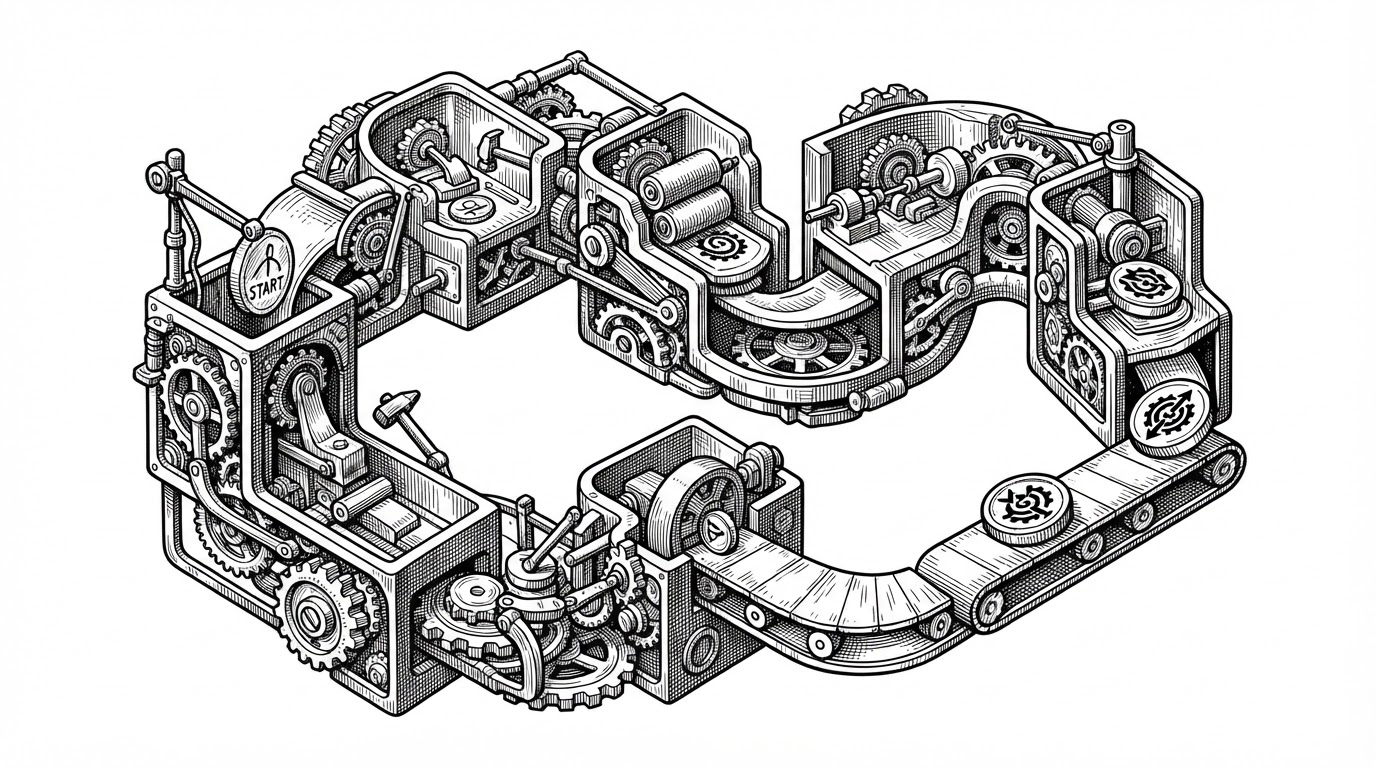
`Euler/BaseEulerState.lean` turns the proof into a sequence of state transitions. That matters because singularity proofs are rarely one-shot. They are pressure systems. The object is to track how quantities change when each step inherits the last one’s structure and adds a bit more strain.
The terms in the file tree sound bureaucratic, but they are the proof’s control knobs. Parent state. Label data. Coefficient cost. Together they make the induction legible as a machine. You can feel the argument asking one question over and over: what must grow, and how fast, until smoothness can no longer survive?
From weak equations to blowup
`Euler/CompactProjectedEulerLaw.lean` is the bridge file. It connects the constructed objects to the projected Euler equation in the divergence-free space where the analysis lives. Once that bridge is in place, the proof can move from abstract state management to the functional-analytic conditions needed to force breakdown.
This is also where the smoothness story turns into a Sobolev story. The repo has to move from norms and weak equations to the conclusion that the solution cannot remain smooth. The formalization does not rely on a rhetorical leap. It proves that the regularity ladder collapses.
Why this looks unlike a normal math paper
| Model | What gets shipped | Who checks it | What the reader gets | What is different here |
|---|---|---|---|---|
| Traditional math paper | A theorem statement and a prose proof | Human referees and specialists | An argument that can be understood, debated, and reworked | Trust is social first, mechanical second |
| Lean formalization | A theorem statement plus a machine-checkable proof object | Lean and Mathlib, plus humans reading the code | A proof that either compiles or fails | Trust is staged, with the statement itself treated as a contract |
| Comparator-driven repo | A claim, a challenge layer, and a proof body | Independent checking tools and formal proof infrastructure | A boundary between intent and implementation | The proof is packaged like software verification rather than a document |
The group produced an analytical proof and Lean formalization that via Navier-Stokes dynamics a fluid can develop a singularity in finite time. The solution is a vortex, a spinning swirl of fluid, that spirals inward and gets increasingly elongated, like spaghetti.
That comparison is the key. A paper can tell you what the authors believe. This repo tells you what the checker accepts. The difference sounds subtle until you scale it to a theorem with the cultural weight of a Millennium Prize problem. Then it becomes the whole story.
What this changes about mathematical software
The broader shift is bigger than fluid dynamics. If a major theorem can be decomposed into contracts, challenge files, and proof modules, then mathematical software starts to look more like modern systems software. Independent checking becomes a design goal, not an afterthought.
That has consequences for trust, reuse, and priority. It also changes what counts as publication. The artifact is no longer just a PDF. It is a verification pipeline with a human-readable layer, a formal contract, and a compiled proof that either survives or does not.