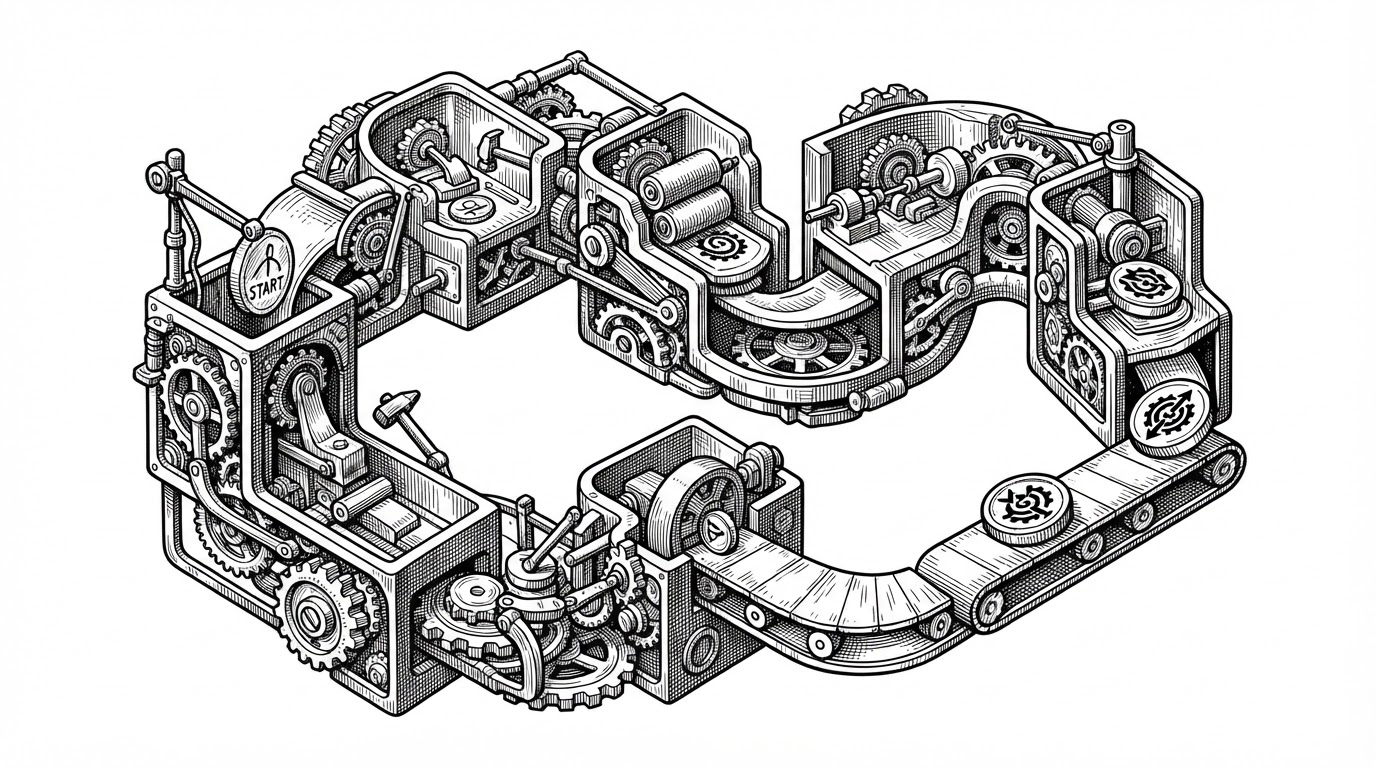
OpenSRE: The Agent That Knows When It’s Stuck
A deep dive into the open-source SRE framework that pairs tool-rich incident response with stagnation detection, session memory, and a benchmark mindset.
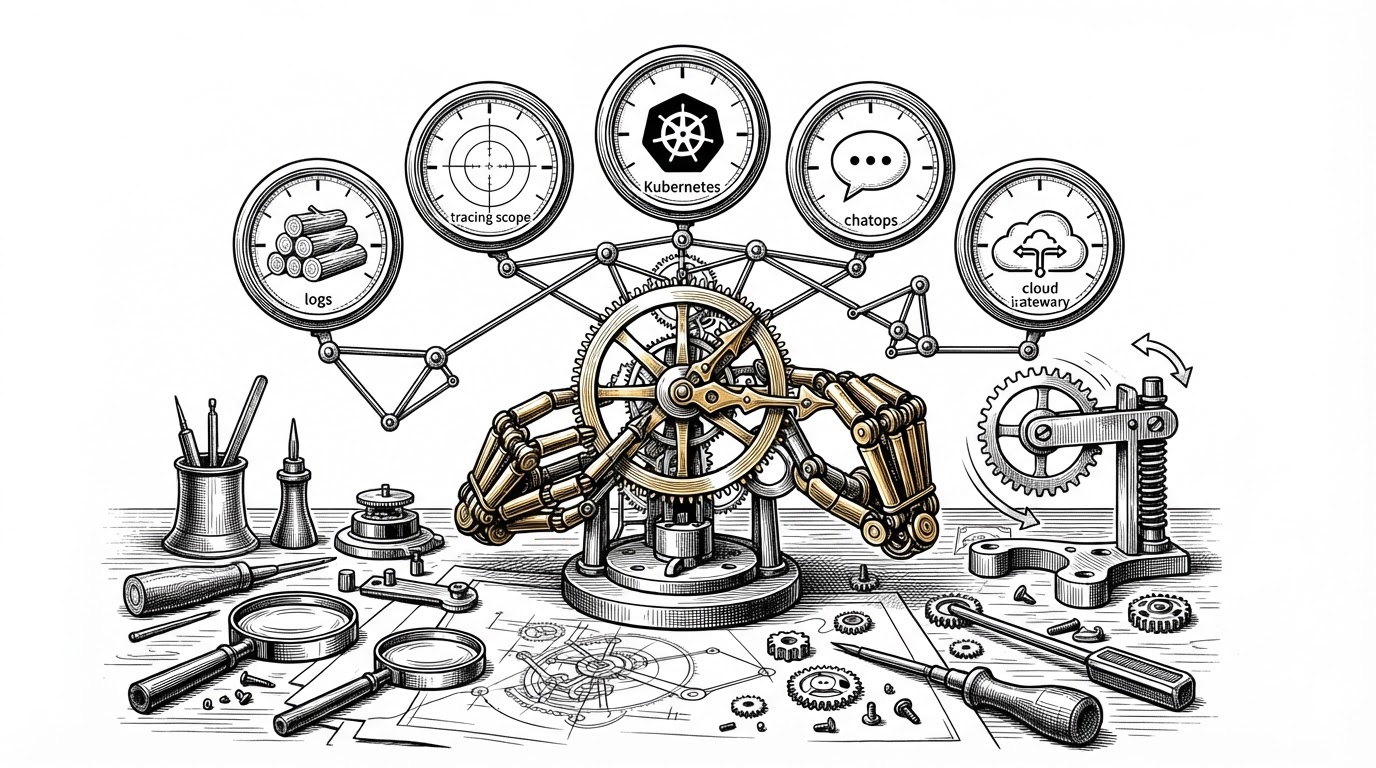

Our mission is to build AI SRE agents on top of this, scale it to thousands of realistic infrastructure failure scenarios, and establish OpenSRE as the benchmark and training ground for AI SRE.
- OpenSRE’s real differentiator is not that it can act, but that it knows when repeated action has stopped producing progress.
- The framework splits the agent from the harness, so the same core reasoning loop can be dropped into different operational surfaces.
- Session persistence is treated as an incident-response requirement, not a convenience, because real troubleshooting spans time and handoffs.
- OpenSRE is trying to define an evaluation culture for SRE agents, not just ship another copilot.
Most AI ops tools promise faster answers. OpenSRE is more interesting because it asks a harder question: what happens when the agent is wrong, repetitive, or just stuck? Its answer is a control loop that watches for stagnation, budgets context, and keeps state across sessions.
That changes the category. This is not just a chatbot for incidents. It is an attempt to make autonomous incident response safe enough to trust.
Why AI SRE fails without a brake pedal
Incident response is a hostile environment for unconstrained agents. Logs are noisy, traces are long, tools can be slow, and every extra turn wastes time and tokens. If the model keeps calling the same tool and seeing the same dead end, the failure mode is not just inefficiency. It is escalation without learning.
OpenSRE is built around that failure mode. It does not assume the model will always self-correct. It adds an explicit mechanism to notice when the loop is going nowhere, then shifts to a fallback path instead of letting the agent spin.
The loop that decides when to stop
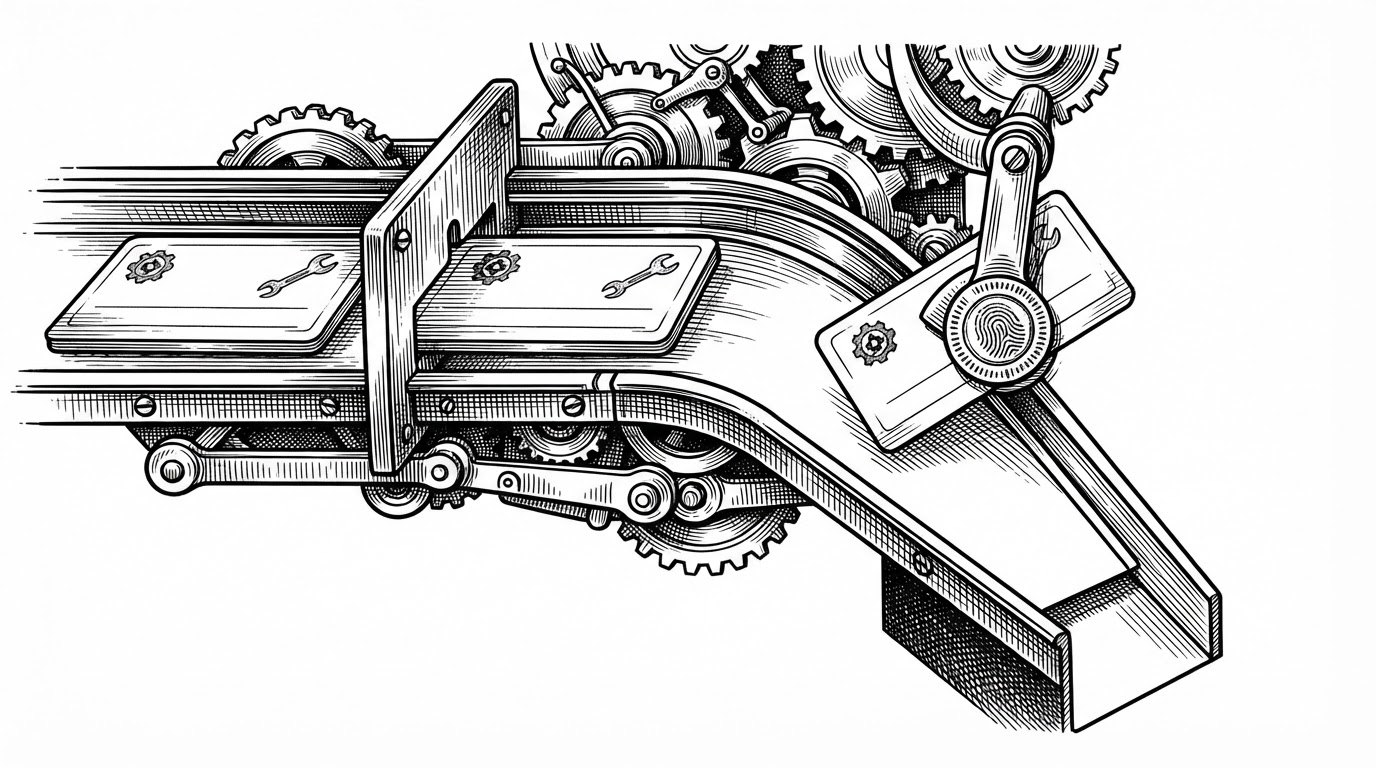
The heart of OpenSRE lives in `core/agent/react_loop.py`. The pattern is familiar, but the guardrails are not. The model reasons, calls a tool, observes the result, and then OpenSRE fingerprints the interaction to see whether the loop is becoming repetitive.
# Conceptual shape of the stagnation check
observation_digest = fingerprint(tool_name, tool_args, tool_output)
if observation_digest in recent_digests:
    stagnation_count += 1
else:
    stagnation_count = 0

if stagnation_count >= 3 or context_budget_exceeded:
    return FALLBACK

return continue_react_loop()
That matters because repetition is a real failure signal. If the same tool input keeps producing the same useless output, more inference does not help. The right move is interruption.
Agent brain, harness body
OpenSRE separates the Agent from the Harness. That split is easy to miss, but it is one of the reasons the project feels more like a runtime than a demo.
| Layer | Job | Why it matters |
|---|---|---|
| Agent | Holds prompts, model state, and tools. | This is the reasoning core, where decisions are made. |
| Harness | Puts the agent into TTY, Slack, or another interface. | This is what makes the system embeddable instead of monolithic. |
| Session manager | Persists, rotates, resumes, and restores context. | This is how the agent survives long incidents and handoffs. |
The agent is the brain. The harness is the body. The session layer is the memory. Once you see that split, OpenSRE stops looking like a single product and starts looking like infrastructure for other workflows.
When an alert fires, the AI agent fetches context, correlates logs/metrics/traces, identifies root causes, and suggests fixes -- before you finish your coffee.
Why the session layer matters in real incidents
Real incidents stretch across time. One person starts the investigation, another takes over, and the system is still changing while everyone is talking. A useful SRE agent needs to survive those handoffs without forgetting what it already tried.
That is the role of `SessionManager` in `core/agent_harness/session/lifecycle.py`. Rotate, resume, and restore are not nice-to-haves. They are the difference between an agent that can help for one turn and one that can stay useful for the whole incident.
OpenSRE’s memory story is also part of its safety story. If the system can restore state cleanly, it can avoid re-running the same dead-end investigation after a restart or context reset.
The integration layer is the real moat
The framework’s reach comes from its tool layer. OpenSRE ships with more than 60 integrations, which sounds like a checklist until you think about what an SRE agent actually needs: observability, cloud control, infrastructure access, and a way to talk to humans.
| Category | Representative tools | What the agent gains |
|---|---|---|
| Observability | Datadog, Grafana, Honeycomb | Faster correlation across logs, metrics, and traces. |
| Cloud and infra | AWS, Kubernetes, Terraform | The ability to inspect and sometimes act on production systems. |
| Comms and response | Slack, PagerDuty, Discord | A way to escalate, coordinate, and keep humans in the loop. |
A broad connector set is not glamorous. It is the difference between a model that can describe infrastructure and a model that can actually touch it.
OpenSRE wants to be the SWE-bench for SRE
The project’s bigger ambition is not just operational. It wants to shape evaluation. The end-to-end tests and failure simulations point toward a benchmark culture for SRE agents, the same way SWE-bench gave coding agents a common proving ground.
That matters because categories harden around measurement. If a project can define realistic failure scenarios, it can influence what counts as good performance, not just what counts as a feature.
OpenSRE processed one alert per run and selected the first alert in sort order. There was no grouping or correlation. The only workaround was to loop through the remaining alerts manually.
That critique is useful because it shows the gap between promise and practice. Evaluation is where those gaps become visible.
How it compares to the rest of AI SRE
The cleanest way to compare OpenSRE is by posture, not feature count. Some tools are Kubernetes-first scanners. Others are remediation SaaS products. OpenSRE is trying to be the runtime that can investigate, persist, and learn across incidents.
| Project | Scope | Environment | Posture | Open source |
|---|---|---|---|---|
| OpenSRE | Multi-cloud SRE agent framework | Broad infra stack | Investigation plus controlled autonomy | Yes |
| HolmesGPT | Kubernetes-focused diagnostics | K8s-first | Cluster investigation | Yes |
| K8sGPT | Deterministic scanner | Kubernetes | Surface-level detection | Yes |
| Aurora SRE | Cross-cloud agent | AWS, Azure, GCP | Automated remediation | Mixed |
| Cleric / Parity / Rootly AI | Managed AI SRE | Production operations | Vendor copilot | No |
The difference is subtle but important. OpenSRE is not just asking, “Can an agent help?” It is asking, “What would a trustworthy operating model for agentic SRE look like?”
What OpenSRE is really selling
The project’s pitch is not raw autonomy. It is bounded autonomy. That means a loop that can stop itself, a harness that can place it in the right surface, a session layer that keeps continuity, and a tool stack broad enough to see the system it is operating on.
That combination is what makes OpenSRE feel larger than a single repo. It is trying to become the operating environment for SRE agents, and maybe the rubric by which they are judged.