openai/math: The Repo That Turns Mathematics Into a Build Artifact
A deep dive into the Lean-backed pipeline where model output becomes papers, proofs, and formal checks, with the failures filed right alongside the wins.
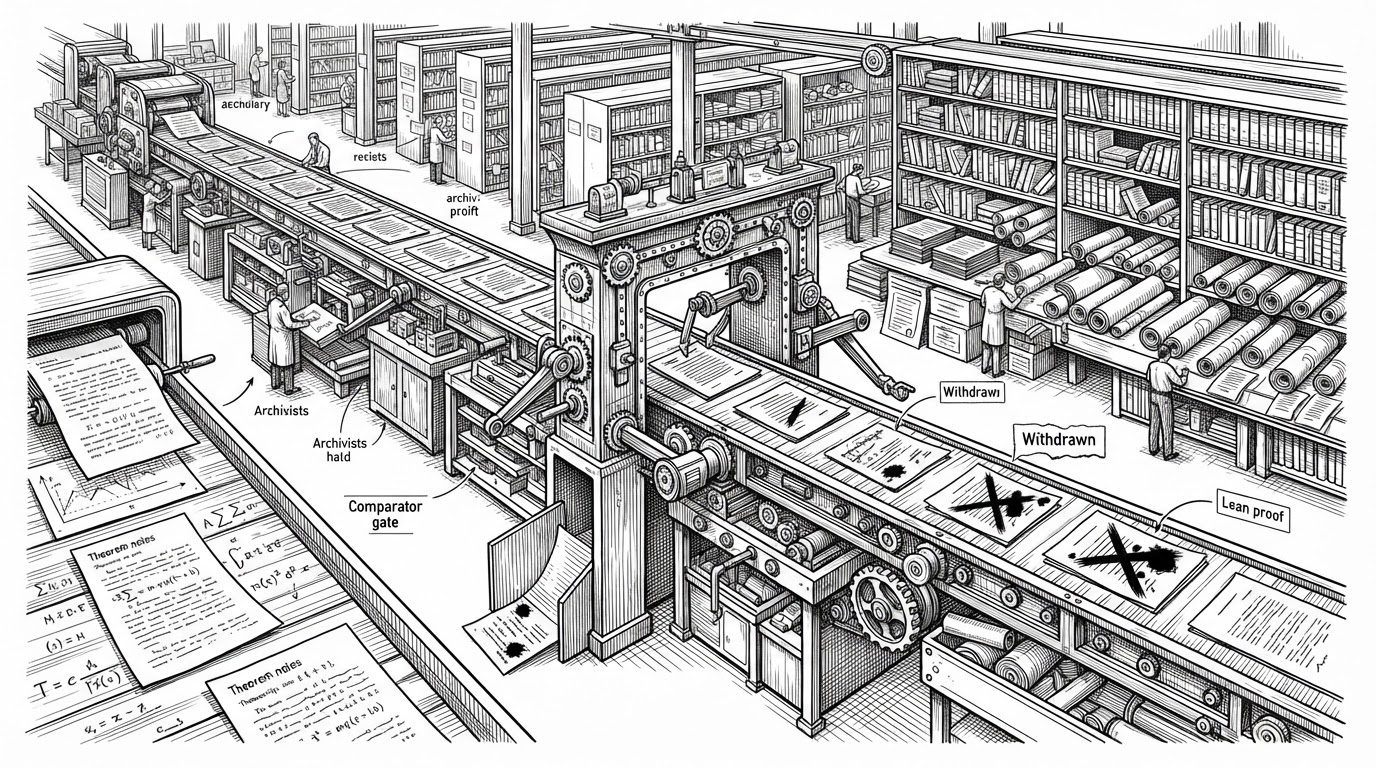
- openai/math is not mainly a pile of papers, but a verification pipeline that turns model output into checked mathematical artifacts.
- The repo’s comparator design matters because it separates the theorem interface from the proof, making tampering much harder.
- Lean changes proof from a narrative claim into a compiled artifact, which gives the project its real credibility.
- The withdrawal log is not a footnote. It is part of the product story, because failure is visible and auditable.
The Math Repo That Behaves Like a CI Pipeline
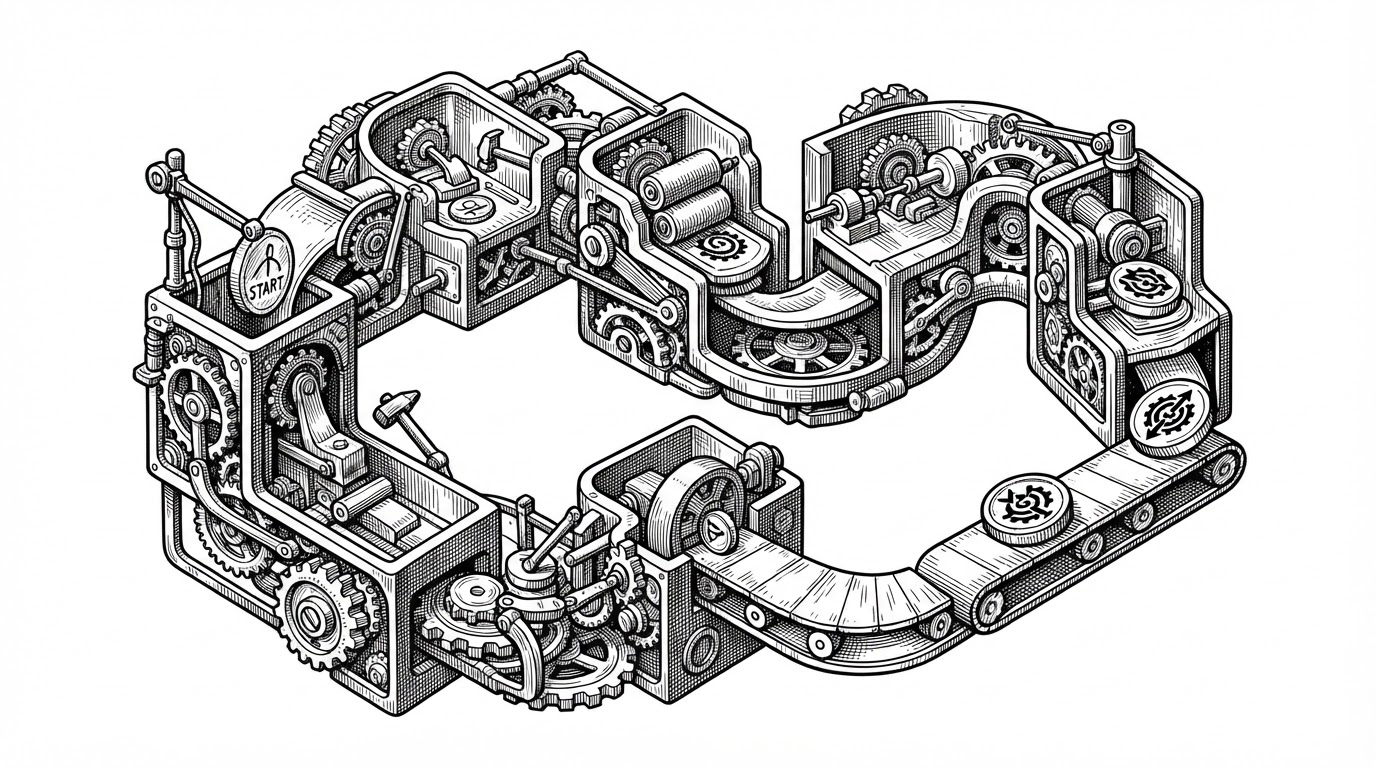
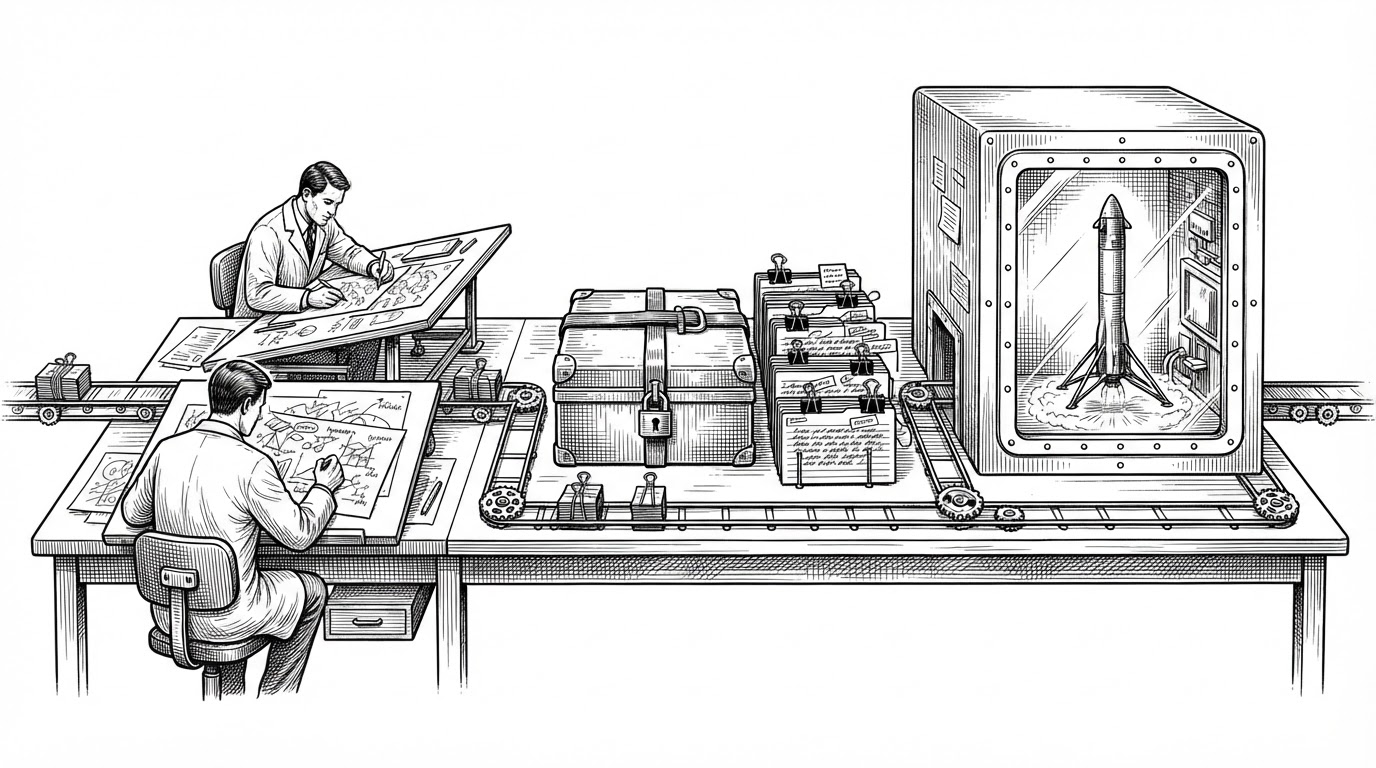
The first thing to understand about openai/math is that it does not behave like a normal research repository. It behaves like a controlled pipeline. The repo ships manuscripts, Lean formalizations, reasoning traces, and metadata side by side, which means every result has to survive more than one representation before it feels real.
We're releasing a broad range of new mathematical results produced by an internal frontier model.
That is the useful shift here. The project is not saying, "look, AI can write math." It is saying, "look, AI can pass through a publishing system where claims, proofs, and formal checks all have to line up." The withdrawals matter for the same reason. They show the system is willing to mark something wrong after publication, not just celebrate the headline.
What’s Actually in the Repository
The repo is organized around multiple versions of the same result. Human-readable papers live in preprints/. Lean challenge files and metadata live in lean/ComparatorChallenges/. The formal proofs sit in lean/OAI/. There are also reasoning_traces/, plus registries such as CONTENTS.md and history.md that make the whole thing navigable.
openai/math/
├─ preprints/
├─ lean/
│  ├─ ComparatorChallenges/
│  └─ OAI/
├─ reasoning_traces/
├─ CONTENTS.md
└─ history.md
The Comparator Is the Real Product
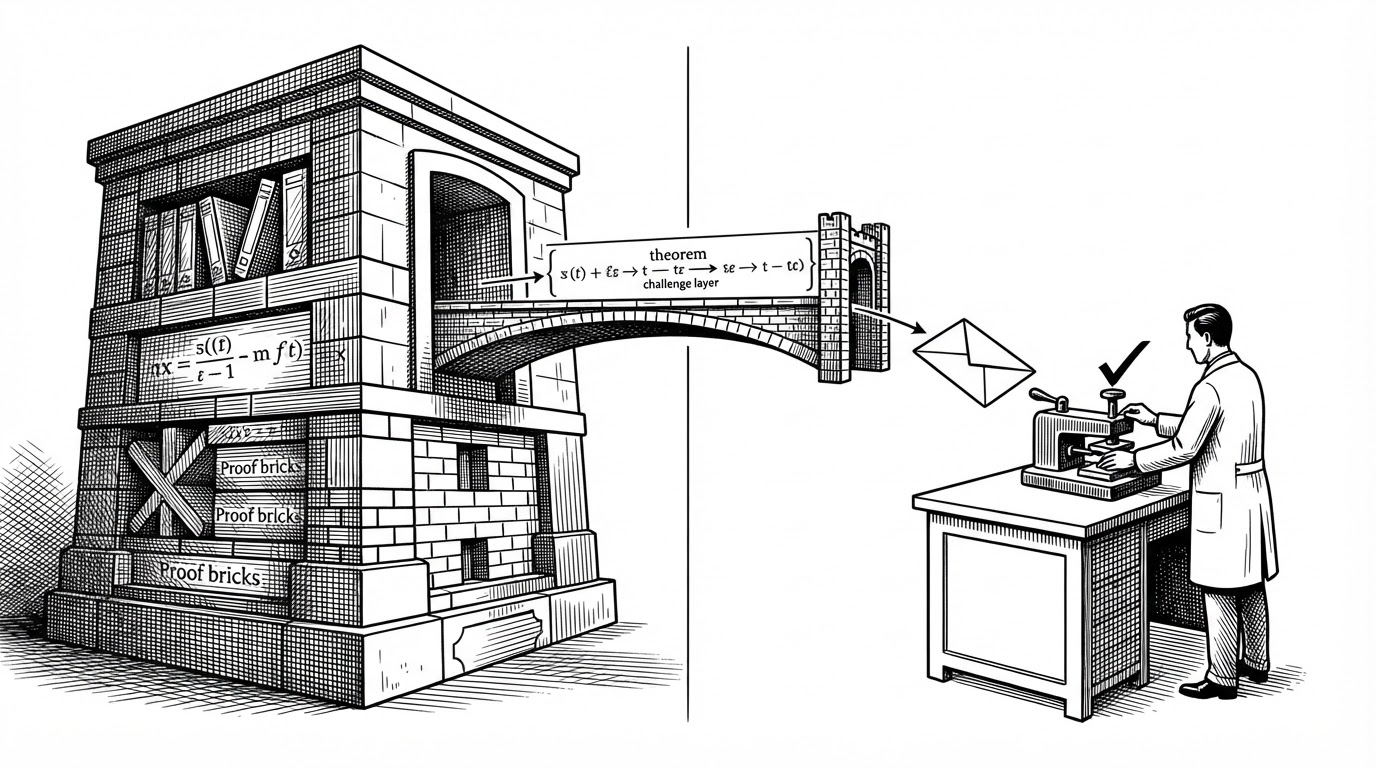
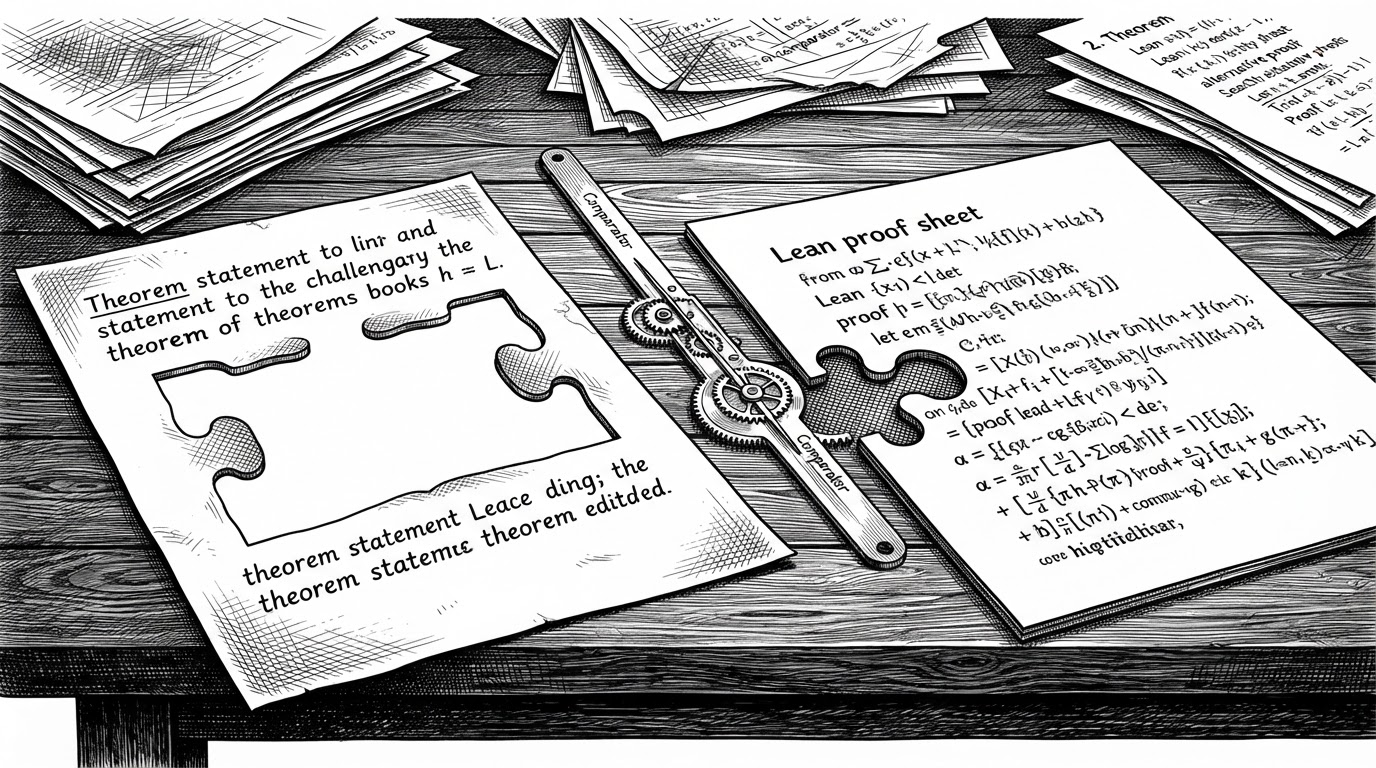
The comparator is the project’s key invention. A challenge file defines the theorem interface, often with a deliberate sorry in the template. A separate solution module has to satisfy that interface without changing the target into something easier. That distinction sounds small until you realize it blocks one of the oldest cheats in automated reasoning: quietly rewriting the question.
| Layer | What it does | Why it matters |
|---|---|---|
| Challenge file | States the theorem interface | Keeps the target fixed |
| Solution module | Provides the proof | Must satisfy the original interface |
| Comparator | Checks the match | Prevents statement tampering |
| Manuscript | Explains the result in prose | Makes the result readable to humans |
This is where Lean changes the meaning of success. A proof is no longer a persuasive explanation. It is a compilable artifact that either checks or fails. The repo’s architecture uses that fact well. It lets prose and formalization coexist without pretending they are the same thing.
Why Lean Changes the Meaning of “Solved”
Lean matters here because it makes correctness executable. In a normal paper, the burden is on human trust and expert review. In this repo, the proof can be checked by a machine against a fixed interface. That does not eliminate judgment, but it raises the cost of bluffing.
On average, each result used three hours of ChatGPT Pro thinking compute with that model.
That disclosure is unusually revealing. It says the system is not a lightweight demo. It is doing expensive inference, then funneling that output into a formal verification layer. The result is a different epistemology from ordinary publishing. The claim is not merely written. It is checked.
The Interesting Part Is Not Just Proof, It’s Discovery
The repo is also a search engine for mathematics, not just a certificate printer. Some results are elegant confirmations. Others are constructions or counterexamples, which often matter more because they require the model to find something specific and valid, not just restate familiar structure.
| Mode | What success looks like | What the system has to find |
|---|---|---|
| Proof | A conjecture is verified | A path through existing theory |
| Counterexample | A conjecture is broken cleanly | A precise object that defeats the claim |
| Construction | A requested object exists | A valid object with the right properties |
That distinction changes how you read the repo. It is not only demonstrating that a model can finish homework. It is showing that a model can participate in discovery, where the target is not obvious in advance and the result may be more interesting because it is unexpected.
The Failure Log Makes the Project Credible
If the repository were only a gallery of successes, it would be easy to dismiss. The presence of history.md changes that. Withdrawals tell you the project is willing to surface errors after release, which is exactly what a serious verification culture should do.
Everything not kept at premise at gunpoint is going to be trained on.
That line captures the pressure beneath the entire project. Once mathematics becomes machine-readable at scale, the discipline’s boundary conditions start to shift. More text is available for training. More claims are available for checking. More mistakes are visible when they slip through.
How It Compares to AlphaProof and Fable
The easiest comparison is not about who is "winning." It is about product shape. DeepMind’s AlphaProof is narrower and more competition-oriented. Anthropic’s Fable is closer to targeted discovery. openai/math is broader and more archival. It looks like a large public record of a reasoning system’s mathematical output.
| Project | Primary output | Trust mechanism | What counts as success |
|---|---|---|---|
| openai/math | Manuscripts plus Lean artifacts | Comparator and formal checks | A result that survives publication and verification |
| AlphaProof | Competition-grade proofs | Fully formal Lean proof search | A correct solution to a constrained problem set |
| Fable | Targeted research results | Tool-augmented reasoning and formalization | A high-value discovery or counterexample |
That difference matters strategically. One model is optimized for a prize problem. Another is optimized for a research conjecture. This repo is optimized for scale, traceability, and reuse. It is less a trophy cabinet than a working archive.
What This Means for Mathematical Work
The biggest implication is not that AI can now write math prose. It is that mathematical work can be versioned, checked, and partially machine-authored in a pipeline that leaves receipts. That pushes the field toward a world where the proof is not just a persuasive ending. It is an artifact that can be audited, corrected, and reused.
If that sounds incremental, it is not. Once claims arrive with formal companions and failure logs, the center of gravity changes. The interesting question stops being whether a model can sound smart. It becomes whether the system can keep its chain of custody intact when the math gets hard.