replicate-model-classifier: The Librarian for a Model Zoo
A Cloudflare Worker feeds Claude schemas and real examples, maps Replicate models onto Hugging Face tasks, and caches the answer like a fact.
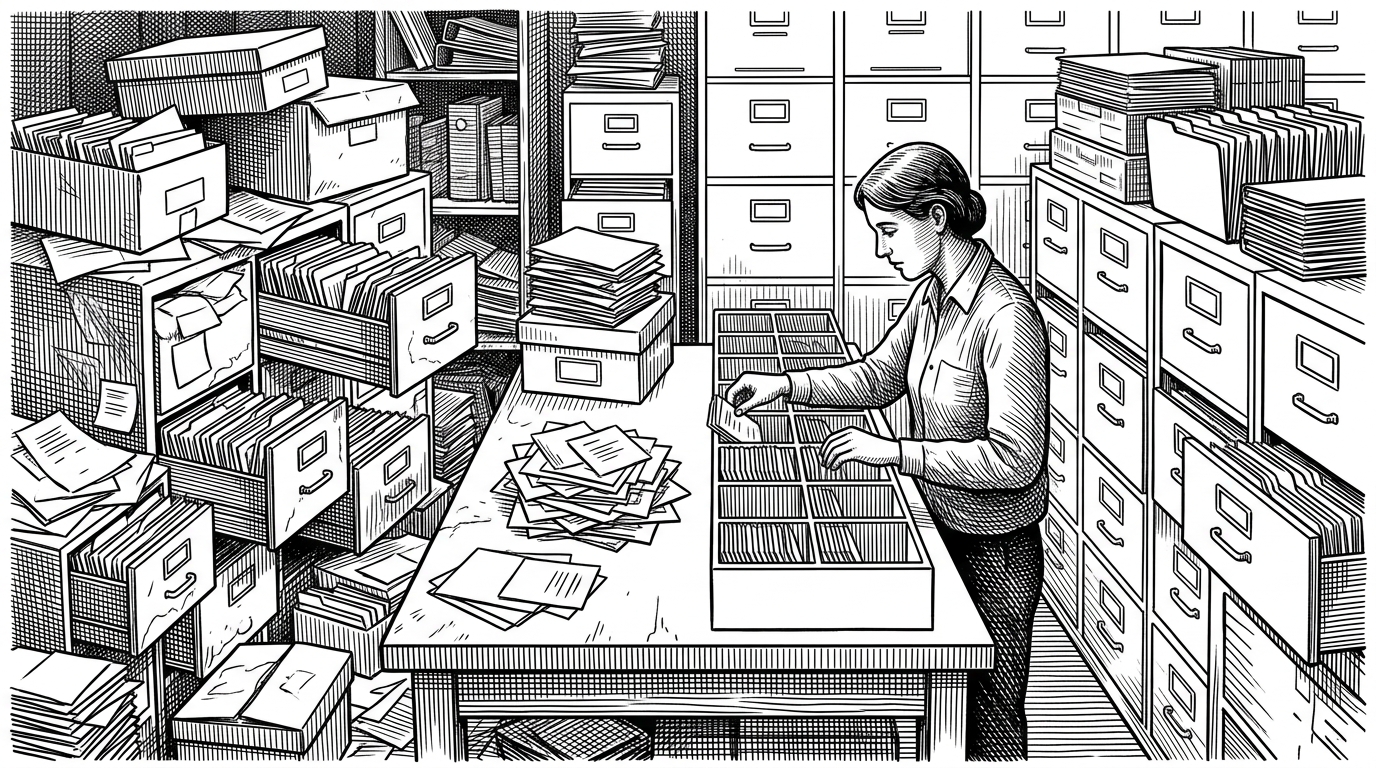
- The repo treats model classification as a filing problem, not a conversational one.
- It feeds Claude schema, examples, and a fixed task list, so the answer is constrained by evidence.
- D1 caching turns a slow judgment into a durable fact that can be reused at the edge.
- The project sits between a model registry and a search index, which is why it feels smaller than a platform and smarter than a tagger.
Model marketplaces fail quietly when labels drift. Search gets fuzzy, filters stop matching reality, and every new model adds another manual cleanup task. replicate-model-classifier attacks that boring failure mode directly: it asks Claude to infer a model's Hugging Face task, then treats the result as infrastructure.
The real job is not inference. It is filing.
That framing matters because the product is not trying to be clever in public. It is trying to make a chaotic catalog legible. Replicate's model pages carry uneven descriptions, custom inputs, and inconsistent outputs, so a stable task label becomes the thing that search, filters, and internal tooling can safely trust.
Replicate is a platform for running machine learning models through a cloud API. You can run public models published by the community, and you can also deploy your own models or create fine-tunes (when supported by the model family).
Why someone built a classifier for Replicate models
The repository reads like a single-maintainer utility, which fits the job. A small edge worker, a schema file, a prompt builder, a seed script, and a D1 table are enough to turn a messy platform problem into a repeatable pipeline. The point is not to launch a new model product. The point is to make an existing ecosystem easier to search, sort, and trust.
The prompt is the product
The important file is src/prompt.ts. It does not ask, "What does this model do?" in the abstract. It packages the model description, input schema, output schema, and real execution examples into a structured evidence bundle, then constrains Claude to the Hugging Face task set. That changes the job from free-form generation to grounded classification.
That structure does two things at once. It reduces hallucination because the model sees grounded evidence, and it improves interoperability because the output already speaks Hugging Face's language. The classifier is less a reasoning agent than a translation layer.
Why one expensive answer becomes a cheap fact
The runtime story is just as deliberate as the prompt. src/index.ts follows a cache-aside pattern, so a D1 lookup decides whether the Worker serves a stored label or pays for a fresh Claude call. The seed script then prewarms the cache from popular models, which means the most likely requests are classified before anyone asks. The result is a ten-year cache policy that treats taxonomy as durable infrastructure, not a temporary opinion.
| Dimension | Manual curation | replicate-model-classifier | Registry platforms |
|---|---|---|---|
| Input signal | A person reads pages and guesses the task | Description, schema, and real examples | User-entered tags and registry metadata |
| Cost model | Ongoing review and repeated edits | One LLM call, then cache the result | Low inference cost, but metadata still needs upkeep |
| Best use | Small catalogs with expert oversight | Messy catalogs that need normalized tasks | Artifact tracking and lifecycle management |
| Failure mode | Inconsistency and bottlenecks | Bounded hallucination risk when evidence is weak | Generic metadata that does not map cleanly to a task |
That comparison is the point. Hugging Face Hub, MLflow, and DVC are all useful, but they are not doing the same job. They manage models and metadata. This repo specializes in semantic normalization, turning one platform's messy catalog into a vocabulary that other systems can actually use.
What it beats, and what it is not
The interesting part is not that it beats human tagging on scale. It is that it makes a judgment once, stores the answer, and assumes taxonomies should be durable. That is a very different posture from a generic registry. It is also why the project feels modest in size and sharp in intent. It is a metadata layer with discipline.