RuFlo: The Distributed Operating System for Engineering Swarms
Moving beyond simple prompts to a world of Raft consensus, WASM kernels, and algorithmic agent agreement.
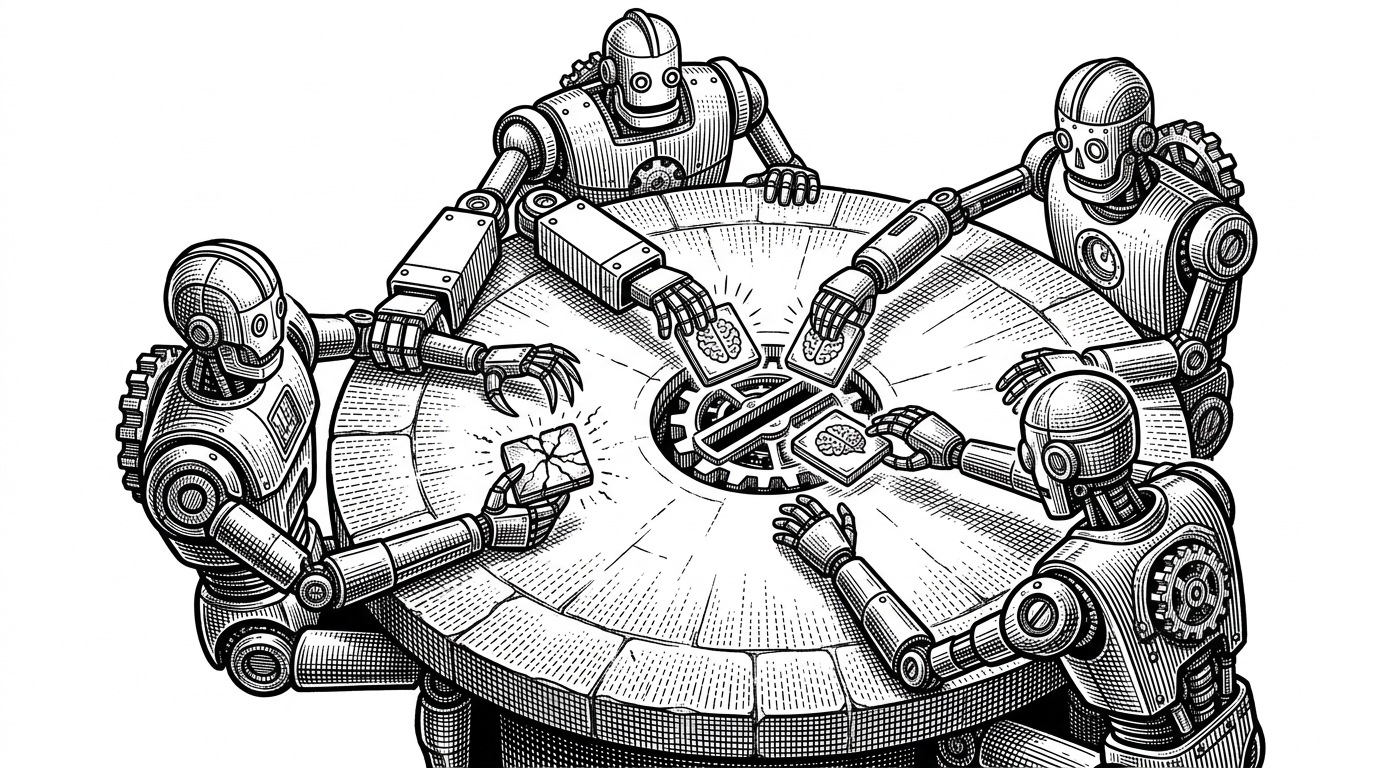

Formerly known as Claude Flow, Ruflo is an enterprise AI agent orchestration platform that turns Claude Code into a full multi-agent development environment — coordinating 60+ specialized agents across swarms, with self-learning memory, fault-tolerant consensus, and 215 MCP tools.
- RuFlo treats AI agents as distributed nodes that must reach a majority agreement via the Raft consensus algorithm to prevent hallucinations.
- The system utilizes Rust-compiled WASM kernels and HNSW vector searches to provide sub-millisecond memory retrieval and persistent reasoning.
- A specialized SPARC methodology enforces engineering discipline by requiring agents to finalize architecture and pseudocode before generating any production code.
- A Q-Learning router dynamically organizes specialized agents into various network topologies based on the specific requirements of the engineering task.
When Agents Disagree: The Raft Consensus
Most AI agent frameworks treat large language models like chatty assistants. RuFlo treats them like unreliable nodes in a distributed cluster. By applying hard computer science primitives to the inherently fuzzy world of AI, RuFlo solves the hallucination problem through algorithmic agreement rather than better prompting.
When a RuFlo swarm tackles a complex engineering task, it does not trust a single agent's output. Instead, it relies on a majority-vote system governed by the Raft consensus algorithm and Byzantine Fault Tolerance (BFT). If one agent hallucinates a non-existent API endpoint, the other agents in the cluster outvote it, preventing the faulty code from ever being written to disk.
The Skill-Based Registry
The architecture shifts away from monolithic prompts toward modular "Skills." RuFlo maintains over 130 specialized agents, ranging from Security Auditors to Performance Analysts. These are not static personas. They are discrete units of agent capability dynamically routed based on the task at hand.
A Q-Learning router evaluates the requested task and dynamically spins up the necessary topologies. A sequential pipeline might use a Ring topology, while a massive parallel code review triggers a Mesh topology where pulses explode outward to all nodes simultaneously.
AgentDB: Memory at the Speed of Rust
To maintain context across complex software development lifecycles, RuFlo abandons standard stateless chaining. It introduces AgentDB, an intelligence layer powered by Rust-compiled WebAssembly (WASM) kernels. This allows the system to run high-performance HNSW (Hierarchical Navigable Small World) vector searches locally.
The result is sub-millisecond reasoning and pattern retrieval. By using Elastic Weight Consolidation (EWC), RuFlo prevents catastrophic forgetting, allowing the swarm to maintain a persistent, evolving understanding of a codebase without constantly re-indexing.
| Feature | Standard Agent Frameworks | RuFlo Swarm |
|---|---|---|
| Primary Language | Python | TypeScript, Rust, WASM |
| State Management | Stateless, Chains | Raft Consensus, BFT |
| Memory Index | Standard Vector DB | HNSW + Elastic Weight Consolidation |
| Methodology | Free-form Prompting | SPARC Stateful SDLC |
SPARC: Enforcing Engineering Discipline
Left to their own devices, autonomous agents tend to write code before fully understanding the architecture. RuFlo prevents this operational drift by enforcing the SPARC methodology: Specification, Pseudocode, Architecture, Refinement, and Completion.
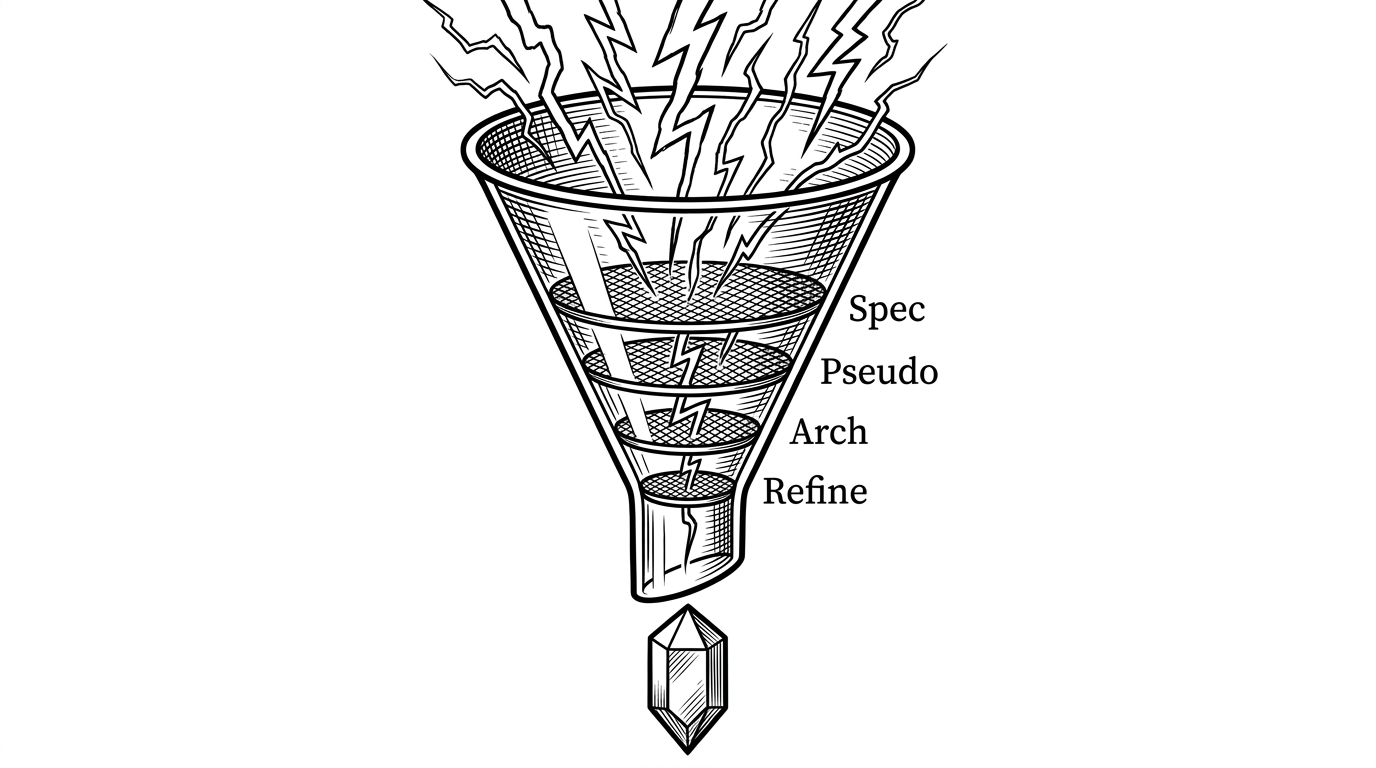
This deliberate friction ensures that the AI's output is grounded in pre-approved design patterns. A dedicated SPARC Coordinator agent oversees the lifecycle, preventing subordinate agents from becoming overwhelmed by context or skipping critical architectural reviews.
Origin and Vision
Originally built as Claude Flow, the project evolved out of a necessity to manage Anthropic's Model Context Protocol (MCP) at scale. Creator Reuven Cohen recognized that a single AI agent, no matter how capable, could not replace an engineering department without the structural rigor of a distributed operating system.
By combining the raw generative power of modern LLMs with the battle-tested reliability of consensus algorithms, RuFlo offers a glimpse into the future of automated software engineering. It proves that the path to true autonomy requires more than just clever prompts; it requires systemic, algorithmic agreement.