QuickShow: The Movie Booking App That Treats Every Seat Like a Transaction
A look at how this MERN-style project uses Clerk, Stripe, and Inngest to make booking feel reliable instead of fragile.

- QuickShow is interesting because it treats booking as a bounded transaction, not a loose set of CRUD actions.
- Its strongest move is the coordination layer around Stripe, where seat holds, payment completion, and cleanup all have explicit outcomes.
- Using Clerk private metadata for roles and favorites shifts user-specific state out of MongoDB and into the auth boundary.
- The repo teaches workflow thinking: where to lock, where to expire, and where to trust the source of truth.
Most movie-ticket clones stop at seat selection and a payment button. QuickShow goes one step further and asks what happens when the user disappears, the payment lags, or two people want the same seat at once.
That is why the repo feels more serious than a typical tutorial build. It is not just a movie app. It is a small system for preventing bad outcomes.
When Booking Becomes a Race
The core problem is simple to describe and annoying to solve. A seat can be available, held, paid for, or released, and the app has to keep those states aligned while users click in parallel.
That makes booking a consistency problem. If the app gets the timing wrong, the UI may look fine while the backend quietly creates a double booking or a zombie hold.
The Hold, the Checkout, the Cleanup
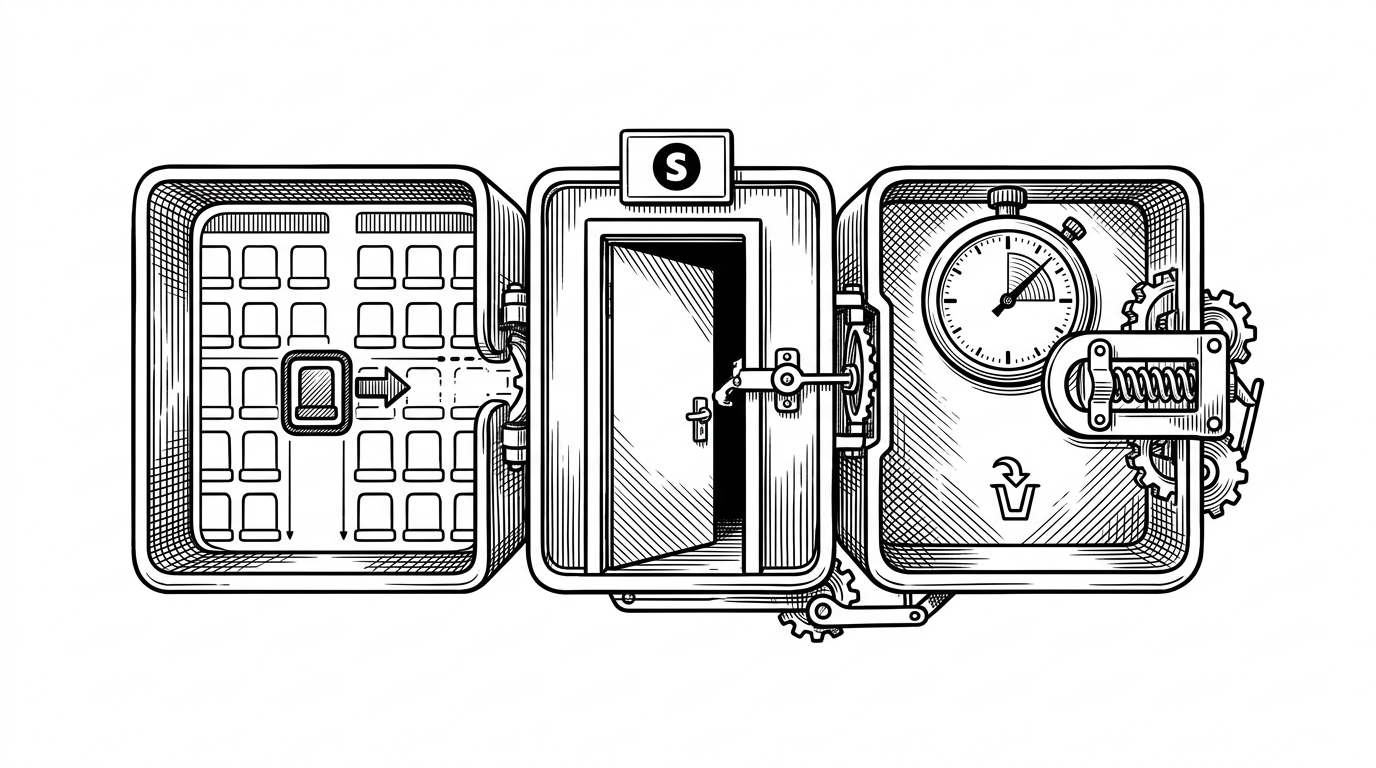
QuickShow's most interesting move is not Stripe itself. It is the coordination around Stripe.
The backend first checks whether the seats are still available, then creates a provisional booking record, then opens Stripe Checkout. If payment does not land, Inngest fires a delayed event and clears the hold so the seat does not stay trapped in limbo.
// Simplified booking lifecycle
const available = await checkSeatsAvailability(showId, seats);
if (!available) throw new Error('Seats are no longer available');

const booking = await Booking.create({
  showId,
  seats,
  userId,
  isPaid: false,
});

const session = await stripe.checkout.sessions.create({
  mode: 'payment',
  line_items: [...],
  success_url: `${APP_URL}/success`,
  cancel_url: `${APP_URL}/bookings/${booking._id}`,
});

await inngest.send({
  name: 'app/checkpayment',
  data: { bookingId: booking._id },
});
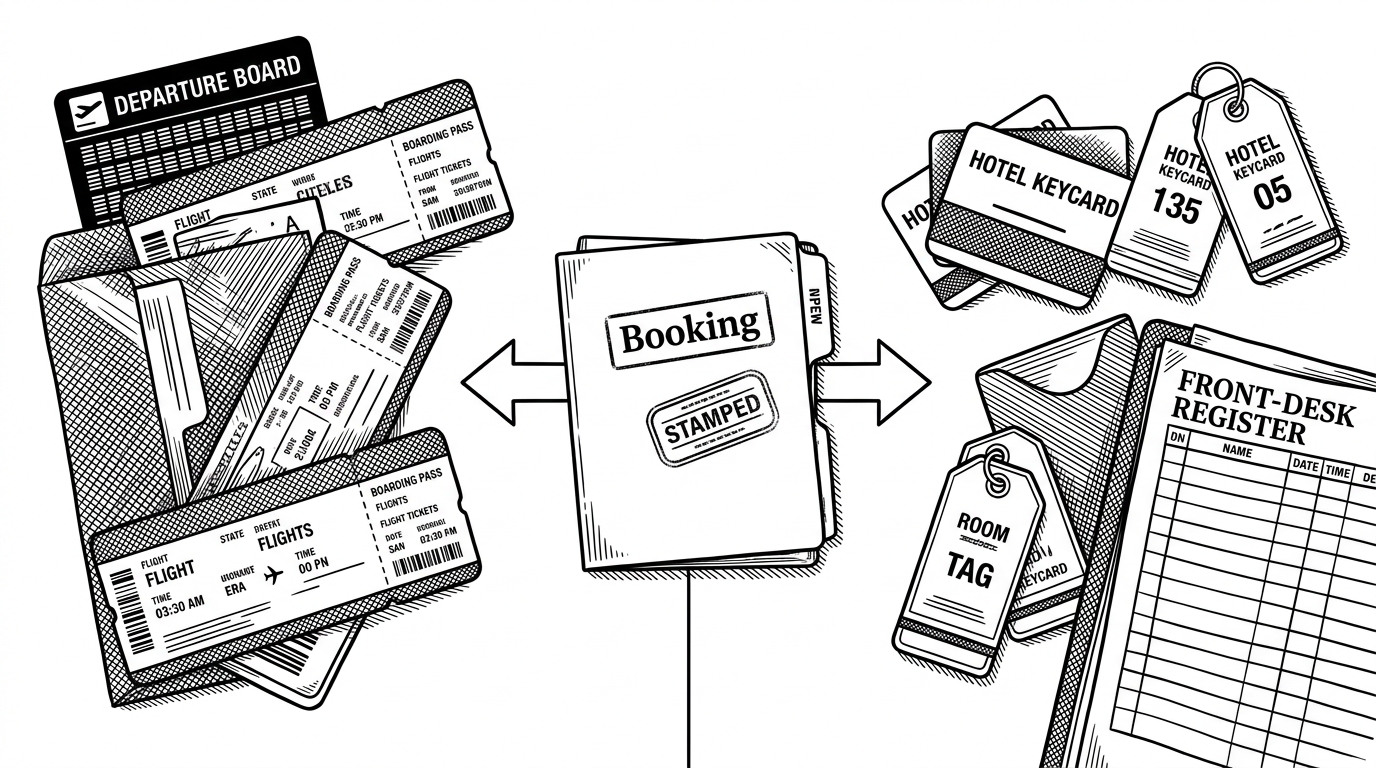
That sequence matters because it separates intent from finality. A hold is not a sale, and QuickShow keeps that distinction visible in both the data model and the job workflow.
This is the part many student projects skip. They store the seat state, but they do not design for abandonment.
Why Clerk Metadata Changes the Shape of the App
QuickShow uses Clerk private metadata for two pieces of user-specific state: roles and favorites. That means the app does not have to build a custom auth profile table just to know whether someone is an admin or which movies they liked.
| Decision | Typical MERN clone | QuickShow |
|---|---|---|
| Role checks | JWT claims or a local users table | Clerk private metadata with server-side role checks |
| Favorites | Stored in MongoDB like any other collection | Stored with the auth provider as user-specific metadata |
| Admin gating | Often client-only | Checked on both client and server |
| State boundary | Everything goes into app database | Identity-adjacent state stays with Clerk |
That is a small design choice with a big effect. It reduces database sprawl and makes the app feel more deliberate about where identity lives.
In this full stack project, user can signup, explore the movies and book the tickets. While booking tickets, user can choose their preferred seats. We will build the admin dashboard also, where admin can add new movies and manage the bookings.
TMDB as a Living Catalog
QuickShow does not treat movie metadata as something the team has to hand-curate forever. If a show references a movie that is not in the local database, the backend hydrates it from TMDB and stores the result locally.
That keeps the admin workflow light. The app can start from external source data, then cache what it needs without forcing a separate catalog management job for every new title.
| Source of truth | Local-first catalog | QuickShow |
|---|---|---|
| Movie metadata | Fully manual records | Fetched from TMDB when needed, then cached |
| Admin workload | Create and maintain every movie entry | Add shows against a hydrated catalog |
| Freshness | Depends on manual updates | Can rehydrate from the external API |
| Design cost | More database maintenance | More dependency on an external API, less admin friction |
That tradeoff is sensible for a project like this. The point is not to own every piece of metadata. The point is to keep the booking flow moving.
Why This Feels More Production-Ready Than Most Clones
Compared with a typical tutorial-grade MERN app, QuickShow is more explicit about failure. It has a hold timeout, a cleanup path, server-side admin protection, and a real separation between provisional and paid bookings.
| Concern | Typical tutorial clone | QuickShow |
|---|---|---|
| Authentication | Basic login flow | Clerk with private metadata |
| Seat locking | Usually optimistic and fragile | Availability checks plus provisional booking state |
| Payment cleanup | Often missing | Inngest handles hold expiry and release |
| Movie data | Manual seed data | TMDB hydration |
| Operational mindset | Build the screens | Build the workflow |
That is why the repo reads like a teaching tool with better instincts than usual. It does not just show how to wire pages together. It shows how to protect a transaction from edge cases.
For a portfolio project, that matters. For a real ticketing system, it is the difference between looking finished and being dependable.
What the Repo Is Really Teaching
QuickShow is a lesson in state boundaries. Some data belongs in MongoDB, some belongs in Clerk, and some should only exist long enough to prove a payment completed.
If you learn anything from it, learn this: booking systems are not about rendering seats. They are about deciding, with certainty, when a seat is held, when it is sold, and when it should be returned to the pool.